 小影邮箱
邮件退订率怎么看?Reading the Exit Sign
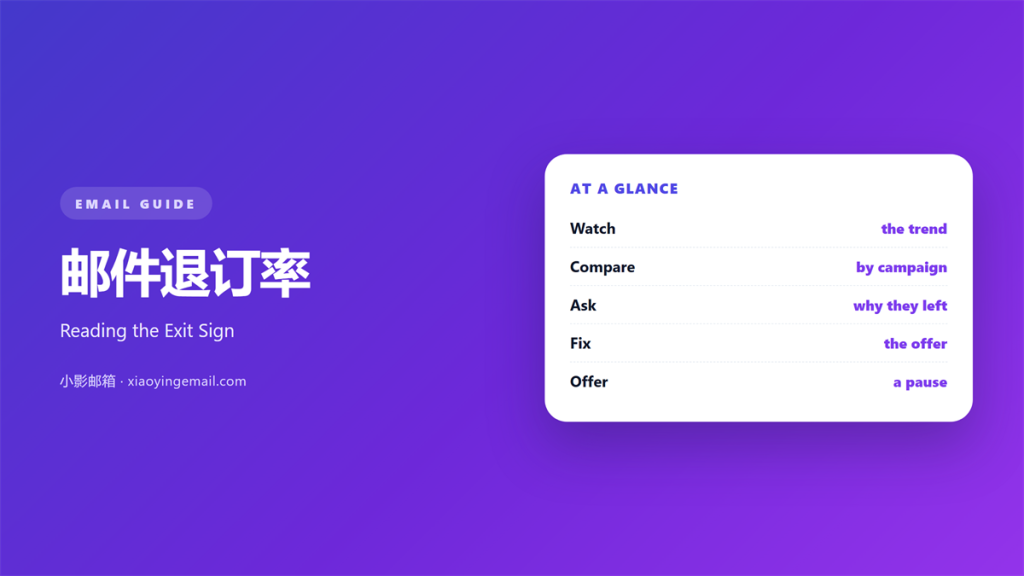
Key Takeaways
- 邮件退订率 counts readers who leave your list.
- A small number is normal and healthy.
- A sudden rise means the content missed.
- Fix the offer before you blame the list.
- Make leaving easy and leaving clean.
What 邮件退订率 means
邮件退订率 is the share of readers who opt out.
Each unsubscribe divides by the mail delivered.
The result is a small number, often under one percent.
It sits next to opens and clicks in your report.
One number tells you who chose to leave.
It does not say why they left.
That part needs a closer look.
It differs from a bounce or a complaint.
A bounce means the address failed.
A complaint means the reader flagged you.
Read it as a trend, not a verdict.
One send rarely tells the full story.
Why 邮件退订率 matters
A list is a set of relationships.
When one ends, the relationship ends too.
A rising 邮件退订率 is an early warning.
It shows the mail no longer fits the reader.
It also shapes your sender reputation.
Many platforms watch how readers behave.
Quiet leaving is better than a spam report.
So read the number, but do not fear it.
A shrinking list costs money over time.
Each lost name must be replaced.
A tidy list is easier to keep than a large one.
So watch the exit before it grows.
Small losses add up across a year.
A large list can hide a slow leak.
Healthy versus alarming
Under half a percent is usually fine.
Above two percent deserves a look.
The trend matters more than one send.
A single spike is often noise.
A slow climb is a real signal.
When 邮件退订率 climbs
A sharp 邮件退订率 often has one cause.
Maybe the subject promised something new.
Maybe the send went out too often.
Maybe the list picked up the wrong names.
Check the last few sends first.
Compare them against the earlier ones.
The pattern usually shows itself fast.
Look at which segment left first.
New readers may leave faster than old ones.
That tells you where the mismatch sits.
Compare the rate to your own average.
A wide gap often names the cause.
Fix the source before the next send.
Signs the list is tired
Opens fall while unsubscribes rise.
Readers stop clicking but stay subscribed.
Complaints collect in the same week.
Any pair of these signals a needed change.
When 邮件退订率 stays healthy
A steady low number means the fit is good.
Readers found the reason they joined.
They keep opening and keep reading.
The list grows even as a few leave.
That balance is the goal.
Growth and loss can both happen at once.
Count the new names and the lost ones.
A small drop is not a crisis.
That steady state is worth protecting.
Balancing growth and loss
If the new names beat the lost ones, keep going.
If the lost ones win, change the content.
Then measure again next month.
邮件退订率 in context
Context decides what a number means.
A big promo list loses more names.
A small welcome list loses almost none.
So compare like with like.
Look at your own history, not a blog post.
Your own chart beats any industry average.
Seasonal sends also shift the rate.
A monthly digest may behave differently.
So judge each list on its own curve.
Keep a simple chart across the year.
How to read a 邮件退订率
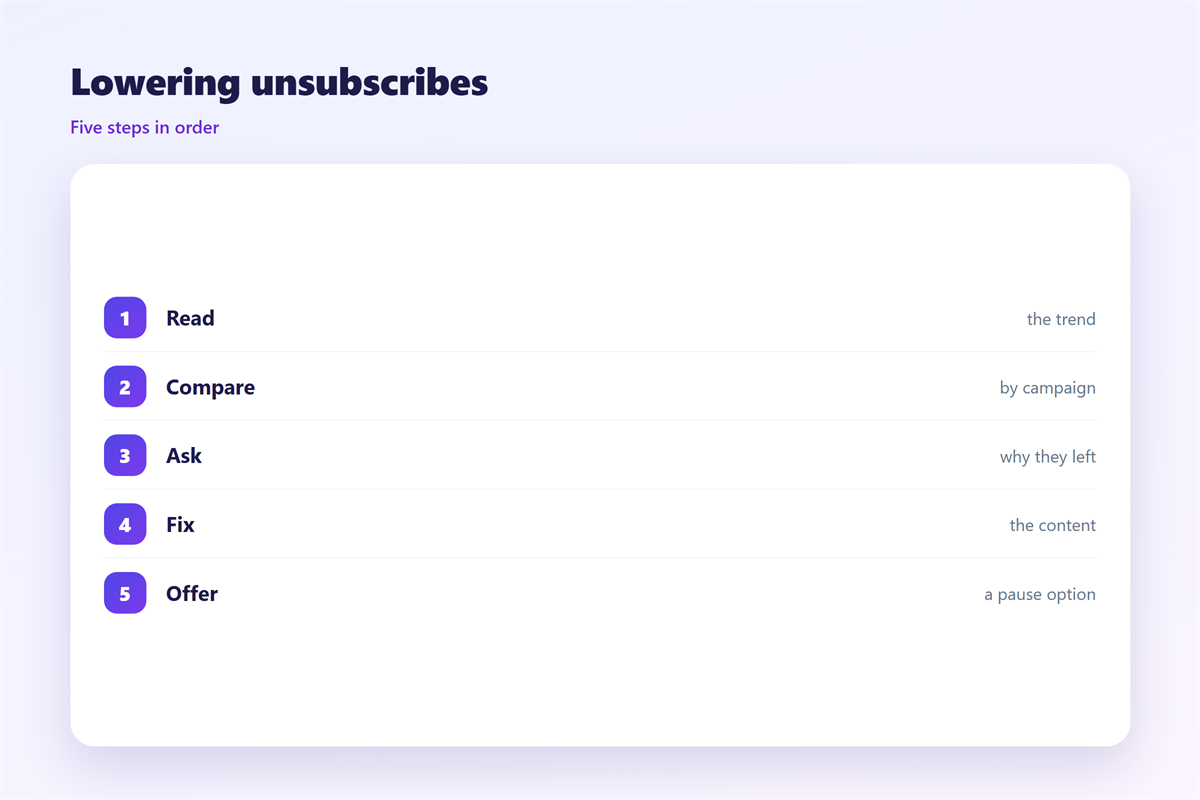
Open your report and find the rate.
Write it down beside the send date.
Add the subject line and the topic.
Do this for a few months.
Keep the same unit every time.
Percent of delivered is the usual unit.
Note the rate after each send.
A simple table is enough.
Then read the line, not the point.
Then draw it as a simple line.
A flat line means your plan works.
A climbing line means something changed.
A falling line means your fix landed.
邮件退订率 and content fit
Most leaving starts with a mismatch.
The reader joined for one thing.
Then the mail started selling another.
Keep each send close to the promise.
Ask a new reader what they expect.
Ask what made them join in the first place.
Then repeat that promise in each send.
That promise is your contract with the reader.
Ask readers what they want more of.
Then send that and nothing else.
Fit is cheaper to keep than to rebuild.
A poor fit shows a higher 邮件退订率.
Keeping 邮件退订率 low
Small habits keep the number calm.
The page a reader sees when leaving appears in 邮件退订页.
The habit of removing dead names sits in 邮件列表清洗.
The share of readers who open is explained in 邮件打开率.
The pace of each send is covered in 邮件发送频率.
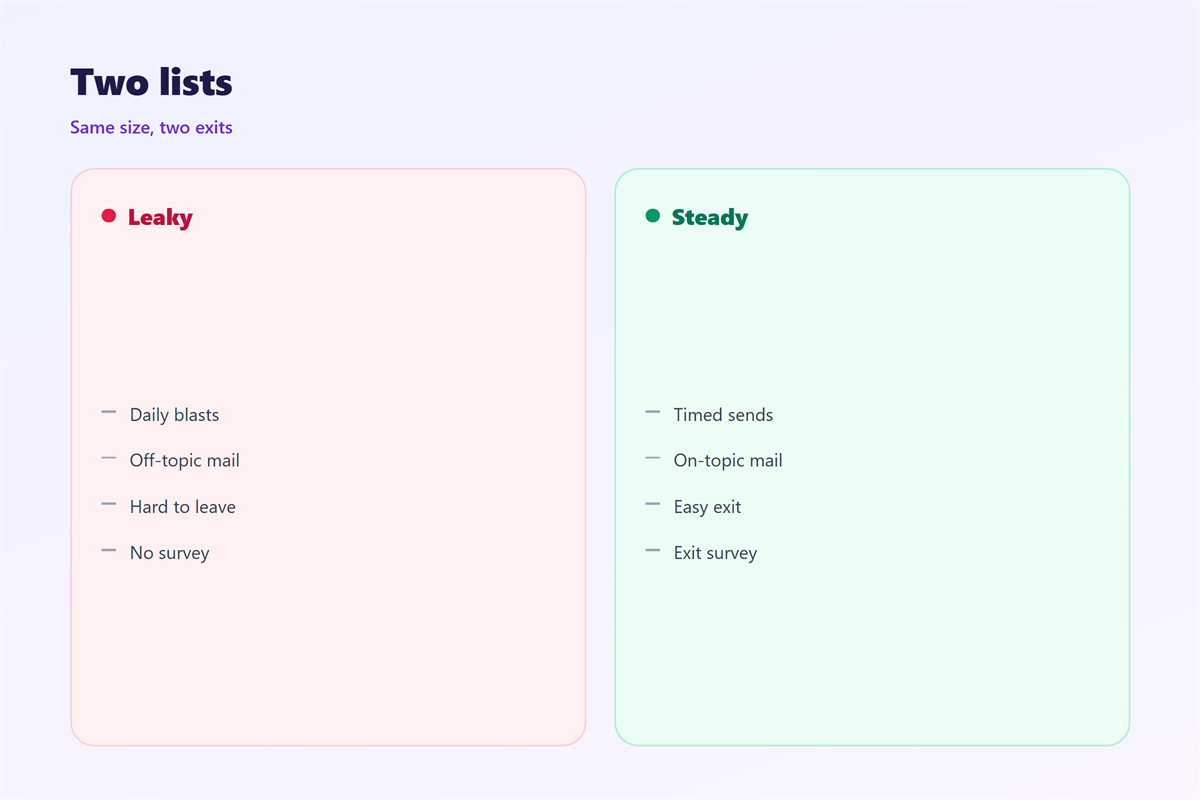
Make leaving a single click.
Then clean the list on a set schedule.
Write the rules down for the team.
Send on a rhythm readers can expect.
Watch the trend, not one bad day.
Review the rules each quarter.
Set a target and share it with the team.
Then track it every month.
A team that agrees keeps its list strong.
A calm 邮件退订率 is easier to keep than to fix.
FAQ
What is a good 邮件退订率?
Under half a percent is a healthy target for most lists.
A steady figure matters more than a perfect one.
Should I worry about one spike?
Not on its own. Check the next two sends before you change anything.
A single spike rarely lasts more than a week.
Does a 邮件退订率 hurt delivery?
Less than a complaint does. A quiet exit is the better one.
Repeated complaints are the bigger risk.
Can I lower a 邮件退订率 fast?
Send less often and match the content to the promise.
Small fixes usually show up within two sends.
评论
还没有评论,来说两句吧。
评论功能已关闭。