 小影邮箱
邮件对账怎么做?Match Bills Without Chasing
Key Takeaways
- 邮件对账 matches every bill to a payment.
- A fixed monthly date beats a random reminder.
- One summary list saves hours of searching.
- Copy the right people and name the period.
- A short record settles any later query.
What 邮件对账 means
邮件对账 is the habit of matching bills to payments by email.
It replaces guesswork with a short, dated list of what was paid.
The goal is simple: every invoice should point to one payment.
When the two sides agree, the account is closed for that period.
Most small teams do this badly or not at all.
A little structure turns a painful chore into a quiet routine.
The whole job lives in the inbox, so nothing extra is needed.
A clear 邮件对账 names the month, the totals and the person who checked.
It is not accounting, and it is not a full audit either.
It is simply the check that each bill was paid once.
Anyone who handles money can learn the habit in a day.
The result is a picture of what the business actually owes.
That picture is useful at the end of every busy month.
When 邮件对账 goes wrong
Problems appear when money and documents slowly drift apart.
A payment arrives without a reference, so nobody can match it.
An invoice is paid twice because two people acted at once.
A supplier re sends a bill and it is filed as a new one.
These small gaps cause real losses over a whole year.
A rushed 邮件对账 misses the very errors it should catch.
An honest 邮件对账 exposes those gaps before they grow large.
Stress makes people skip steps, and the gaps then grow quietly.
So keep the process boring, short and the same every month.
A shared folder of loose files is a common weak point.
Without a name or a date, a file is almost impossible to trace.
Two people doing the same task is another frequent cause.
Clear ownership prevents that waste and the double work.
Currency differences add another layer of quiet confusion.
Record the currency beside every amount to avoid mistakes.
Building a 邮件对账 routine
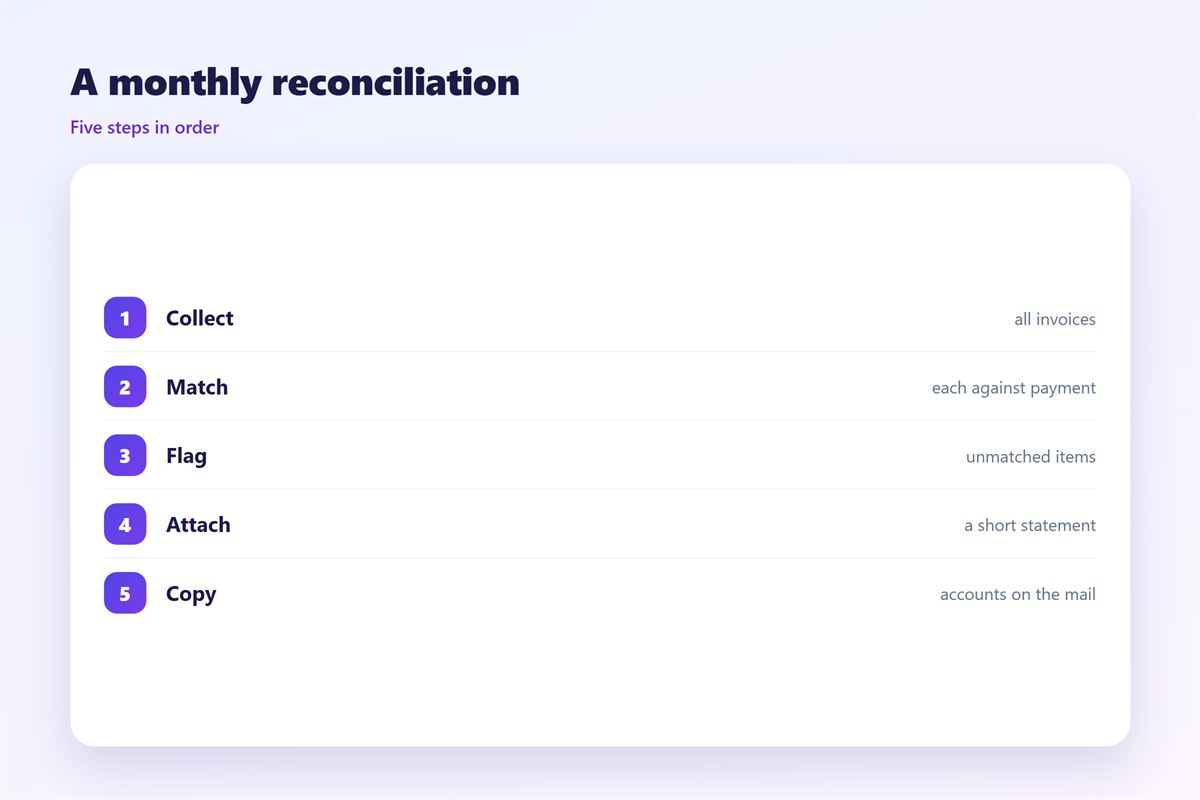
Pick one day each month and protect it like a real meeting.
Gather every invoice and every payment notice into one folder.
Work through them in date order and mark each one clearly.
Use a single summary list instead of scattered notes.
- Date: record when the payment cleared.
- Reference: copy the number from the bill.
- Amount: note any difference at once.
- Owner: name who checked the entry.
That list becomes the spine of every 邮件对账 you run.
A regular 邮件对账 keeps the inbox tidy at the same time.
Send the summary to the right people at the end of each period.
A short 邮件对账 beats a perfect one that never gets finished.
Name the summary file with the month and the year.
Then the next period is easy to find and compare.
Keep a short note of any item left open at the end.
That note is the first thing you check next month.
Share the file rather than sending endless copies around.
One shared version keeps everyone reading the same numbers.
Set a reminder a few days before the chosen date.
That small prompt stops the routine slipping out of view.
A good routine survives holidays and busy weeks.
Keep it small enough to finish in one sitting.
Testing your 邮件对账
You can test the routine with one month of records.
Count the invoices and count the payments they should match.
If the numbers differ, find the missing link before you continue.
Check that every reference is present and easy to read.
Ask a colleague to follow your list and see if it makes sense.
If they stumble, the list is missing a column or a label.
Keep the 邮件对账 simple enough for someone else to repeat.
Compare the summary with the bank statement line by line.
Slow reading here catches errors that speed would hide.
Ask the supplier to confirm any figure you cannot match.
A quick question now avoids a long dispute later.
Keep last month’s list beside the current one.
Fixing a failed 邮件对账
When the totals refuse to agree, slow down and look again.
Check the dates first, because a month boundary explains many gaps.
Then check the references, since a typo can hide a real payment.
Ask the other side for their list and compare the two carefully.
A calm 邮件对账 finds the error faster than a rushed one.
Our notes on 邮件发票 explain how a bill is sent. Firm payment requests are covered under 邮件催款. The files that travel along are listed in 邮件附件, and long term storage sits under 邮件归档.
Write down what caused the gap so it does not repeat.
Then close the period and start the next one clean.
Correct the reference in your own records as well.
The next month will then start from a clean position.
If the same supplier errs often, agree a clearer format.
A short rule about references saves future effort.
Ask what changed, not who is to blame.
A calm question usually uncovers the real cause quickly.
FAQ
Is 邮件对账 the same as bookkeeping?
No. It only matches bills to payments. Full bookkeeping goes much further.
How often should I do it?
Once a month suits most teams. A busy business may prefer weekly. Pick one and keep it.
What if a bill has no reference?
Add one yourself. A short code in the notes is enough. Then reuse it next time.
Who should be copied?
Copy the person who approves and the person who pays. Keep the list short, since long threads hide mistakes.
评论
还没有评论,来说两句吧。
评论功能已关闭。