 小影邮箱
邮件付款怎么写?Payment Mail That Tracks
Key Takeaways
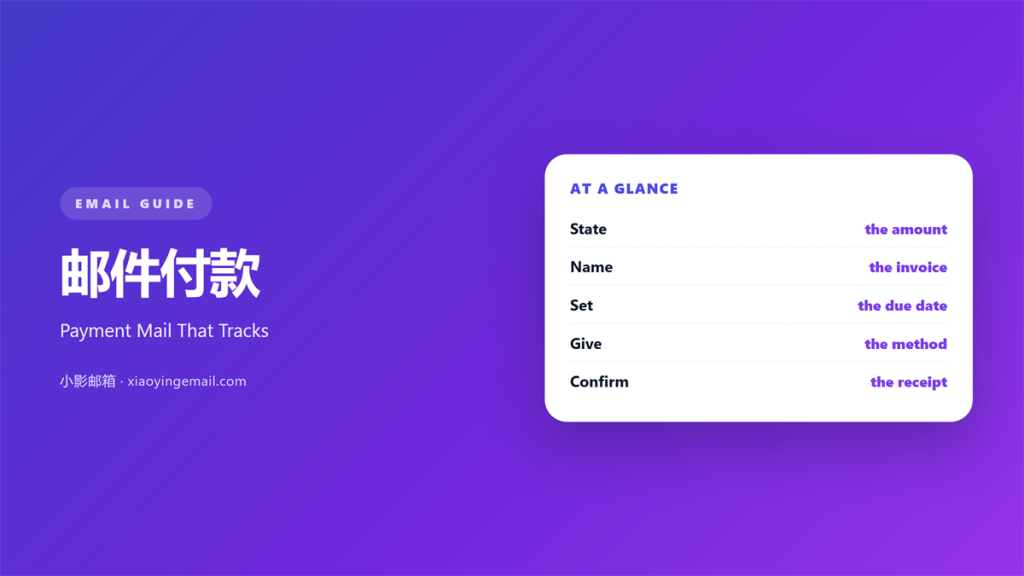
- 邮件付款 keeps the money side of a deal clear.
- Name the amount and the reference in full.
- Say how you will pay and when.
- Confirm once the money has landed.
- Keep every payment note in one thread.
What 邮件付款 means
邮件付款 is the mail that moves money.
It covers invoices, reminders, and confirmations.
It also covers the note you send after paying.
Each message shares one job.
It should remove doubt about the money.
A good note names the sum and the currency.
It names the invoice or order number.
It names the date the payment was made.
Then it says what happens next.
Payment mail is not the same as a receipt.
A receipt proves the money arrived.
A payment note sets the expectation.
Both belong in the same thread.
A reader should never have to ask for the total.
A clear 邮件付款 keeps both sides calm.
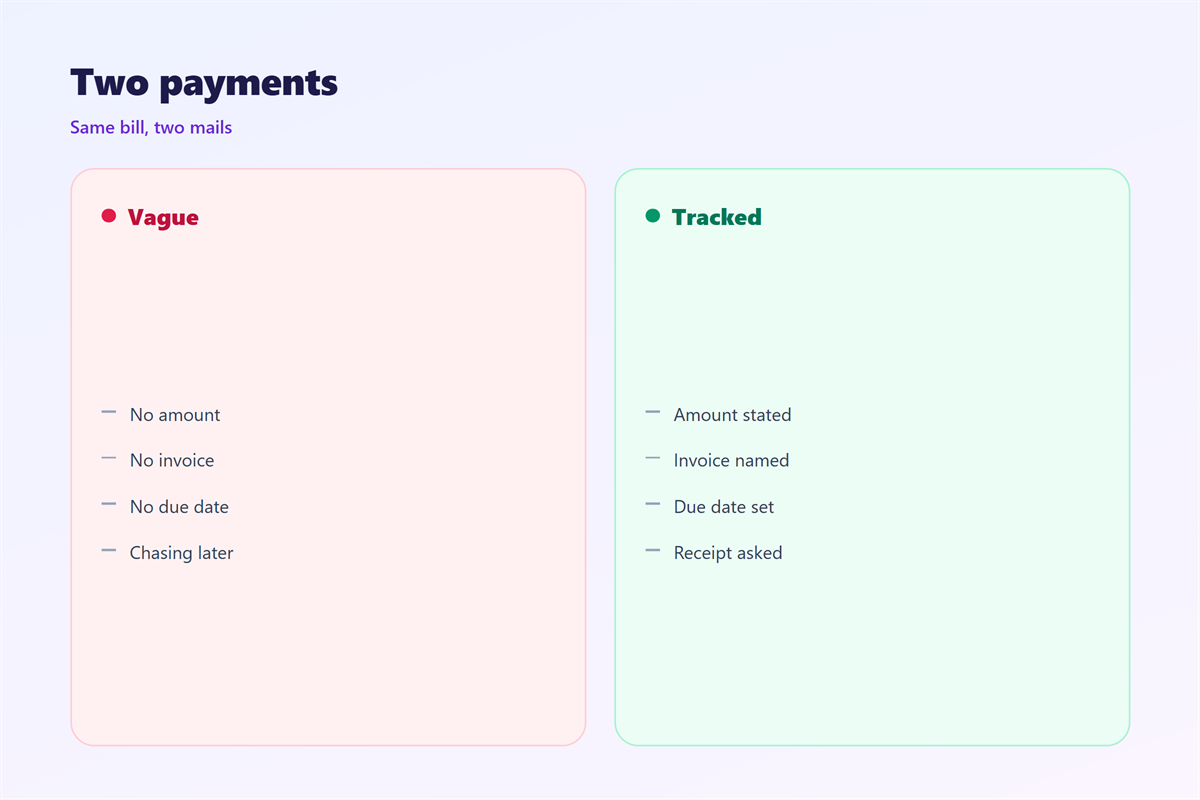
A vague one starts a long, slow chase.
Late payment often starts with a confusing note.
So clarity is a kind of speed.
Why 邮件付款 matters
Money is the part people check twice.
A clear note shortens the wait for payment.
It also protects the relationship.
A polite reminder beats a cold demand.
Payment mail also creates a record.
If a figure is questioned, the thread is there.
A steady 邮件付款 removes small errors.
A wrong digit can delay a whole month.
So check the amount against the invoice.
Then check the reference number too.
It also helps the finance team.
They match your note to the ledger in seconds.
The three facts
Amount, reference, and date.
Write all three in the first two lines.
Then the reader needs no second glance.
When 邮件付款 helps
邮件付款 helps at several clear points.
Use it when you send an invoice.
Use it when you confirm a transfer.
Use it when a payment is late.
Each case needs the same calm tone.
Write the facts first and the feeling second.
It helps when several bills arrive at once.
One thread per bill keeps them apart.
It also helps when a sum is large.
Then confirm the figure before you send it.
A second pair of eyes catches most slips.
The tone stays even in every case.
A steady voice gets a faster answer.
A short reminder
Keep the reminder to four lines.
Restate the amount and the due date.
Then ask for a new date if needed.
End with thanks, not a threat.
When 邮件付款 hurts
Harsh 邮件付款 can damage a good client.
A sharp line gets read as an insult.
So drop the capitals and the exclamation marks.
Anger rarely speeds a payment up.
Vague notes also cause harm.
A missing reference sends the money astray.
Then the chase starts all over again.
Another risk is a silent reminder.
If you never follow up, the due date slips.
So set one calm reminder and keep it polite.
Repeating the same demand also wears people down.
Escalate slowly and only when needed.
So write the note when you feel calm.
Then read it once more before sending.
邮件付款 and records
A payment note is a small piece of proof.
Keep it in one thread per deal.
Then the whole story sits in one place.
Date the note. Quote the invoice number.
Attach the receipt once the money lands.
That habit saves hours at year end.
A tidy 邮件付款 also helps an audit.
The numbers are easy to follow.
Keep the subject line stable across replies.
Then search finds the thread at once.
Do not start a fresh thread for each reminder.
A single chain shows the full chase.
Name the thread so it is easy to find.
A clear name saves a future search.
How to write 邮件付款 mail well
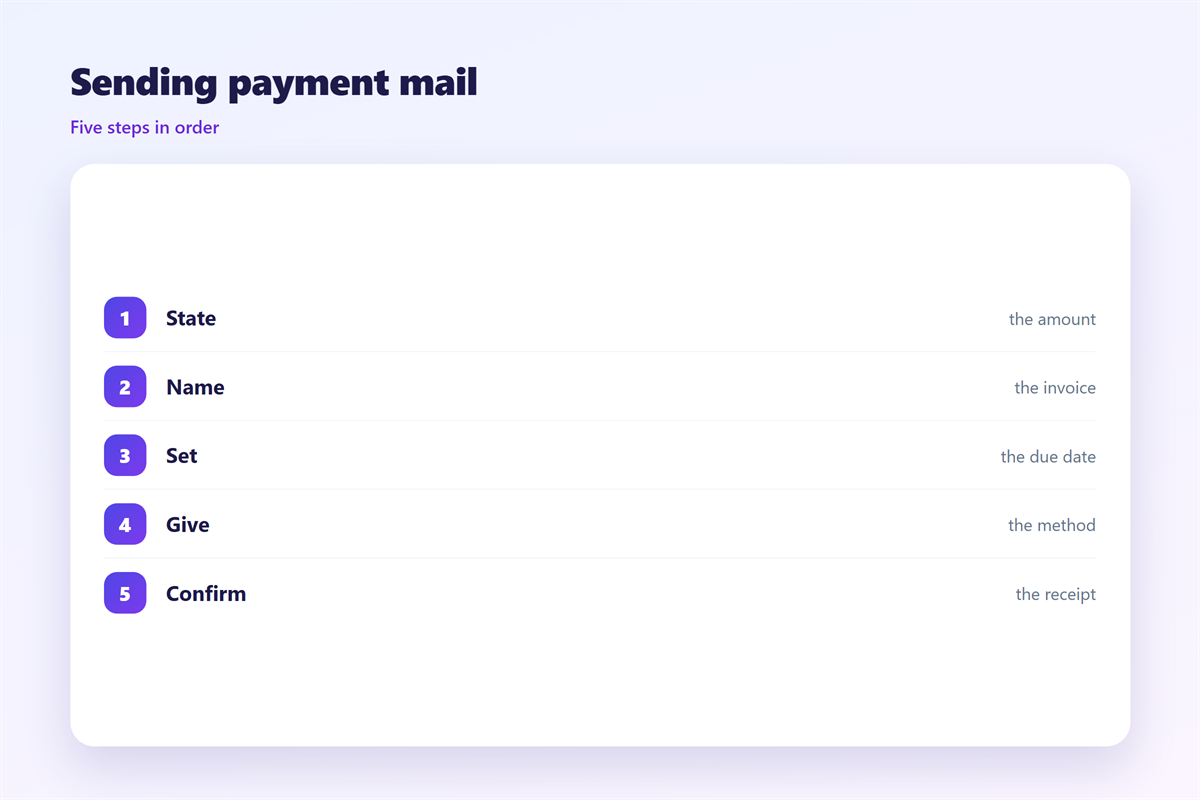
Open with the amount and the reference.
Then say what the note is about.
An invoice, a reminder, or a confirmation.
Then give the date and the method.
Then ask for one clear action.
Keep the note under five lines.
Then read it as the other side would.
Cut any line that sounds like blame.
Then check the figure one last time.
Then send it and save it to the thread.
Then keep the greeting warm and short.
A warm greeting softens a firm message.
Good 邮件付款 is short, clear, and kind.
A short template
Amount, reference, date, action, and thanks.
Five parts cover most payment notes.
邮件付款 across borders
Cross-border payments add a few traps.
Name the currency in full, not just a symbol.
Then give the exact bank details again.
Fees can change the amount that arrives.
So say who pays the transfer fee.
Then agree on the rate in writing.
A moving rate can cause a shortfall.
Then confirm the sum once it lands.
Time zones also slow the reply.
So allow an extra day before you chase.
Keep the wording plain for a second language.
Short sentences translate well.
Then confirm the sender’s bank charges.
A short note prevents a long exchange.
Keeping 邮件付款 tidy
One format keeps every payment note familiar.
Pick the wording once and reuse it.
The bill itself is covered in 邮件发票.
The firm nudge sits in 邮件催款.
The matching of bills appears in 邮件对账.
The way figures are written sits in 邮件金额.
Then a colleague can send the same note well.
And a client always knows what to expect.
FAQ
When should I send a reminder?
Once the due date passes, wait two working days, then write.
Should I pay from the same account every time?
Yes, if you can. It makes the reference easier to match.
What details must a payment note include?
The amount, the currency, the reference, and the date.
Is a threat of legal action wise?
Rarely. A calm reminder works better and keeps the client.
评论
还没有评论,来说两句吧。
评论功能已关闭。