 小影邮箱
邮件托管怎么选?Where Your Mailbox Lives
Key Takeaways
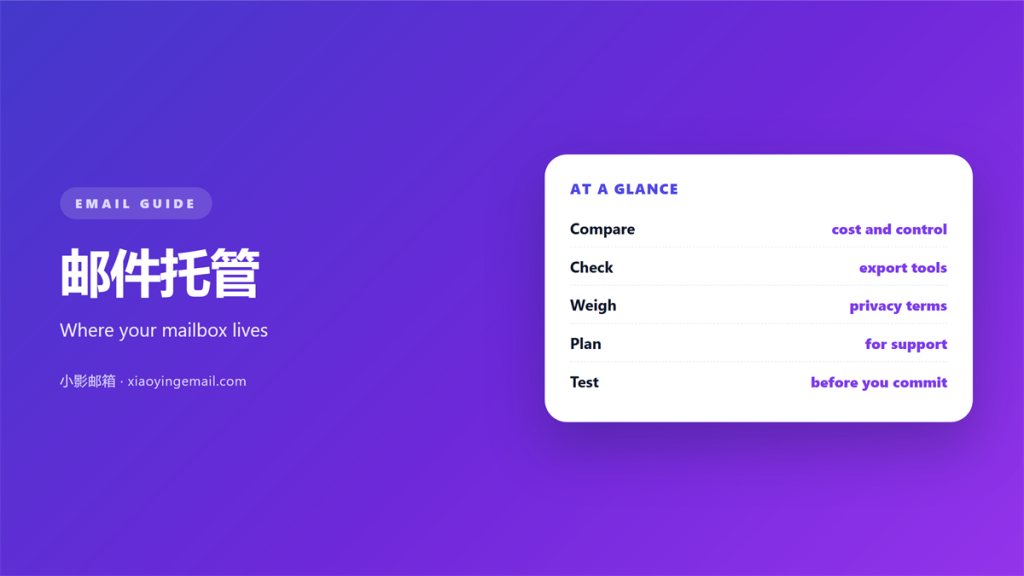
- 邮件托管 decides where your mailbox really lives.
- Shared hosting is cheap but you share the reputation.
- Your own domain makes any host look serious.
- Check MX records before you move one message.
- Backups and exports matter more than the price.
What 邮件托管 means
邮件托管 is the service that stores and delivers your email.
It covers the server, the software and the people who keep them running.
You pay a provider to run that engine for you.
The word covers a wide range. It runs from free consumer mail to private racks.
Small teams usually rent space. Large firms often split the job across vendors.
Either way, the mailbox needs a home that stays online.
When that home fails, every message sent to you bounces back.
So 邮件托管 is less about a logo and more about reliability.
A cheap plan that drops mail costs more than a calm one.
A good provider handles spam, malware and sudden traffic spikes.
You still own the address and every conversation inside it.
The provider owns the machines. You own the mail.
Why 邮件托管 matters
Where mail lives shapes speed, cost and control. A good 邮件托管 plan answers all three.
A managed 邮件托管 plan moves most of that work off your plate.
Downtime during a busy launch can cost a sale or a client.
A reliable host keeps that risk small and quiet.
How 邮件托管 shapes speed
Delivery time depends on the host and its network.
A distant server adds a small delay to every message.
Most people never notice. Busy support desks often do.
Cost and control
Renting 邮件托管 space is cheap at the start.
Running your own server costs less per seat over years.
The trade is staff time, and that time is rarely free.
Add the cost of updates, backups and night calls.
The cheapest plan is not always the cheapest outcome.
Who runs the servers
A shared plan hides the machinery from you.
A private setup hands every decision to your own team.
Most companies sit somewhere between those two ends.
Shared versus private 邮件托管
A shared plan puts many domains on one machine.
It is the cheapest and the fastest way to start.
A private plan gives your team its own resources.
That separation usually costs more each month.
The choice comes down to volume and risk.
A tiny team rarely needs a private server.
A regulated firm often cannot avoid one.
Read the contract before you decide either way.
How to choose 邮件托管
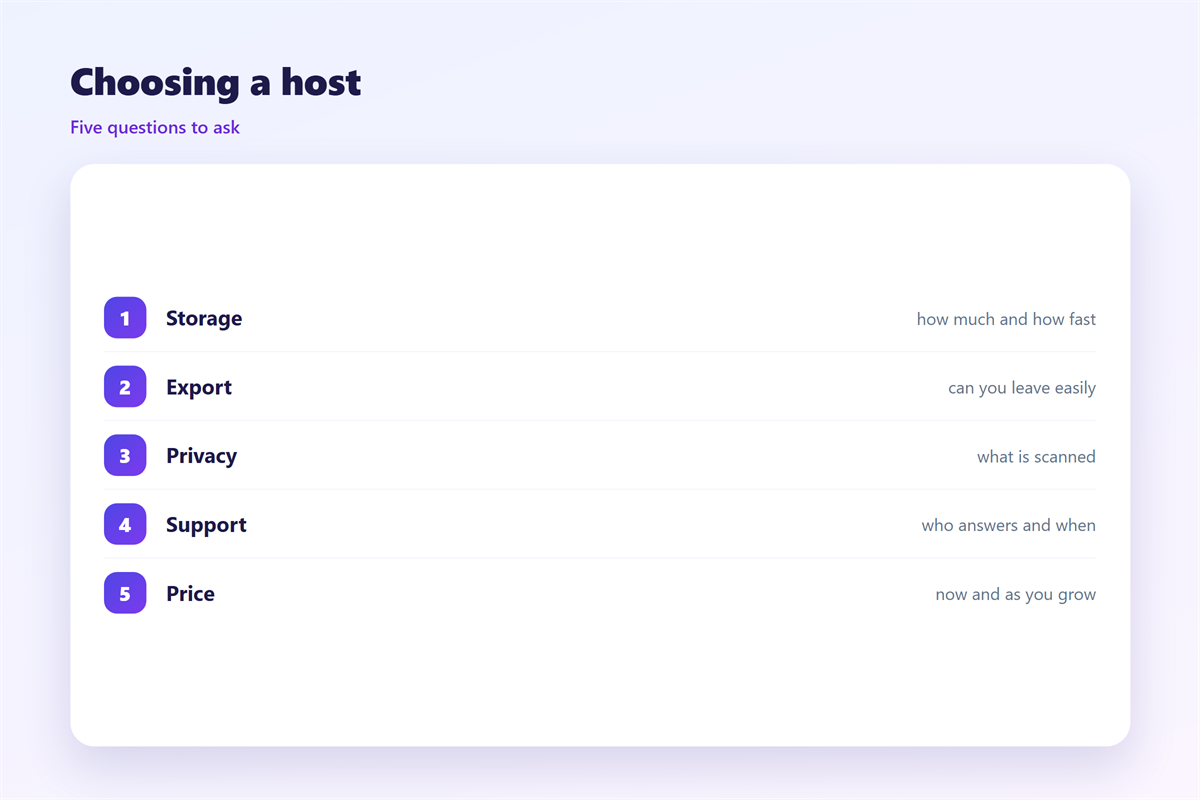
Start with the size of your team, not the price list.
List what you truly need. Storage, shared calendars and good spam filters top most lists.
Read the uptime promise and the fine print behind it.
Ask how fast support answers on a bad day.
Test the webmail on a phone before you commit.
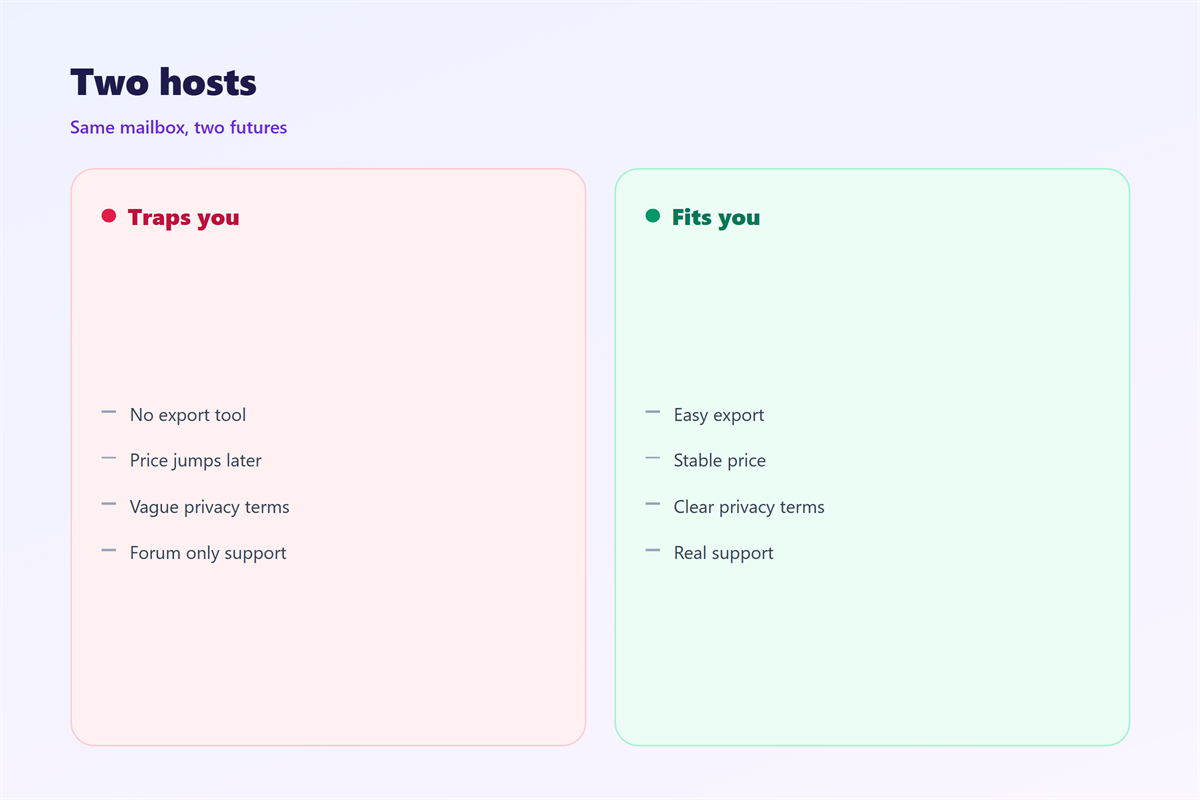
Check that export tools exist. A host that traps your mail is a trap.
Compare the cost per seat over three years, not one month.
A free tier often ends the moment you add a second user.
Pick a plan you can leave. Portability is worth a small premium.
Ask for a short trial before you sign a year.
Check where the servers sit if data rules apply.
Speak to a current customer if you can.
A ten minute call often beats a long brochure.
Moving to new 邮件托管
Migrate in stages instead of one big switch.
Copy old mail first and confirm the count matches.
Then change the records that point mail to the new home.
Keep both systems live for a week or two.
Watch the first few days closely. Early errors are easy to undo.
Tell the team the exact date and what will change.
Test sending and receiving from outside your own network.
Check that old folders came across in full.
Confirm that calendar invites still send and land.
A quiet cutover beats a dramatic one every time.
Common mistakes
The first mistake is picking on price alone.
The second is ignoring backups until the day you need them.
The third is skipping the domain and using a generic address.
Another 邮件托管 mistake is trusting a plan nobody has tested.
Do not move everything on a Friday afternoon.
Avoid mixing personal and company mail on one free account.
Do not forget to update every device after the change.
Do not assume old passwords will still work.
Do not skip the test message from an outside address.
Finally, keep a written record of your own settings.
Settling in after the move
A new 邮件托管 home needs a short settling period. Our notes on 邮件服务器 explain the engine underneath. The guide to 企业邮箱 covers admin work. Your address is covered in 邮箱域名. MX routing is explained in 邮件MX记录.
Watch bounce messages for the first week.
Ask two colleagues to send a test each.
Do a light review each quarter. Small checks prevent big surprises.
Update the plan when the team grows or shrinks.
FAQ
Does 邮件托管 affect deliverability?
It can. A shared host with a poor reputation drags your domain down with it. A clean private host usually performs better. Check your own sender records too.
Can I host my own mail server?
Yes, but the work is real. You handle updates, backups and blocklists yourself. Small teams rarely have the time for that.
What does 邮件托管 cost?
A small business plan costs a few dollars per user each month. Self-run servers trade that fee for staff time. Count both before you compare.
Is shared 邮件托管 safe?
It is safe when the provider separates accounts well. Ask how they isolate tenants before you sign. A written answer beats a sales page.
评论
还没有评论,来说两句吧。
评论功能已关闭。