 小影邮箱
邮件收藏怎么用?Keep It for Later
Key Takeaways
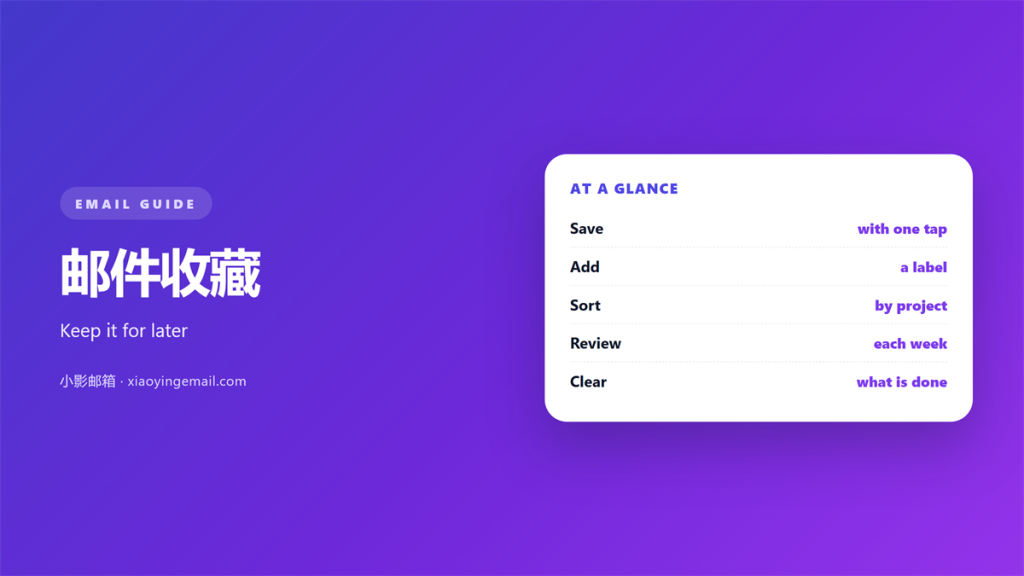
- 邮件收藏 saves a message you will need again later.
- Save with a reason, not just a reflex.
- Give every saved note a label and a place.
- Review your shelf once a week to clear old copies.
- A saved message beats a memory every time.
What 邮件收藏 means
邮件收藏 means keeping a message for a later moment.
It is not the same as leaving mail in the inbox.
A saved note has a purpose and a place to live.
The inbox is a stream. A shelf is a store.
When you save, you promise to return to it.
That promise only works if the return actually happens.
Most people save far more than they ever reopen.
A calm 邮件收藏 habit starts with one clear rule.
A save is a small act of trust in your future self.
It says this matters, and I will handle it later.
Without that trust, the inbox becomes a heavy place.
Why a 邮件收藏 habit matters
The inbox is built for arrival, not for memory.
Important notes sink below a tide of new mail.
A saved item stays findable after the tide moves on.
A 邮件收藏 is only useful when you truly return to it.
It also quietens the mind. You stop holding it in your head.
The quiet benefit
A saved message removes a small worry from your day.
It becomes a task you can trust to a system.
Over a month, that trust lowers the weight of the inbox. It turns a busy 邮件收藏 pile into a calm shelf.
A saved item also removes the fear of forgetting.
That fear drains energy all through the day.
Once the note is safe, the mind can rest.
Where to keep a 邮件收藏
Pick one place and stay with it.
Some people use a folder. Others use a label or a star.
The tool matters less than the habit itself.
A label can mark the topic. A flag can mark the urgency.
Keep the naming simple so search can find it. Good names make a 邮件收藏 shelf easy to scan.
Name it for search
Use words you would actually type later.
A vague label is almost the same as no label.
Add a date when the item has a deadline.
Small details make a later search painless.
One reason to save
Save a message when it needs an action later.
Save it when it holds a fact you will reuse.
If it is neither, read it and let it go.
Every 邮件收藏 should answer one simple question. What will I do with this?
Some saves need a partner, like a reply or a call.
Note the partner in the label so you remember.
Then the save becomes a small plan, not a pile.
How to build the 邮件收藏 habit
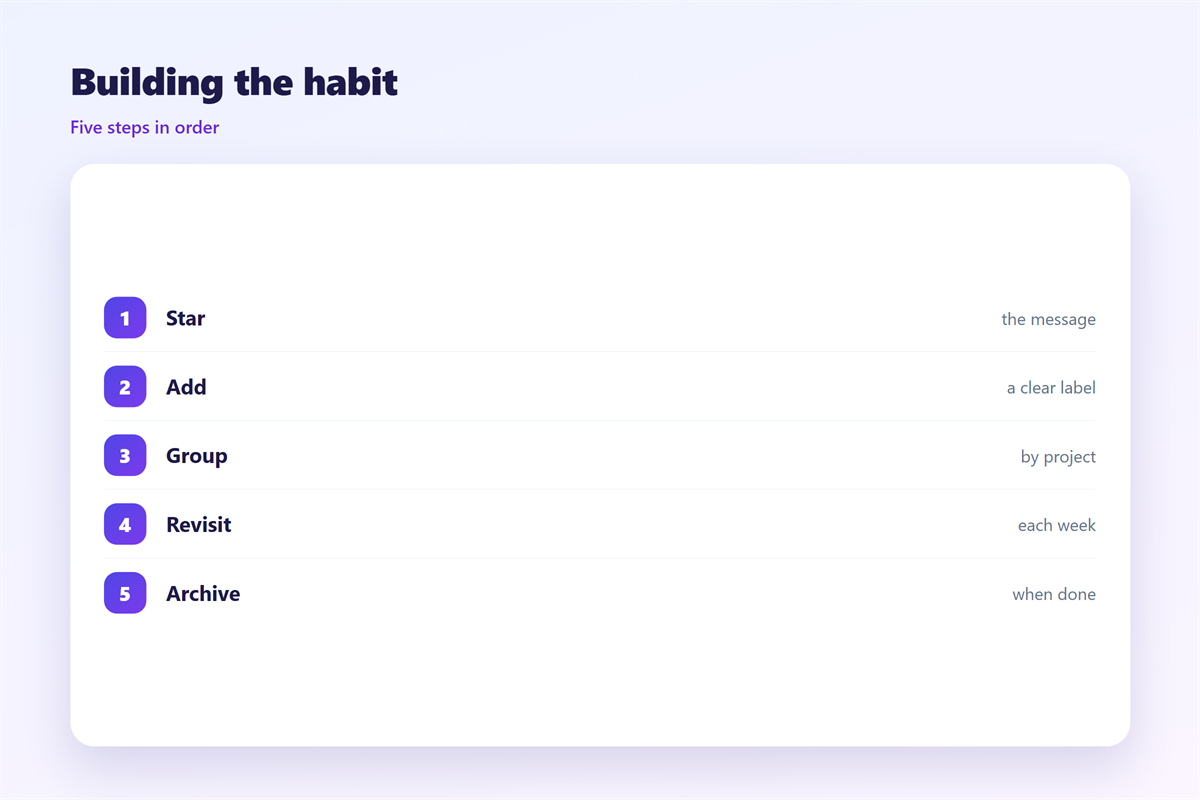
Set a clear trigger. Do it the moment you decide to act.
Do not save to avoid a decision. Decide, then save the reason.
Keep the save action close to your reading hand.
If it takes three clicks, you will stop doing it.
Try it for a week and watch what you keep.
Adjust the rule, then repeat the habit.
A fixed time each day makes the habit stick.
Morning works for many people. Evening works for others.
Pick one slot and protect it.
Add a short note with the save when you can.
The note jogs your memory far better than the subject line.
Review once a week
A short weekly review keeps the shelf honest.
Open each saved item. Act, file or delete it.
Anything untouched for a month is probably not needed.
That review closes the loop your 邮件收藏 promised.
Do the review at a quiet time. Ten minutes is enough.
Work from oldest to newest and keep moving.
Finish the pass before you open new mail.
Mistakes that weaken a 邮件收藏
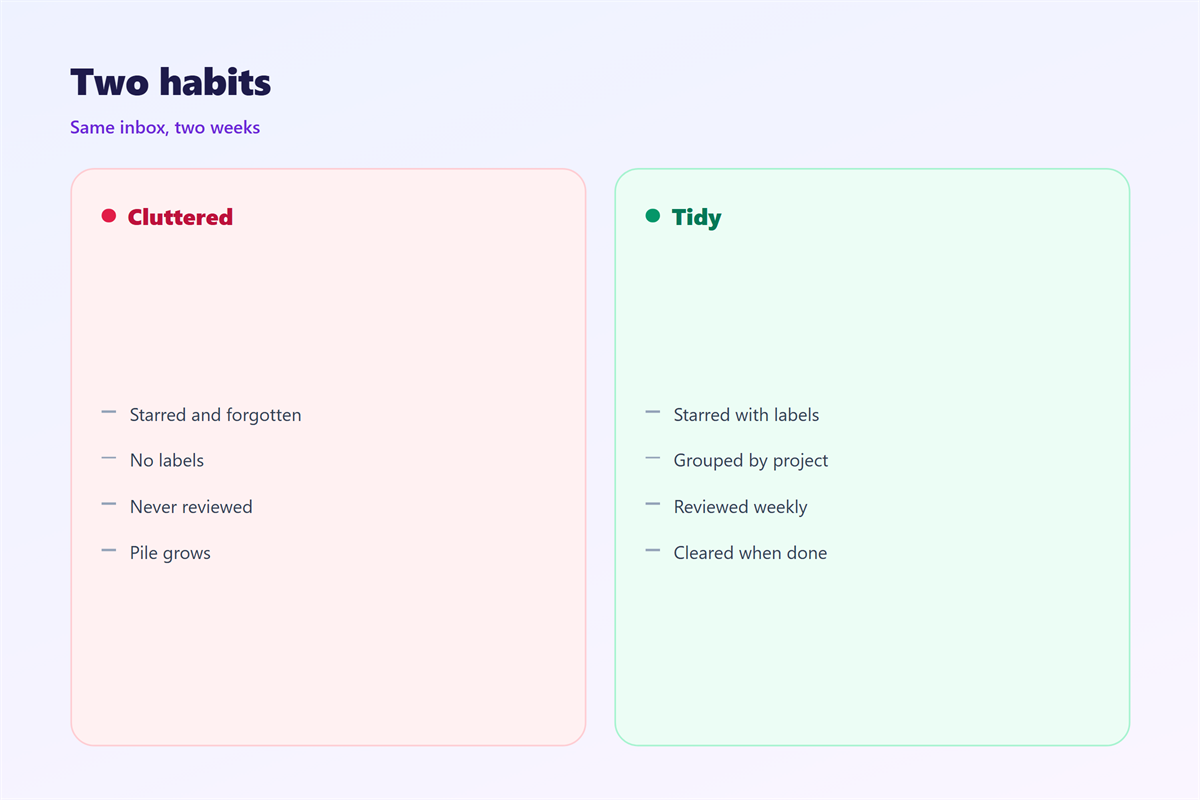
The first mistake is saving everything to feel safe.
The second is saving with no label and no note.
The third is never returning to the shelf at all.
Another mistake is using three tools at once.
Finally, do not confuse saving with doing.
A save is a promise. A promise without action becomes a burden.
Another mistake is saving the same file twice.
Duplicates make the shelf harder to trust.
Check for an old copy before you save a new one.
Sending and improving a 邮件收藏
Let a saved message become a clear task. See 邮件待办.
Sort your saved mail into tidy views. The setup sits in 邮件标签页.
Push a saved item to a better moment. The method is in 邮件稍后处理.
Keep the wider box calm and clear. A guide lives in 邮件收件箱.
Then improve one part each week. Small edits beat a full rebuild.
A steady 邮件收藏 habit is a quiet gift to your future self.
Keep a short list of what you save most often.
That list shows where a saved note turns into real work.
Over time you will see your own patterns.
FAQ
Is 邮件收藏 the same as archiving?
No. Archiving clears the inbox. Saving marks a message you plan to use again.
How many saved items are too many?
If you never reopen them, that is too many. Review and trim often.
Should I save on my phone or laptop?
Use one system that syncs. Then you can save from any device.
What if I forget to review?
Set a fixed weekly slot. A short reminder keeps the habit alive.
评论
还没有评论,来说两句吧。
评论功能已关闭。