 小影邮箱
邮件校对怎么做?Catch the Small Slips
Key Takeaways
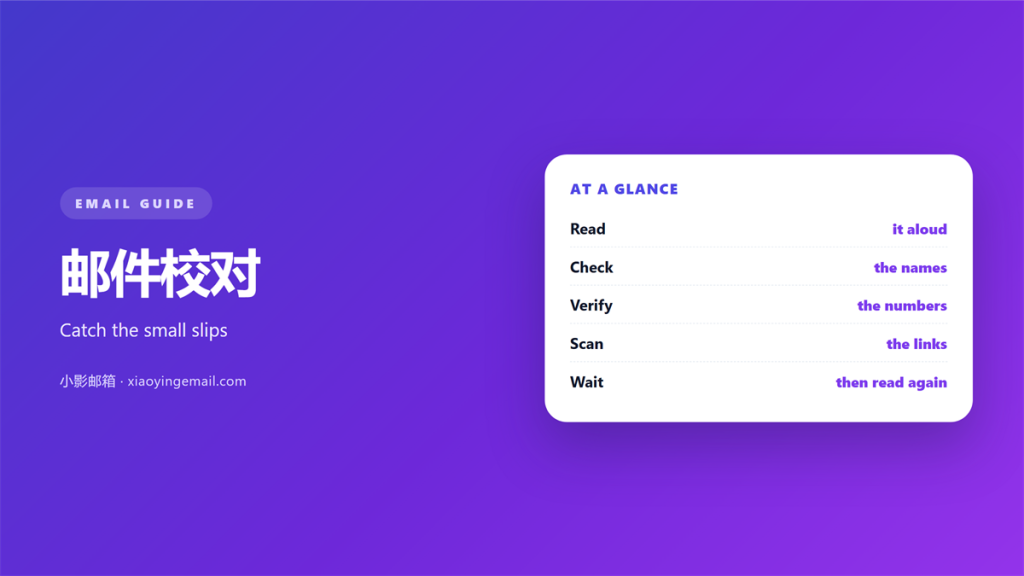
- 邮件校对 catches the small slips before you send.
- Read once for meaning, once for detail.
- Typos cost trust faster than a weak idea.
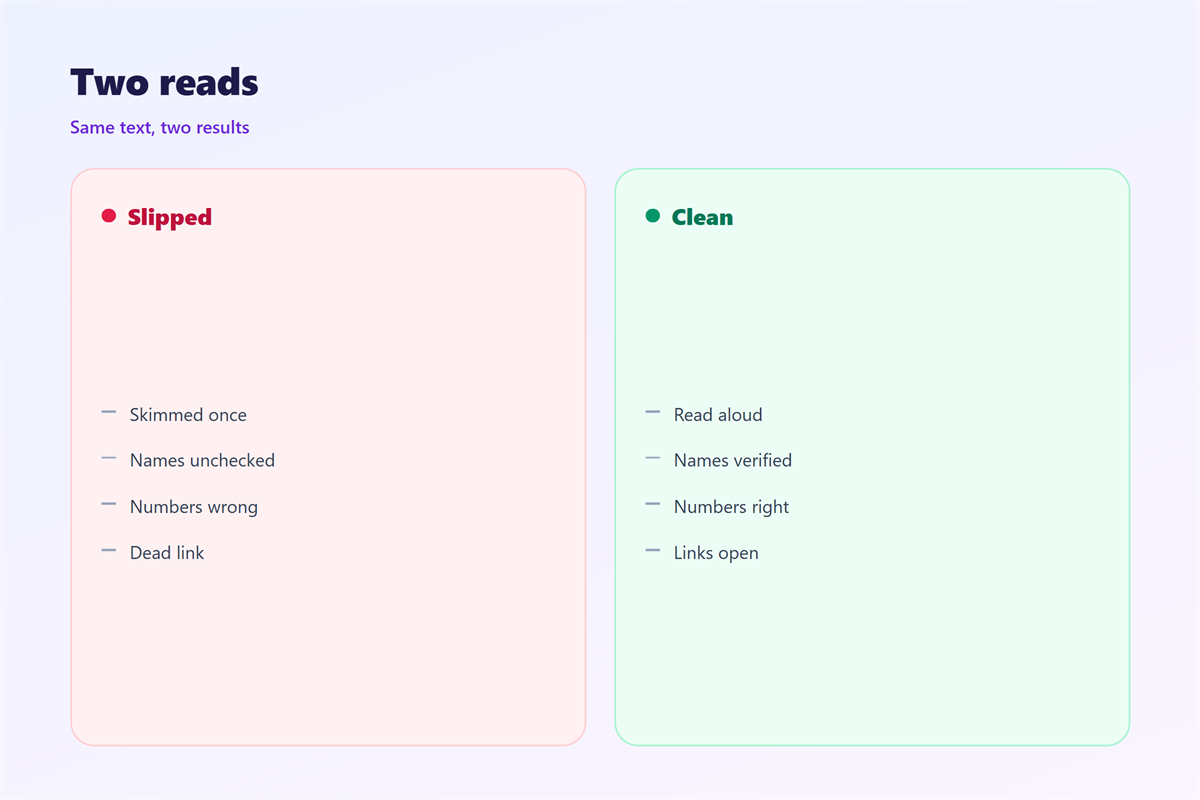
- Read the draft aloud to hear the errors.
- Check names, numbers and links every time.
What 邮件校对 means
邮件校对 is the last careful read before a message leaves.
It looks for small slips, not big ideas. A clean note also respects the reader’s own time.
Spelling, grammar and names all get a second look.
Numbers and links get the same care.
It is not a full rewrite.
The text is already good. This step makes it clean.
A good 邮件校对 takes only a few minutes.
Those few minutes protect your name. Most slips take seconds to fix and hours to undo.
It also saves a follow up apology.
Small care often reads as respect. It is a quiet act of respect for the reader.
Good proofing also protects the whole team.
Why 邮件校对 matters
A typo in a name can upset a client.
A wrong figure can cost real money.
A broken link wastes the reader’s time.
A steady 邮件校对 habit lowers all these risks.
It also makes you look calm and careful.
That reputation opens doors over years.
Readers judge a writer by the small details. A tidy page is easier to trust.
Clean text carries the message without a distraction. A small error pulls the eye away from your point.
The reader stops reading and starts judging.
Spelling errors are the easiest to fix and the easiest to see.
The quiet benefit
A careful read also catches a weak tone.
A rushed line can sound cold by mistake.
A tidy draft shows the reader you thought of them.
That care often earns a faster reply.
Good proofing quietly builds trust.
How to check 邮件校对
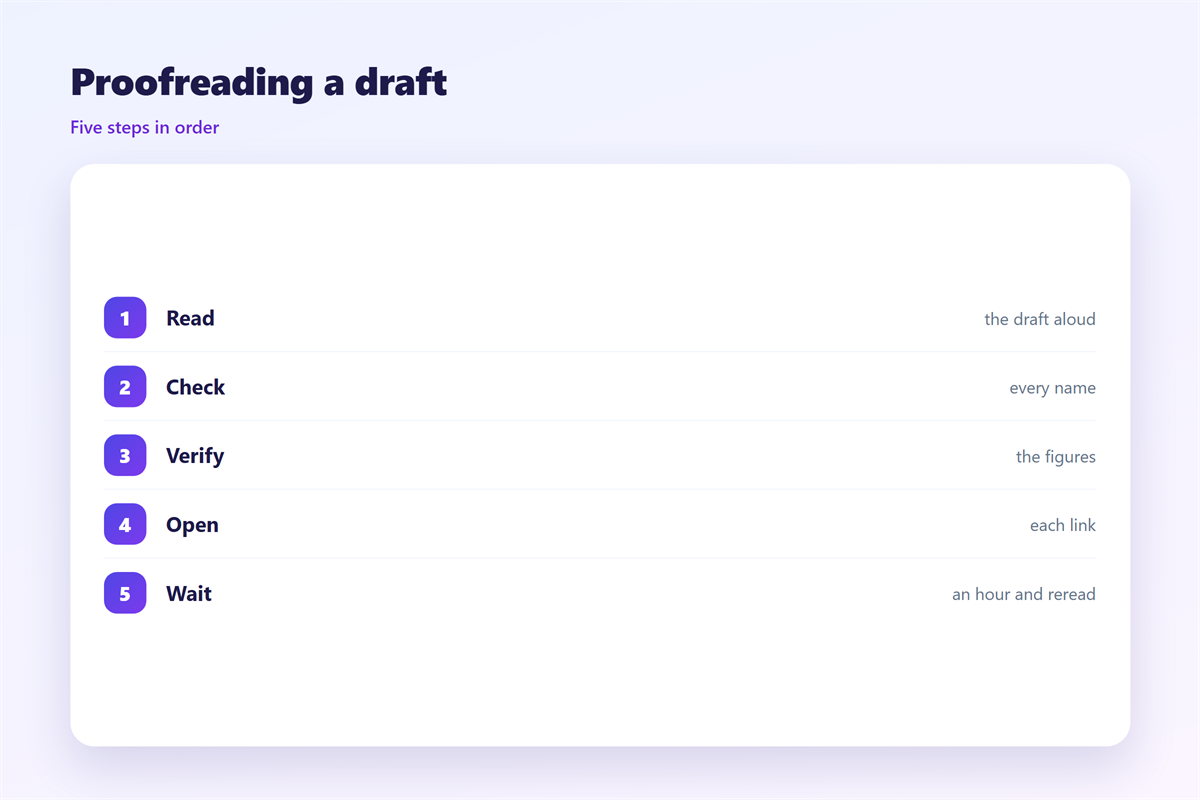
Finish the draft first. Then leave it for a moment.
Read it once for meaning. Read each paragraph on its own.
Small breaks help the eye focus.
Then read it again for detail.
Change the pace. Read the second pass aloud.
The ear catches what the eye skips.
Check every name against your address book.
Check every number against its source.
Click every link before you send.
Read the subject line last.
A calm 邮件校对 follows the same order every time.
What to include
Check the greeting against the reader’s name.
Then check the closing line. Read the greeting as the reader will see it.
Names and titles
Spell every name exactly as the person writes it.
Get the job title right.
A small error here is hard to forgive.
Numbers and dates
Match every figure to the source.
Check each date and each amount.
Then check the time zone if you name a time.
Links and files
Click the link, then check the page.
Open the file you attach.
Remove any old attachment by mistake. Name the attachment before you attach it.
A clear name saves the reader time.
Numbers that help 邮件校对
Two passes is usually enough.
A third pass helps on a very formal note.
Allow a short pause between passes. A short pause is often the best tool.
That gap makes the errors stand out. A short break clears the head before a final read.
Keep a short list of the errors you make often.
Check that list at the end of every draft. Count the passes you make on a normal note.
Two is usually enough for most mail.
A personal 邮件校对 list is worth more than a general rule.
Closing a 邮件校对
Read the first line and the last line together.
These two lines carry most of the weight.
Make sure they still match.
Then read the whole message once more. A last read is a sign of care.
Send only when the text feels calm.
A finished 邮件校对 leaves no small doubt. Then save the draft for a moment.
A final glance often catches one last slip.
Mistakes that weaken 邮件校对
The first mistake is proofing straight after writing.
The second is trusting the spell checker alone. A quick send often carries a slow regret.
The third is checking the body but not the subject.
Another is reading on a tiny screen. A larger screen shows errors more clearly.
Finally, do not send while you are angry or tired.
A steady 邮件校对 routine beats a lucky one.
Sending and improving 邮件校对
Match your tone to the reader. The rules are gathered in 邮件礼仪.
Soften a formal line where you can. The choices are set out in 邮件语气.
Check the greeting a second time. The forms are shown in 邮件称呼.
Then check the sign off. The options are listed in 邮件结尾.
Improve one part of your routine each week. Small edits beat a new habit. A final habit saves a public mistake.
Ask a colleague to read a very formal note. A second pair of eyes is worth the wait.
Keep a note of the slips you catch. A growing 邮件校对 list makes the next draft easier.
FAQ
Is 邮件校对 the same as editing?
No. Editing improves the ideas. Proofing cleans the small details.
How long should it take?
A few minutes for most notes. Allow more for a formal letter.
Do I still need to read aloud?
Yes. Reading aloud catches errors that silent reading misses. Say the words and listen for the odd line.
What should I check first?
Start with names, numbers and links. Then read for tone. A calm check order beats a random scan.
References
- Harvard Business Review: Better writing
- Litmus: Email proofreading tips
- IETF RFC 5322: Internet Message Format
评论
还没有评论,来说两句吧。
评论功能已关闭。