 小影邮箱
邮件标点怎么用?Punctuation That Helps
Key Takeaways
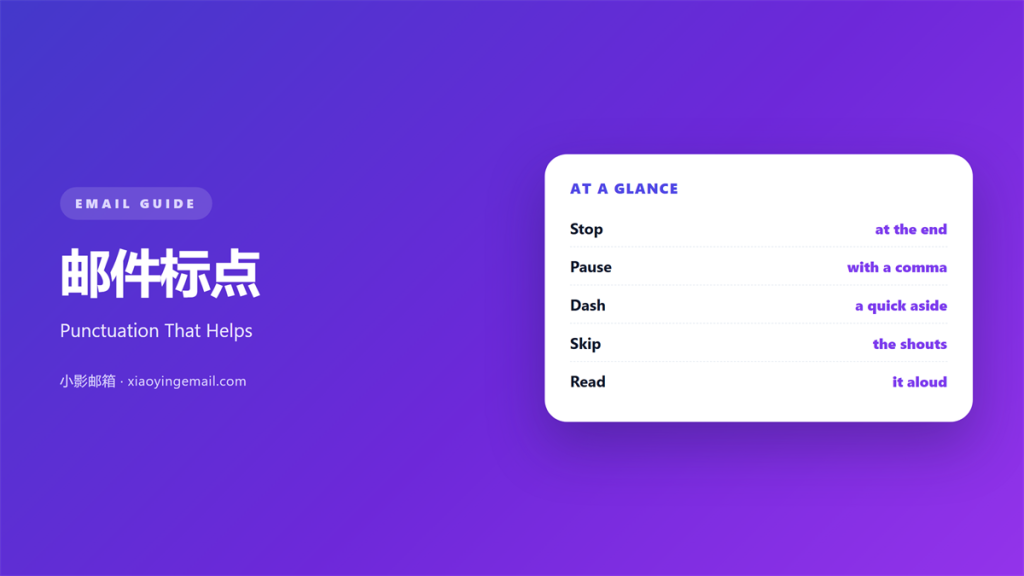
- 邮件标点 guides the eye and the inner voice.
- Short sentences need fewer marks, not more.
- One dash can replace a whole clause.
- Exclamation marks age faster than words.
- Read the draft aloud before you send.
What 邮件标点 means
邮件标点 is the set of marks that shape how a message reads.
It covers the full stop, the comma, the dash and the humble colon.
Most people never think about it. They type and send.
Yet a single mark can turn a friendly line into a cold one.
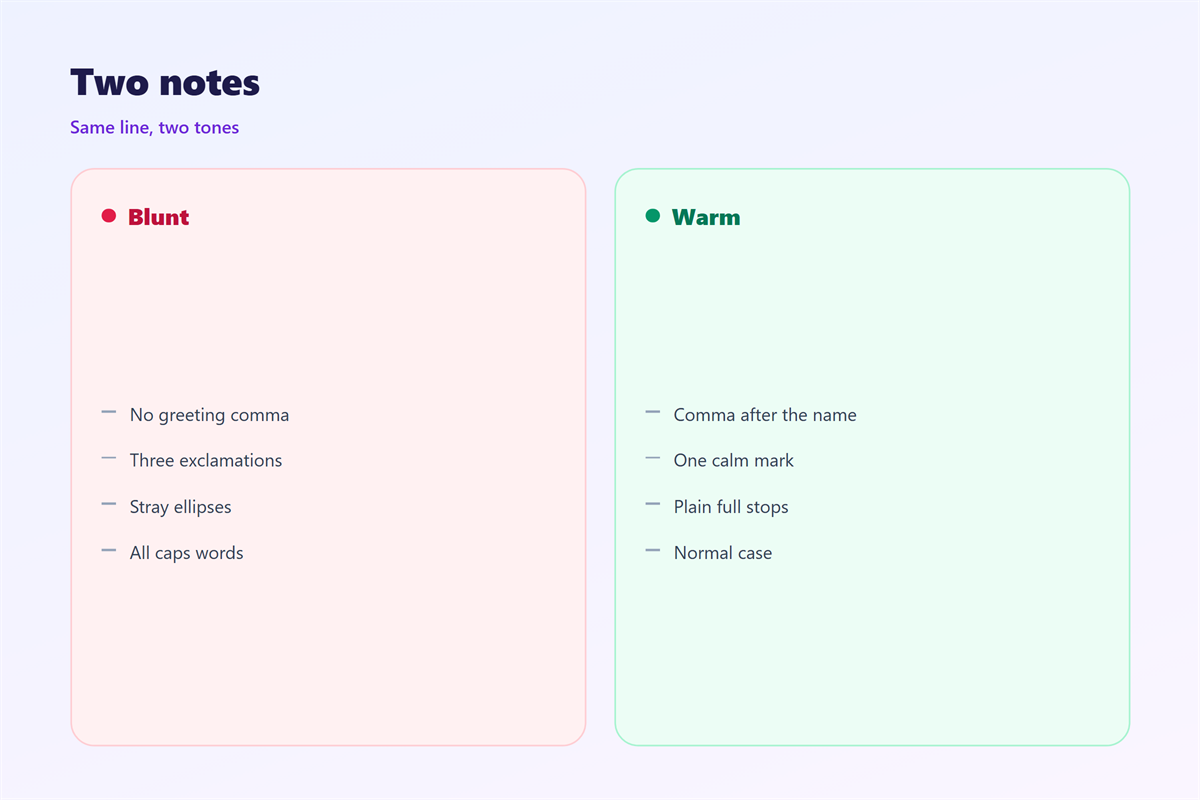
Consider two short phrases. “Thanks, Jane.” reads warm.
“Thanks Jane.” reads like a command, not a greeting.
That tiny comma changes the whole tone of the line.
Good 邮件标点 is invisible when it works. You only notice it when it fails.
Why 邮件标点 matters
Writing has no tone of voice. The marks must carry it instead.
A reader cannot hear your smile. They can only see the words.
Clear 邮件标点 replaces the signals of speech.
It shows where a thought pauses and where it ends.
Without those signals, the reader guesses. Guessing causes friction.
Good marks also protect you. A careless comma can read as rude.
It can even change a fact. A missing sign flips a meaning.
So 邮件标点 is not decoration. It is part of the message.
The cost of a mistake
A wrong mark rarely starts a fight by itself.
But it adds doubt to the reader’s mind. Doubt slows a reply.
Over a year, small frictions add up.
A careful writer avoids them without effort.
Marks that carry 邮件标点
You do not need every mark on the keyboard.
Good 邮件标点 stays quiet. It never draws attention to itself.
Five of them do most of the work in a normal note.
The full stop
One thought, one stop. Keep the sentences short.
A period after every line can feel blunt in a chat.
In email it is simply clear. Use it and move on.
The comma
The comma marks a small pause. It separates ideas that belong together.
Use it after a greeting. “Hello Sam,” is warmer than “Hello Sam”.
Do not scatter it. Too many commas slow the eye.
The dash
A dash adds a quick aside. It is lighter than a bracket.
Use one dash, not three. A long line of them looks careless.
Keep the aside short. Then return to the main point.
邮件标点 in greetings and closings
The first and last lines carry the most weight.
A greeting sets the tone. A closing signs it off.
Both deserve a moment of care.
Use a comma after the name. That small mark reads as friendly.
End the greeting with a comma too, not a full stop.
In the closing, keep the sign-off plain. “Best regards,” is safe.
A comma after the closing line is now a matter of taste.
Whichever you pick, keep it the same in every message.
Marks to avoid
Some marks work against you in a working inbox.
An exclamation mark shouts. Two of them shout twice as loud.
They also date quickly. What sounded keen last year now sounds shrill.
All caps have the same problem, and worse.
Ellipses suggest doubt. Three dots trail off and leave a reader unsure.
A semicolon can look fussy in a short note. Split the sentence instead.
Emoji can help or hurt. One is friendly. Five is noise.
A mark that fights the meaning is the worst kind.
So match the mark to the reader. A quiet tone rarely offends.
邮件标点 across cultures
Marks do not travel perfectly. Their weight changes by region.
A full stop can read as cold in a quick chat message.
In a formal letter it is simply correct.
Some languages use different marks for questions and quotes.
If you write across borders, keep your marks plain.
Choose the safest option and stay consistent.
When in doubt, mirror the style of the person writing to you.
Fixing 邮件标点 before you send
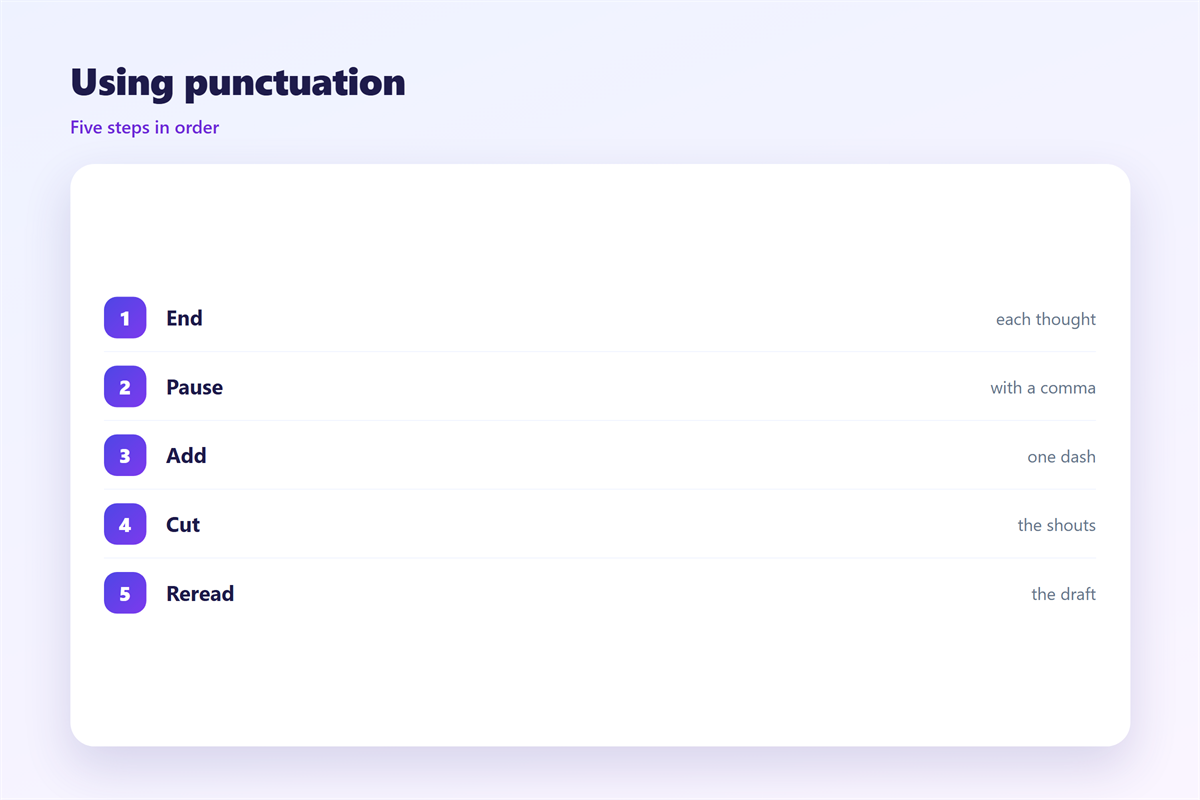
A quiet read will catch most slips. Do it before you hit send.
Start with a pause. Walk away for a minute if you can.
Then read the draft aloud. Your ear hears what your eye skips.
Check the greeting and the closing first. They carry the tone.
Look for stray exclamation marks. Delete all but the one that matters.
Break any sentence that runs past twenty words.
Finally, check the names and the numbers.
Clean 邮件标点 is the last check before sending.
A last pass takes a minute and saves a correction later.
Keeping 邮件标点 consistent
Consistency matters more than any single rule.
Pick a style and hold it across every message.
The habits behind a clean first draft are set out in 邮件撰写.
The final read is described in 邮件校对.
Say the lines in your head to hear the tone. That method is explained in 邮件语气.
Give each idea its own block. The layout is described in 邮件正文.
Then keep a short house style for the whole team.
A team that agrees on 邮件标点 writes faster and reads better.
FAQ
Is 邮件标点 really that important?
Yes. A single mark can change the tone or the meaning of a line.
Should I use exclamation marks at work?
Sparingly. One is enough for a friendly line.
Is a full stop rude in a chat?
Sometimes. In a short chat message it can read as cold.
What about emoji?
Use a few, and match the reader. Silence is safer than a joke.
References
- IETF RFC 5322: Internet Message Format
- Grammarly: Punctuation in email
- The Chicago Manual of Style: Punctuation
评论
还没有评论,来说两句吧。
评论功能已关闭。