 小影邮箱
邮件会后跟进怎么写?After the Meeting Ends
Key Takeaways
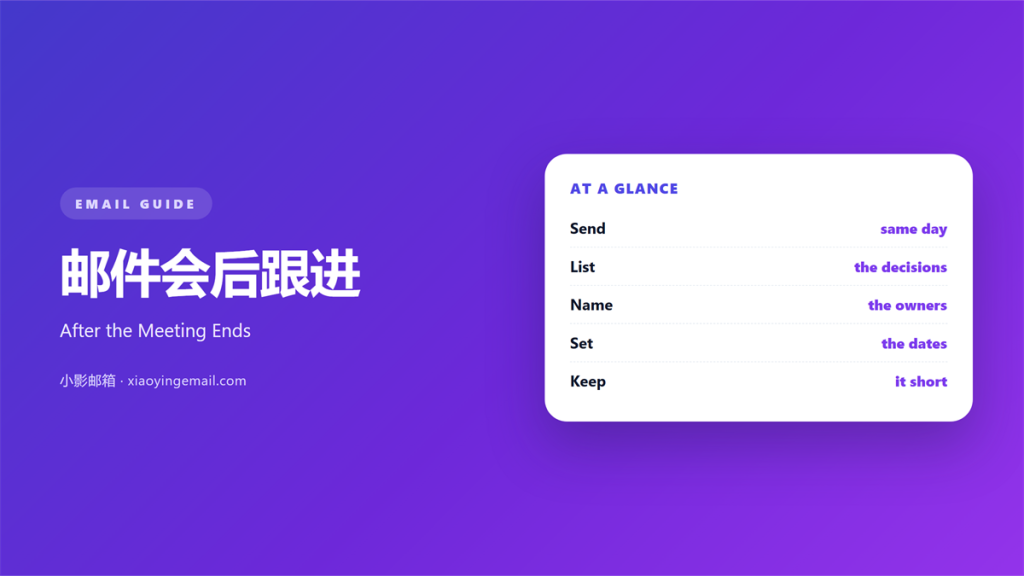
- 邮件会后跟进 turns a spoken meeting into a written record.
- Send the note on the same day, while memory is fresh.
- Name the decisions, the owners, and the dates.
- Keep the tone warm and the request simple.
- One clear note often closes the loop for good.
What 邮件会后跟进 means
邮件会后跟进 is the note you write after a meeting ends.
It records what the group decided and who will act.
The note also gives everyone a shared reference point.
A good one is short and fits on a single screen.
It replaces memory with a small written trail.
Think of it as the receipt for the hour you spent.
Without it, talk drifts and tasks fade away.
With it, the meeting keeps working after the room clears.
That shift is the whole point of the habit.
It also saves the cost of a second meeting.
The note is a small promise kept in writing.
Over time, it becomes a useful project log.
The note is a gift to your future self.
You can trace a decision weeks later.
It protects those choices from being reopened.
Why 邮件会后跟进 matters
People forget most of what they hear.
A spoken promise is easy to misremember.
A written line is harder to argue with.
邮件会后跟进 also protects the quiet people in the room.
Their ideas survive in plain text.
It gives latecomers and absentees the same picture.
And it turns good intentions into a to-do list.
That shift is where real work begins.
A team that follows up well wastes fewer hours.
Fewer hours lost means faster projects.
Trust grows when people see their words recorded.
It also removes the need for endless recap calls.
A short log also helps new joiners catch up.
When to send 邮件会后跟进
Speed matters more than polish in this task.
The best window is a few hours after the meeting.
Same-day notes get read. Next-week notes get lost.
If the meeting runs late, send it the next morning.
Do not wait for perfect minutes.
A rough note today beats a tidy one later.
A quick 邮件会后跟进 keeps the thread alive.
Set a small reminder on your calendar.
Pick a steady habit
Choose one time of day for follow-up notes.
Many people write them right after lunch.
A fixed slot turns the task into a routine.
Routines survive busy weeks. Good intentions do not.
Write the note while the details are still clear.
What to put in 邮件会后跟进
Four items cover most 邮件会后跟进 needs.
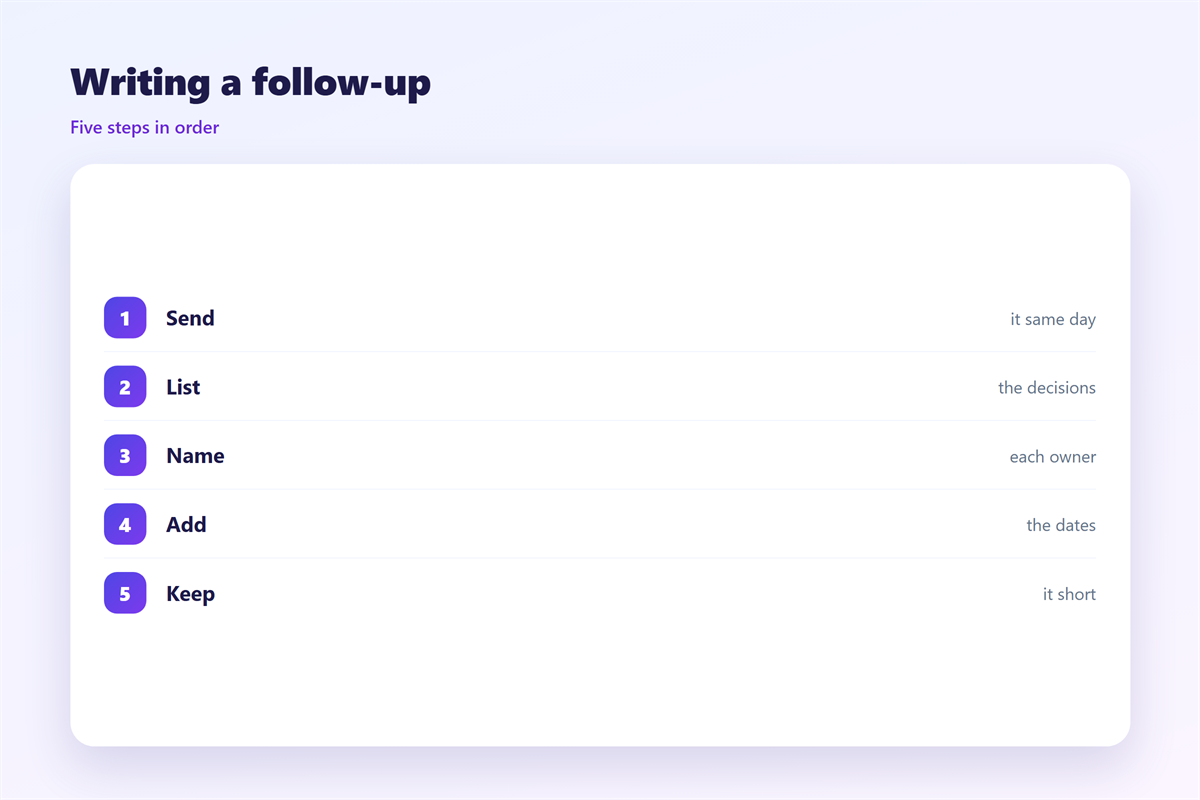
First, one sentence that thanks people for their time.
Second, the decisions, each on its own line.
Third, the owner of each action.
Fourth, the date each action is due.
Add a closing line for questions if the topic is sensitive.
Keep the whole note under two hundred words.
Short notes get read twice. Long notes get skimmed once.
Write in plain language and short lines.
Leave out small talk that adds no value.
A screenshot can help when a layout matters.
Use plain labels
Bold the words Decision, Owner, and Due.
Labels help the eye jump to the facts.
A reader should find an action in seconds.
The same labels work in every note.
Mistakes that sink a follow-up
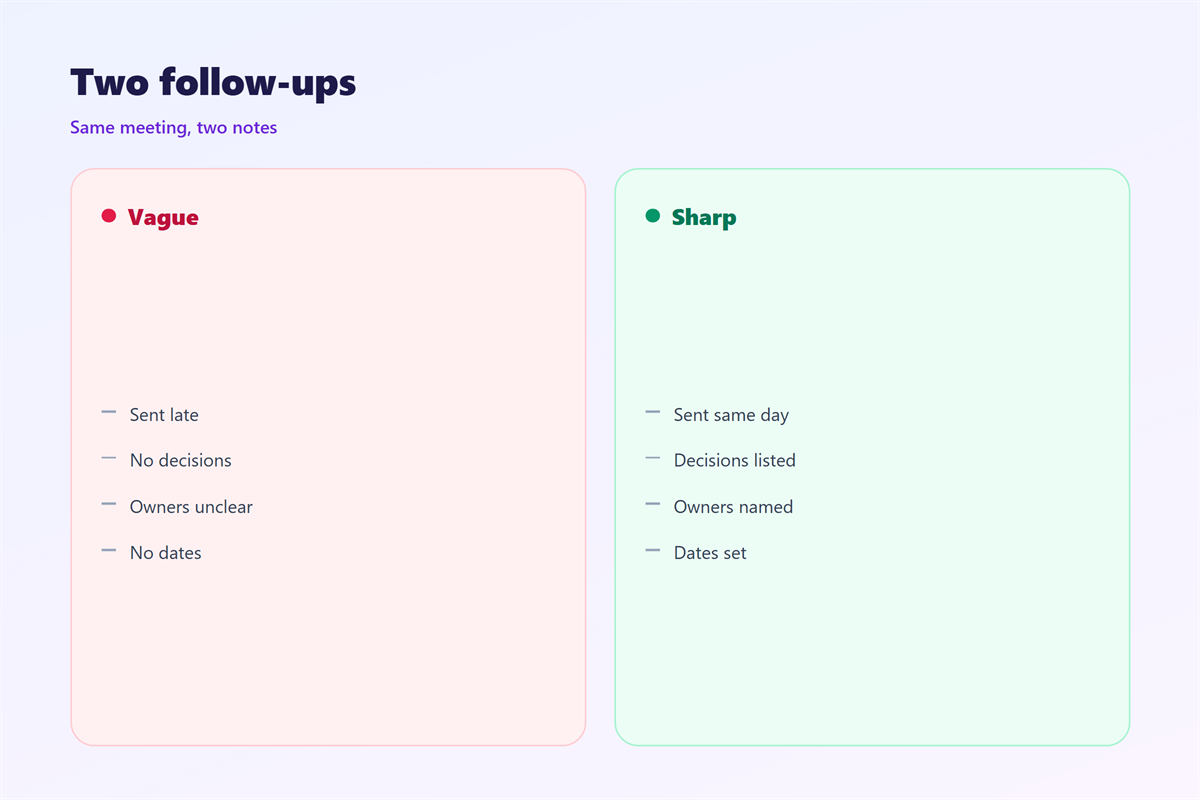
The first mistake is writing a diary, not a summary.
Nobody wants a full transcript in their inbox.
The second is a missing owner. A task without a name stalls.
The third is a vague date, such as soon or later.
The fourth is burying the request in a long paragraph.
Each mistake makes 邮件会后跟进 feel like noise.
A weak note trains people to ignore you.
Fix vague wording
Replace “we should” with “Ana will”.
Replace “soon” with a real calendar date.
Small word swaps remove most confusion.
Read your draft as if you were a stranger.
邮件会后跟进 and tone
The note should sound calm and helpful.
It is a service to the reader, not a summons.
Avoid blame when a target was missed.
State the facts and offer a new date.
Warmth keeps people willing to reply.
A polite 邮件会后跟进 gets faster answers.
Anger gets silence and delay.
Kind words cost nothing and buy goodwill.
A note without a deadline still needs a clear owner.
邮件会后跟进 across teams
Different teams read the same note in different ways.
Engineers want detail. Managers want the outcome first.
Put the summary on top and the detail below.
That order serves both groups at once.
A clear 邮件会后跟进 helps both groups reply.
Copy only the people who need the record.
A focused list keeps the thread easy to scan.
Long cc lists invite slow replies and noise.
Use shared file links instead of heavy attachments.
Keep the subject line short and specific.
Reuse the same subject across the whole thread.
Keeping 邮件会后跟进 consistent
A shared template makes every note feel familiar.
The timing and wording of a polite nudge is covered in 邮件跟进.
The art of a short written record appears in 邮件会议纪要.
The way to agree on a time is explained in 邮件日程.
The habits that keep a tone kind appear in 邮件礼仪.
Agree on a format and use it every week.
A team that shares a format sends better 邮件会后跟进.
The habit then spreads without any extra effort.
Review the format once a season.
FAQ
How soon should I send 邮件会后跟进?
Within a few hours if you can, and never past the next morning.
How long should the note be?
Keep it under two hundred words with one line per action.
Who should receive the note?
Send it to attendees and copy anyone who needs the record.
What if I disagree with a decision?
State your view politely and ask for a short written reply.
评论
还没有评论,来说两句吧。
评论功能已关闭。