 小影邮箱
邮件措辞怎么选?Words That Carry Tone
Key Takeaways
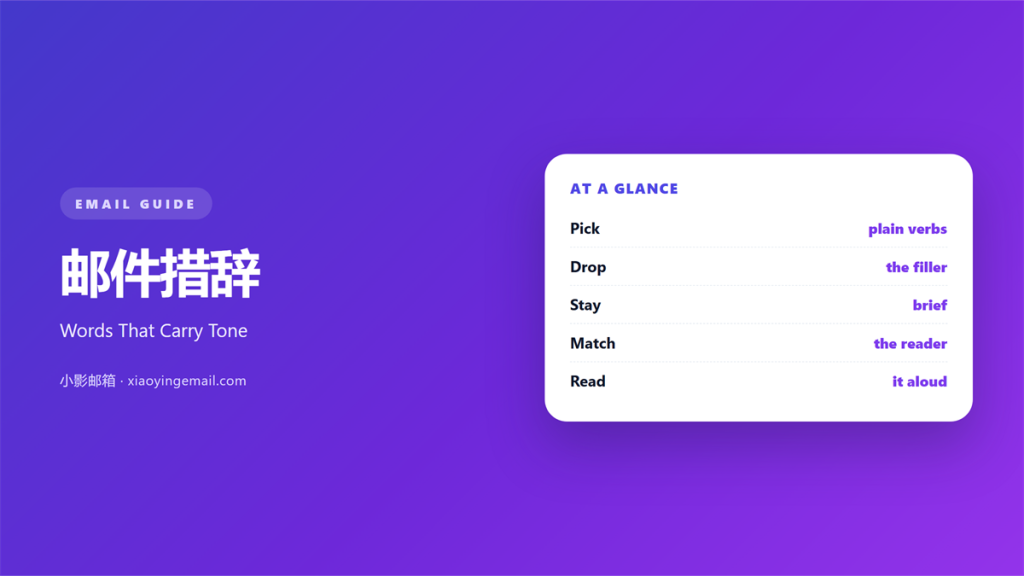
- 邮件措辞 is the set of words you choose to send.
- Plain verbs carry more weight than extra adjectives.
- Cut filler phrases that add length but no meaning.
- Match the tone to the reader and the reason.
- Read the whole note aloud before you send it.
What 邮件措辞 means
邮件措辞 is the exact wording you place in a message.
It is the words, not the layout or the font.
Every word you pick carries a small tone.
Some words sound warm and some sound cold.
The same request can feel polite or rude.
Only the wording changes between those two.
So choose each word on purpose.
A plain verb usually beats a long phrase.
Short words also read faster on a screen.
That speed keeps the reader with you.
So drop the padding and keep the point.
邮件措辞 is a small craft with a big result.
Good wording is invisible when it works.
Why 邮件措辞 matters
Words set the tone of the whole message.
A cold phrase can undo a warm opening.
A kind phrase can soften a firm request.
The reader hears your words as your voice.
Good 邮件措辞 keeps that voice steady.
It also removes doubt about your meaning.
Vague words make the reader guess.
Clear words let the reader act at once.
That speed is worth more than polish.
So wording is not decoration.
It is the core of the message.
A careless line can start a small argument.
Words are the only tool you truly control.
A careful line can prevent a needless reply.
Plain words or filler
Filler phrases take space but say little.
“I just wanted to” adds nothing useful.
“Basically” and “actually” rarely earn a place.
Cut them and the sentence grows stronger.
When 邮件措辞 helps
Careful wording helps in almost every case.
Use it for a first note to a stranger.
Use it for a request you really need.
Use it when the news is bad.
Use it when you must say no.
Each case rewards a calm and plain voice.
The reader feels respected and stays calm.
Good wording also protects the relationship.
邮件措辞 on a busy day
A busy day tempts you to type fast.
Fast typing brings clipped and blunt words.
One extra second saves a long repair.
Reread the hard lines before you send.
When 邮件措辞 hurts
Loose wording hurts in a few ways.
A harsh word can end a good thread.
A vague word can create a wrong task.
Heavy jargon can shut a reader out.
Sarcasm almost never survives an email.
Irony often reads as anger on a screen.
So avoid phrases that need a face.
Keep the wording plain and kind.
The reader should never have to decode you.
The short-verb rule
Pick the shortest verb that fits.
“Decide” is better than “make a decision”.
“Help” is better than “provide assistance to”.
Shorter verbs read faster and land harder.
邮件措辞 in plain text
Plain text strips away every style cue.
No bold and no colour survive the trip.
Only your words carry the tone.
So the wording must do all the work.
Emoji help a little and can misfire.
Use them rarely and only when safe.
A calm word beats a smiling face.
Write as if the reader sees plain text.
If it still sounds kind, it is well written.
The plain version is the real version.
Test every tone against that plain view.
How to choose 邮件措辞 well
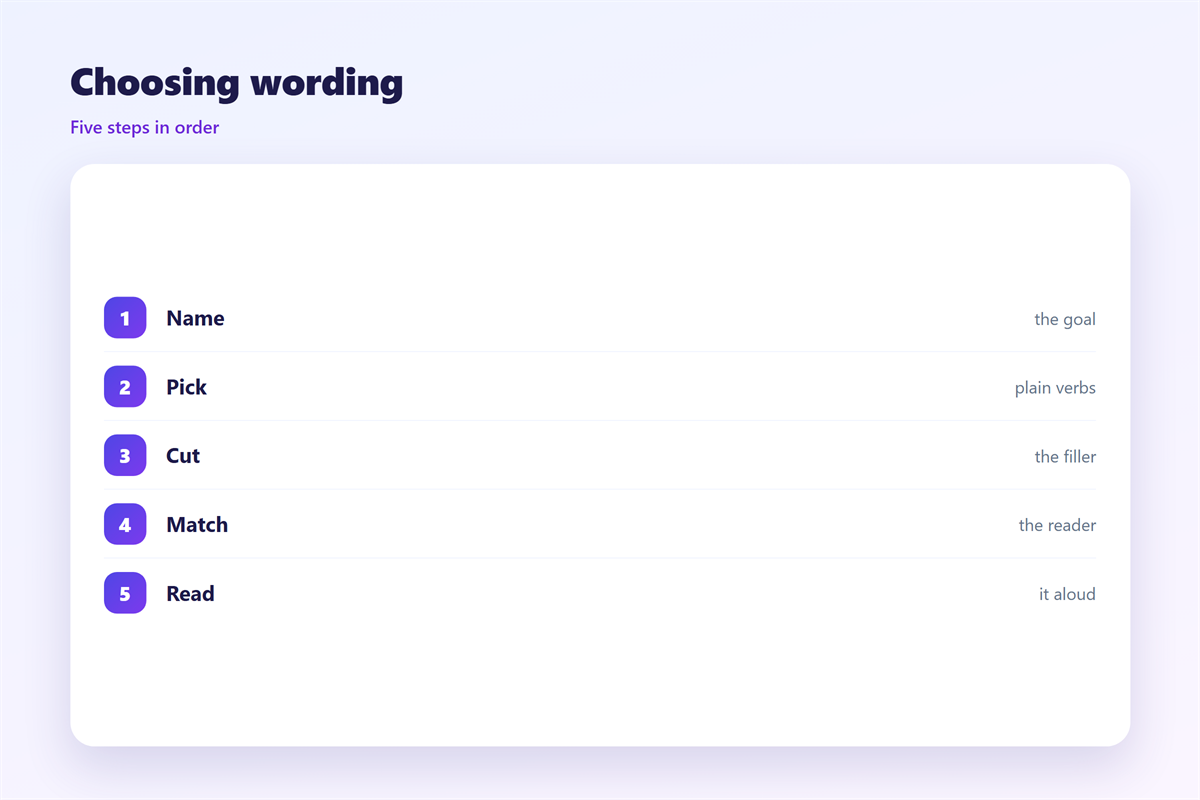
Write the message as one quick draft.
Then read it aloud.
Where you stumble, the reader will too.
Cut every word that does not earn a place.
Replace a long phrase with one verb.
Keep one idea in each sentence.
Use “please” once, not in every line.
State the ask in plain and short words.
Close with a simple and honest line.
A good 邮件措辞 sounds like you at ease.
The reader never notices the craft behind it.
Next, check the tone on a second read.
If a line could sting, soften it.
If a line is vague, make it exact.
Aim for words that are clear and kind.
邮件措辞 and tone
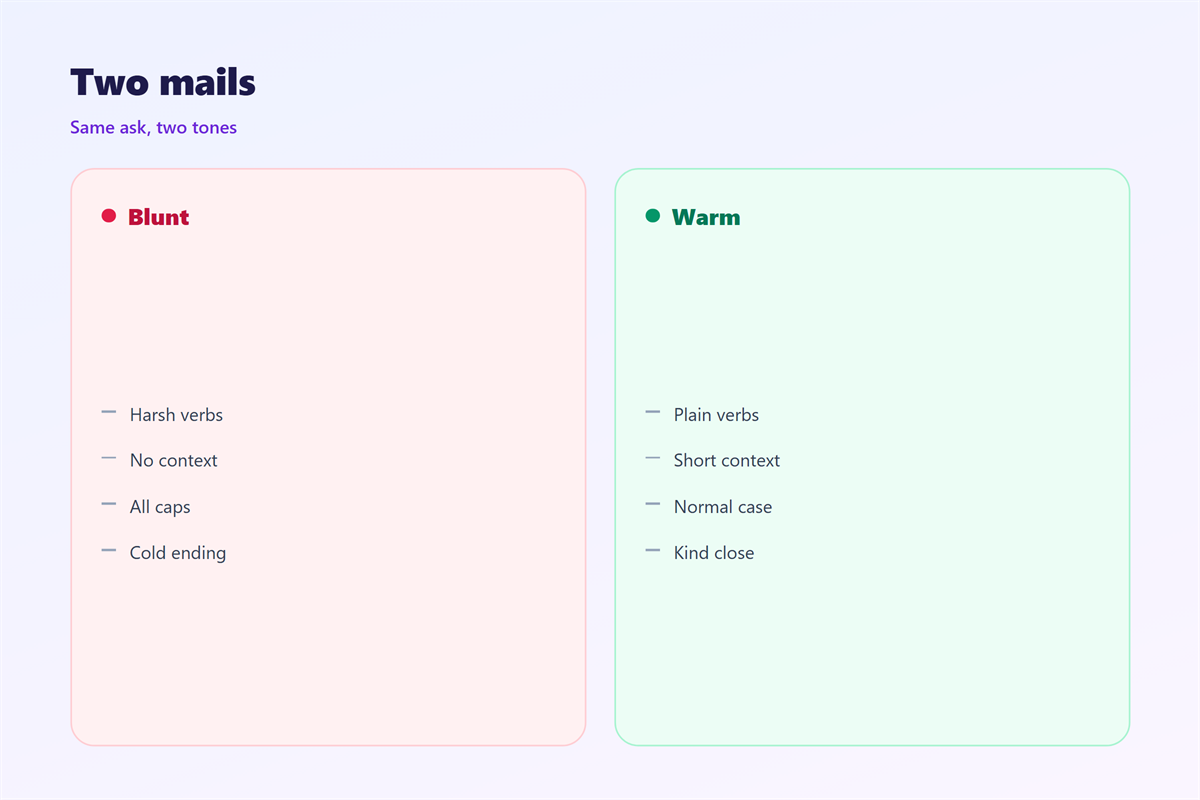
Words carry the tone of a whole note.
The same facts can feel calm or cold.
A soft verb lowers the reader’s guard.
A blunt verb raises it at once.
So pick a tone and hold it steady.
Use words that fit the reader and the job.
A warm word and a clear ask can share one line.
Tone is a choice, not an accident.
Read the note as the reader would.
Then adjust the words until it lands.
Keeping 邮件措辞 consistent
Consistency turns good wording into a habit.
Pick a house voice and hold it across the team.
The formal, neutral and warm styles appear in 邮件语气.
A set of reusable lines lives in 邮件话术.
The plain courtesies are gathered in 邮件礼貌用语.
The words of respect are listed in 邮件敬语.
Agree on a few phrases the team may reuse.
Then keep the same voice for every message.
A team that agrees on 邮件措辞 writes clearer mail.
FAQ
What is good 邮件措辞?
Choose plain verbs, cut the filler, and match the tone to the reader.
Does 邮件措辞 change with the reader?
Yes. A stranger needs more warmth, a close colleague needs less.
Should I use jargon in a technical team?
Only when everyone shares it. Otherwise spell the term out.
Can a short note still sound polite?
Yes. Plain words plus one sincere “thank you” is plenty.
评论
还没有评论,来说两句吧。
评论功能已关闭。