 小影邮箱
邮件委婉怎么说?Saying No With Grace
Key Takeaways
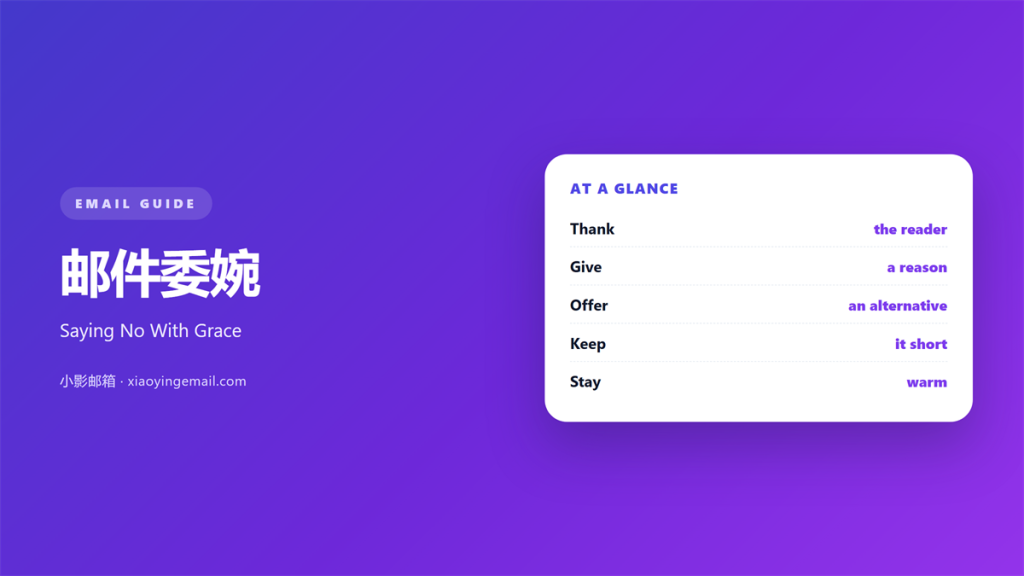
- 邮件委婉 is a gentle way to say no.
- It keeps the door open for next time.
- Give a short reason, not a long story.
- Offer one alternative if you can.
- Thank the reader for thinking of you.
What 邮件委婉 means
邮件委婉 is the art of refusing without harming the bond.
It softens a no without hiding it.
The reader still learns the answer.
But the words feel calm and kind.
So the door stays open for later.
It is not the same as a vague reply.
A vague reply avoids the answer.
A tactful one gives the answer.
It just wraps it with care.
The message is clear and the tone is warm.
Both parts matter equally.
Drop either one and it fails.
So keep the meaning and the manner.
That balance is the whole skill.
It respects both the answer and the person.
That is why people rehearse it.
A few good lines are enough to learn.
Why 邮件委婉 matters
A request arrives with a person behind it.
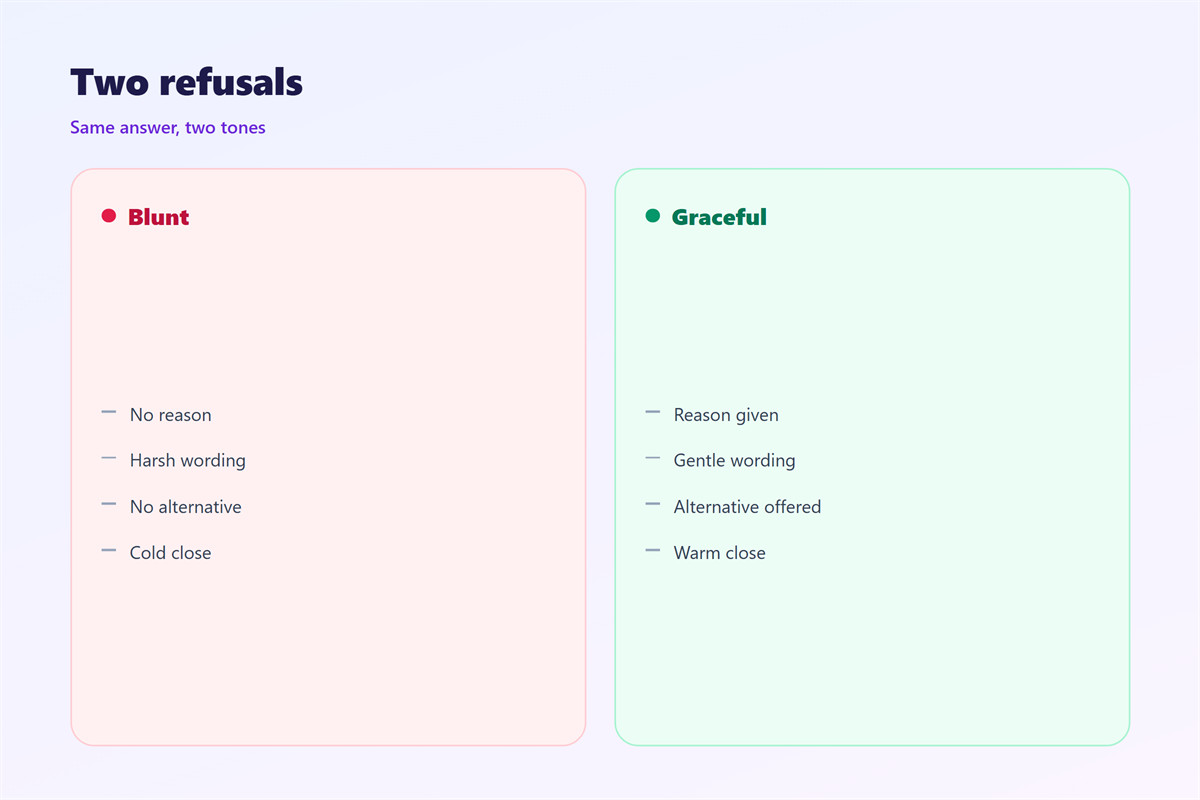
A blunt no can sting.
It may end a useful contact.
A kind no keeps the contact alive.
The person may ask again later.
Or they may send you a better offer.
So a soft answer pays over time.
It also protects your own name.
People remember how you refused them.
They rarely recall the exact words.
They recall the feeling that stayed.
So a little 邮件委婉 protects the relationship.
A kind refusal also sets a precedent.
Others see how you treat people.
That shapes how they treat you.
Warm, clear or firm
A warm no suits a close colleague.
A clear no suits a normal working peer.
A firm no suits a repeated request.
Pick the tone that fits the history.
When 邮件委婉 helps
邮件委婉 helps when you must decline a request.
It helps when the answer is no for now.
It helps when the price is simply too high.
It helps when your calendar is already full.
It helps when you must protect your team.
It helps when a client asks for a discount.
It helps when a friend wants a favour.
In all these cases, the bond matters too.
So the no has to carry both facts.
The facts are the answer and the respect.
A kind line holds them together.
That is what makes the refusal work.
It helps when the timing is simply wrong.
It helps when your budget is fixed.
It helps when another person fits better.
The soft no
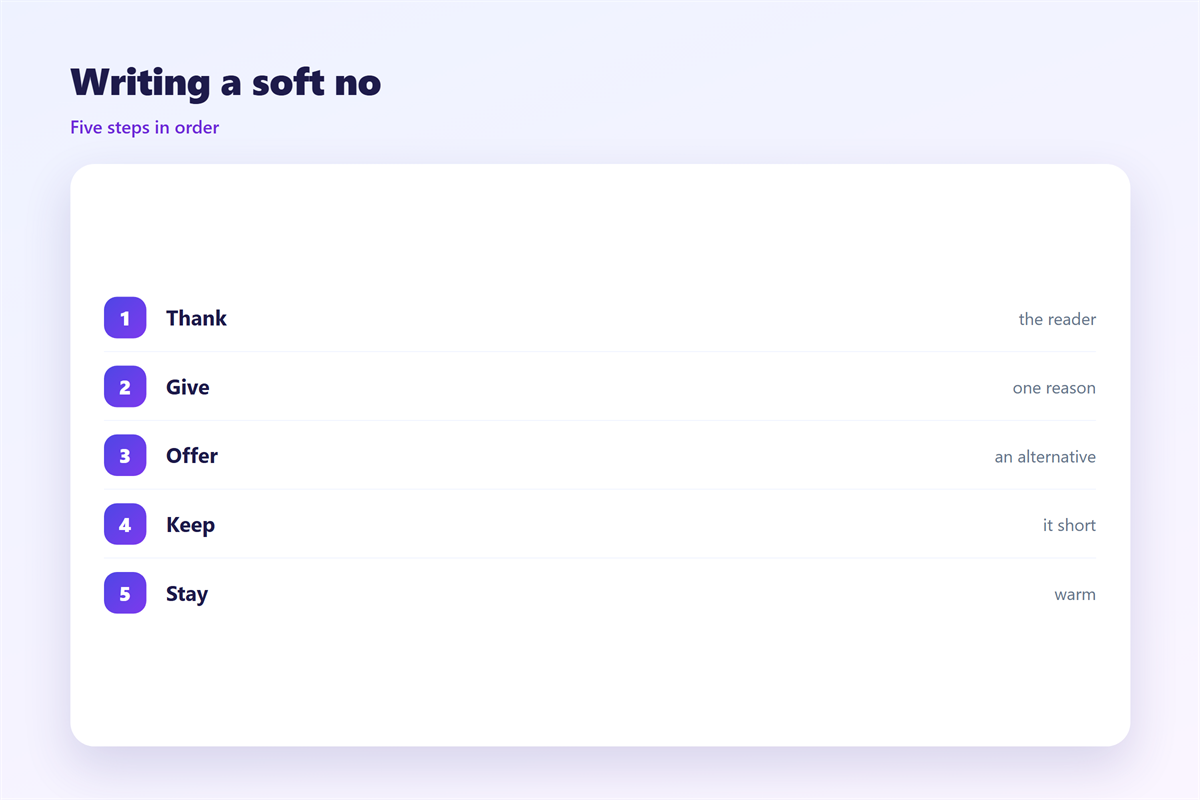
Start with a short thanks.
Then state the no in one line.
Add one honest reason.
Close with a warm sign-off.
When 邮件委婉 hurts
邮件委婉 hurts when the reader needs a clear answer.
A soft no can read as a hopeful maybe.
Then the person waits for weeks.
That wastes their time and yours.
It hurts when you pad the note.
Long excuses sound like a lie.
It hurts when you blame the reader.
Never hint that their request was silly.
It hurts when you promise too much.
A false hope is worse than a no.
So be gentle and be exact.
The two are not in conflict.
It hurts when the reader is under pressure.
They need a fast and clear answer.
Slow softness only adds to their load.
When a plain no is kinder
Sometimes a direct line helps more.
A hiring rejection needs a fast, clear note.
A safety issue needs a firm answer.
In those cases, drop the padding.
邮件委婉 in practice
Answer within a day or two.
Do not leave the request hanging.
Open with a thank-you for the ask.
Then give the answer in plain words.
Add one short reason if it helps.
Offer an alternative when you can.
Maybe a smaller task or a later date.
Then close with a warm line.
Read the note once for tone.
Check that the no is unmistakable.
If it is clear and kind, send it.
That note serves both people well.
Keep a few phrasings close at hand.
Then you reply while the request is fresh.
A quick, kind answer earns trust.
How to write 邮件委婉
Choose one reason and keep it simple.
Do not stack three excuses in a row.
Use the word no once, near the top.
Then shift to what you can offer.
A small yes softens a large no.
You might suggest a different colleague.
Or a date that works for you both.
Keep the note short and warm.
Then proofread it for a cold phrase.
One cold line can undo the rest.
So soften it or cut it out.
The reader should feel respected, not rejected.
邮件委婉 and the reader
Every reader reads a no in their own way.
Some want the answer first.
Some want the warm words first.
A good note serves both.
Lead with thanks, then the answer.
That order feels kind and clear.
Watch the reply you get.
A calm reply means you got it right.
A hurt reply means you should adjust.
Then reuse the wording next time.
A kind template saves daily effort.
It also keeps your tone steady.
Keeping 邮件委婉 steady
A steady tone is easy to reuse.
The sound of the whole note is covered in 邮件语气.
The plain refusal itself appears in 邮件拒绝.
The gentle follow-up sits in 邮件催促.
The everyday courtesies are explained in 邮件礼貌用语.
Save two or three kind phrasings.
Review them once a year.
A team that agrees on 邮件委婉 writes kinder mail.
FAQ
How do I write 邮件委婉 to a client?
Thank them, give the answer, and offer options.
Is a short no rude?
No. A clear short note can still be warm.
Can 邮件委婉 work in a short note?
Yes. Brevity and kindness go well together.
Should I explain my reason?
Give one honest line, then move on.
评论
还没有评论,来说两句吧。
评论功能已关闭。