 小影邮箱
邮件总结怎么写?Wrapping It Up
Key Takeaways
- 邮件总结 is the short close of a long exchange.
- List what changed, what is next, and who acts.
- Send it to everyone who was part of the thread.
- Keep the facts and drop the side comments.
- A good summary lets the thread end quietly.
What 邮件总结 means
邮件总结 is a short message that closes a discussion. It states the result and the next step.
It is not a transcript. It is the useful part of one.
A summary can be five bullets and one line of thanks.
It should stand alone without the earlier messages.
That is the real test of a good close.
If a reader must scroll up, the note is incomplete.
Most people write summaries from memory, which hides gaps.
Keep the thread open beside the draft.
Then check each fact against the source.
Why 邮件总结 matters
Long threads hide their own outcome.
People remember the last message, not the decision.
A short summary fixes that gap.
It gives the team one version of the facts.
That shared version prevents later disputes.
It also gives quiet readers a chance to correct you.
Silence after a summary usually means agreement.
That silence is useful, but only if you ask for it.
Teams also read the summary months later.
It becomes the first place a new member looks.
That makes the note part of the record, not just a reply.
The cost of an open thread
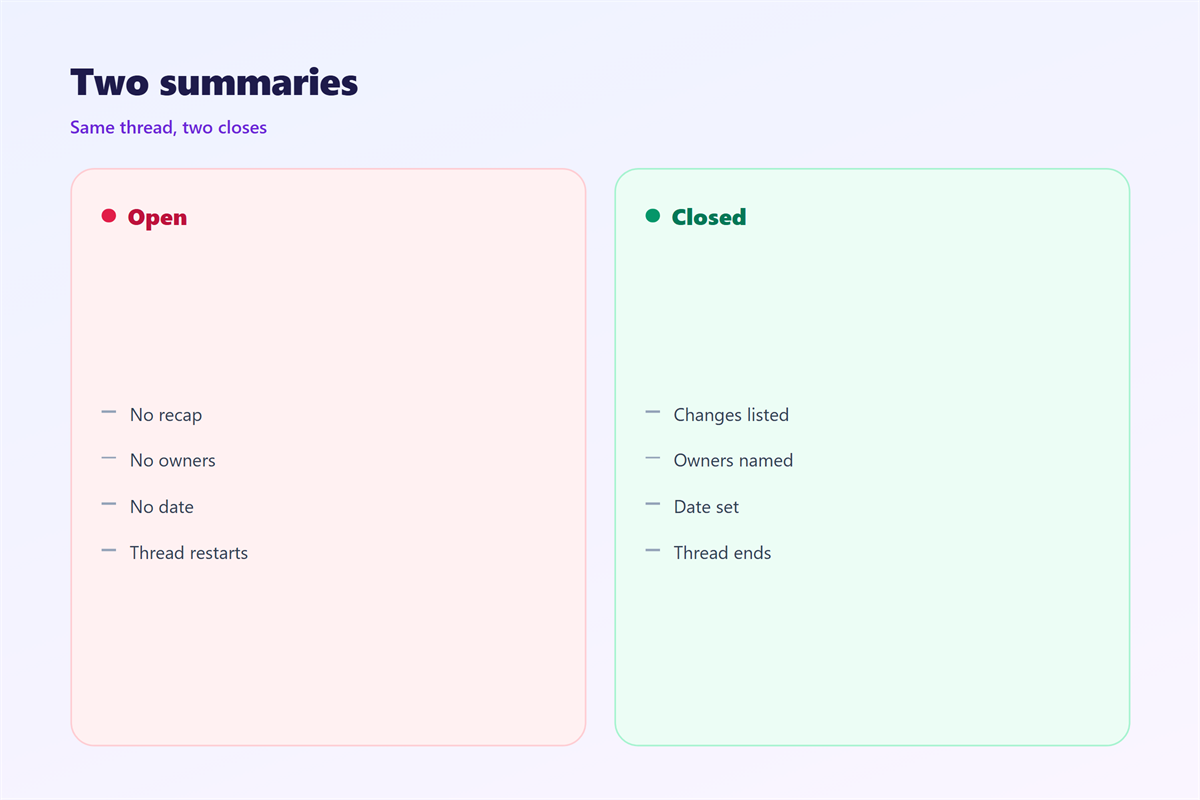
A thread with no close keeps pulling people back.
Each new reply adds noise and loses a detail.
One clear summary stops that drift.
When 邮件总结 helps
邮件总结 helps when a decision has just been made.
It helps when several people spoke in one thread.
It helps when a client needs a record of the call.
It also helps when a task moves to a new owner.
Each case needs the same three facts.
It helps when a long call produced several small tasks.
It helps when two teams left with different impressions.
Three facts to include
What changed, what comes next, and who owns it.
Add a date when the next step has a deadline.
Leave out praise, blame, and old arguments.
When 邮件总结 hurts
邮件总结 hurts when it arrives too early.
A half-finished debate cannot be summarised well.
It hurts when the writer adds a new opinion.
A summary should report, not reopen the question.
It also hurts when the list is too long.
Ten bullets turn a close into another task.
And a summary sent to the wrong people creates confusion.
Check the recipient list before you send.
A summary that arrives before the facts is just a guess.
Wait for the missing reply before you write.
邮件总结 and structure
Structure makes the close easy to trust.
Open with one line that names the outcome.
Then use bullets for the changes.
Group them by topic, not by speaker.
End with the owner and the date.
A good 邮件总结 names the one number people will quote.
Keep the first block to two sentences.
A short opening is easier to quote in later threads.
The three-block close
Block one: the decision.
Block two: the actions.
Block three: the next check-in.
That shape works for a team note or a client update.
How to use 邮件总结 well
Write the summary while the thread is still fresh.
Read the last ten messages before you start.
Copy only the facts you can confirm.
Use the same words the group used.
Then name the owner of each action.
If an owner is unclear, ask before you send.
Keep the tone neutral and the length short.
Then invite one correction at the end.
Put the summary in the same thread when you can.
That keeps the context and the record together.
A short template
Start with “Here is what we agreed”.
Then list three to five bullet points.
Close with “Reply if anything is missing”.
That last line turns a monologue into a check.
邮件总结 at the end of a project
Projects end with a lot of small decisions.
A final summary gathers them in one place.
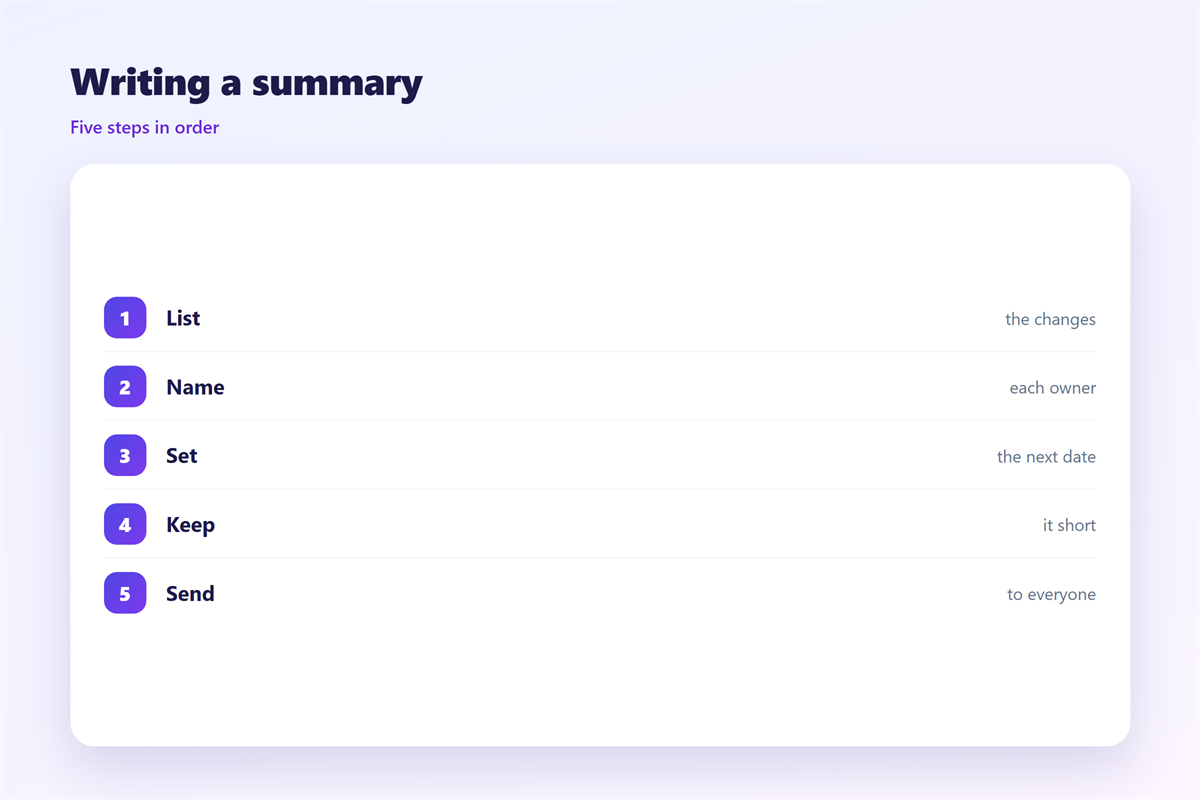
List the result, the date, and the people involved.
Then add the lessons that will change next time.
Keep those lessons to two or three lines.
A long lesson list is rarely read twice.
File the summary with the project documents.
Then link it in the closing message.
Ask the team for one correction before you file it.
Then send the final version to the whole group.
What to leave out
Skip the play-by-play of every meeting.
Skip personal notes and jokes.
Keep the facts that a future reader will need.
That reader may join the team next year.
Keeping 邮件总结 consistent
Consistency makes summaries faster to read.
Agree on the three-block shape for the team.
Agree on a subject prefix such as “Summary:”.
Agree on how soon a close should go out.
The status update format is covered in 邮件汇报. The review habit appears in 邮件复盘. The personal report is explained in 邮件述职. The short digest sits in 邮件摘要.
Then save two good examples in the team folder.
A shared shape makes 邮件总结 quicker for everyone.
FAQ
Is 邮件总结 only for long threads?
No. Even a short exchange benefits from a clear close. One line is often enough.
Who should send the summary?
The person who called the meeting or started the thread. That choice is rarely a surprise.
How many bullets should 邮件总结 have?
Three to five is a good range. More than that needs a separate document.
Should I include the original messages?
No, just the facts. A link to the thread is enough for anyone who needs detail.
评论
还没有评论,来说两句吧。
评论功能已关闭。