 小影邮箱
邮件口碑怎么积累?Word of Mouth by Mail
Key Takeaways
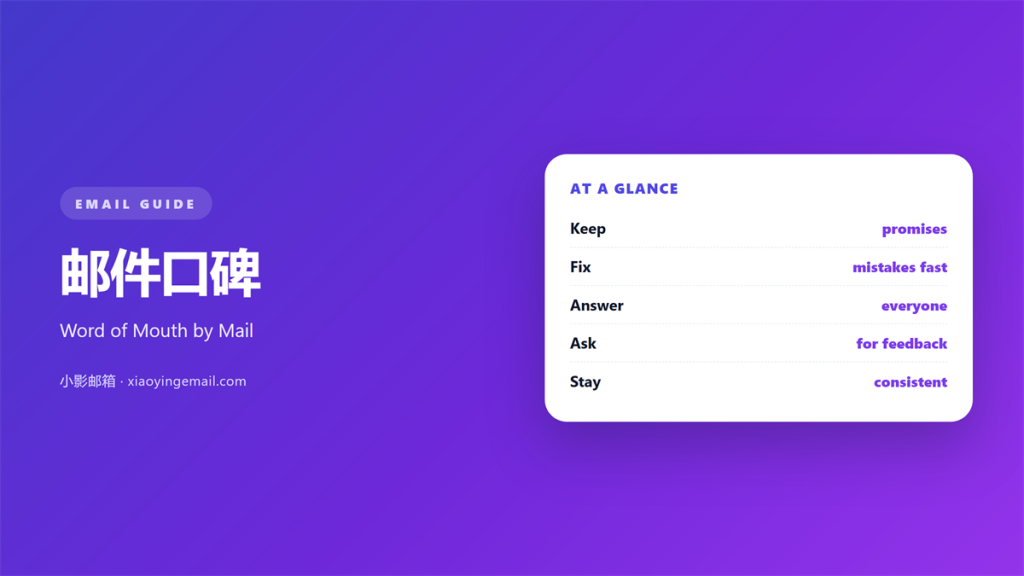
- 邮件口碑 is what readers say about you after a message.
- It grows from kept promises, not clever copy.
- One fast fix can outweigh one bad day.
- Ask for feedback before you need it.
- Let happy readers speak in their own words.
What 邮件口碑 means
邮件口碑 is the reputation your mail leaves behind.
It travels in replies, forwards, and quiet recommendations.
You never see most of it.
A reader who trusts you tells one friend.
A reader who feels tricked tells five.
The difference is built long before the sale.
It comes from the sender name people recognise.
It comes from a promise kept on time.
邮件口碑 is slow to build and quick to lose.
That imbalance is the whole reason to guard it.
Goodwill is the raw material.
Every reply either adds to it or takes some away.
It is earned in ordinary weeks.
It is spent in a single careless send.
Why 邮件口碑 matters
People believe other readers more than ads.
A forwarded note carries a friend’s endorsement.
That endorsement costs you nothing.
It also arrives at the perfect moment.
Reputation lowers the cost of every send.
Readers open mail from names they trust.
They forgive a late delivery from a known firm.
邮件口碑 also protects you in a crisis.
A list that trusts you waits for the fix.
A list that does not simply leaves.
The same logic applies to every market.
A known name is easier to recommend.
Trust is measured in seconds
A familiar name buys a second of attention.
That second is where every sale starts.
When 邮件口碑 helps
邮件口碑 helps when a reader shares a note.
A good offer reaches people you never mailed.
It helps when a mistake is fixed fast.
One honest apology can turn a critic around.
It helps when you ask for a favour.
Most readers will help a sender they like.
The favour should be small and specific.
One sentence is easier to give than a long review.
A short line also fits a busy day.
A reader who shares once often shares again.
Ask at the right moment
Ask right after a delivery lands well.
Ask right after a problem is solved.
Do not ask in the middle of a complaint.
When 邮件口碑 hurts
邮件口碑 hurts when the promise slips.
A late order with no note feels like a lie.
It hurts when replies go unanswered.
Silence tells the reader they do not matter.
It also hurts when feedback is collected and ignored.
A survey with no follow-up breeds contempt.
Nobody likes to be asked and then forgotten.
Finally, never buy a good review.
Readers can spot praise that was paid for.
The damage spreads further than the price.
邮件口碑 and trust
Trust is a balance of small moments.
Each send adds a little or takes a little.
The balance is hard to rebuild once broken.
邮件口碑 grows from the ordinary weeks.
It is not built by one brilliant campaign.
A quiet month with good service does more than a launch.
Say what will happen next
Name the date and then meet it.
If the date moves, write before it does.
A warning is a promise you can still keep.
Readers remember the warning and the reason.
That memory is worth more than speed.
A slow honest answer beats a fast excuse.
How to use 邮件口碑 well
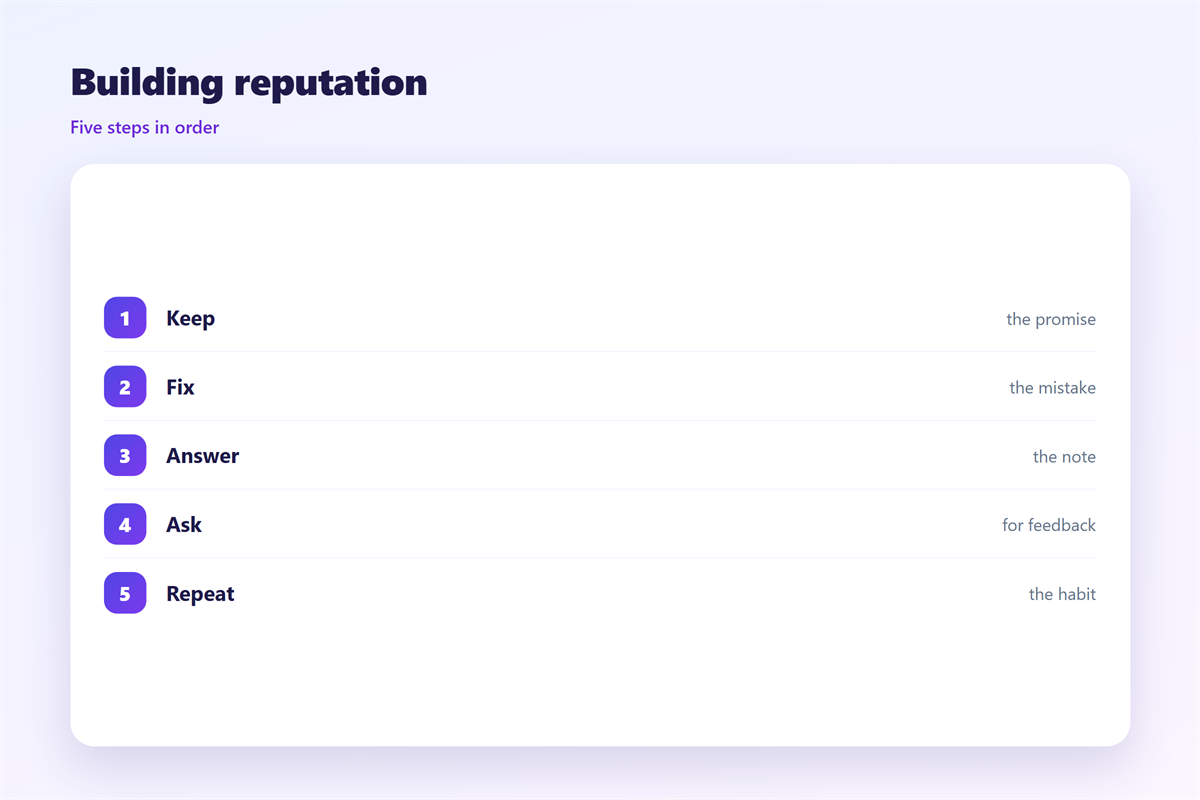
Start by writing plainer mail.
Say what you will do and by when.
Then do it without being asked.
Add one easy way to reply.
A single question beats a long form.
Then act on the answer within a week.
Ask happy readers for a short line.
邮件口碑 spreads faster when it has words to carry.
Keep those words in your own file.
Read them before writing a new campaign.
They will remind you what readers value.
Pick the plainest line and use it.
Then check it against the next send.
One question, one week
Ask one clear question per message.
Give a week for the answer to arrive.
Then report back what changed.
Readers who see action become advocates.
邮件口碑 after a mistake
Every list meets a bad day.
The reply decides what happens next.
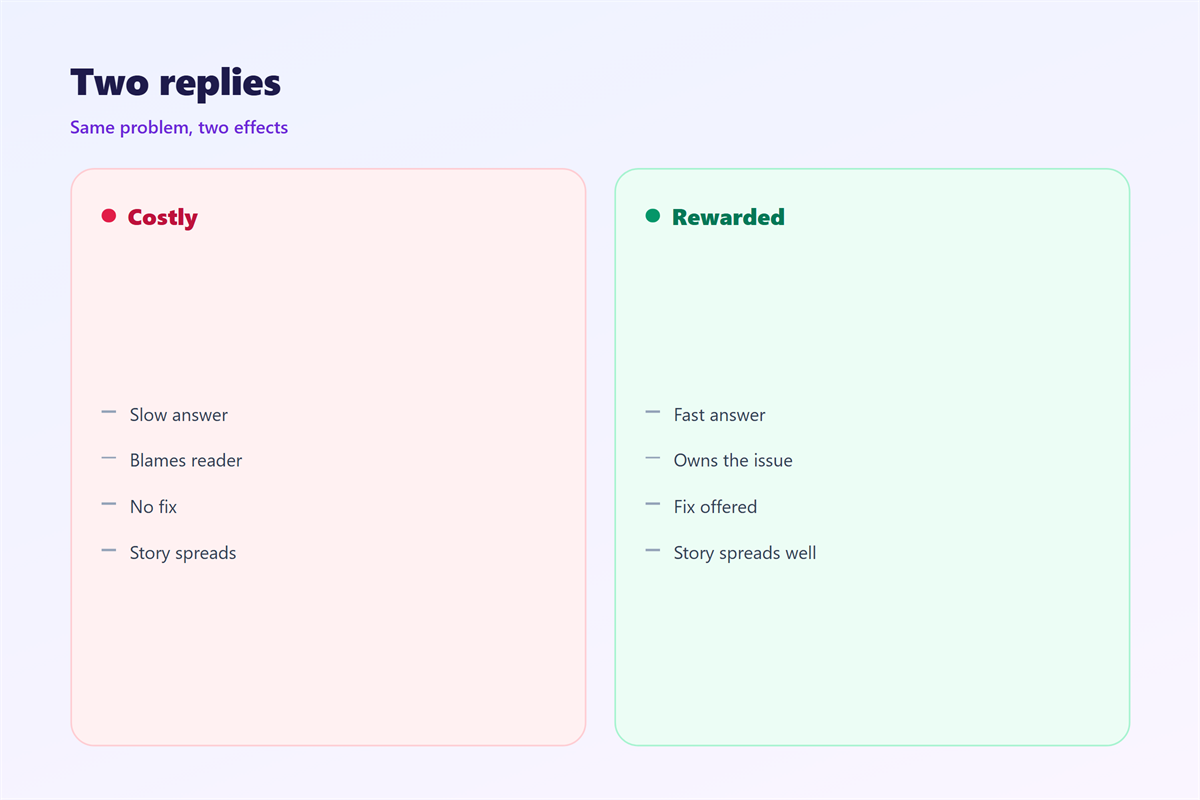
Write the apology within one working day.
Name the problem in plain words.
Say what you are doing about it.
Give a date for the fix.
Do not blame a system or a supplier.
邮件口碑 survives mistakes that are owned.
It rarely survives excuses.
Follow up when the fix is done.
The second note matters as much as the first.
Keep both notes short and free of polish.
Readers forgive a fault that is named early.
They remember how the reply felt.
Keeping 邮件口碑 honest
Reputation is borrowed trust, returned slowly.
Only mail people who asked to hear from you.
Make it easy to leave the list.
A clean exit protects the name.
The sharing side lives in 邮件分享率 and the ask itself sits in 邮件推荐信. The survey is covered in 邮件满意度调查, and the care work appears in 邮件客户关怀.
Then keep one file of promises and dates.
Review it every month.
A kept promise is the cheapest ad you own.
FAQ
How fast should a complaint be answered?
Within one working day. A short holding note is better than silence.
Should I offer a reward for sharing?
Sometimes. A small thank-you is fine. Paying for praise damages real goodwill.
Can a small list build word of mouth?
Yes. Small lists share more per reader. Ask directly and reply fast.
What if a review is unfair?
Answer once, calmly. Correct the facts without attacking the writer.
评论
还没有评论,来说两句吧。
评论功能已关闭。