 小影邮箱
邮件配额怎么管?Quotas Without Surprises
Key Takeaways
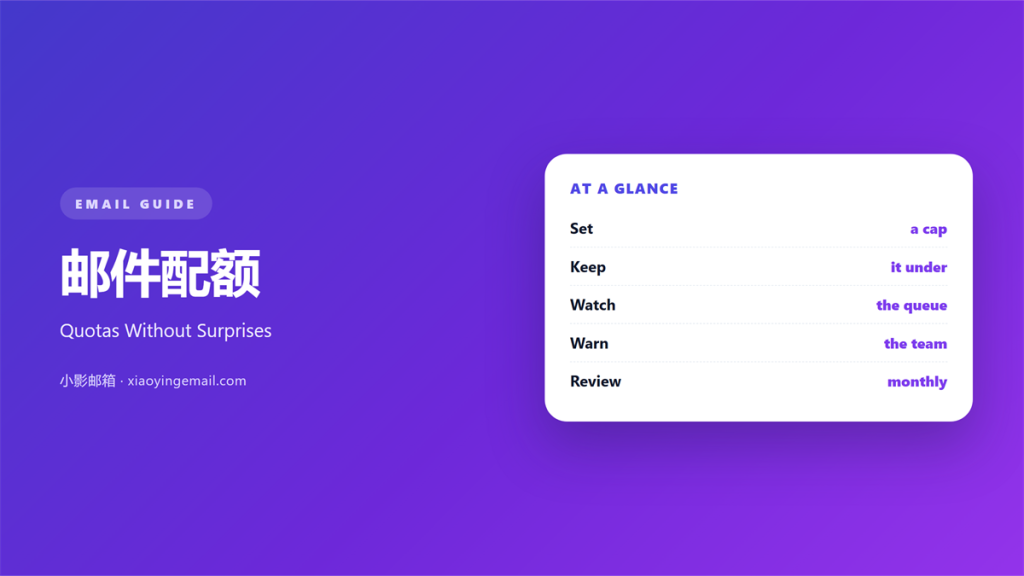
- 邮件配额 caps how much one sender may push out.
- A quota is a limit you set, not a goal.
- Keep the cap below the provider ceiling.
- Watch the queue for spikes after every change.
- Review the numbers once a month.
What 邮件配额 means
邮件配额 is the maximum amount of mail one sender may push out.
It can count messages, recipients, or both.
Providers publish their own hard limits.
Your quota should sit well below that ceiling.
The quota belongs to the account, not the campaign.
That difference matters when several teams share one domain.
One busy team can spend the whole allowance.
Then every other team waits until the window resets.
A clear 邮件配额 makes that trade visible.
Without it, the loudest team wins by default.
Why 邮件配额 matters
A quota protects the reputation of the sending domain.
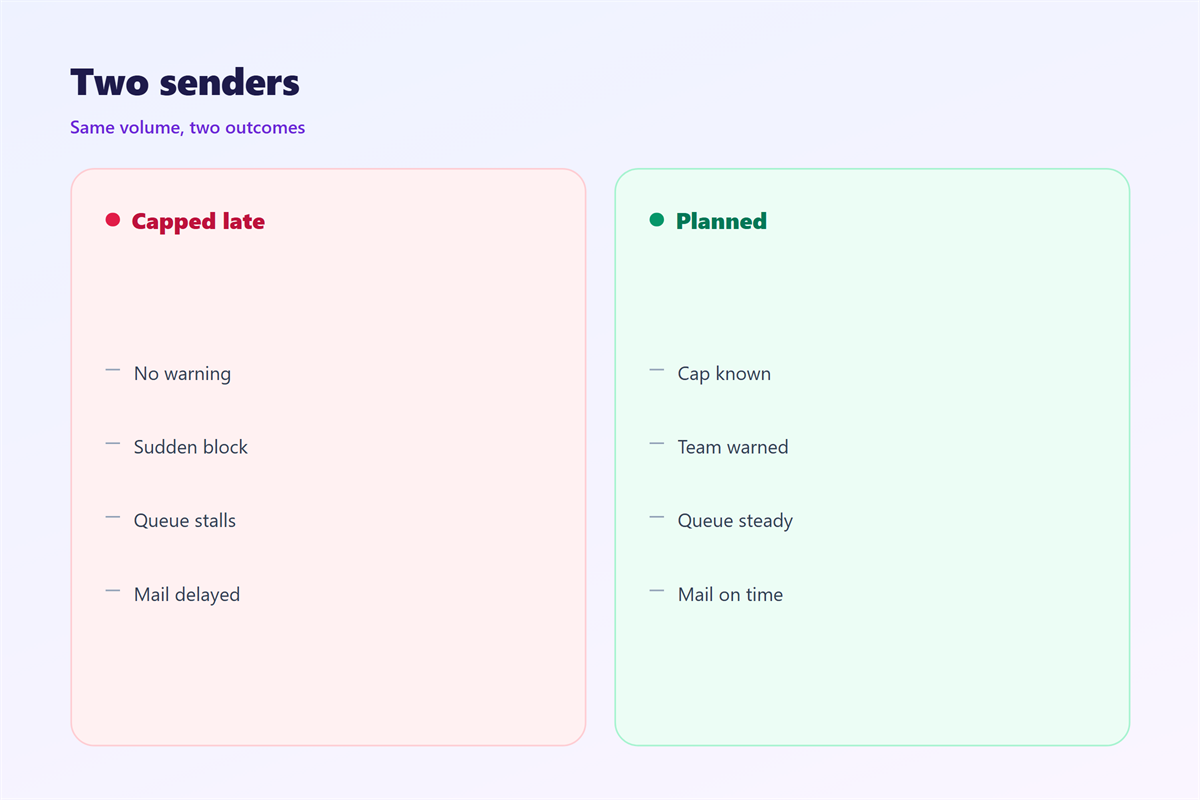
Sudden volume looks like abuse to a mailbox provider.
Providers slow or block mail that arrives too fast.
A quota forces the sender to plan ahead.
Planning turns a burst into a steady stream.
It also makes cost predictable for the finance team.
Most platforms charge by volume or by contact.
A fixed cap keeps the monthly bill inside the budget.
Finally, a quota gives support a clear answer.
When a campaign stalls, you can show the limit.
That beats guessing why the mail did not go out.
When 邮件配额 helps
邮件配额 helps when several teams share one sending account.
It helps during a launch that could spike overnight.
It also helps when a new list arrives from a partner.
A fresh list can double the daily volume in an hour.
A quota catches that jump before the provider does.
The cap is useful again during a holiday campaign.
Everyone wants the same slot, and the cap sorts it.
Set the cap from last month
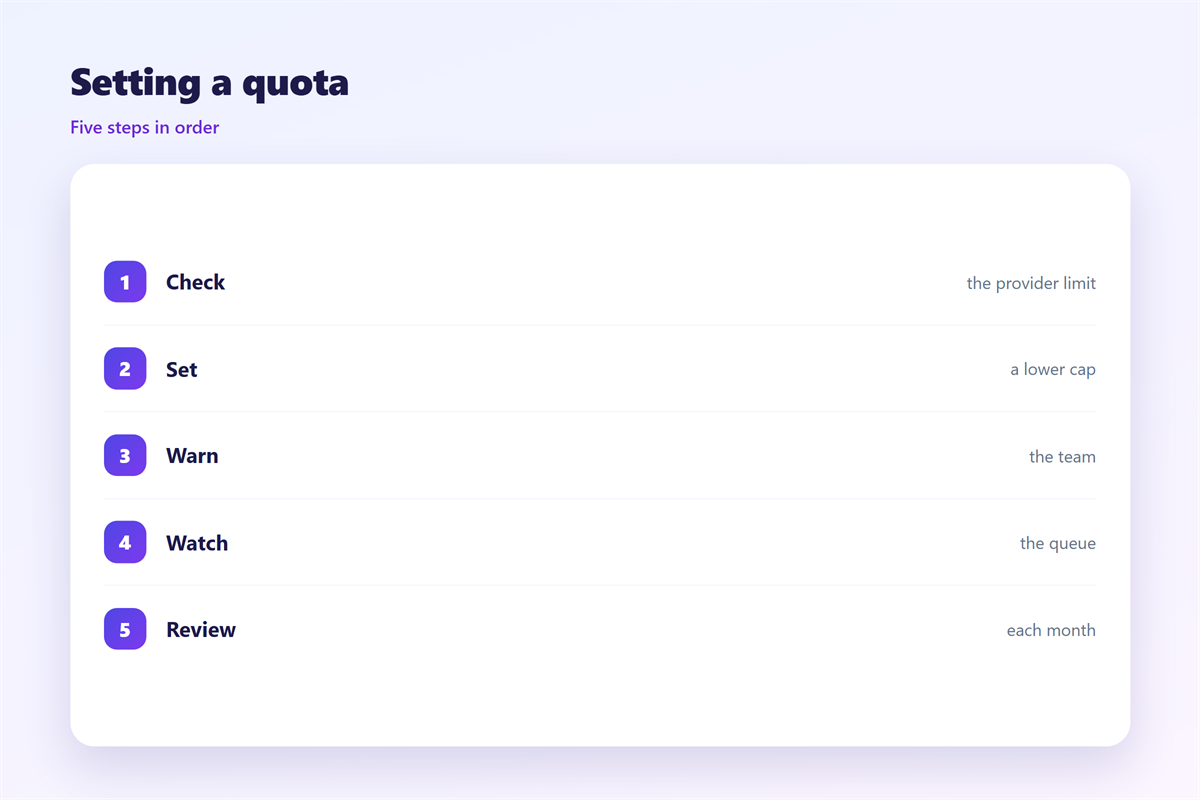
Start with the volume you actually sent last month.
Add a small margin for growth, perhaps ten percent.
Do not set the cap from the plan you hope to reach.
Hope is not a measurement, and the provider agrees.
Write the number down where the team can see it.
When 邮件配额 hurts
邮件配额 hurts when it is set once and never reviewed.
A stale cap blocks growth that the domain has earned.
It also hurts when the cap is too tight to finish a send.
Half a campaign is worse than none at all.
The reader sees a promise that never arrives.
A quota hurts again when nobody knows it exists.
Teams then blame the platform for a silent stop.
Publish the number and the reset time.
A hidden limit creates suspicion, not discipline.
Finally, avoid one global cap for every stream.
Transactional mail deserves its own allowance.
邮件配额 and the queue
The quota decides what leaves, and the queue holds what waits.
A queue is a buffer, not a storage room.
Mail that sits too long loses its value.
A password reset that arrives tomorrow is useless.
So keep part of the allowance free for urgent mail.
Marketing fills the rest of the quota.
When the queue grows, read the pattern first.
A steady rise means growth, and a spike means a bug.
Read the queue in the morning
Check the queue depth at the same hour each day.
A flat line is fine, and a climbing line is not.
If the line climbs for three days, cut the cap.
Then find the source before you raise it again.
How to use 邮件配额 well
Begin with a written rule for each sending stream.
Name the owner of each stream.
Set a daily cap and a monthly cap.
The daily cap catches accidents within hours.
The monthly cap protects the budget.
Then decide what happens when the cap is reached.
Queue the rest, or drop it, but decide in advance.
Silence is the worst of the three options.
Review the numbers every Monday morning.
Raise the cap only after a clean week.
Write the cap as a sentence
We send at most twenty thousand messages a day.
That sentence is clearer than a spreadsheet row.
Put it at the top of the sending checklist.
Everyone who touches the account should read it.
A good 邮件配额 is boring, and boring is fine.
邮件配额 on a busy week
Busy weeks test a quota more than quiet ones.
A sale, a newsletter, and a system alert may collide.
Sort the streams by how fast they must leave.
Security alerts go first, then receipts, then news.
Give each stream a reserved slice of the cap.
Then a big newsletter cannot starve the rest.
Watch the complaint rate during the week.
A rising complaint rate suggests the list is stale.
Lower the volume before the provider lowers it for you.
On Friday, compare the plan with what happened.
Write one line about the gap.
No 邮件配额 survives a week without a review.
Keeping 邮件配额 consistent
Consistency turns a limit into a habit.
Use the same cap logic for every region.
Provider rules sit in 邮件发送限制. A slower ramp is described in 邮件限流. The cadence of each stream appears in 邮件发送频率. The backlog behind the cap is covered in 邮件队列.
Then store the numbers in one shared sheet.
Update the sheet on the first day of each month.
A cap that nobody edits is a cap nobody trusts.
Keep the history, not just the current value.
Old values explain why a limit exists.
FAQ
How many 邮件配额 levels should a team set?
Two is enough. One daily cap and one monthly cap cover most cases.
Does a quota slow down delivery?
Only when it is too low. A realistic cap never touches normal traffic.
Who should own the number?
The person who pays for the platform. That owner feels both cost and risk.
Can we raise the cap during a launch?
Yes, but raise it a week early and watch the complaints.
评论
还没有评论,来说两句吧。
评论功能已关闭。