 小影邮箱
邮件转交怎么做?Passing It On
Key Takeaways
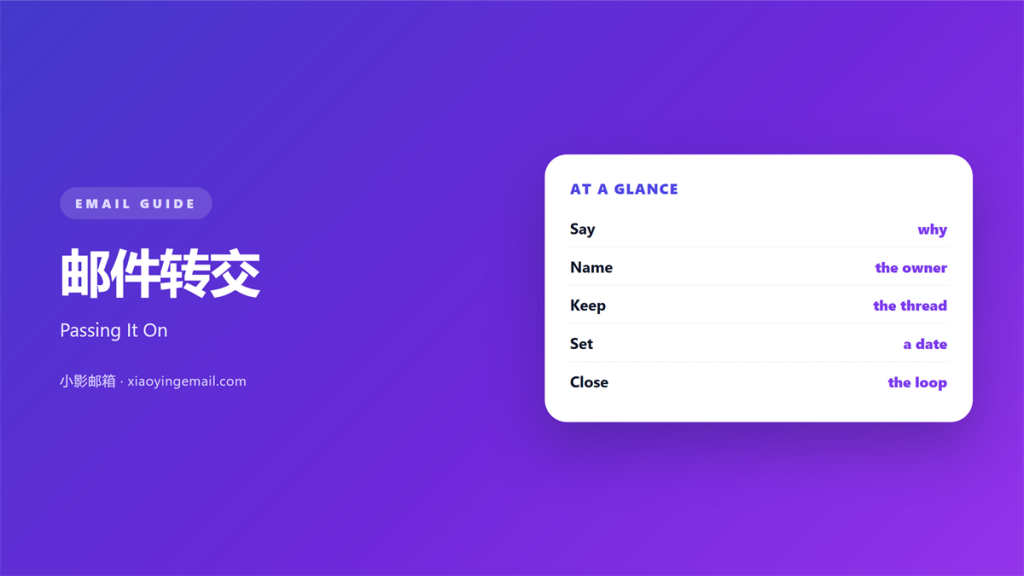
- 邮件转交 hands a message to the person who acts next.
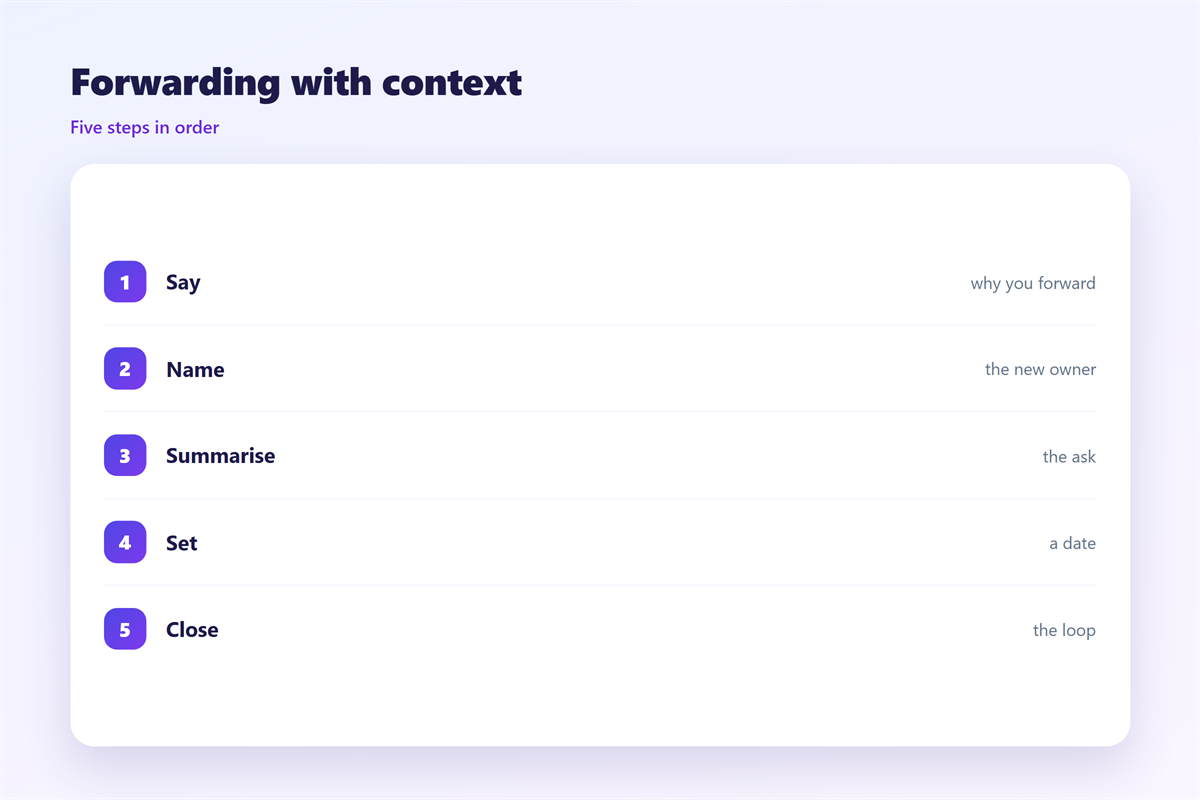
- Write one line that explains why the mail moved.
- Name the new owner and the date for a reply.
- Drop readers who no longer need the thread.
- Keep the original message below your short note.
What 邮件转交 means
邮件转交 is the act of handing a message to a new owner.
It differs from a quiet copy sent to a whole team.
The point is a change of responsibility.
You received a note. Someone else must now finish it.
A good handover keeps the history and adds a purpose.
The reader should never have to guess why the mail arrived.
One line at the top removes that doubt.
Everything below that line is the record.
That record still matters after the task is closed.
So never strip the quoted thread when you pass a mail on.
Write above it instead and leave the rest alone.
Short note on top. Full history underneath.
Why 邮件转交 matters
Teams lose hours when ownership is unclear.
A message sits in an inbox that nobody checks.
The sender assumes someone is working on it.
Nobody is, because the handover was implied and never stated.
A clear note closes that gap in one step.
It also protects the person who passes the work on.
A written note proves the work left their desk.
It also helps the new owner start without a call.
Everything needed sits in one place.
A vague forward creates a second conversation.
A clear handover avoids that extra back-and-forth.
The cost of a silent forward
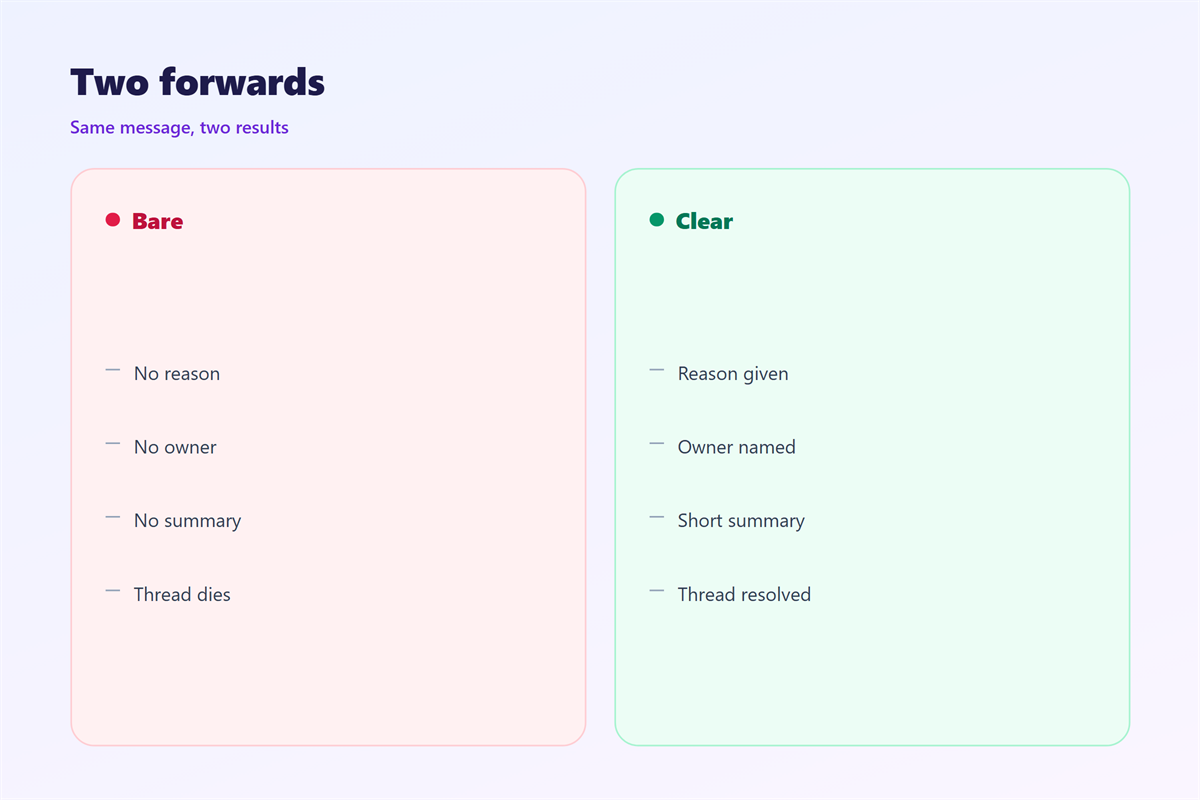
Silent forwarding is the common failure.
The mail arrives with no explanation at all.
The reader checks the thread for a hidden request.
Time passes. The task waits.
One sentence would have prevented all of it.
When 邮件转交 helps
邮件转交 helps when the request belongs to another team.
A billing question goes to finance, not to sales.
It helps again when a colleague goes on leave.
The open items need a new named owner.
It also fits a support case that needs a specialist.
The first agent keeps the history and adds a summary.
Use it when a customer writes to the wrong address too.
Pass the note on with a short apology and a reason.
That small courtesy keeps the customer calm.
Each of these cases shares one trait.
The work must move. The context must stay.
邮件转交 does both at once.
Handover versus escalation
Escalation raises urgency. Handover changes the owner.
They often happen together, but they are not the same.
Say which one you are doing.
A reader who expects a fix may only get a new contact.
Name the action so nobody is surprised.
When 邮件转交 hurts
邮件转交 hurts when it replaces a decision.
Passing a problem upward is not the same as solving it.
It also hurts when the note is longer than the task.
Readers skip a wall of explanation.
Keep the note to two or three short lines.
It hurts again when the thread holds private remarks.
Check the quoted text before you send it out.
One careless line can leak a comment about a colleague.
邮件转交 also hurts when nobody accepts the work.
An unassigned forward is just a delay with extra steps.
Ask for a reply that confirms the owner.
No confirmation means no handover.
邮件转交 and ownership
Ownership is the heart of a clean transfer.
Every handover should answer one question.
Who holds this now?
Put that name in the first line.
Put the date in the second line.
Then state what the new owner must produce.
Without a defined output, the work drifts.
邮件转交 also needs a clean list of readers.
Remove anyone who has no further role.
The remaining group should stay small.
One owner, one date
Two owners usually means no owner.
Pick one person and copy the rest.
Then set a single date for the reply.
A date turns a wish into a task.
Review it the next morning.
How to use 邮件转交 well
Start with the subject line.
Add a short tag such as handover and the owner’s name.
Then write the note in three parts.
Why it moved. What is needed. When it is due.
Keep each part to one sentence.
Below that, leave the original mail untouched.
Do not edit the quoted text to look better.
The record must stay true.
Then choose the readers with care.
Put the new owner in the main field.
Keep former readers in copy only if they still care.
Finally, ask for a one-word reply.
That reply is your proof.
Write the note before the address
Many people fill the address field first.
That habit invites a quick, empty forward.
Write the note while the reason is fresh.
Then add the address and read it once more.
This order produces better handovers every time.
邮件转交 on a busy thread
Long threads need a summary, not a scroll.
Write four lines at the top of the transfer.
State the current status in one line.
State the open question in the next.
Then name the owner and the date.
Readers should not need the full thread to start.
邮件转交 on a busy thread also needs a clean subject.
Old subjects hide new requests.
Change the subject when the task changes.
Keep the old one in the quoted header if needed.
That small edit helps search later.
Keeping 邮件转交 consistent
Consistency makes handovers fast to read.
Use the same three parts every time.
Rules for automatic forwarding live in 邮件转发. The wider practice of shifting work appears in 邮件交接. The fields that carry the names sit in 邮件收件人. The way teams are sorted is covered in 邮件分组.
Then write the format into a shared template.
A team that follows one format saves minutes each day.
FAQ
How long should a 邮件转交 note be?
Two or three short lines. Longer notes get skipped.
Should I forward the whole thread?
Yes, keep it below your note. Remove private remarks first.
Do I need to tell the original sender?
Usually yes. One line prevents confusion later.
What if nobody replies?
Send one reminder with the same date. Then escalate.
评论
还没有评论,来说两句吧。
评论功能已关闭。