 小影邮箱
邮件库存怎么写?What Is Left
Key Takeaways
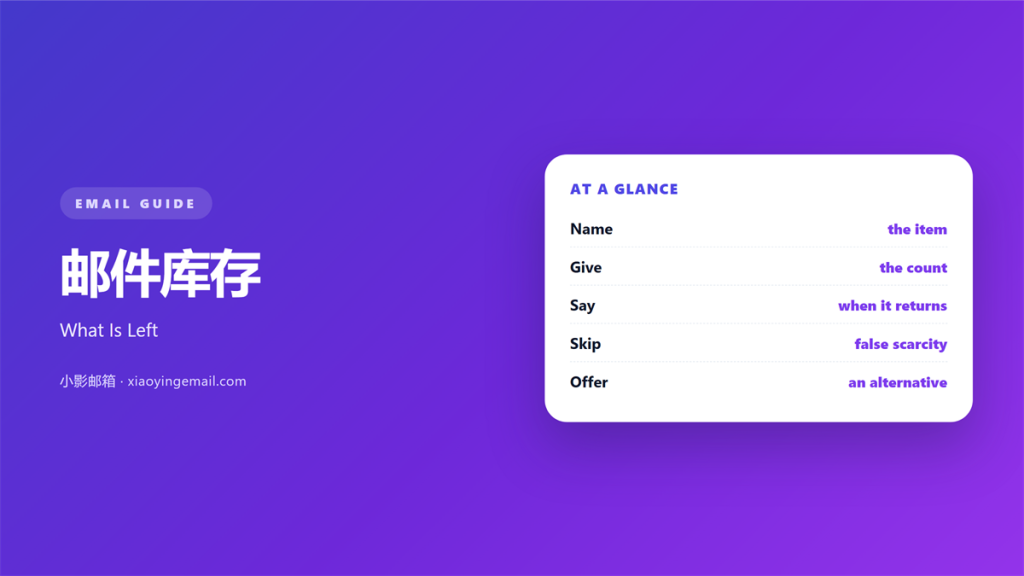
- 邮件库存 tells a buyer what is left and when.
- Name the item and the exact count.
- Give a restock date, not a vague promise.
- Never invent a low number to force a sale.
- Offer an alternative when the shelf is empty.
What 邮件库存 means
邮件库存 is a note about how much of an item remains.
It covers three cases: low stock, sold out, and back in stock.
Each case needs a different sentence.
The low-stock note gives a number.
The sold-out note gives a date.
A good 邮件库存 note never uses the word hurry.
The number itself creates the urgency.
Three left is a fact. Almost gone is a mood.
Facts travel further than moods.
State the size or the colour that is short.
A count without a variant confuses people.
Say whether the count is per warehouse.
That detail prevents angry replies.
Then say when the next delivery is due.
Vague words such as low and limited mean nothing.
Why 邮件库存 matters
Stock news answers a question people already have.
A shopper who found an empty page will check again.
One mail saves that second visit.
It also prevents a support ticket.
A 邮件库存 note keeps the order alive.
Buyers rarely wait for a product they cannot date.
A restock week is a promise they can plan around.
That small certainty protects the sale.
It also protects the relationship.
A shop that tells the truth gets a second look.
A dated note also reduces cancelled orders.
Scarcity without pressure
Real scarcity needs no exclamation mark.
One sentence does the whole job.
Anything louder reads like a trick.
Readers have seen too many fake counters.
When 邮件库存 helps
It helps when the item is a known favourite.
A 邮件库存 alert on a repeat seller earns its place.
It helps when the buyer asked first.
A waitlist request is permission to write.
It helps before a seasonal peak.
Warn regulars before the shelf empties.
It also helps with a single size or colour.
Narrow news is easier to trust.
It helps when the item restocks in small runs.
Small runs sell out before the next mail.
Back-in-stock notes
A back-in-stock note is the most welcome kind.
Send it the hour the item returns.
Include the price, since it may have moved.
Keep the old link working if you can.
When 邮件库存 hurts
邮件库存 hurts when the count is invented.
Readers compare notes in reviews and forums.
A “3 left” that never changes is a lie.
It hurts when every mail says sold out.
Constant alarms train people to ignore you.
It hurts when the count is weeks old.
It hurts when the restock date slips twice.
Send a short correction, not silence.
Silence after a missed date costs more trust than the delay.
It hurts when the note hides the price.
A buyer who clicks and finds a new price feels tricked.
It hurts when one mail covers forty products.
Nobody scrolls to find their own item.
邮件库存 and the product page
Every 邮件库存 claim lands on a product page.
That page must show the same number.
If the mail says four, the page says four.
A mismatch looks like bait.
Update the page before you send the mail.
Then check the page on a phone.
The button must work when stock is low.
Hide the size that is gone.
An empty variant looks like a broken shop.
Set the count to zero the moment it sells out.
Alternatives when the shelf is empty
Suggest one similar item, not five.
Name the difference in a few words.
Say plainly that the first choice is gone.
A waitlist button beats a dead end.
Then close with the restock date again.
How to write 邮件库存
Write the 邮件库存 mail from the record, not memory.
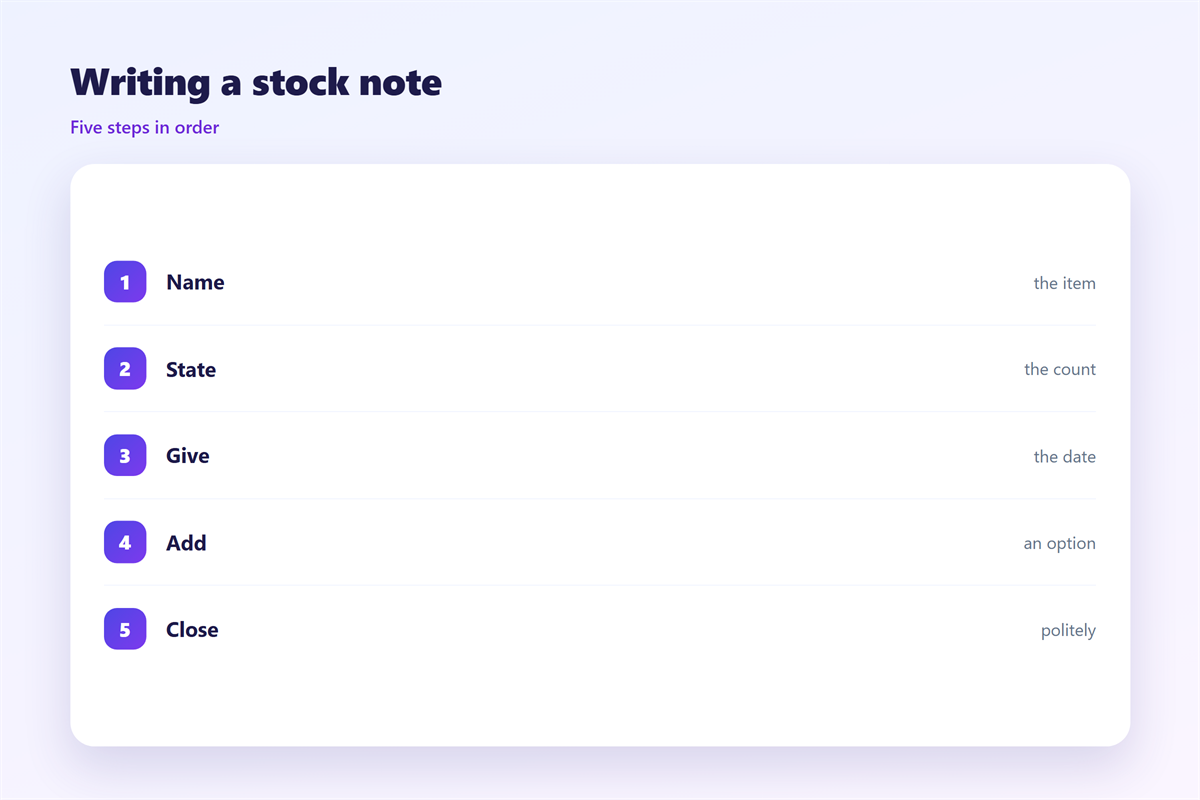
Open with the item and the variant.
Then give the count in digits.
Add the restock date if one exists.
Add the price if it changed.
Put one button under those lines.
Keep the subject factual and short.
“Back in stock: linen shirt, size M” works.
One item per mail
Split a large restock into several mails.
Send them over a week, not an hour.
Each mail then has one clear subject.
Each reader gets only the news they asked for.
That keeps the open rate high.
It also keeps complaints low.
Send to the waitlist first, then the wider list.
邮件库存 on a phone
Stock mail is often read standing in a shop.
That reader wants the count in the first line.
Put the item name there.
Keep the thumbnail small and square.
A full-width image delays the button.
Make the button say what happens next.
“Add to basket” is clearer than “Go”.
Show the size options as large targets.
Test the flow with one thumb only.
Then check it on a slow connection.
Keep the whole mail under one screen.
Keeping 邮件库存 honest
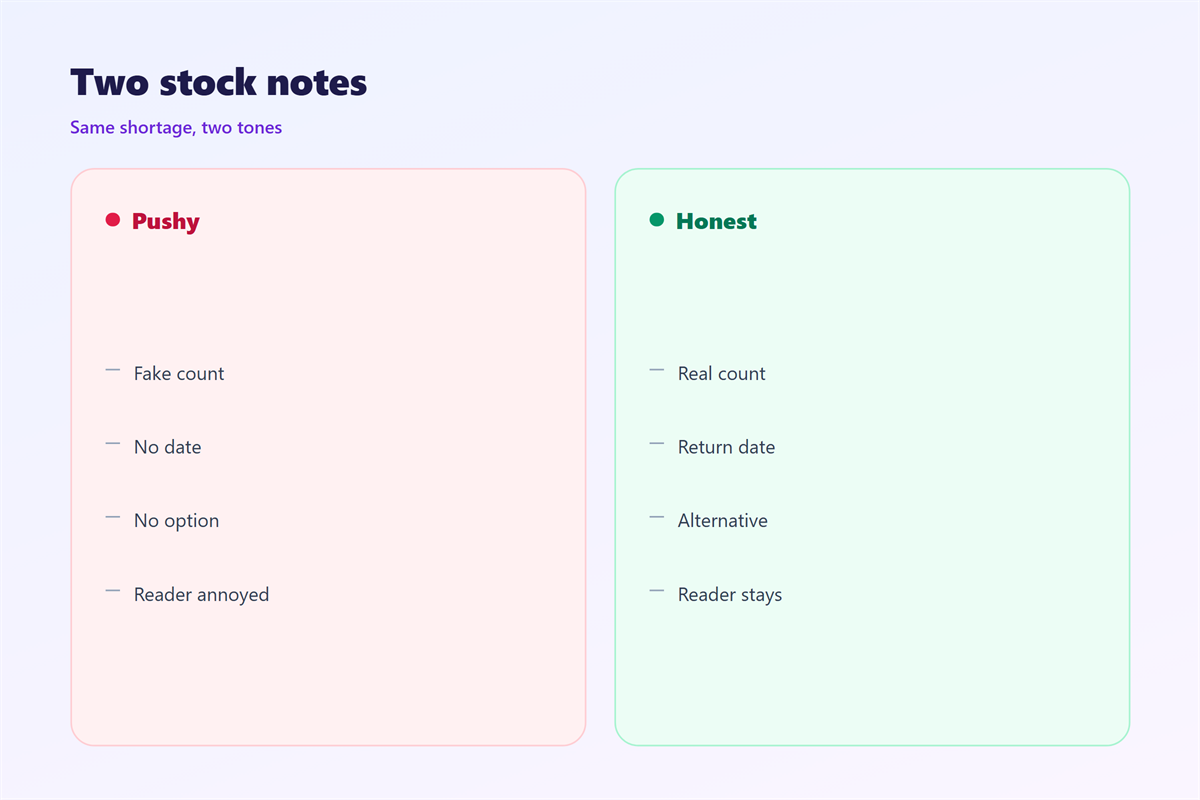
An honest stock note admits when it does not know.
“Date unknown” is better than a guess.
Then send the update when the date is firm.
The delivery wording sits in 邮件发货通知.
The tracking details sit in 邮件物流.
The receipt pattern sits in 邮件订单确认.
The alert settings sit in 邮件通知.
Keep the count honest even when it is zero.
Zero is a fact, and facts keep trust.
Never raise a count to look busy.
Write the rule down for whoever sends next.
FAQ
How many items fit in one 邮件库存 mail?
One. Two at most, and only if they are related.
Should I show a count for every product?
No. Use counts where stock is genuinely short.
What if the restock date moves?
Send one short correction in the same thread.
Is a waitlist better than a count?
They work together. The count explains the wait.
评论
还没有评论,来说两句吧。
评论功能已关闭。