 小影邮箱
收件箱清零怎么做?A Habit, Not a Sprint
Key Takeaways
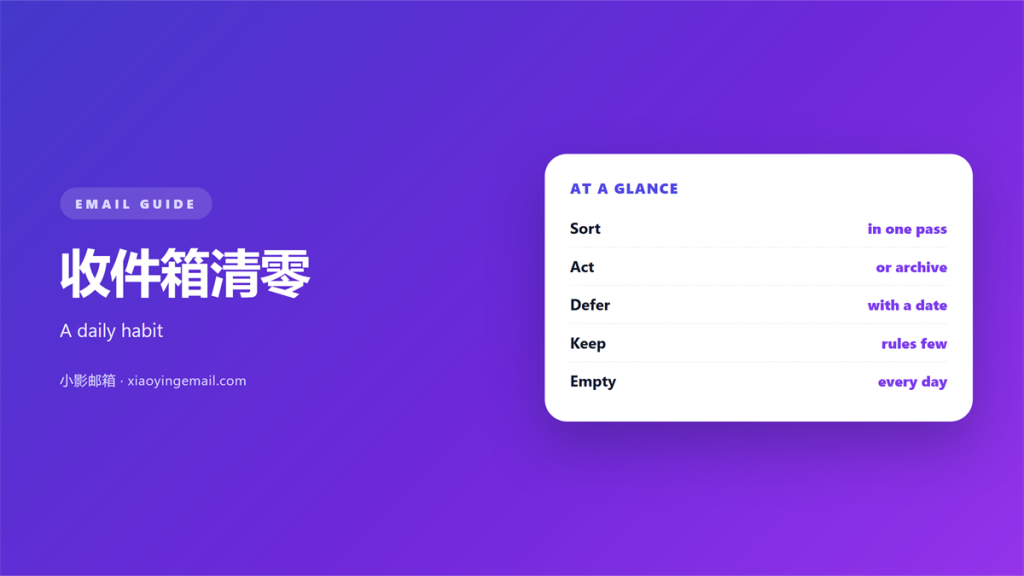
- 收件箱清零 is a daily habit, not a one-time purge.
- Touch each message once and decide on the spot.
- Answer fast items, or turn them into a task.
- Archive what you have read and do not need.
- Repeat at the same time each day.
What 收件箱清零 means
收件箱清零 means an empty inbox at the end of a working session.
It does not mean you read every message. It means each one has a next step.
Some get a reply. Some become a task. The rest get archived.
The goal is a clear mind, not an empty folder for its own sake.
A writer named Merlin Mann coined the phrase years ago. The idea still holds.
A 收件箱清零 habit beats a heroic clean-up once a month.
The habit is small and repeatable. A big purge feels great and fades fast.
Email is designed to arrive without pause. A tidy system is the only brake.
Each unread message is a tiny open loop. The mind dislikes open loops.
Closing the loop takes a decision. Even a small one drains less energy than a stare.
Others treat every message as urgent. That habit fills the inbox fast.
Why 收件箱清零 matters
A full inbox hides the one message that needs you. A clean one shows it first.
A neat inbox also helps you find old decisions fast. Search beats memory.
It reduces the urge to check. Fewer surprises mean a calmer day.
Busy people still find time to answer one clear message.
How 收件箱清零 protects your focus
An open inbox pulls you back every few minutes. Each glance costs real attention.
When you know where things are, you stop checking twice.
A calm inbox is the daily reward of 收件箱清零.
Fewer things fall through
A tidy inbox makes a missed item obvious. It stands out against the empty space.
You also stop rereading the same messages. Each one moves on the first pass.
How to reach 收件箱清零
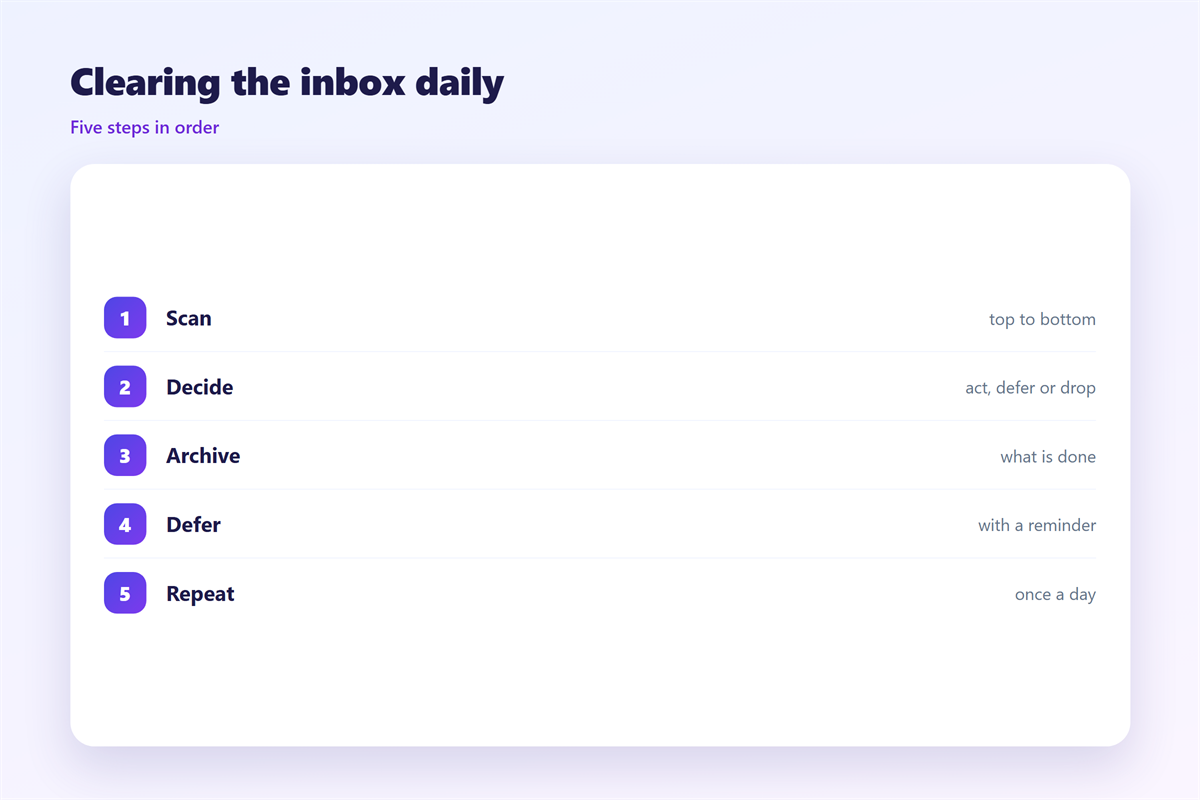
Reaching 收件箱清零 takes one honest pass from top to bottom.
Work in one pass and do not skip around the list.
For each message, pick one action. Reply, task, archive or delete.
If a reply takes under two minutes, write it now. Speed keeps the pile small.
Longer items become tasks with a date. Then they leave the inbox.
Archive anything you may need later. Search will find it again.
Delete the pure noise at once. Newsletters you never read are noise.
Set a timer for the first pass. Thirty minutes is enough for most people.
Stop when the timer ends. A tired second pass makes poor choices.
Unsubscribe from lists you never open. Fewer arrivals make the pass shorter.
Turn off desktop pop-ups during the pass. Alerts break your rhythm.
Do the easiest actions first. Momentum carries you into the harder ones.
If a message needs a long answer, schedule it as a task instead.
Keep a short list of waiting items. The list holds what the inbox should not.
Where 收件箱清零 meets your tools
Your mailbox offers ways to sort without much thought. Use them well.
Filters can push routine mail aside. A good rule keeps the inbox lean.
The right tools help. Shape the view in 邮件收件箱, add 邮件自动分类 for routine mail, and set a clear 邮件未读标记 for what needs you. A simple 邮件标记 then carries the item forward.
Tools should serve 收件箱清零, not replace it.
Star or flag a message you must return to. A clear marker beats memory.
Unread counts can mislead you. A mark is not the same as a next step.
Set a swipe action for archive. One gesture saves a whole menu.
Labels work better than deep folders. One message can carry several labels.
A saved search finds anything in seconds. Trust it and stop filing by hand.
A simple rule beats a clever one. You should never fight your own tools.
Common mistakes
The first 收件箱清零 mistake is treating it as a one-time event.
The second is reading without deciding. A read message with no action returns.
The third is a deep folder tree. Deep folders hide mail you never reopen.
Do not open the inbox all day. Batch it and protect your focus.
Avoid using the inbox as a to-do list. Tasks belong in a task list.
Do not chase a perfect zero. A calm, current inbox is the real goal.
Do not let a single message hijack the whole pass. Park it and move on.
Avoid clearing the inbox once and then vanishing for a month.
Do not keep a message open as a reminder. That is a job for a list.
Keeping 收件箱清零 every day
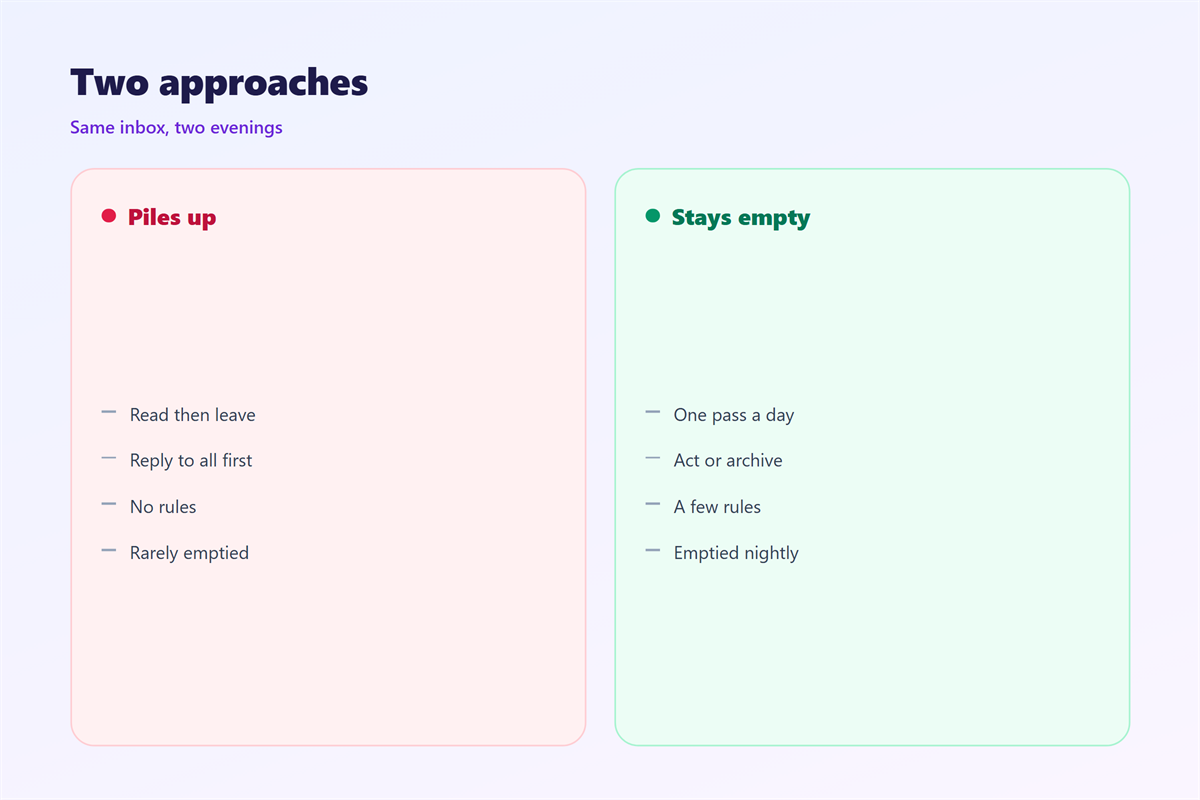
Pick a fixed time and guard it. Two short passes beat one long slog.
Start with the oldest unread first. Priority often follows age.
Send quick replies while the message is open. Then archive it at once.
Handle the hard ones early in the day. Energy fades by the afternoon.
End each pass with an empty screen. That small win keeps the habit alive.
A daily 收件箱清零 routine is the real win, not a lucky clean sweep.
Review once a week. A quick sweep catches anything that slipped.
A short daily review beats a long weekly battle. Small and steady wins.
If you miss a day, start fresh. Guilt slows the next pass.
Pair the pass with a fixed cue. After coffee works for many people.
FAQ
Is 收件箱清零 realistic?
Yes, for most people. It needs a few short sessions each day, not hours.
How often should I empty the inbox?
Once or twice a day suits most jobs. Some roles need three quick passes.
What about messages I must keep?
Archive them and rely on search. A tidy folder tree is rarely worth the time.
Does it mean I must reply to everything?
No. Many messages need no reply. Decide the next step and move on.
评论
还没有评论,来说两句吧。
评论功能已关闭。