 小影邮箱
邮件发送量怎么控?Volume You Can Hold
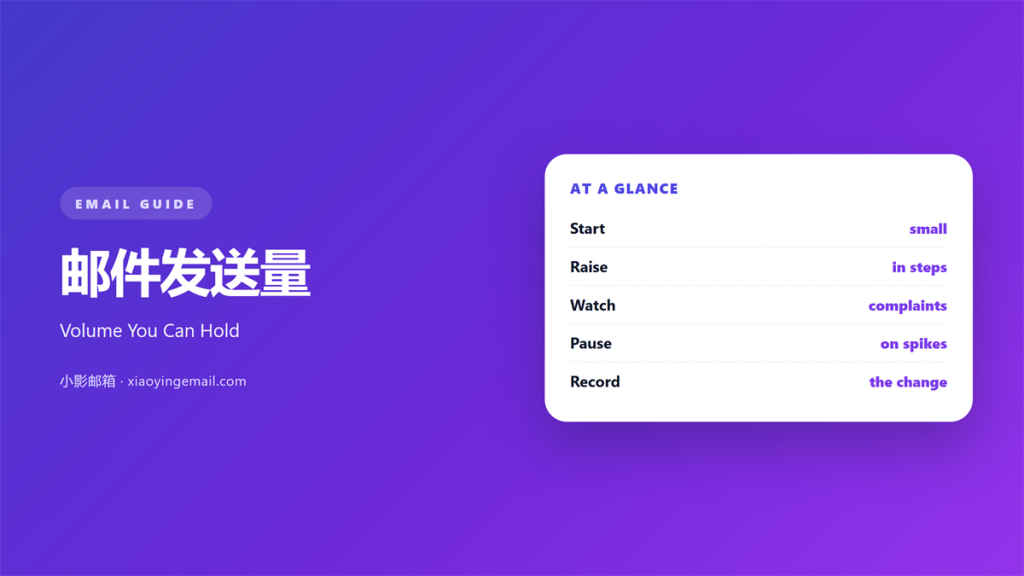
Key Takeaways
- 邮件发送量 is how much mail leaves in a period.
- Growth should be slow enough to measure.
- Complaints and bounces set the real ceiling.
- Raise volume only after a clean month.
- Keep one number for every sending stream.
What 邮件发送量 means
邮件发送量 is the number of messages you send in a set period.
Most teams measure it per day or per month.
Recipients matter as much as messages.
One message to ten thousand people is ten thousand deliveries.
The counting rule should be written down.
Otherwise two reports will disagree by lunchtime.
Volume is not the same as reach.
Reach is how many people actually saw the mail.
Volume only says how hard you pushed.
That distinction keeps the scoreboard honest.
Both numbers should appear in the monthly note.
Why 邮件发送量 matters
Volume is the first thing a mailbox provider measures.
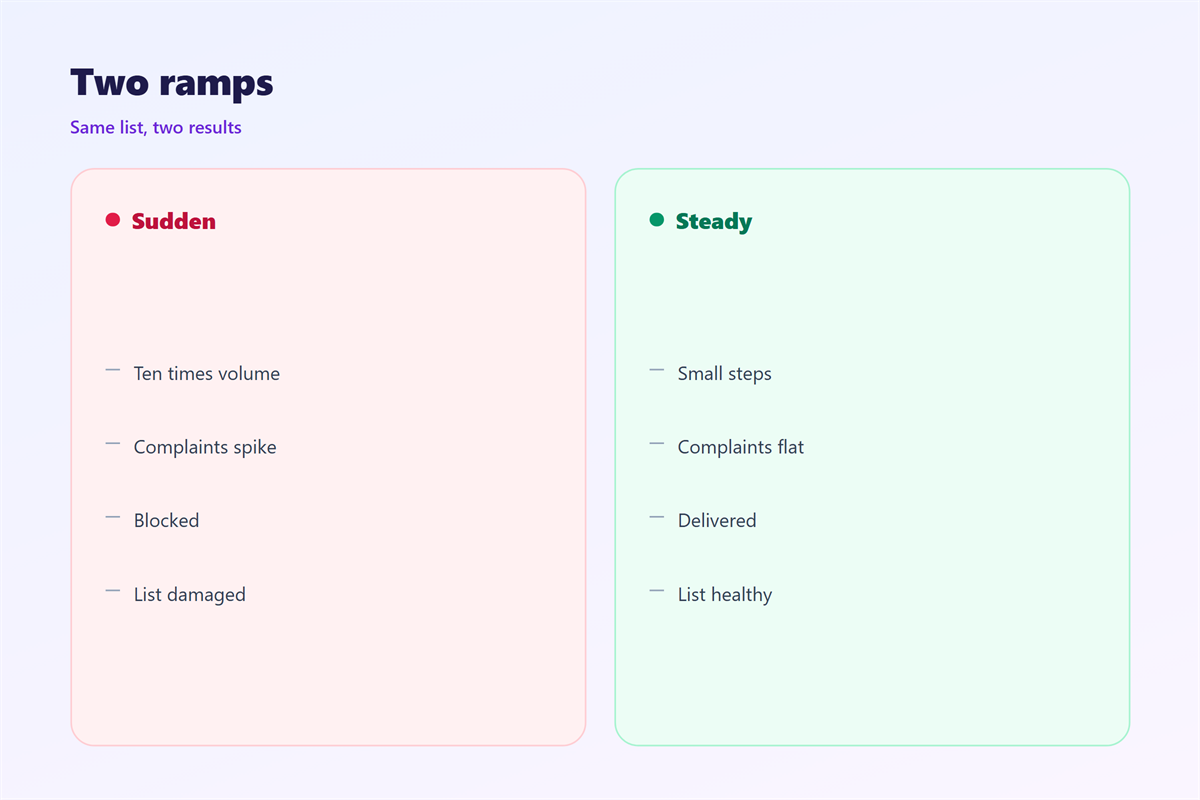
A sudden jump looks like a compromised account.
Providers then delay the mail or block it.
Even a good sender can lose an entire day.
Volume also decides how fast a list can grow.
Send too little and the list cools down.
Send too much and the complaints arrive.
There is a middle band that works.
A high 邮件发送量 is not a virtue.
It is a cost that someone must carry.
Finding that band takes weeks, not hours.
Patience here saves a lot of repair work later.
When 邮件发送量 helps
邮件发送量 helps when you plan a product launch.
A launch needs a known number, not a guess.
It also helps when finance asks for a forecast.
Volume times cost per message is a real number.
The same figure helps when you brief a partner.
Partners want to know how many messages they will get.
That number also shapes the contract.
It helps again when a list is about to expire.
A small weekly send keeps the addresses warm.
Start from the engaged half
Split the list by recent opens and clicks.
Send to the engaged half first.
Add the quiet half only when complaints stay low.
This one habit protects reputation during growth.
It also gives you a clean number to report.
When 邮件发送量 hurts
邮件发送量 hurts when it grows faster than engagement.
More mail to cold addresses means more complaints.
It also hurts when every team reports its own number.
Then nobody can explain the monthly total.
A shared figure prevents that argument.
One owner should publish it each month.
Volume hurts again when it hides a bad segment.
A big send can mask a small group that always bounces.
Break the number down by source.
Averages hide the problem you need to fix.
Finally, never chase volume as a target.
Volume is a cost line, not a trophy.
邮件发送量 and list health
List health decides how much volume the domain can hold.
List health limits 邮件发送量 more than any setting.
A clean list of five thousand beats a stale list of fifty thousand.
Hard bounces should leave the list at once.
Soft bounces deserve a second or third try.
After that, remove the address and move on.
Complaints are the strongest signal of all.
One complaint in a thousand is already high.
Track the rate weekly, not yearly.
Keep a suppression list
A suppression list stops repeat mistakes.
Add every hard bounce and every complaint to it.
Then check new imports against that list.
A partner file often contains addresses you removed last year.
One check at import saves a whole repair cycle.
How to use 邮件发送量 well
Write the 邮件发送量 on one page.
Add the target number for the next quarter.
Then describe the steps between the two.
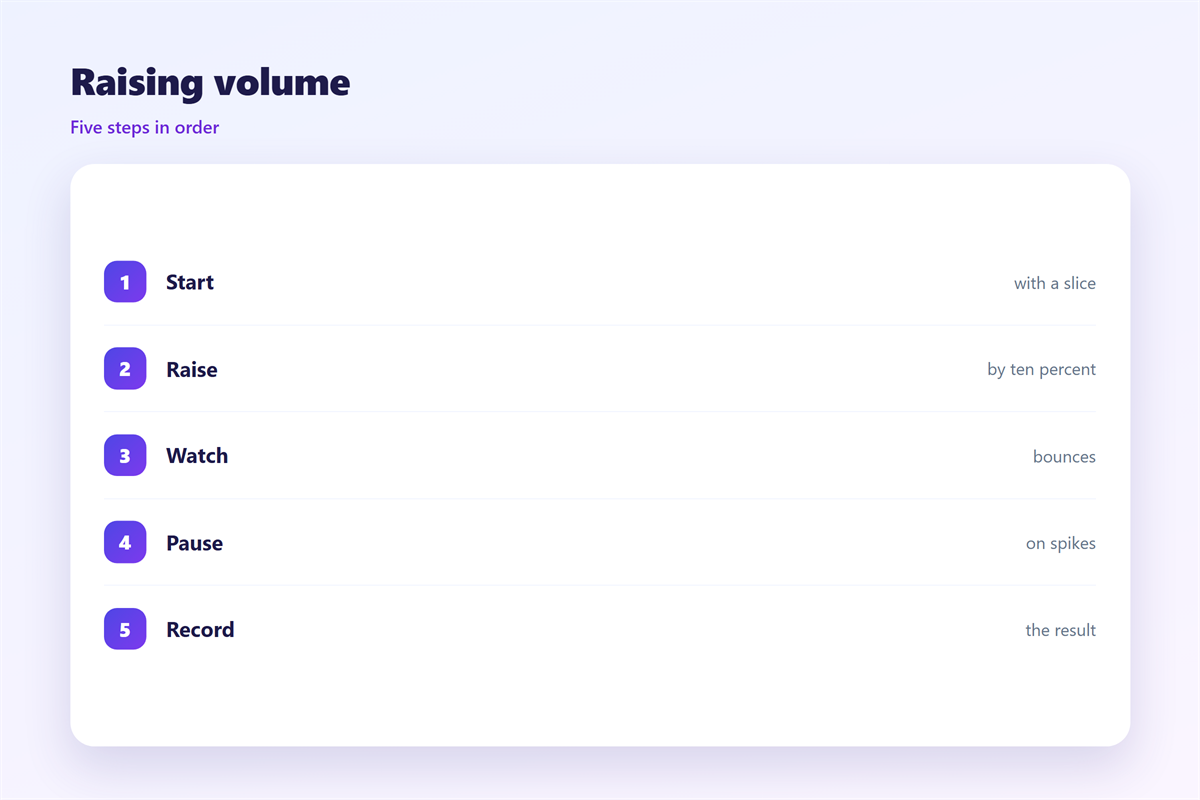
A ten percent rise per month is a safe pace.
That pace gives the domain time to adjust.
Watch three signs after each step.
Delivery rate, bounce rate, and complaint rate.
If all three stay flat, the step worked.
If one moves the wrong way, stop and wait.
Then repeat the step with a smaller group.
Send at the same hour
A steady hour makes the pattern easier to read.
Providers notice rhythm, and rhythm looks human.
Random bursts look like a script.
Pick two windows and keep them for a month.
Then compare the results before you change anything.
邮件发送量 on a new domain
A new domain has no history and no trust.
Start with a few hundred messages a day.
Send to people who expect to hear from you.
Ask them to reply, since replies help reputation.
Each reply is a small vote of trust.
Then double the volume after a clean week.
Stop the ramp if the bounce rate rises.
A pause costs a day, and a block costs a month.
Keep the content plain during this period.
Heavy images and many links look risky to filters.
Once the ramp is done, add the design back.
Keeping 邮件发送量 consistent
One dashboard should hold every stream.
Label each stream by purpose, not by team.
The provider ceiling is explained in 邮件发送限制. Whether the mail landed is covered in 邮件到达率. Inbox placement records sit in 邮件投递率. The warning signs are collected in 邮件退信率.
Then set a review meeting on the first Monday.
Keep it to fifteen minutes.
Read the numbers aloud and note the change.
Note the date beside every change.
A short ritual beats a long report.
Teams that do this catch problems early.
FAQ
What is a safe 邮件发送量 for a new list?
A few hundred a day. Increase only while complaints stay near zero.
Should volume include transactional mail?
Yes, because the provider counts it. Keep it in a separate line anyway.
Does a bigger list always mean more revenue?
No. A smaller engaged list often earns more per message.
How often should we review volume?
Weekly for the rate, monthly for the total.
评论
还没有评论,来说两句吧。
评论功能已关闭。