 小影邮箱
邮件到达率怎么看?Did It Really Land?
Key Takeaways
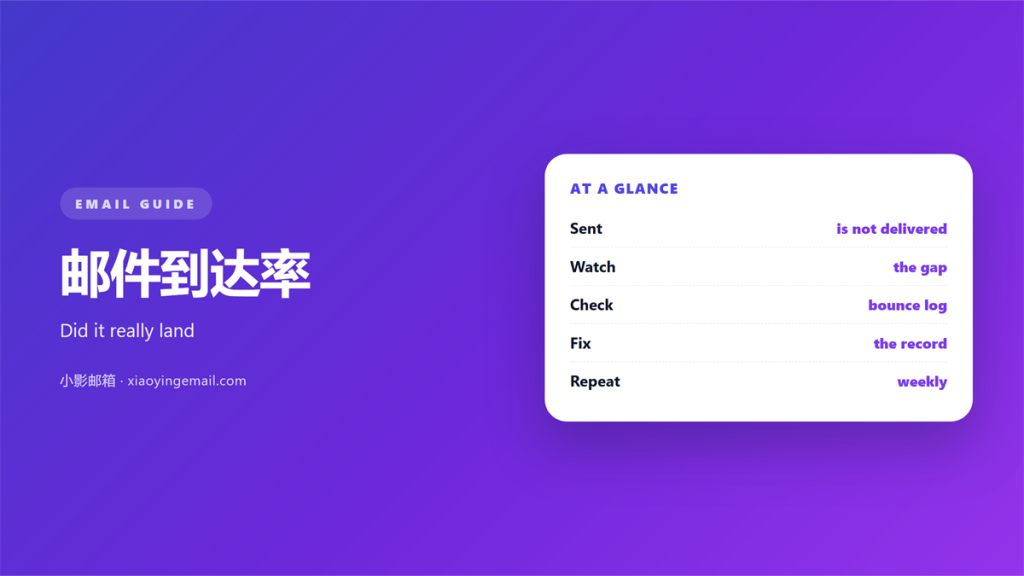
- 邮件到达率 measures what lands, not what you send.
- A bounce is a signal, not just a lost reader.
- Sender reputation decides more than clever wording.
- A clean list lifts results with far less effort.
- Check the trend before you blame the inbox.
What 邮件到达率 means
邮件到达率 is the share of messages that reach a real inbox.
Many senders confuse it with the delivery rate. Delivery only means a server accepted the mail.
Accepted mail can still bounce later or land in spam. So delivery is a promise, not a result.
邮件到达率 asks the harder question. Did a human actually receive the message?
That gap between sent and seen is where most problems hide.
A high send count means nothing on its own. Only the landing point tells the real story.
So track three numbers together. Sent, delivered and placed in the inbox.
The difference between those numbers is your 邮件到达率.
Placement is not the same as an open. A person may see the mail and ignore it.
An inbox listing still matters, because spam folders hide the message.
Senders often learn about a problem far too late.
A weekly glance at placement catches trouble early.
Why 邮件到达率 matters
A message nobody sees cannot sell or inform. Every blocked email is wasted work.
Poor 邮件到达率 also wastes money. You pay for a list and reach only part of it.
Providers judge the whole sending stream. One bad batch can hurt the next good one.
A healthy rate keeps your brand in front of the reader. Silence slowly erases you.
Revenue follows attention. If the inbox never shows the mail, nothing follows.
A good record also takes pressure off the whole team.
Reading 邮件到达率 honestly
Do not trust a single send. Look at a full week or month.
Small lists give noisy results. A rate over fifty emails means very little.
Read each provider on its own. One strict filter can hide a healthy average.
What drags 邮件到达率 down
Hard bounces from dead addresses are the clearest cause.
Spam complaints and sudden volume spikes come next in line.
A missing authentication record also lowers trust with providers.
Endless mail to quiet readers adds to the same slow damage.
How to raise 邮件到达率
Start with your list. Remove addresses that never open a message.
Authenticate every message you send. Signed mail is far harder to fake.
Warm up a new sending address slowly. Sudden jumps look like spam.
Write honest subject lines. A trick that works once can cost your trust.
Let readers leave easily. A clean unsubscribe lowers complaint rates.
Send at a steady pace each week. Consistency teaches providers to trust you.
Remove hard bounces at once. They never recover, and they hurt the rest.
Ask readers to add you to their contacts. That small step helps a lot.
Keep the HTML simple. Heavy code can trip some filters.
Include a plain text version beside the rich one.
Good habits lift 邮件到达率 over months, not days.
The list behind 邮件到达率
An old list is the most common hidden cause of trouble.
Addresses die quietly. People change jobs and abandon old mailboxes.
Send to your engaged readers first. Active people protect your standing.
Re-engage the quiet ones once. If they stay silent, let them go.
A smaller, live list often beats a large, cold one.
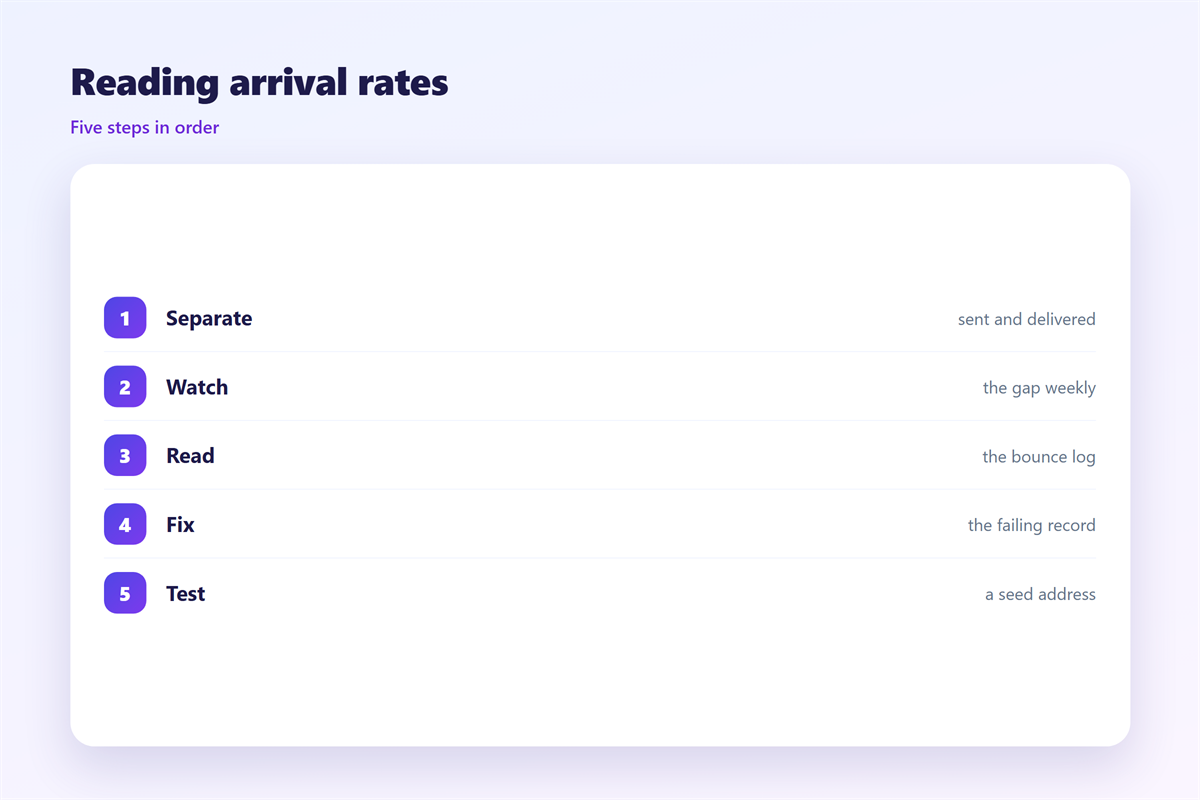
Group readers by how recently they opened. Give each group its own plan.
Never buy a list. Purchased addresses break every rule you follow.
Cut the oldest contacts from the send. They cost more than they return.
Keep a clear record of every removal you make.
Measuring 邮件到达率
Pick a clear window and keep it. Thirty days works for most senders.
Split the number by provider. Gmail and Outlook behave quite differently.
Watch the bounce rate beside it. A rising bounce rate predicts a falling 邮件到达率.
Keep a log of every change you make. Memory cannot explain last month’s dip.
Compare only similar sends. A holiday campaign never matches a normal one.
Measure the gap between delivered and placed, not just the total.
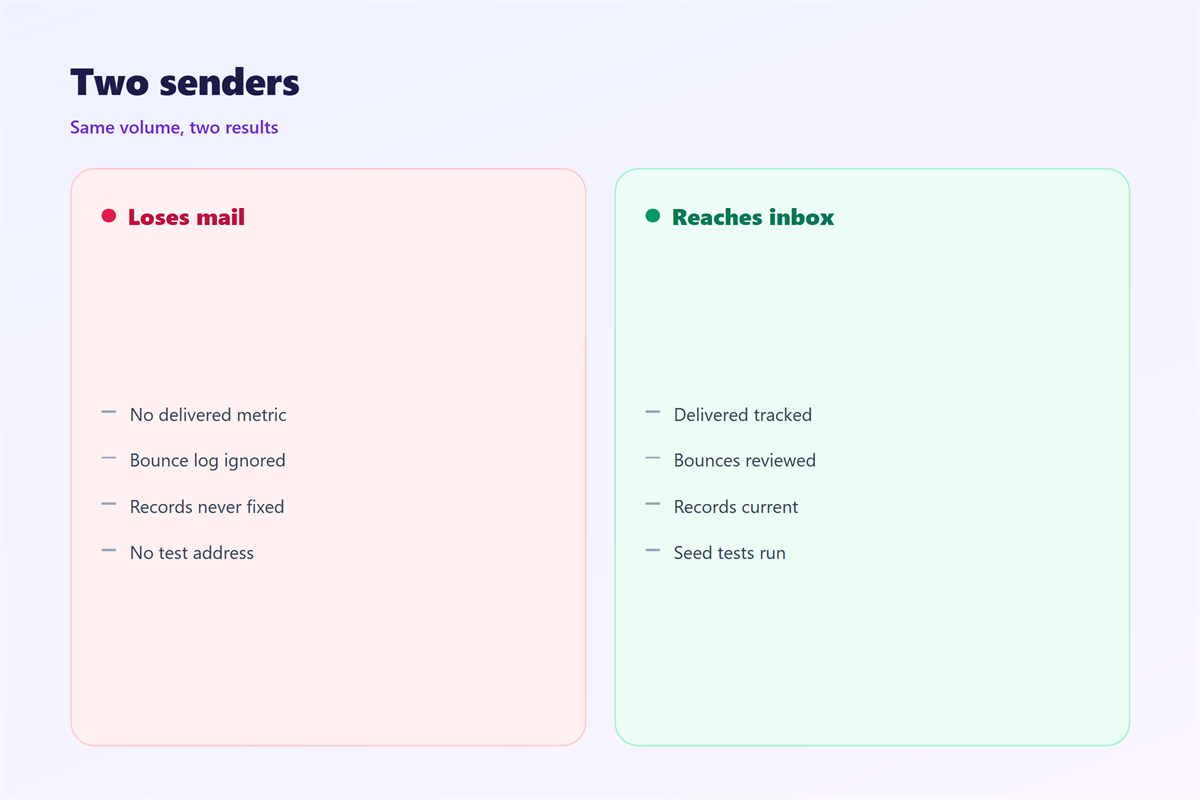
A simple sheet beats a dashboard you forget to open.
Review the numbers with the team. A shared view avoids repeated mistakes.
Note the send date beside each figure. Context makes the number useful.
Ask a partner whether your mail arrives. Outside tests reveal hidden blocks.
Set a simple target and treat it as a guide, not a rule.
Sending and improving
Send on a schedule your readers can learn. Predictable mail feels calmer.
Watch where each message lands, not just if it leaves. The placement story sits in 邮件投递率.
Learn why a message fails to arrive. The types are explained in 邮件退信.
Avoid the traps that block whole domains. The warning signs appear in 邮件黑名单.
Protect the name you send from. The habits that build it are in 邮件信誉.
Then repeat what worked. A steady habit beats a clever one off send.
Keep a short note of every fix you make. Future you will thank present you.
Check the same numbers next month. Trends matter far more than snapshots.
FAQ
Is 邮件到达率 the same as delivery rate?
No. Delivery means a server accepted the mail. 邮件到达率 means it reached the inbox.
What is a healthy rate?
Above ninety five percent is a common target. Anything lower deserves a closer look.
Do bounces always hurt me?
Hard bounces always do. Soft bounces often clear up on their own.
How often should I clean my list?
Once a quarter is enough for most senders. Busy lists may need it monthly.
References
- Litmus: Email deliverability guide
- Google: Email sender guidelines
- IETF RFC 5321: Simple Mail Transfer Protocol
评论
还没有评论,来说两句吧。
评论功能已关闭。