 小影邮箱
邮件唤醒怎么做?Winning Back Quiet Readers
Key Takeaways
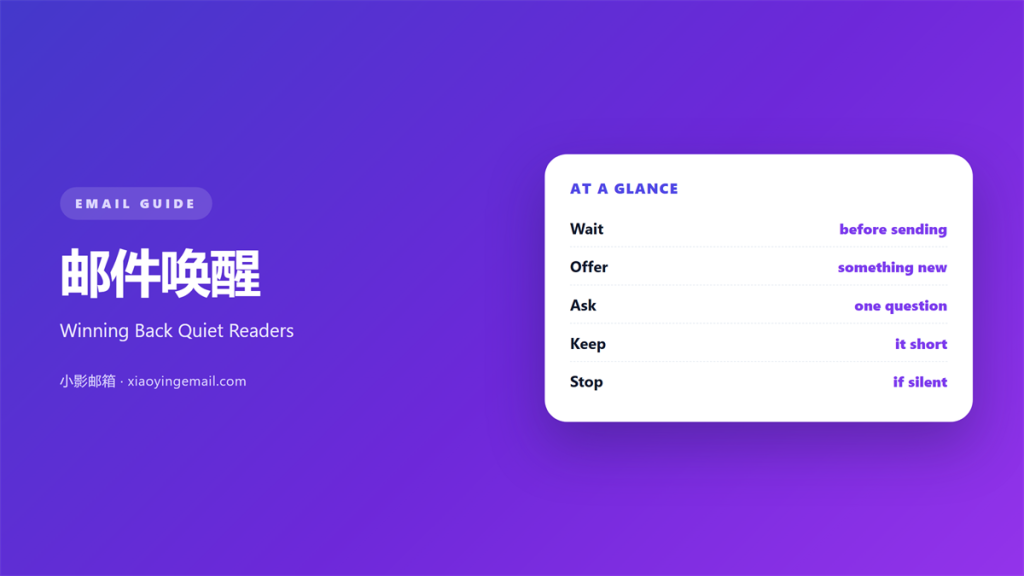
- 邮件唤醒 is a friendly note to a reader who went quiet.
- Offer something new, not a reminder to buy.
- Keep the message short and easy to answer.
- Try twice, then stop and respect the silence.
- Track replies instead of open rates alone.
What 邮件唤醒 means
邮件唤醒 is the work of winning back a quiet reader.
A reader may stop opening your mail for months.
Often nothing is wrong. Life simply got busy.
Your note invites them back in a gentle way.
It is not a sales pitch dressed as concern.
It is a fresh reason to pay attention again.
Done well, it feels like a helpful tap on the shoulder.
Done badly, it feels like a guilt trip.
The difference is the offer and the tone.
A patient 邮件唤醒 can revive a fading list.
It also clears out people who will never return.
Both outcomes are useful to know.
Treat the note as a quiet restart, not a chase.
Respect is the core of this work.
One warm line can reopen a closed door.
Why readers go quiet
Readers drift away for many small reasons.
They may be busy, bored, or simply overloaded.
Sometimes the topic stopped matching their needs.
Sometimes the last few messages missed the mark.
None of this is personal.
It is just the normal churn of an inbox.
A quiet reader is not always a lost reader.
邮件唤醒 starts by understanding that silence.
Many will return if you give them a reason.
Your job is to make that reason obvious.
Ask why they joined in the first place.
Their first interest is a clue to their return.
Match that interest and the odds improve.
Lists age, and that is normal.
Signs of a fading reader
Fewer opens over eight weeks is one sign.
No clicks for a month is another.
These signals tell you when 邮件唤醒 may help.
Watch the pattern, not a single quiet week.
One slow month is normal for any list.
When 邮件唤醒 is worth doing
Not every silence needs a rescue mission.
Start when the quiet lasts several weeks.
Pick readers who once opened your mail often.
Skip anyone who unsubscribed or complained.
Focus your effort on the warm middle group.
That group is most likely to return.
A small, sharp list beats a huge, cold one.
Clean your list before you write a single note.
A clean list protects your sender score.
Quality beats size in every win-back plan.
Give the plan a clear start and end.
How to write 邮件唤醒
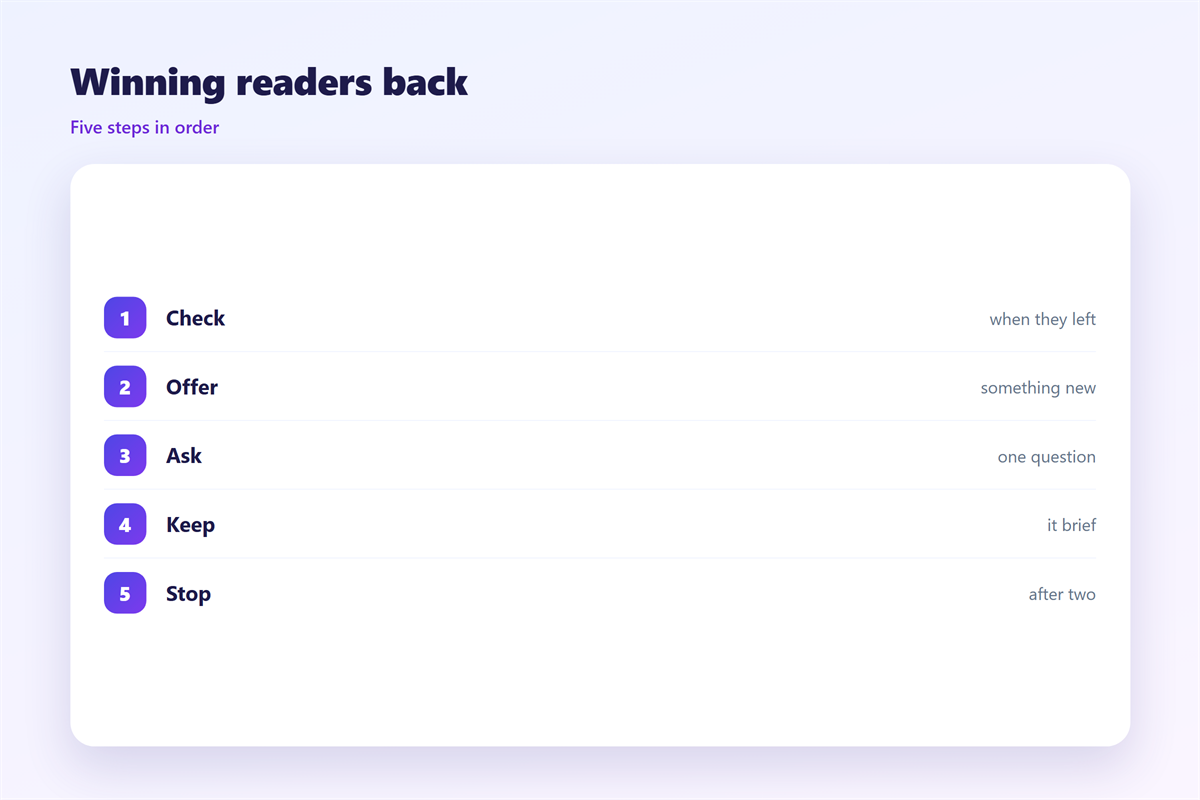
Keep the note under a hundred words.
Open with a simple human line.
Then offer one clear piece of value.
Make the next step a single easy click.
Avoid needy phrases like “we miss you”.
They add nothing and cost goodwill.
Write as one person to another.
Skip templates that sound like a robot.
Read the note aloud before you send.
Give a fresh reason
Share a new guide, tool, or update.
The value should stand on its own.
Readers return for the gift, not the guilt.
A helpful tone invites a warm reply.
What to offer in 邮件唤醒
The offer should match what they once liked.
Use their past clicks as a hint.
If they read guides, send a better guide.
If they browsed a product, show what changed.
One clear offer beats three fuzzy ones.
A specific offer is easier to judge.
A good 邮件唤醒 answers a real need.
Make the benefit visible in the subject line.
Show the value before you ask for time.
Keep it simple
Give them one link, not five.
Too many choices cause a quiet exit.
One clear path is easy to follow.
Mistakes in 邮件唤醒
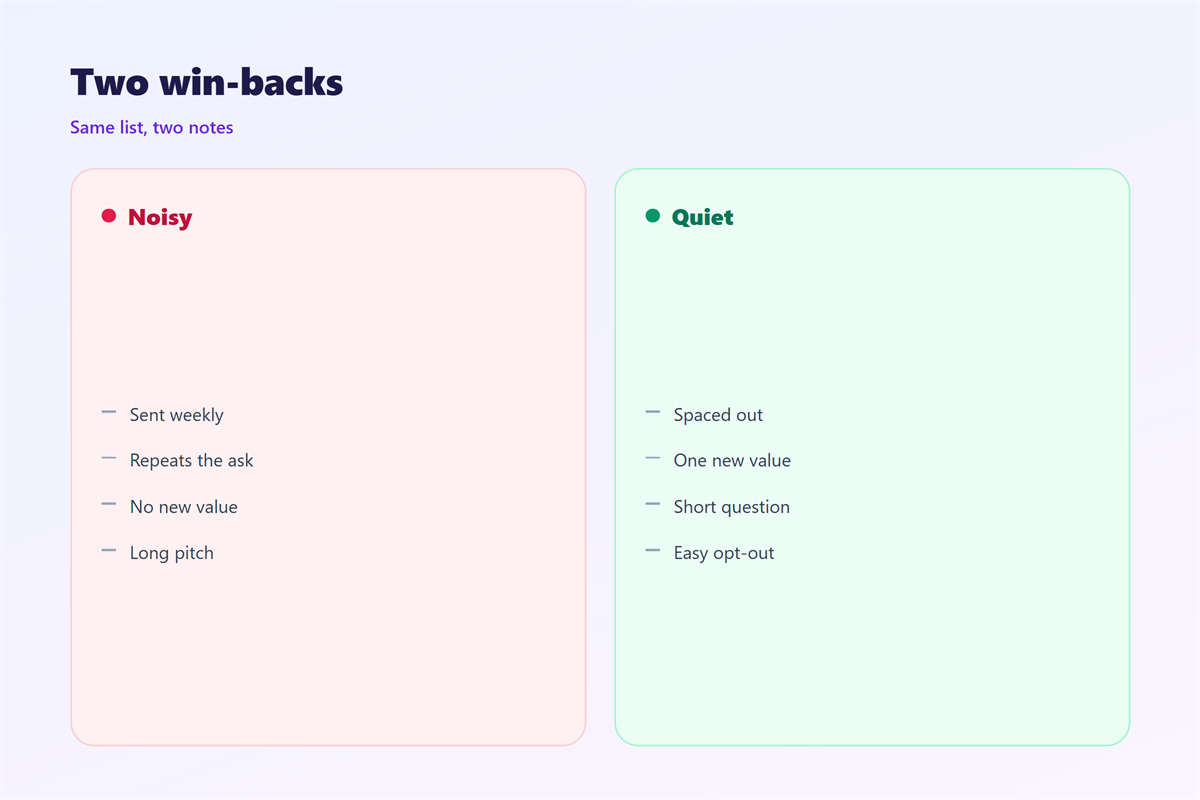
The first mistake is a guilt-heavy subject line.
The second is a huge discount with no context.
The third is writing a long wall of text.
The fourth is sending five notes in one week.
Each mistake pushes the reader further away.
Patience wins more readers than pressure.
Never fake urgency you cannot explain.
Honesty protects your name over the long run.
Stop after two tries
Two notes across two weeks is enough.
If silence continues, let them rest.
You can try again in a few months.
邮件唤醒 and measurement
Opens alone can mislead you here.
A reader may open and still do nothing.
Watch replies, clicks, and small actions.
Then compare the group before and after.
A good 邮件唤醒 lifts clicks, not just opens.
Record what worked for the next round.
Small tests teach you more than guesses.
Compare like with like to stay honest.
Watch what happens in the week after.
Keeping 邮件唤醒 consistent
A steady rhythm makes the effort pay off.
The wider win-back view appears in 邮件再营销.
The slow build before the ask is covered in 邮件培育.
The number behind the first click appears in 邮件打开率.
The habits that keep readers close appear in 邮件客户关怀.
Agree on a schedule for quiet-reader notes.
A patient 邮件唤醒 keeps the list warm.
The habit also protects your sender score.
Keep a simple log of each attempt.
Over a year, small gains add up.
A calm routine beats a burst of effort.
Revisit the plan every season.
FAQ
How often should I run 邮件唤醒?
Once a quarter is enough for most lists.
Should I offer a discount?
Only if it fits your brand and your margin.
How many notes before I stop?
Send two notes, then rest the reader for a while.
Can 邮件唤醒 hurt my sender reputation?
Not if you mail only engaged people and stop on silence.
评论
还没有评论,来说两句吧。
评论功能已关闭。