 小影邮箱
邮件沉默用户怎么处理?Readers Who Stopped
Key Takeaways
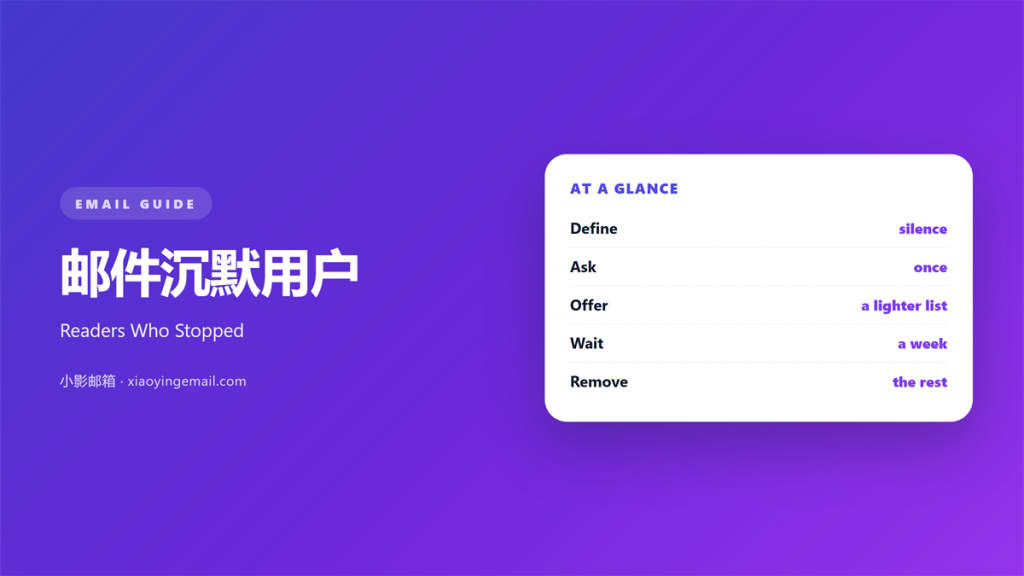
- 邮件沉默用户 are readers who stopped opening your mail.
- Define silence by a date range, not a feeling.
- Ask once, in plain words, whether they stay.
- Offer a smaller subscription for people who still care.
- Clean in batches so delivery data stays readable.
What 邮件沉默用户 means
邮件沉默用户 are subscribers who no longer open anything.
The mail still arrives, but nobody reads it.
Silence is measured, not guessed.
Most teams use a window of ninety to one hundred eighty days.
Opens, clicks, and replies all count as activity.
A single open in that window breaks the silence.
Note that some readers block images by default.
Their opens may never register at all.
So a silent segment always contains a few real readers.
Treat the label as a question, not a verdict.
A 邮件沉默用户 may simply have changed address.
Or the subject lines stopped matching their work.
Either way the old routine no longer works.
The address stays valid while the habit fades.
Why 邮件沉默用户 matters
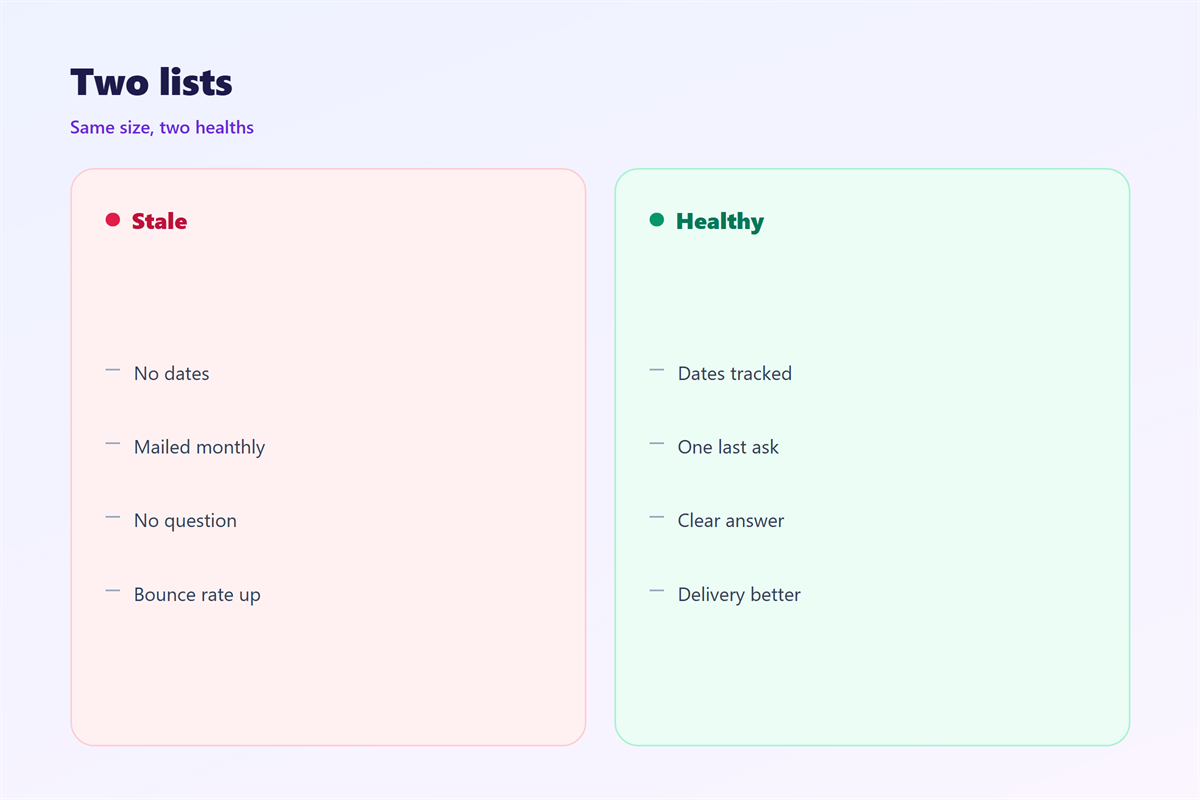
Silent addresses still cost money every month.
Most platforms charge by stored contacts.
They also dilute every number you report.
Opens fall, and the average hides the cause.
Mailboxes watch how often people open your mail.
When many copies go unread, the inbox gets careful.
Gmail and Outlook both filter on engagement signals.
That affects the readers who still want you.
So a silent segment slowly becomes a delivery problem.
Cleaning protects the people who still read.
Silence versus disinterest
Silence is a behaviour. Disinterest is a guess.
You cannot see why someone stopped opening.
You can only see that they did.
Ask them instead of inventing an answer.
When 邮件沉默用户 helps
The review helps when the list has aged.
A 邮件沉默用户 group above a fifth deserves a look.
It helps before a big launch, not during it.
It helps when costs need cutting quickly.
It also helps when opens have drifted down for months.
A short review is cheaper than a new campaign.
It helps when the offer has changed.
Some readers signed up for a different product.
Others joined through a contest they forgot.
Before a migration
Clean before you move to a new platform.
You carry fewer records and fewer errors.
The import finishes faster too.
Do the review two weeks before the move.
When 邮件沉默用户 hurts
The 邮件沉默用户 review hurts after one bad month.
A quiet month may be a holiday or a launch.
Deleting then loses people who would return.
It hurts when opens are the only signal you trust.
Image blocking makes opens unreliable.
Add clicks and replies before you judge.
It hurts when the last mail is a guilt trip.
Readers answer guilt with a complaint, not a click.
It hurts when you remove everyone on the same day.
Bulk deletion hides which segment caused the drop.
Move in batches of a few thousand.
Keep one batch back as a control group.
邮件沉默用户 and sender reputation
Every 邮件沉默用户 address sits in your sender score.
Mailbox providers score the whole stream, not one mail.
Repeated unopened mail lowers that score.
A lower score sends more mail to spam.
Then even your best readers miss the note.
The fix is smaller, not louder.
Send to active readers for a few weeks.
Watch the inbox rate climb again.
Then test the quiet group with one mail.
The three-batch routine
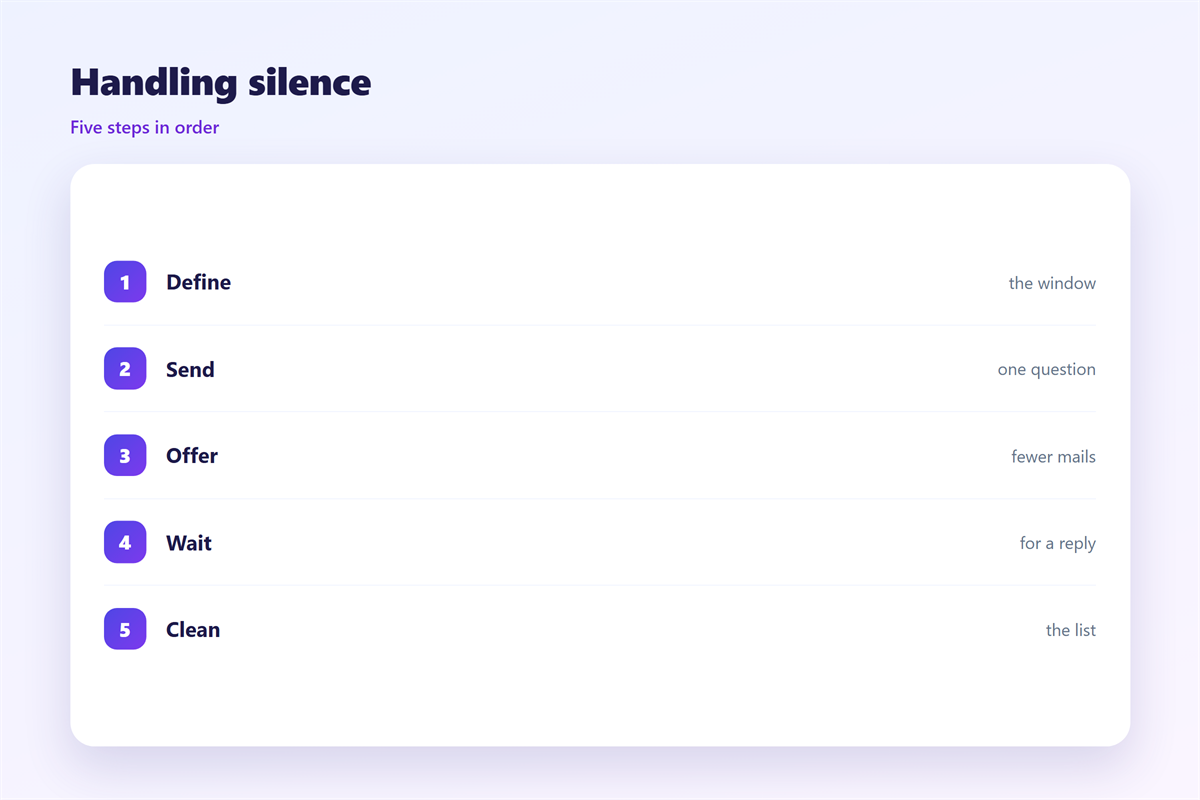
Split the group into three batches by age.
Send the first batch and wait a week.
Compare the reply rate before the second.
Stop if complaints rise above a tenth of a percent.
Keep a control group you never mail.
How to run a 邮件沉默用户 review
Start with a definition you can defend.
Pick the window before you query the list.
Export the 邮件沉默用户 with their signup date.
Check how many arrived, not how many were sent.
Then write the last-chance mail by hand.
Keep it to eighty words and one question.
Give two buttons: stay, or receive less.
Name the exact change in the second button.
The smaller subscription
An important-notices-only option keeps the address.
It promises fewer mails and no promotions.
Readers who pick it often come back later.
Make the switch one click, with no login.
Then honour it for at least six months.
Record the choice in the field your platform reads.
邮件沉默用户 on a phone
Many 邮件沉默用户 will read the last mail on a phone.
That is often the only screen they check.
So the question must sit above the fold.
Put the two buttons side by side if they fit.
Otherwise stack them with a clear gap.
Label the keep button with a plain verb.
Use “Stay subscribed” rather than “Yes”.
Make the quieter option look equal, not hidden.
A dark pattern here earns a spam complaint.
Test the tap targets with one thumb.
Then send the mail to yourself twice.
Keeping 邮件沉默用户 honest
A fair 邮件沉默用户 review says what happens next.
Say when the address will be removed.
Then remove it on that date.
The recovery sequence sits in 邮件唤醒.
The removal steps sit in 邮件列表清洗.
The scoring method sits in 邮件活跃度.
The exit numbers sit in 邮件退订率.
An unsubscribe is cheaper than a complaint.
Keep the unsubscribe link visible in every mail.
A clean list is a promise you keep, not a number you show.
Write the rule down so the next team inherits it.
FAQ
How long counts as silence?
Ninety days is a common start. Six months is safer.
Should I delete them all at once?
No. Move them in batches and watch complaints.
Does a small list hurt revenue?
Not if the remaining readers open and buy. Quality pays.
Can I win them back later?
Rarely by mail. A fresh signup is the honest route.
评论
还没有评论,来说两句吧。
评论功能已关闭。