 小影邮箱
邮件培育怎么做?Nurture Before the Ask
Key Takeaways
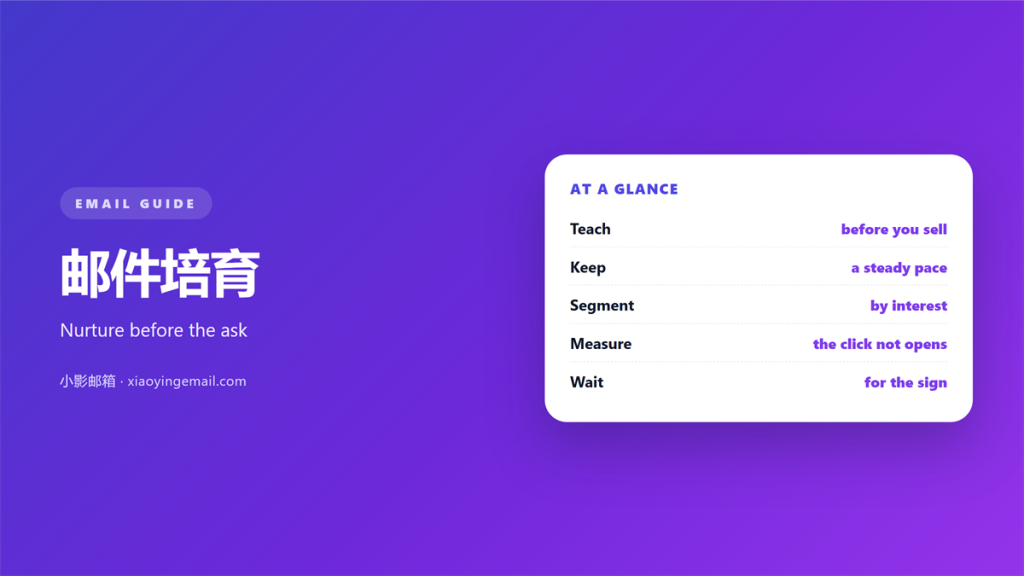
- 邮件培育 builds trust before the ask.
- Each email teaches one small thing.
- A short series beats one long letter.
- Save the offer for later.
- Let readers leave when they want.
What 邮件培育 means
邮件培育 is a short series that warms a reader before any sale.
It is not a campaign for one product. It is a set of helpful messages.
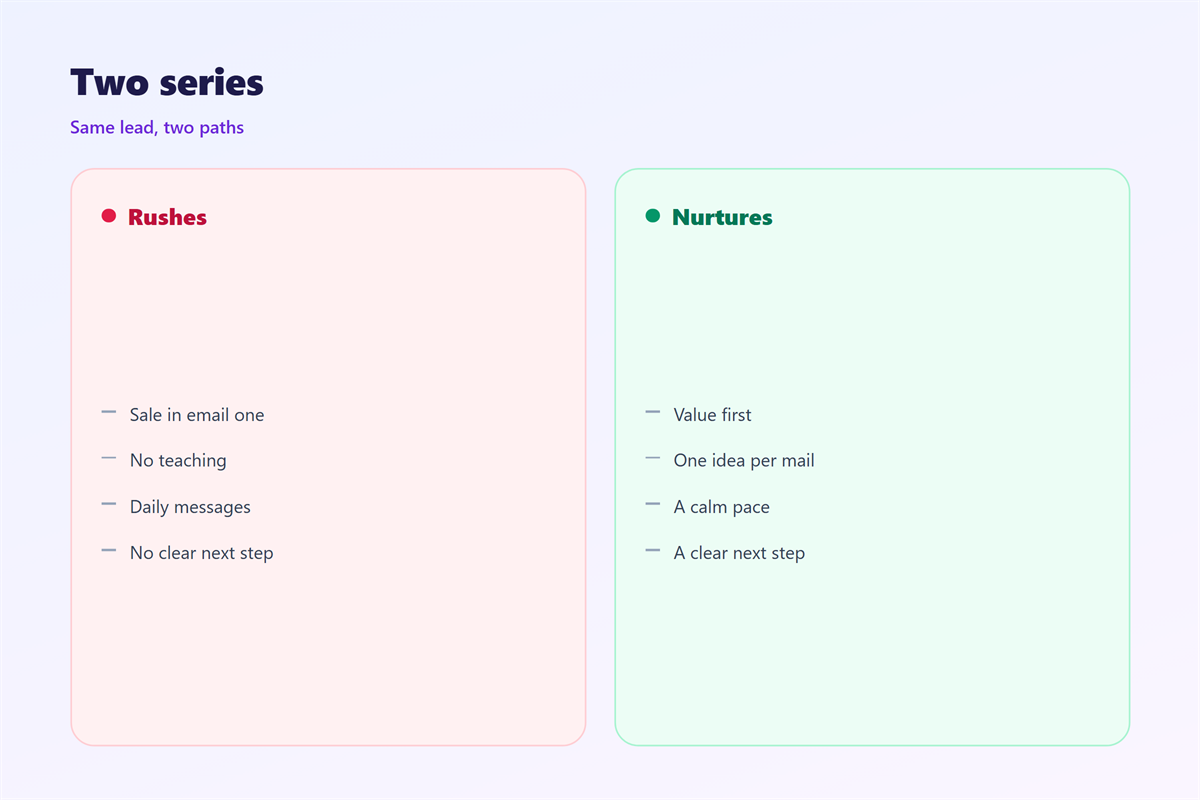
Each message gives something small. The reader learns to trust you.
A good 邮件培育 series feels like a chat, not a pitch.
Most buyers are not ready on day one. Nurture gives them time.
Think of it as a slow introduction. Not a single loud pitch.
Why 邮件培育 matters
Trust takes time to build. One email cannot do that alone.
A calm 邮件培育 series earns attention step by step.
It also lowers complaints. A reader who trusts you rarely marks spam.
A good 邮件培育 habit builds a loyal list.
Loyal readers open more and complain less.
They also buy again without a hard push.
邮件培育 builds trust first
Start with something useful. A small tip costs you little and helps a lot.
Answer one common question. Plain answers show that you listen.
Let the reader try before buying. Confidence grows from small wins.
When 邮件培育 should sell
Only after you have given value. Then the offer feels earned.
A late 邮件培育 offer lands better than an early one.
Keep the ask small at first. A trial or a guide is enough.
Choosing what to send
List the questions readers ask most. Each one can become an email.
Share a small lesson in each note. One idea is enough per message.
Tell a short story sometimes. Real examples beat abstract advice.
Answer objections before they grow. Doubt shrinks when you name it.
Mix quick tips with deeper guides. Variety keeps readers curious.
Look at your sent folder for ideas. Old replies often hold good questions.
A 邮件培育 series example
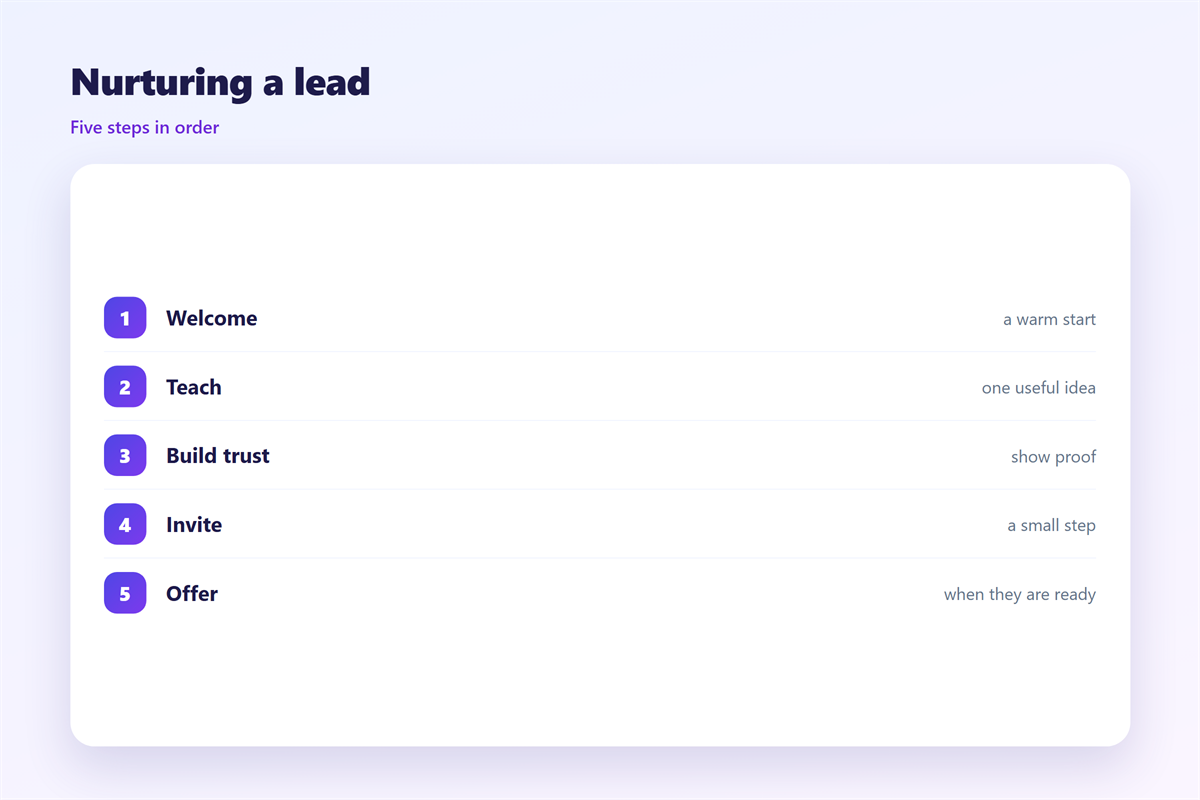
Email one says thank you. It shares a short guide on a core topic.
Email two answers a common worry. It adds one useful example.
Email three tells a small story. It hints at the product once.
Email four makes a soft offer. It links to a trial, not a hard sale.
Email five says goodbye with a tip. It asks nothing at all.
That is a whole series in five notes. Each one gives before it asks.
Keep each note under two hundred words. Short notes get finished.
Timing and pacing
Space the emails over days. Two or three days between notes feels calm.
Send the first note right away. The sign up is still fresh.
Do not rush the later ones. Give the reader time to think.
Check the reader’s time zone. A morning send can land at midnight.
Set the series once and let it run.
Leave room for a break. A pause makes the next note welcome.
How to plan a 邮件培育 series
Pick one goal for the whole series. Everything serves that goal.
Write each email around one idea. Two ideas in one email cancel out.
Space the messages over days. Give the reader time to read and think.
Mix helpful notes with soft offers. Most notes should simply help.
Keep the 邮件培育 series short. Four or five emails are often enough.
Keep the 邮件培育 tone warm and plain.
Read each note out loud. If it sounds stiff, soften the words.
Write the goal before the words. A clear goal shapes every note.
Common mistakes
The first mistake is selling too soon. Trust needs a little space.
The second is a wall of text. Long emails get skimmed or closed.
The third is one path for everyone. New and old readers need different steps.
Another mistake is ignoring the exit. Leaving must stay easy and honest.
Do not copy a series from another list. Audience and offer change everything.
Another mistake is a broken link. Fix dead links before they cost you.
Nurture on a small list
A small list is easier to read. You can reply to real people.
Ask what they want to learn. Then write the next note for them.
Small lists grow by trust, not by volume. Slow is fine here.
Keep the tone personal. A short reply can beat a polished campaign.
One good reply can teach you what to send next.
Measuring 邮件培育
Watch the open first. A low open means the subject needs work.
Then watch the click. That shows if the message was useful.
Log the send date beside the number. A 邮件培育 result without a date is hard to compare.
Compare the trend, not one send. A single bad day is only noise.
Track replies as well. A reply shows real trust.
Keep one simple sheet. It beats a dashboard you never open.
Where to go next
Make leaving simple in 邮件订阅. Keep the addresses clean per 邮件列表. Set the rules of permission in 邮件营销. Judge the first line with 邮件打开率.
Then repeat what worked. A steady series beats a clever one off push.
FAQ
How long should 邮件培育 run?
One or two weeks is common. Give each message a day or two of space.
How many emails should I write?
Four or five is a good start. Add more once you know what readers like.
Can 邮件培育 work without a product?
Yes. Nurture suits any list. Trust helps even when you sell nothing.
Should I segment the series?
Yes, if you can. A short branch by interest keeps the notes useful.
评论
还没有评论,来说两句吧。
评论功能已关闭。