 小影邮箱
邮件复购怎么做?Bringing Buyers Back
Key Takeaways
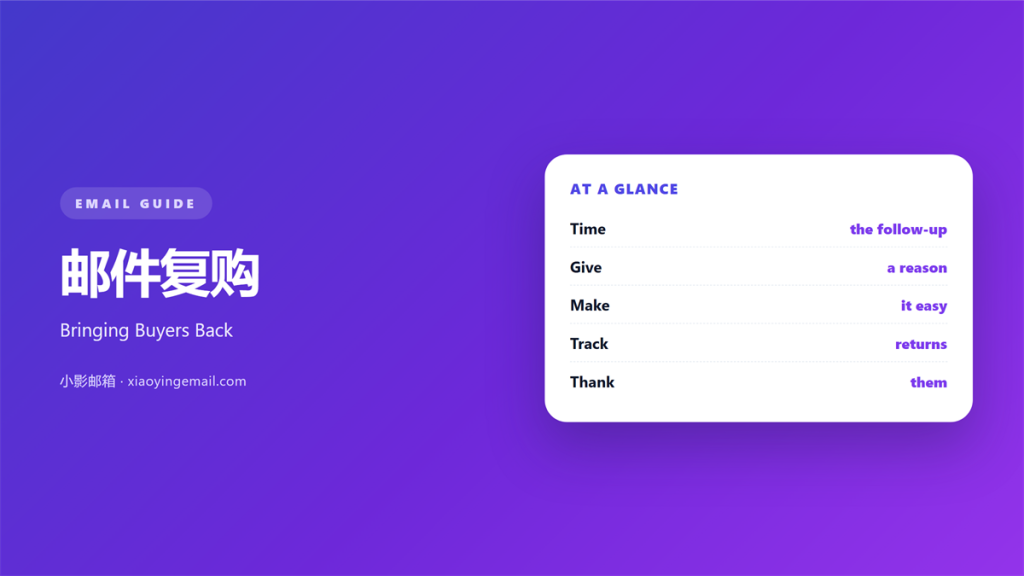
- 邮件复购 is the second sale to the same buyer.
- The first order earns the right to ask again.
- Time the follow-up to the product’s natural cycle.
- Give a reason, not just a reminder.
- Measure who returns and who stays quiet.
What 邮件复购 means
邮件复购 is the work of bringing a buyer back.
It starts after the first order arrives.
The goal is a second purchase, not a friendly nudge.
A reminder alone rarely earns the sale.
The buyer needs a reason to return now.
That reason can be a refill, an upgrade, or a thank-you.
邮件复购 works best when it feels personal.
The message should mention what they bought.
It should also know when that item runs out.
Generic blasts treat a loyal buyer like a stranger.
A stranger has no reason to come back twice.
So the note begins with their order, not your catalogue.
That small detail separates a repeat sale from a cold pitch.
Why 邮件复购 matters
Getting a new buyer costs more than keeping one.
A returning buyer already trusts the shop.
They know the delivery time and the quality.
That trust shortens the next decision a lot.
邮件复购 also protects revenue in quiet months.
Repeat orders smooth the peaks and the dips.
A list of one-time buyers is fragile.
One bad month can empty the whole pipeline.
The second sale also predicts the third one.
Buyers who return twice tend to stay for years.
Trust compounds with every order
Each good delivery makes the next one easier.
邮件复购 simply reminds people of that history.
It turns a past order into a future habit.
The habit is worth more than any single discount.
When 邮件复购 helps
邮件复购 helps when the product runs out.
Coffee, ink, and soap all have a natural rhythm.
A timely refill note feels like a service.
It also helps after a good support case.
A fixed problem is a strong reason to return.
New versions create another clear moment.
Owners of the old model often want the upgrade.
A seasonal change gives one more opening.
Match the note to the purchase
Look at what each buyer actually bought.
Send the refill note only to refill buyers.
Send the upgrade note only to owners.
Small lists make this easy to do by hand.
When 邮件复购 hurts
邮件复购 hurts when it ignores the first order.
A generic “come back” note reads as noise.
It also hurts when the timing is wrong.
Asking for a refill one week after delivery insults the buyer.
Too many reminders can feel like pressure.
One note per cycle is usually enough.
Discounts on every repeat order train bad habits.
Buyers learn to wait for the next coupon.
The margin shrinks while the habit grows.
Finally, never hide the price of the second order.
A surprise charge ends the relationship for good.
邮件复购 and timing
Timing is the whole game in 邮件复购.
Start from the delivery date, not the order date.
Add the expected life of the product.
Then send the note a few days before it ends.
A coffee bag may last three weeks.
A software licence may last a full year.
A coat may last several winters.
Build a simple clock
Write down the life of each main product.
Set the follow-up from that number.
Review the clock every quarter.
Products change, and so do buying habits.
How to use 邮件复购 well
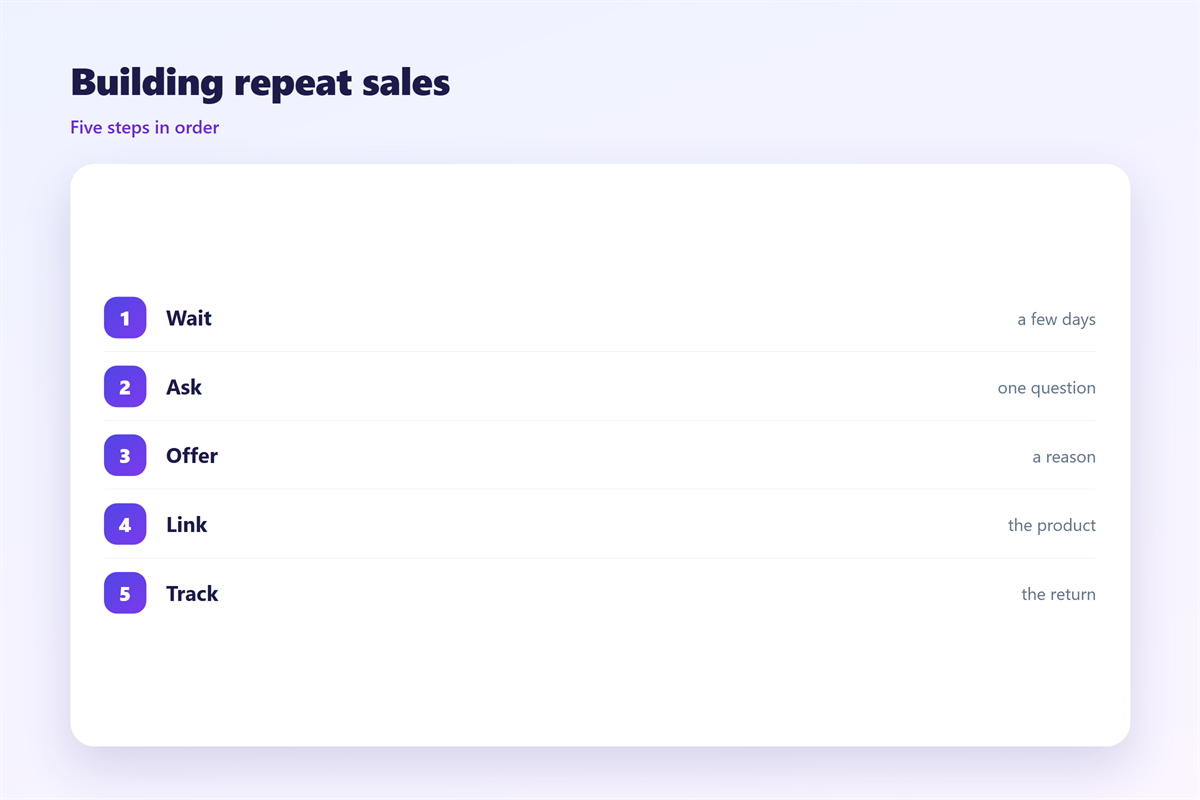
Begin with the buyer’s own purchase.
Name the item and the date in the first line.
Then give one clear reason to return.
Keep the note short and plain.
One button is enough for a repeat order.
Make reordering faster than buying the first time.
Save the address and the payment method.
Then thank them for coming back.
A short thank-you lifts the next order too.
Ask one question about the last delivery.
The answer tells you what to send next time.
Reorder in two clicks
Put the same item and size in the basket.
Skip the address step when the details are unchanged.
Test the flow on a phone every month.
A slow checkout loses the sale you just earned.
邮件复购 on a small list
Small lists are the best place to start.
You can read every order and spot the pattern.
邮件复购 rewards that kind of close attention.
Group buyers by what they bought.
Then write one note for each group.
A group of thirty is easy to handle.
A group of three thousand needs clear rules.
Start with rules you can follow by hand.
Automate only after the manual note works.
The manual note teaches you what to say.
Automation only repeats what you already know.
Keep a short log of every repeat order.
The log shows which note earned the sale.
Keeping 邮件复购 honest
Honesty keeps the second sale coming.
Never invent a reason to write.
If the item is not due, wait.
Say plainly why you are writing.
Some notes belong to care, not selling.
The service side lives in 邮件客户关怀 and the wider path sits in 邮件营销漏斗. The stages of a buyer’s life appear in 邮件生命周期, and the follow-up call is covered in 邮件回访.
Then keep one rule for how often you write.
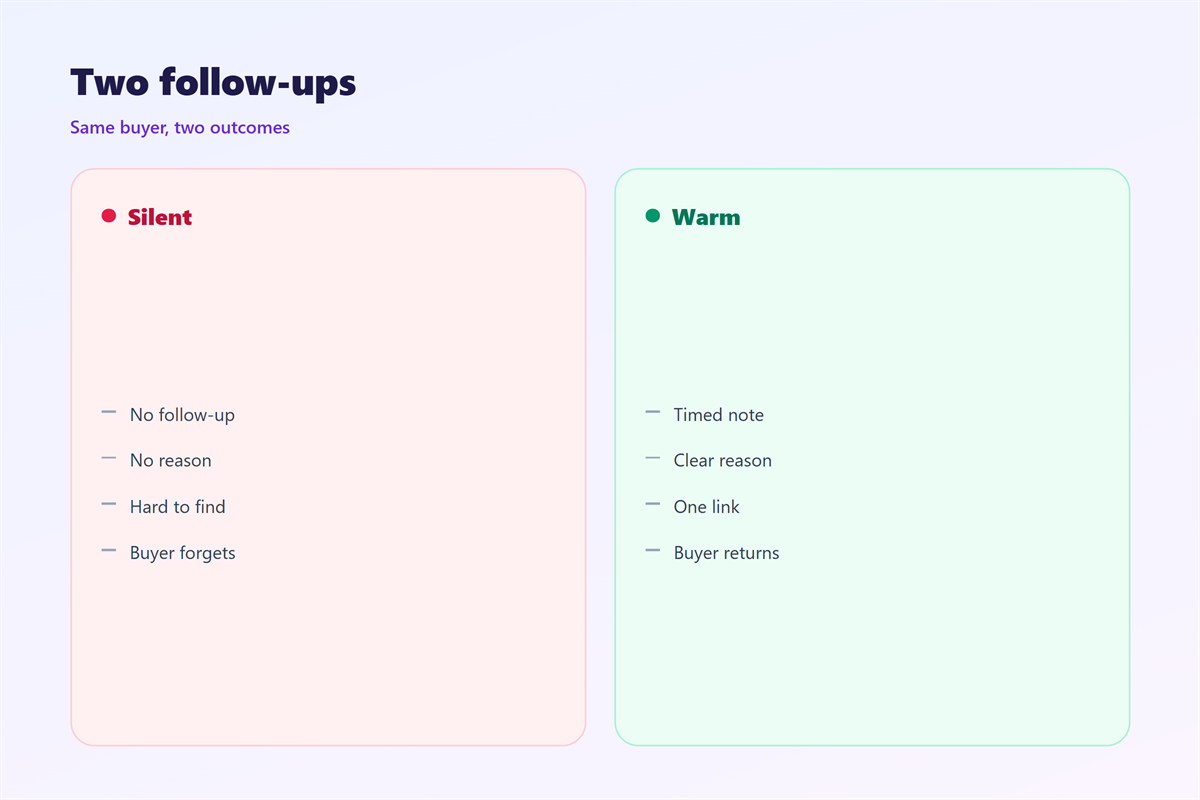
A buyer who feels watched will leave.
A buyer who feels remembered will stay.
That difference is the whole craft.
FAQ
How soon should 邮件复购 start?
Wait for the first delivery to arrive. Then follow the product cycle.
Should I offer a discount on every repeat order?
No. A discount every time becomes the new price. Use one only for a real reason.
What if the buyer never returns?
Send two quiet notes, then stop. Keep mailing only if they still open.
Which measure matters most?
The share of buyers who order twice. Track it by month and by product.
References
- Litmus: Email marketing and rendering guides
- Campaign Monitor: Email marketing resources
- Nielsen Norman Group: Writing for the web
评论
还没有评论,来说两句吧。
评论功能已关闭。