 小影邮箱
邮件营销漏斗怎么搭?From List to Loyal
Key Takeaways
- A 邮件营销漏斗 moves a stranger toward a buyer.
- Each stage gets one clear message.
- Permission comes before any pitch.
- Measure the step, not the whole trip.
- Small lists can run a funnel too.
What 邮件营销漏斗 means
邮件营销漏斗 is the path a reader walks from stranger to loyal buyer.
It is not one clever email. It is a short series of ordered steps.
Each step has one job. Each message answers the question of that moment.
A simple 邮件营销漏斗 has three or four stages.
A funnel slows the rush. It earns attention before it asks for money.
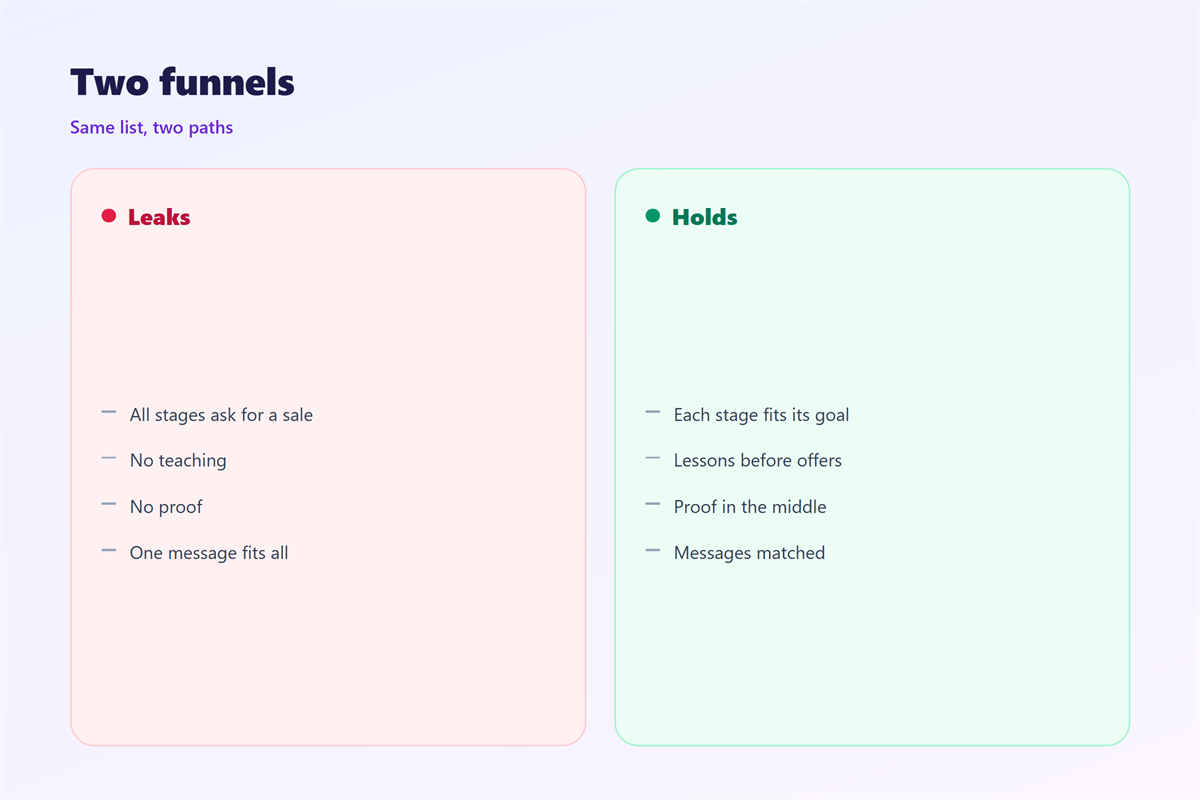
Most senders skip this part. They pitch on day one and lose the reader.
Think of a funnel as a friendship. It grows in small steps over time.
You would not ask a new friend for a favour on day one.
The same manners apply to email. Earn the right before you ask.
The stages of a 邮件营销漏斗
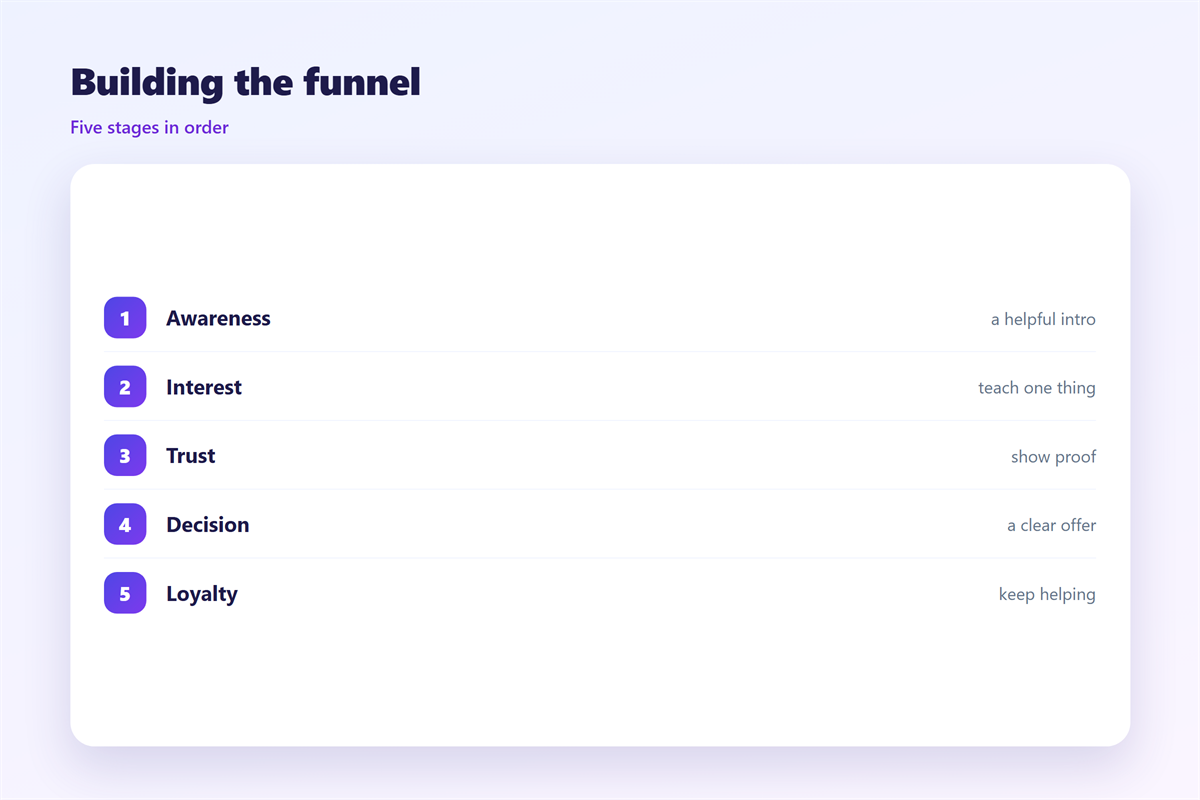
Start with the sign up. Then build trust and make the first offer.
Reward the repeat buyer last. Each stage is a small promise.
Keep the promise and the reader moves down. Break it and they leave.
Stage one: the 邮件营销漏斗 entry
The first stage is permission. Someone raised a hand and said yes.
Welcome them fast and set the tone. Say what they will get from you.
Do not sell here. Deliver the thing you promised at sign up.
Stage two: warm interest
The second stage builds trust. Share something useful with no strings.
Teach a small skill. Answer a common question in plain words.
Let the reader see how you think. Trust grows from small proofs.
Stage three: the first purchase
The third stage makes one clear offer. Pick a single product or service.
Tie the offer to the help you already gave. That link feels honest.
Remove every extra choice. One button in one colour is enough.
A worked example
A visitor reads a blog post. Then they join the list.
Email one arrives the same day. It says hello and shares a guide.
Email two comes three days later. It answers one common question.
Email three makes one small offer. It links to a single product.
Email four thanks the buyer. It asks for nothing at all.
That is a whole funnel in four messages.
You can copy the shape. Just change the topic and the offer.
Keep the spacing calm. One day, three days, then a week.
Watch each step and adjust. Small changes add up over a month.
Why a 邮件营销漏斗 beats random sends
Random sends rely on luck. A funnel relies on order.
Each message stands on the last one. The reader is never rushed.
A good 邮件营销漏斗 also shows where people stop. That tells you what to fix.
It keeps your effort focused. You stop sending mail that does nothing.
A calm 邮件营销漏斗 wins more than a loud one.
How to build a 邮件营销漏斗
Start with the goal. Decide what a finished trip looks like.
Then work backwards. Name the step before the sale.
Write one message for each step. Keep every message short.
Give each email a single idea. Two ideas in one email cancel each other.
Build the 邮件营销漏斗 around the reader’s mood.
Space the messages over days, not hours. Give the reader time to act.
A short 邮件营销漏斗 respects the reader’s time.
Set the timing once and let it run. A steady series beats a manual push.
Keep the 邮件营销漏斗 honest at every step. It should never feel like a trap.
Name each email clearly in your tool. Months later that name is your memory.
Test one change at a time. Otherwise you never learn what helped.
Tools and timing
Most email tools can run a series for you. Set it once and let it work.
Check the clock in the reader’s time zone. A morning send can land at midnight.
Space the messages over days, not hours. Rushing feels like pressure.
Keep the copy short on a phone screen. Most mail is opened there first.
Use plain text often. A simple note can feel more human.
Write the goal on one line. Everyone on the team should know it.
Review the series each season. Offers and links go stale over time.
Common mistakes
The first mistake is pitching too early. Trust takes at least two emails.
The second is too many messages. A crowded inbox gets ignored.
The third is one path for everyone. New and old readers need different steps.
Another mistake is ignoring the exit. Leaving must stay easy and honest.
Do not reuse a funnel from another list. Audience and offer change everything.
Never buy names to fill the top. Strangers did not ask to hear from you.
Another mistake is a broken link. A dead link wastes the whole step.
A vague goal is also common. Name the action before you start.
Measuring a 邮件营销漏斗
Measure the 邮件营销漏斗 one stage at a time.
The open tells you if the subject worked. The click shows real interest.
Watch where the biggest drop sits. That is your first thing to fix.
Keep a note of what you changed. Memory is a poor record of last month.
A 邮件营销漏斗 without dates is hard to compare later.
Compare the trend, not one send. A single bad day is only noise.
Keep one simple sheet. It beats a dashboard you never open.
Where to go next
Set the rules of permission in 邮件营销. Keep the addresses clean per 邮件列表. Judge the first line with 邮件打开率. Then read real interest through 邮件点击率.
Then let the 邮件营销漏斗 run on its own. A steady series beats a clever push.
FAQ
Does a 邮件营销漏斗 need many emails?
No. Three or four well spaced messages beat a long series most days.
How long should it take?
One or two weeks is common. Give each step a day or two of space.
Can I run it on a small list?
Yes, and a small list is easier to watch. The steps work at any size.
Should every email sell?
No. Early messages should help. Save the hard ask for later.
评论
还没有评论,来说两句吧。
评论功能已关闭。