 小影邮箱
邮件客服怎么做?Support Mail That Resolves
Key Takeaways
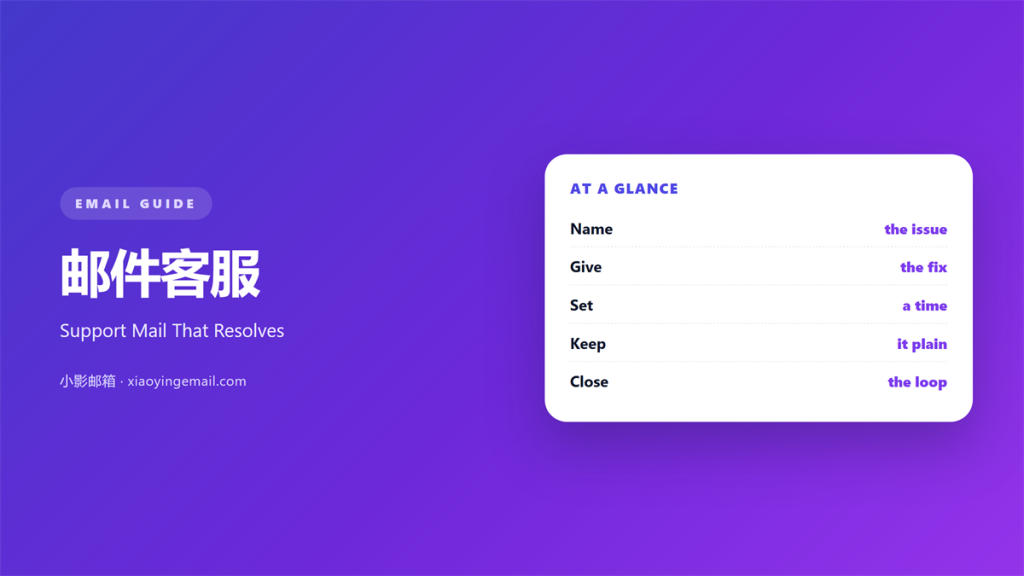
- 邮件客服 answers customers through email.
- A good reply names the problem and the fix.
- Speed matters, but clarity matters more.
- One thread keeps the whole story in one place.
- Close the loop, then check the customer is happy.
What 邮件客服 means
邮件客服 is support given by email.
A customer writes with a problem.
An agent reads it and replies.
The reply explains the cause.
It also states the fix.
The exchange usually spans a few days.
Each reply is logged in a thread.
That thread is the customer’s file.
Good agents keep it clean.
They quote only what matters.
They answer the main question first.
Then they add the details.
They also set a clear next step.
That step keeps the case moving.
It also confirms the next update.
That line removes future worry.
Why 邮件客服 matters
Support decides if a customer stays.
One slow reply can lose a sale.
One clear reply can win loyalty.
Email is also easy to forward.
So a good answer reaches other people.
It quietly markets the brand.
A bad one does the same, in reverse.
邮件客服 also creates a record.
The record shows what went wrong.
Teams use it to fix the product.
So support feeds the whole company.
That is why the wording matters.
A calm tone also lowers stress.
A rude one raises the temperature.
Most readers judge the firm by one reply.
So write each reply with care.
First reply, then details
Answer the main point first.
Add the steps after that.
Long preambles lose the reader.
Short openers keep trust.
When 邮件客服 helps
Fast, clear support builds trust.
It lowers the number of repeat tickets.
It turns an angry note into a calm thread.
It gives the agent a clear script.
The script keeps answers consistent.
New staff learn from older threads.
The team can also spot one big issue.
Many tickets on one topic is a signal.
That signal helps the product team.
So good support pays twice.
Once for the customer, once for the firm.
That is a rare double win.
It also frees the agent’s day.
Fewer repeats mean more time.
The one-thread rule
Keep one thread per issue.
Never start a second thread.
The history stays in one place.
That saves everyone time.
When 邮件客服 hurts
A copy-paste reply hurts.
The customer can tell at once.
A late reply hurts too.
Silence makes people write again.
Each new note adds to the pile.
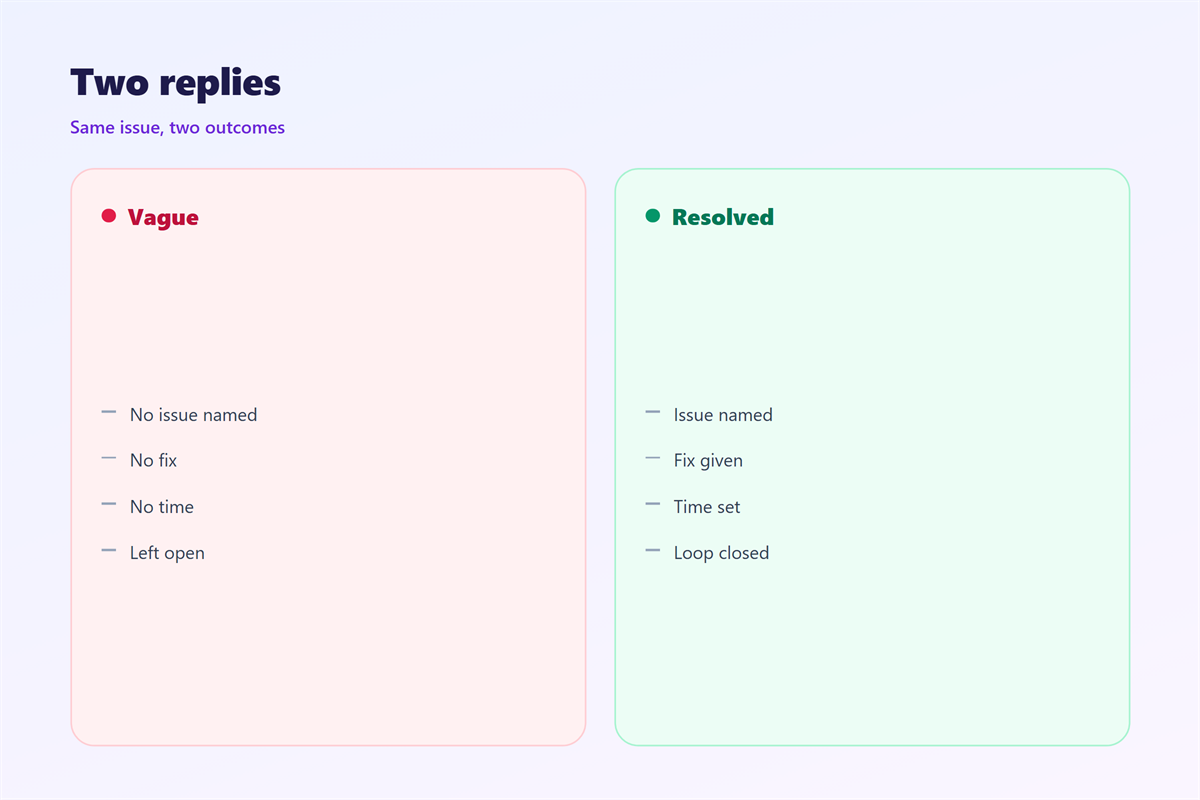
Vague answers also hurt.
A soft promise says nothing.
Give a step and a date instead.
Tone can hurt as well.
Blame turns a small issue into a fight.
Own the problem without excuses.
Then offer the next step.
Never leave a thread open.
A closed case is a happy case.
An open case worries the customer.
So close it on the promised day.
The golden-hour rule
Reply within one working hour if you can.
Even a short holding note helps.
Then send the full answer later.
Speed buys you patience.
邮件客服 in practice
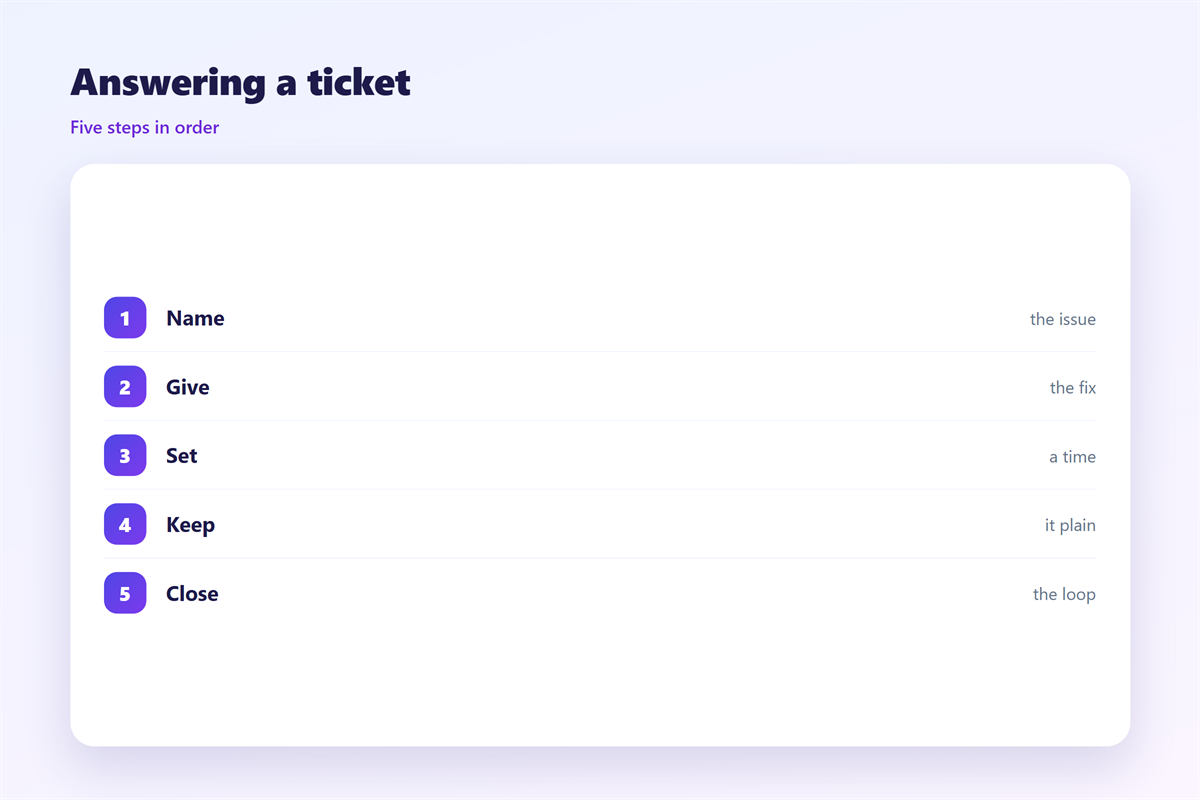
Start by reading the whole thread.
Find the single real question.
Answer it in the first line.
Then explain the cause.
Then list the steps clearly.
Number the steps one by one.
Ask for a reply if more is needed.
Set a date for the next update.
Close with a calm, warm line.
Then log the case properly.
Tag it so the team can find it.
That tag helps the next agent.
Write the customer’s name correctly.
Small details show real care.
Then re-read the note once.
Fix any typo you find.
Then press send.
How to set 邮件客服
Build a small reply library.
Add one entry per common issue.
Keep each entry short and plain.
Then add the personal touches by hand.
Never send a template as it stands.
Read it aloud before you send.
Fix any line that sounds cold.
Sign with a real name.
Offer a way to reply.
Then track the first-reply time.
A steady 邮件客服 grows from habit.
Review the library each quarter.
Cut the entries that customers dislike.
Keep the ones that close cases fast.
Share the best ones with the team.
That is the whole craft.
Then track one simple score.
A single number is enough.
邮件客服 and the customer
Customers want to feel heard.
Start with a short line of thanks.
Then move to the facts.
Do not over-apologise.
One clear apology is enough.
Keep the reader’s name in the reply.
Reflect their words back once.
That shows you read the note.
Then offer the fix.
End with an open door.
A warm close invites them back.
That is how loyalty is built.
A quick follow-up seals it.
Ask one short question at the end.
Keeping 邮件客服 steady
Your support tone sits inside a wider plan.
The contact around a case appears in 邮件客户关怀.
The fast answers you can store sit in 邮件快捷回复.
The base text you reuse is covered in 邮件模板.
The loop that closes each case sits in 邮件反馈.
Review your first-reply time once a month.
Then share the best replies with the team.
A shared style keeps answers even.
A steady 邮件客服 keeps customers close.
FAQ
How fast should 邮件客服 reply?
Aim for the first reply within one working day.
Should I use templates in every reply?
Use them as a base, then make each one personal.
What if the customer is angry?
Stay calm, own the issue, and give a clear step.
Does 邮件客服 need a follow-up?
Yes. Check the fix worked before you close.
References
- W3C WAI: Content structure and readability
- Litmus: Email marketing guides
- Nielsen Norman Group: Email usability research
评论
还没有评论,来说两句吧。
评论功能已关闭。