 小影邮箱
邮件建议怎么写?Suggest Without Push
Key Takeaways
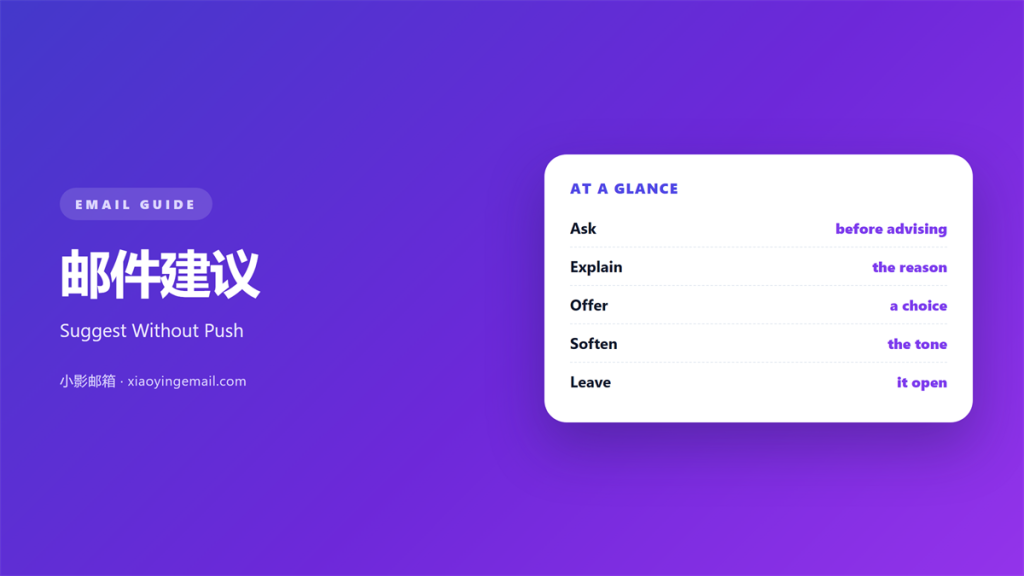
- 邮件建议 offers one clear idea and leaves the choice open.
- A good suggestion respects the reader’s judgement.
- Lead with the reason before the request.
- Keep the tone helpful, never pushy or superior.
- Offer to help before you expect agreement.
What 邮件建议 means
邮件建议 is a short note that offers an idea for the reader to weigh.
It gives a reason and a choice, not an order.
It stays polite even when the writer is sure.
The reader should feel free to say no.
That freedom is what makes a suggestion useful.
A 邮件建议 that demands a yes is really a command.
Keep the idea small and the tone calm.
One clear 邮件建议 beats three vague ones.
A 邮件建议 should sound like advice, not a verdict.
The best suggestions sound like an offer, not a verdict from above.
They leave the reader free to accept, delay or politely decline.
It points at one small change and explains the likely gain.
Why a 邮件建议 works
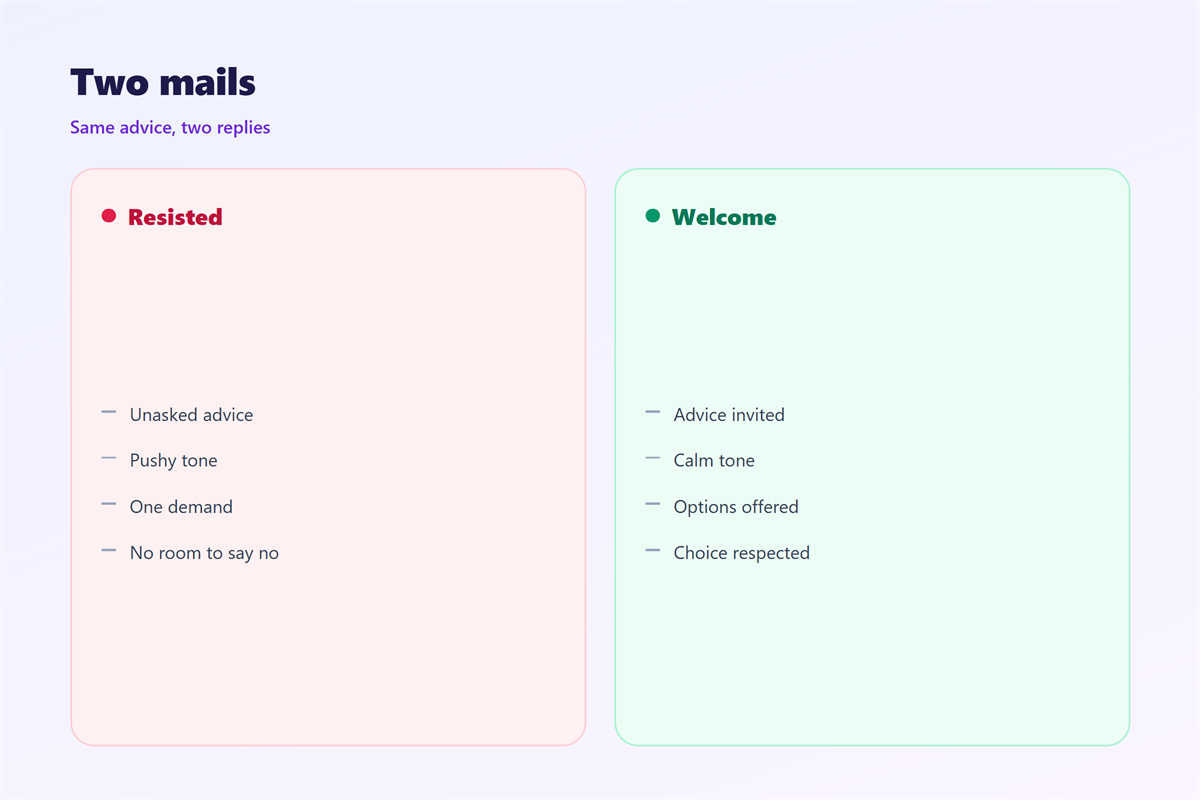
People resist orders but accept ideas they help shape.
A suggestion invites the reader into the decision.
It also keeps the relationship level between two adults.
A calm 邮件语气 makes the idea easier to accept.
When the reader agrees freely, they act with more care.
A pushy note may win once and lose the trust for good.
A steady 邮件建议 builds trust over the years.
An idea that the reader helps shape is far easier to defend.
It also protects the working bond when the two sides disagree.
A calm tone usually matters more than a perfect choice of words.
A good suggestion also shows that you understand the reader’s goals.
Leave room to decline
Say clearly that saying no is fine.
Readers relax when they keep the final say.
That small courtesy often raises the odds of a yes.
Building a 邮件建议
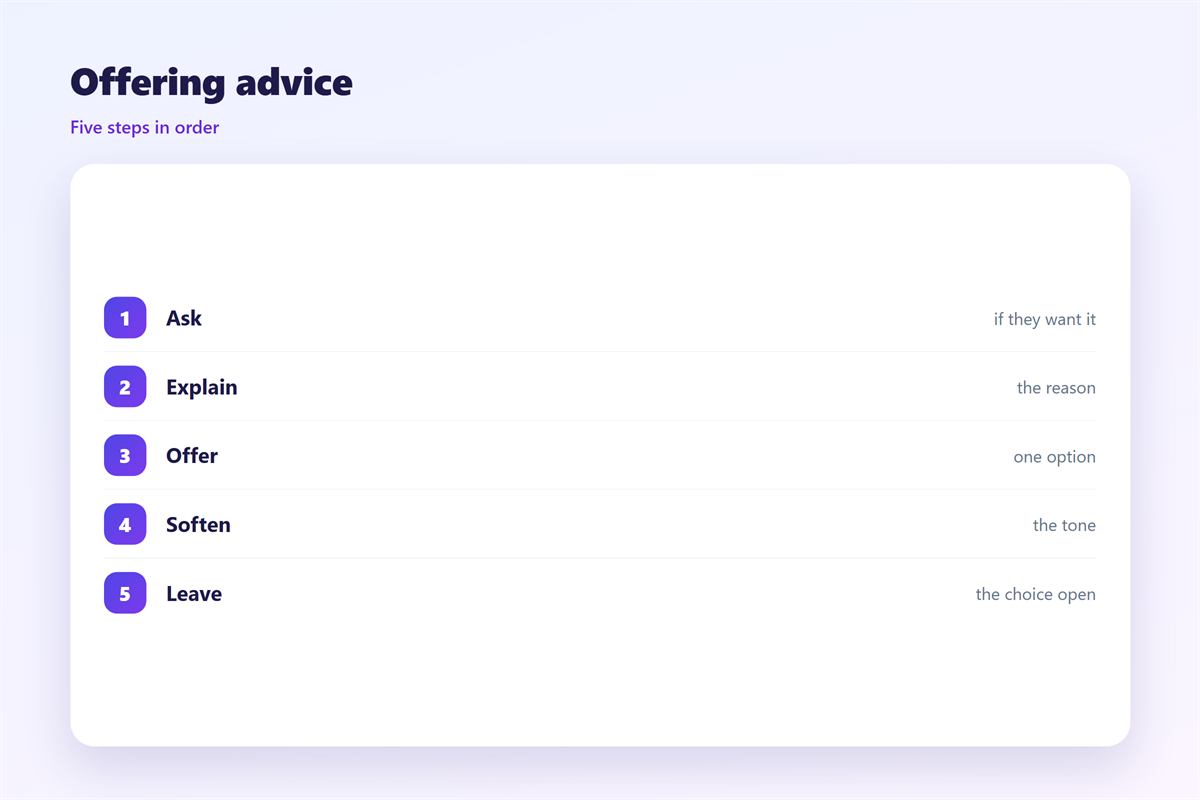
Use the same three parts every time for speed.
Start with the reason, then the idea, then the offer.
The order matters more than the wording.
Keep the whole note short enough to read in half a minute.
A real example from your own work often makes the point faster.
Name the benefit before you name the extra work.
Give the reason first
Explain the problem before you hint at a fix.
A shared problem makes the idea feel mutual.
Numbers and dates make the reason concrete.
State one idea
Keep it to a single, simple change.
Two ideas in one note often cancel each other out.
Say what would improve and by how much.
Offer to help
End by naming the help you can give.
I can draft the first version if that saves time.
Help makes the idea lighter to accept.
邮件建议 in a reply
Replies need a lighter touch than a fresh note.
Agree first with the part that is already right.
Then add your idea as a gentle question.
Would it help to shift the deadline by one day?
A question is softer than a flat statement.
A short 邮件建议 keeps a long thread calm.
Tone carries more weight than any single turn of phrase.
Read the older thread before you add a fresh idea to it.
Never repeat a suggestion the reader has already turned down.
A short question invites an answer without any pressure at all.
Disagree without a fight
Name the shared goal before the difference.
Attack the problem, never the person.
Offer your view as one option among a few.
A short 邮件建议 example
Suppose a teammate sends a rushed report each week.
A gentle 邮件建议 might read like this.
Thanks for the update, the numbers are clear.
Would a short summary at the top help the team?
I can share a format that worked before.
The note gives a reason and an offer.
It never says the old report was wrong.
Notice that the note gives a reason and offers real help.
It never claims the old way was wrong or careless.
The reader can act on it the same day.
Mistakes to avoid
The first mistake is wrapping an order as a suggestion.
Readers sense a demand behind soft words.
The second is giving advice nobody asked for.
Ask first whether the reader wants input.
The third is listing too many ideas at once.
Keep one idea and let it breathe.
A careful 邮件建议 stays short and kind.
Copying a suggestion to the whole team rarely lands well.
Compare options calmly, and never lecture the reader.
Short words are easier to accept than long, clever ones.
One clear idea is worth more than four rushed ones.
Keeping a 邮件建议 handy
Save the notes that worked, and reuse the same shape.
Reusable wording is gathered in 邮件模板.
The right warmth is described in 邮件语气.
A clear order for the body sits in 邮件正文.
Progress notes are covered in 邮件汇报.
Then reuse the good ones and drop the rest.
A folder of drafts saves time across a year.
Group your saved notes by the kind of reader they suit.
A short list of openers can speed up the first line.
Review the folder twice a year and drop the weaker notes.
Good wording is worth keeping and reusing often.
Keep the reader’s time in mind at every line.
FAQ
Is a 邮件建议 rude to a senior person?
No, if you stay brief, humble and useful.
How many ideas should I include?
One. A second idea can wait for its own note.
What if they say no?
Thank them and move on. Keep the door open.
Should I attach a file?
Only if it saves the reader real time.
评论
还没有评论,来说两句吧。
评论功能已关闭。