 小影邮箱
邮件抄送礼仪有哪些?Who to Include and Why
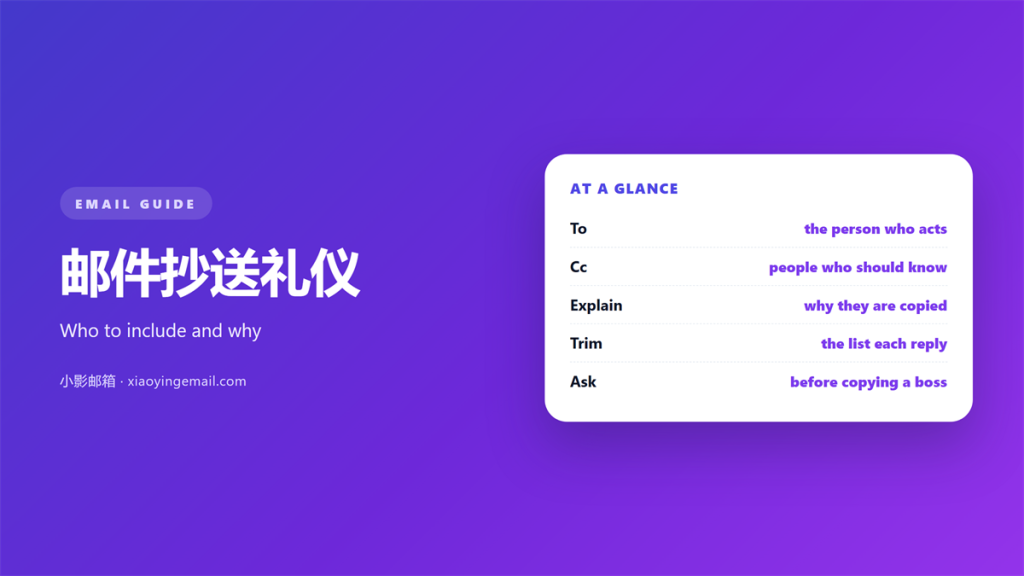
Key Takeaways
- 邮件抄送礼仪 starts with one question: who needs to know?
- Cc shares a record; it does not assign a task.
- Keep the list small and the reason clear.
- Never use Cc to expose or to pressure a colleague.
- Check the names once before you send.
What 邮件抄送礼仪 actually means
邮件抄送礼仪 is about respect for other people’s time.
A copy is not a request. It is a quiet record for the reader.
When people treat Cc as work, they grow a thread nobody owns.
The result is noise. Everyone is copied and no one replies.
Good manners keep the field honest. Each name has a clear reason.
Ask yourself who must act. Those people belong in To.
Then ask who must simply know. Those people belong in Cc.
This simple split is the core of 邮件抄送礼仪. It scales from a small team to a large firm.
A clear rule turns 邮件抄送礼仪 into a daily habit. Write it down once.
The field looks simple. Its effect on a team is large.
A copied reader who is never addressed learns to ignore mail.
邮件抄送礼仪 is strongest when it is invisible. The message simply reaches the right desks.
A clear subject helps every copied reader. It tells them what the thread is about.
Keep the tone neutral on a wide copy. Private asides belong in a single reply.
The rules behind 邮件抄送礼仪
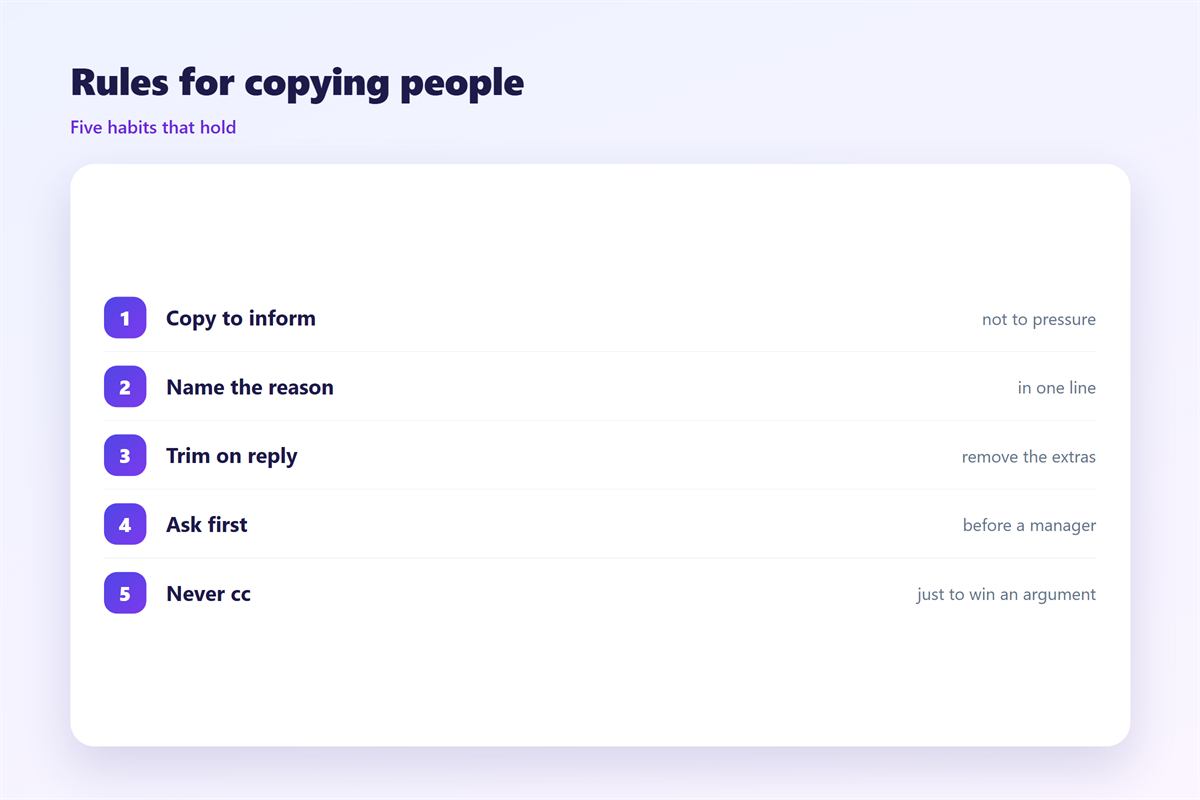
Rule one is short lists. Five names on Cc is usually too many.
Rule two is a clear reason. If you cannot name it, drop the copy.
Rule three is stable order. Keep senior people in a neat sequence.
Rule four is no surprises. Tell a new reader why they were added.
Rule five is a clean subject. A copied reader needs context fast.
- To: the owner who acts.
- Cc: the people who stay informed.
- Bcc: the archive or a protected address.
These five rules carry most of 邮件抄送礼仪.
A shared rule beats a personal habit. New staff learn it in a day.
Keep a spare rule for external readers. Clients need a different tone.
Outside a company, a copy can look like pressure. Choose carefully.
Ask before you copy a whole team. A quick note avoids awkward surprises.
Where 邮件抄送礼仪 goes wrong
Four mistakes appear again and again.
The first is reply all. It adds a name with every round.
Each reply grows the list. The thread slowly becomes public.
The second is the stale group. A list that was right quietly turns wrong.
The third is blind Bcc. The hidden copy stays hidden until someone replies to all.
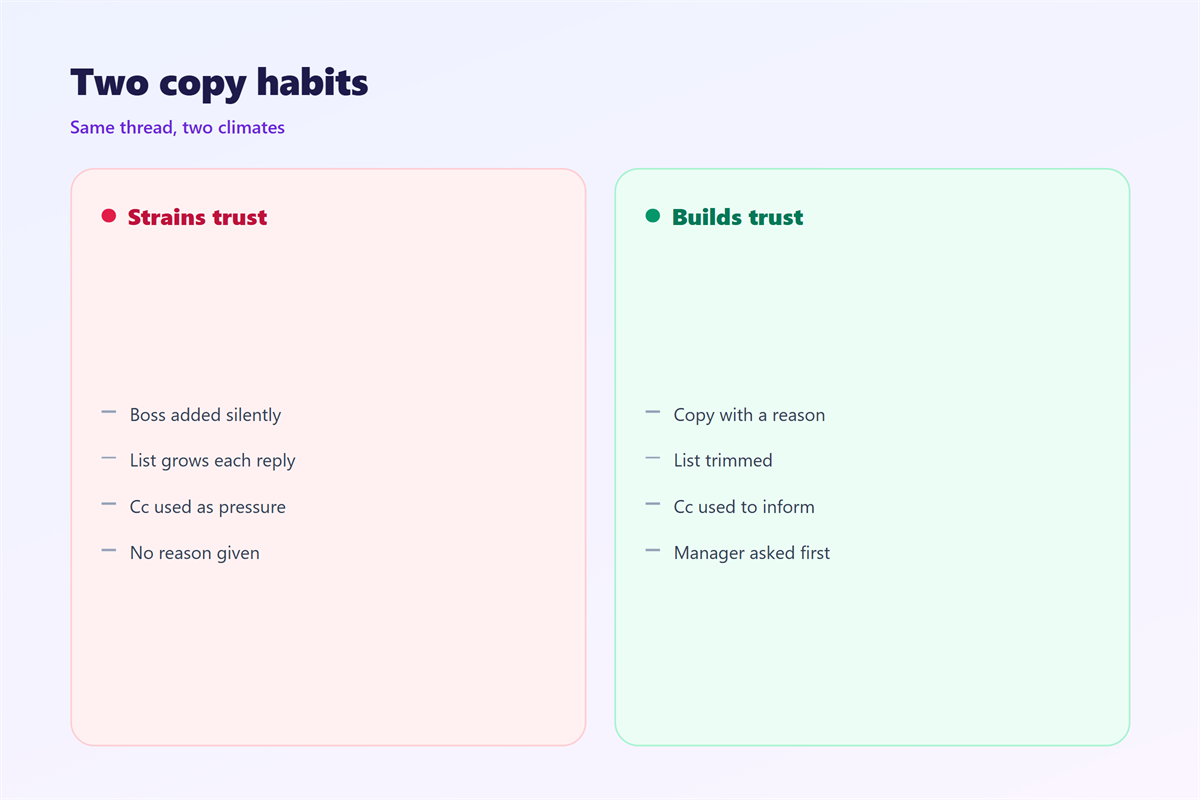
The fourth is the silent escalation. Copying a boss to force a reply damages trust.
None of these are rare. Each one has a cheap fix.
Trim the list before sending. Remove anyone who does not need the record.
A wide list also slows the reply. Each reader waits for someone else.
That delay looks like neglect. The sender never sees it.
Steady 邮件抄送礼仪 keeps the thread tidy over many rounds.
Remove the quiet readers once a thread settles. A smaller list answers faster.
People notice good 邮件抄送礼仪 when they were added on purpose.
A calm check beats a hurried apology. Restraint is the whole skill.
Testing your 邮件抄送礼仪
Send a test before a message that matters.
Address it to yourself first. Read the copy as the last name on the list would.
Then ask one question. If this reached the wrong person, what would they learn?
If the answer worries you, move that name to Bcc or remove it.
For a shared inbox, agree on a rule. To is for owners and Cc is for the team.
Write the rule down. A rule that lives in one head disappears when they leave.
A quick test also checks the order. Names read differently at the top.
Compare your draft with an older thread. See which names still need the record.
Check your 邮件抄送礼仪 as the last step before sending.
Keep a short checklist beside you for the first week. Habits fade under pressure.
A short check makes 邮件抄送礼仪 automatic within a week.
Working with groups and addresses
Groups make copying easy and dangerous.
A group hides its members. You cannot see who will read the message.
Before using a large group, open it once. Check that it still holds the right people.
Prefer a named owner over a group when you need a reply. Groups rarely answer.
An alias can also hide a group. Check the members before you trust it.
Send to fewer people when you are unsure. You can always add a name later.
A small list also replies faster. Everyone can see who owns the task.
Our notes on 邮件抄送 cover visibility in detail. The quieter option is explained under 邮件密送. Broader manners are treated in 邮件礼仪, and greetings sit under 邮件称呼.
Good 邮件抄送礼仪 also means reading the names twice. One quick glance is not enough.
FAQ
Who should be in Cc?
The people who need the record. Not the people who might act. Keep the list short and honest.
Is Cc rude?
No, when it informs. It becomes rude when it exposes or pressures. Ask what the reader must do.
When is 邮件抄送礼仪 broken?
When a copy becomes a weapon. Copying a manager to force an answer always costs trust.
Does order matter?
Slightly. The first name reads as the owner. Put the person who acts first.
评论
还没有评论,来说两句吧。
评论功能已关闭。