 小影邮箱
邮件投稿怎么约?Inviting Submissions
Key Takeaways
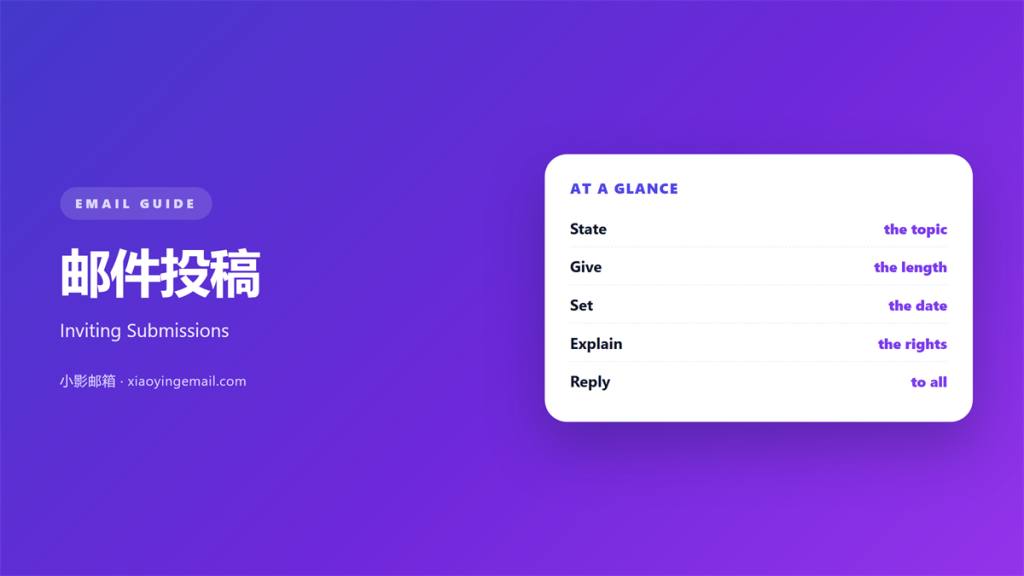
- 邮件投稿 invites readers to send their own work.
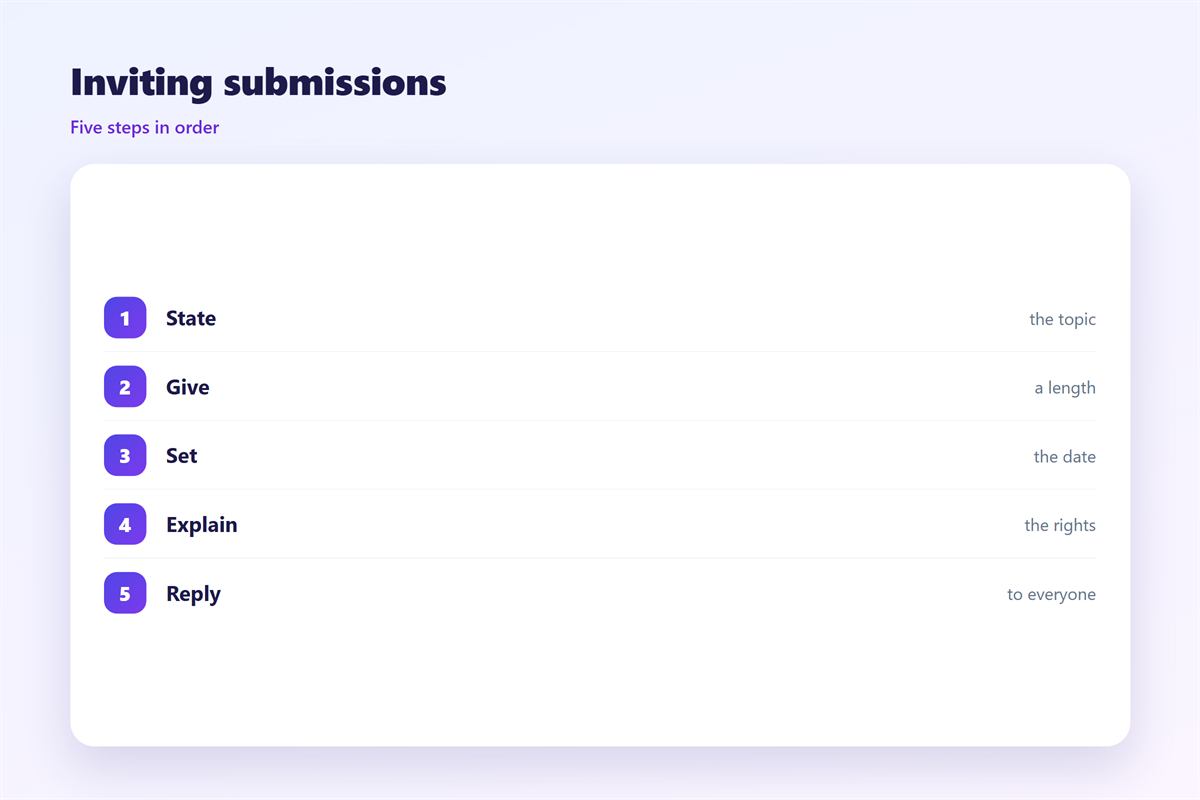
- State the topic, the length, and the deadline.
- Give one clear address to send it to.
- Reply to every sender, even the ones you reject.
- A friendly no keeps a future writer close.
What 邮件投稿 means
邮件投稿 is an open call for written work.
You invite readers to send an article or a note.
The mail explains what you want and when.
It also explains how the review will work.
A good call reads like a clear brief.
So the writer knows exactly what to do.
The best 邮件投稿 makes sending a piece easy.
That ease is the whole point.
Barriers cut the number of good submissions.
So remove every unnecessary rule.
Keep the entry simple and the deadline firm.
Then treat each sender as a real guest.
A clear call also cuts your own inbox.
Fewer writers send the wrong kind of piece.
So write the call as if you were the writer.
Then test it on one friendly reader.
Why 邮件投稿 matters
A call for work brings fresh voices.
It also builds a small community.
People who write for you tend to stay.
They share the issue with their own readers.
邮件投稿 turns an audience into a group.
It also lightens your own load.
One strong guest piece fills a whole section.
And it costs you only a clear brief.
So a good call pays for itself.
Treat it as a long game, not a quick ask.
Guest pieces also refresh your voice.
Readers enjoy a change of tone now and then.
So treat each call as a small welcome.
Setting the brief
Name the topic and the angle.
Set a word range, not an exact number.
Give one example of a good piece.
Then stop. The brief is done.
When 邮件投稿 helps
An open call helps in several ways.
It fills a gap when your team is busy.
It surfaces topics you would miss.
It also tests which ideas readers like.
Their clicks tell you what to publish next.
And the senders become loyal readers.
So the call feeds two goals at once.
Content and community grow together.
That pairing is hard to buy.
So run the call on a steady rhythm.
A regular call also grows your reach.
Each writer brings a few new readers.
That slow growth adds up over a year.
Good calls also surface hidden experts.
Reviewing the pieces
Read every piece once, then again.
Judge the idea before the grammar.
Then note one thing the writer did well.
When 邮件投稿 hurts
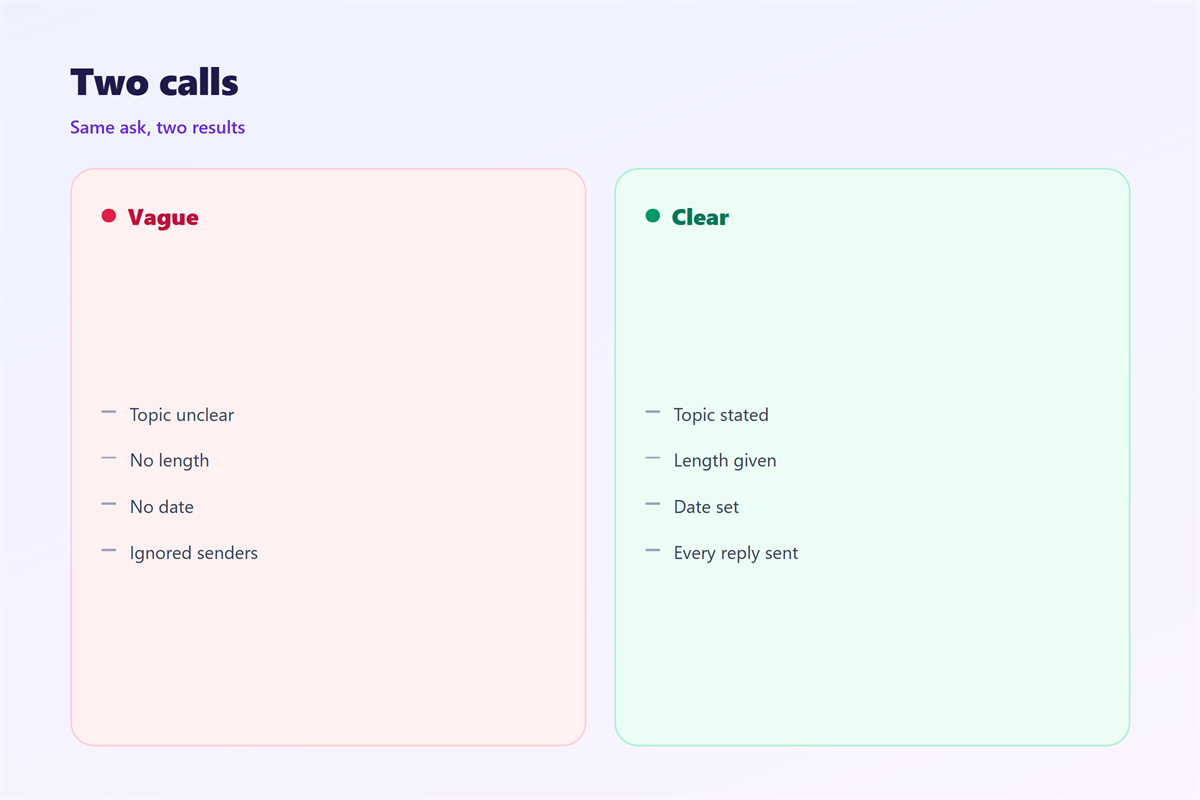
A vague call can hurt.
Writers guess what you want.
The guesses rarely fit.
So you read ten pieces and use none.
Writers then feel their time was wasted.
Another risk is silence.
A sender who hears nothing will not return.
So reply to everyone, even with a no.
A short no still respects the effort.
Then invite them to try again.
A rushed call also damages trust.
Writers remember a careless reply.
The kind-no rule
Thank the writer for the time.
Say plainly that it is not a fit.
Then name one thing you liked.
邮件投稿 in practice
Start with one clear invitation mail.
Put the deadline near the top.
Then give the topic and the length.
Add one link to a sample piece.
Keep the address simple and correct.
A wrong address kills the whole call.
Then send the call on a fixed day.
Repeat it once before the deadline.
So a slow writer still catches it.
Track every piece in one list.
Then read them in the order they arrive.
Keep every piece in one folder.
Then you can find it again fast.
Name the file after the writer.
How to run 邮件投稿
Choose the theme for the season.
Write the call in under ten lines.
State the date and the address twice.
Then hold the deadline once you set it.
After the call, read the open rate.
If few people send, widen the topic.
If too many send, tighten the brief.
Good 邮件投稿 changes slowly.
Next, sort the pieces by fit.
Two strong pieces in one theme should be rare.
If they collide, save one for later.
Then set the reply plan for each sender.
A fixed reply date removes the daily guilt.
Put the same call on your site too.
Not everyone reads every mail.
Then thank everyone who took part.
邮件投稿 and the writer
Writers care about two things.
They want a clear brief and a real reply.
Everything else is secondary to them.
So lead the call with the brief.
Then promise a reply date.
What breaks trust is a silent inbox.
A month of waiting feels like a rejection.
So send the no early if you know it.
An early no feels fair.
A late no feels careless.
So answer the easy cases first.
A good reply invites a second piece.
So write each reply with care.
Keeping 邮件投稿 open
A steady call builds a writing habit.
The announcement that starts the thread sits in 邮件公告.
The way you collect input appears in 邮件反馈.
The choice between a single reply and a group one sits in 邮件回复.
The manners that travel well live in 邮件礼仪.
Review the call once a season.
Then keep the same rule for every theme.
A team that agrees on 邮件投稿 gets better pieces.
Keep one owner for the whole call.
That owner answers every sender.
FAQ
How long should a 邮件投稿 call be?
Under ten lines, with the deadline near the top.
Should I reply to every piece I get?
Yes. Even a short no keeps a writer close.
Can I run 邮件投稿 all year?
Yes, but give each call a clear theme.
What if a piece arrives after the date?
Read it later and save it for the next call.
评论
还没有评论,来说两句吧。
评论功能已关闭。