 小影邮箱
邮件报表怎么看?Numbers That Explain
Key Takeaways
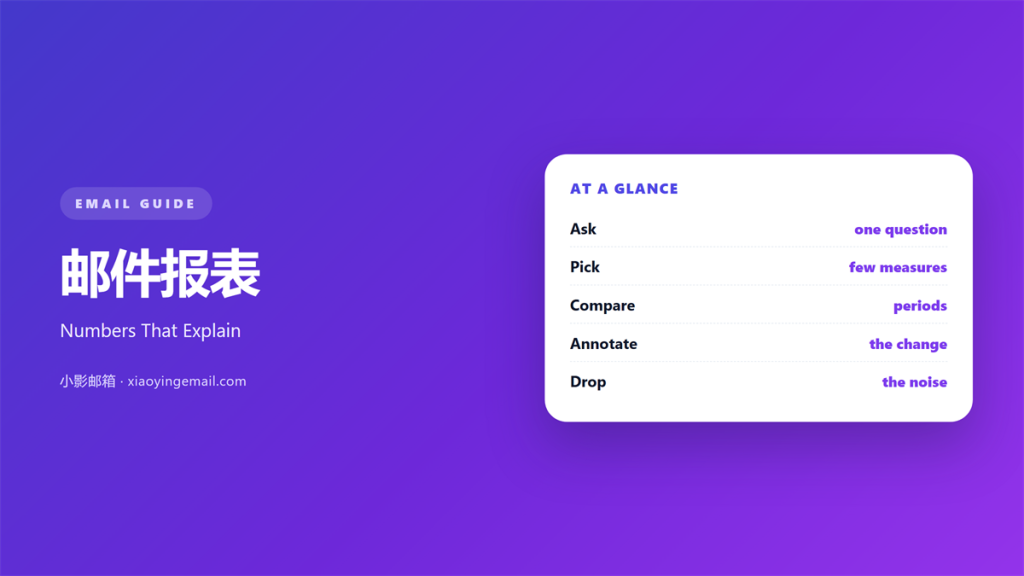
- 邮件报表 is a short record of what one send did.
- Pick a few measures and keep them stable.
- A number without a comparison says little.
- Name the question before the chart.
- End with one decision, not a data dump.
What 邮件报表 means
邮件报表 is a summary of how a campaign performed.
It usually covers delivery, opens, clicks, and sales.
The useful version is shorter than most.
Three or four numbers can carry the story.
The rest belongs in an appendix.
A report is not a dashboard.
It is a note that helps someone decide.
A report should answer one clear question.
That question is usually whether the send worked.
A report with no question becomes noise.
So write the question at the top.
Then let every number serve that line.
A reader should grasp the result in ten seconds.
If they cannot, the layout is doing too much.
Why 邮件报表 matters
Teams argue less when the numbers are shared.
One page can end a long debate.
It also shows where the money went.
A campaign that never pays should be visible.
邮件报表 protects the budget for good work.
Good sends get more room to grow.
Weak sends get fixed or dropped.
The habit also builds memory.
Next year you can compare like with like.
The comparison turns a guess into a trend.
Trends beat single results every time.
Numbers need a witness
A number alone proves very little.
A number against last month proves something.
That second number is the one to quote.
When 邮件报表 helps
邮件报表 helps after every campaign.
A short note keeps the team aligned.
It helps before a planning meeting.
Facts settle arguments faster than opinions.
It also helps when a test fails.
A clear loss saves a second attempt.
One written no is worth a month of guessing.
A short report also protects the next budget.
Report the loss too
Bad results are the most useful rows.
They show which idea has run out.
Keep them beside the wins.
When 邮件报表 hurts
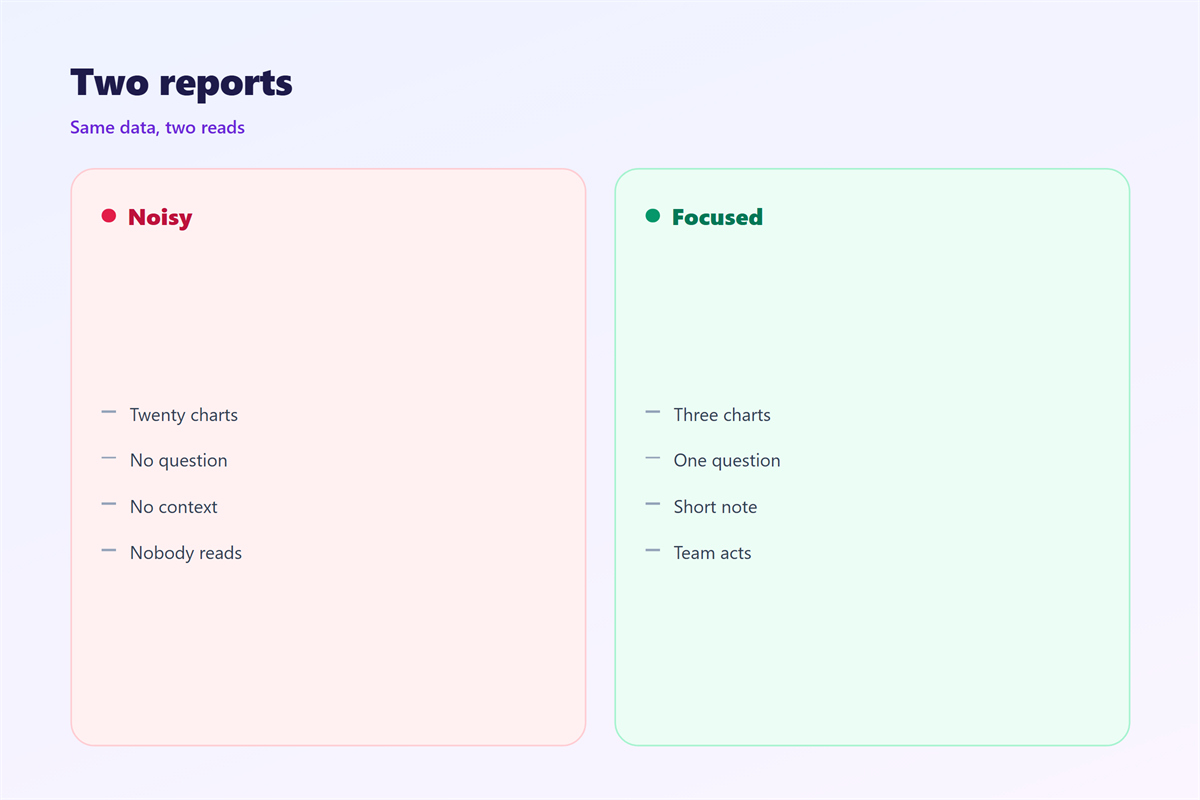
邮件报表 hurts when it lists everything.
Twenty measures hide the one that matters.
It hurts when the period is unclear.
A week compared to a month tells nothing.
It also hurts when the data is old.
A report that arrives three weeks late changes no decision.
Finally, avoid reporting without a decision.
A chart with no next step wastes the meeting.
The reader should leave knowing what changes.
If nothing changes, the report was a ritual.
Rituals feel busy while the work stands still.
Cut the ritual before it cuts the team’s patience.
The team stops trusting the page.
邮件报表 and context
A number needs a neighbour to mean anything.
Compare this send to the last one.
Compare this month to the same month last year.
Then compare the result against the plan.
邮件报表 without context invites false comfort.
A good month may simply follow a bad one.
Season, list size, and offer all move the number.
Write the reason beside each change.
Same send, same window
Keep the measuring window fixed.
Opens arrive over two or three days.
Clicks follow within the first day.
Changing the window changes the story.
How to use 邮件报表 well
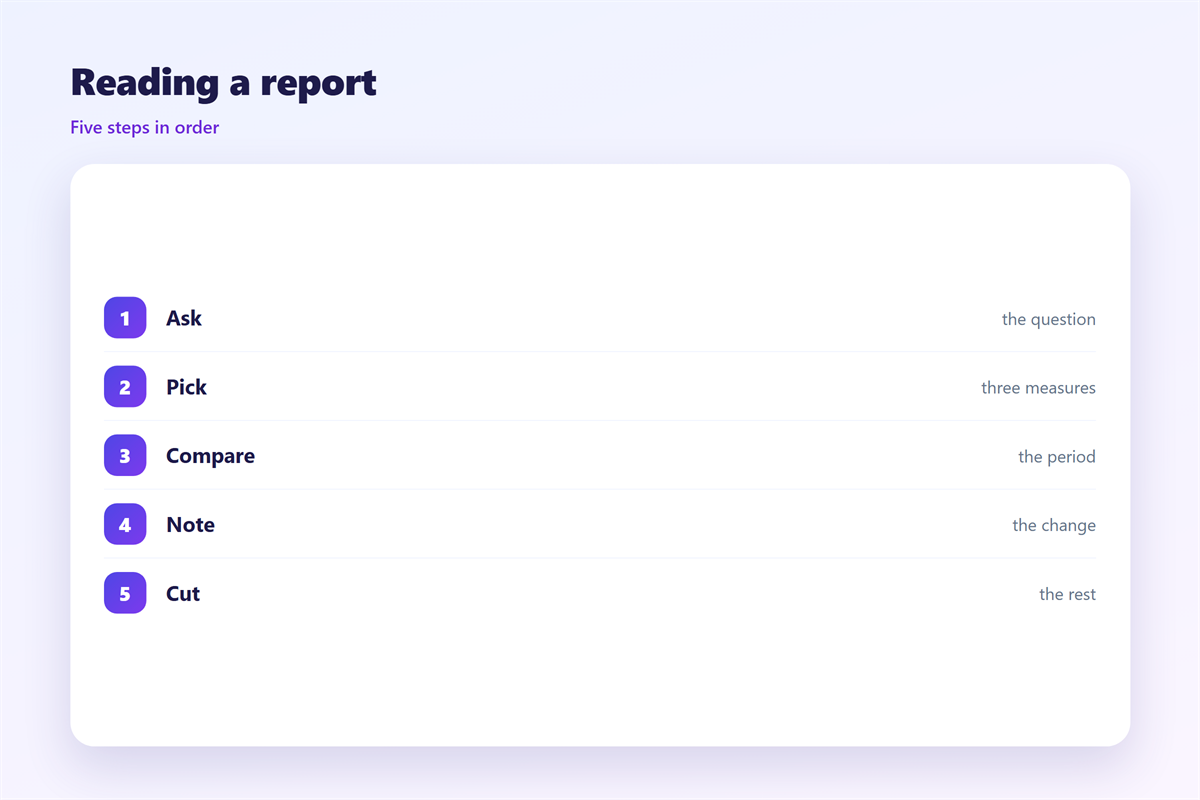
Start with one question for the week.
Choose two measures that answer it.
Write the result in a single line.
Then add one line of context.
Close with one decision and one owner.
Keep the whole note under one page.
Send it on the same day each week.
邮件报表 improves when the format stops changing.
Readers learn where to look.
Then they read it faster.
Speed is the point of a weekly note.
A template with fixed slots makes writing quick.
Fill the slots and stop.
One page, one owner
Name the person who writes it.
Name the person who acts on it.
A report with no owner is a diary.
邮件报表 for a small team
A small team needs less detail, not more.
Five people can share one page.
Put the numbers in the same order every time.
Then add a short note beside each one.
The note explains the change.
A number with a note gets remembered.
邮件报表 should be readable in two minutes.
If it takes longer, cut a section.
The section you cut is rarely missed.
Keep the rest for the quarterly review.
A quarterly review can carry the deeper cuts.
One page a week is enough for most groups.
Short notes survive a busy week.
Keeping 邮件报表 honest
A report is only as good as its source.
Check the tracking before trusting the total.
Count a sale once, not twice.
Say when a number is only an estimate.
The open side lives in 邮件打开率 and the click side sits in 邮件点击率. The sale path appears in 邮件转化率, and the daily summary is covered in 邮件日报.
Then keep one archive of old reports.
Six months of notes beats one perfect chart.
A folder of plain pages is enough.
Then read the older pages before planning.
The pattern is often already there.
FAQ
How many measures belong in a report?
Three at most. Pick the ones tied to the question. Move the rest to an appendix. A fourth number rarely changes the choice.
Should opens still be counted?
Yes, with care. Privacy settings can hide them. Treat the number as a trend. A fall in opens may mean filtering, not dislike.
How often should a report go out?
Weekly for active lists. Monthly for quiet ones. Use the same day each time. Readers plan around a fixed slot.
What belongs in the subject line?
The result, not the topic. “Clicks fell 12%” beats “Weekly report”.
References
- Litmus: Email analytics and rendering guides
- Campaign Monitor: Email marketing resources
- Nielsen Norman Group: Data and web writing
评论
还没有评论,来说两句吧。
评论功能已关闭。