 小影邮箱
邮件转化率怎么提升?From Clicks to Action
Key Takeaways
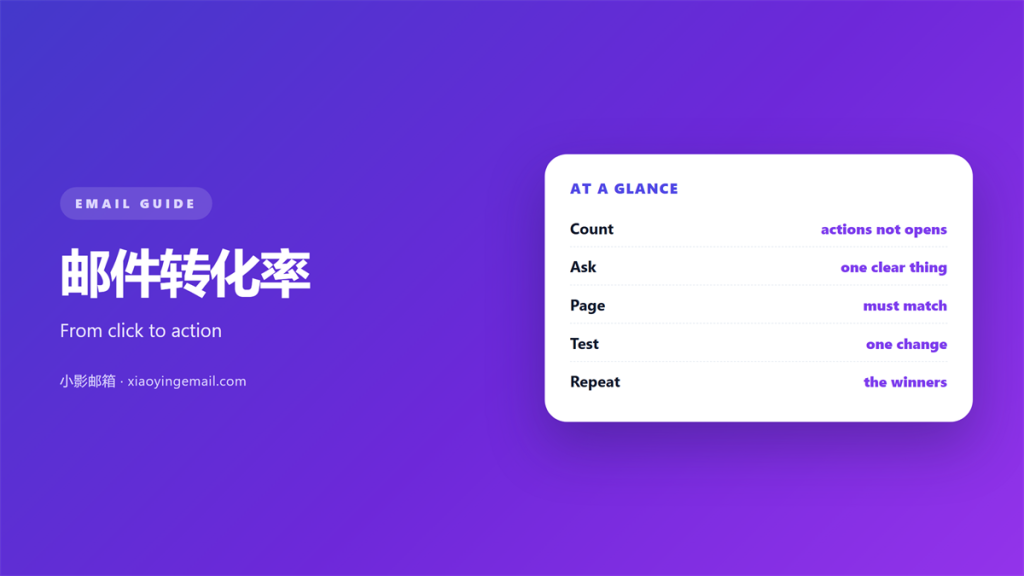
- 邮件转化率 counts actions, not opens.
- One clear ask beats three weak ones.
- The landing page decides half the result.
- Measure small, then change one thing.
- Repeat winners instead of chasing tricks.
What 邮件转化率 means
邮件转化率 is the share of readers who take the action you asked for.
That action might be a purchase, a sign up, or a reply. The number only means something once you name it.
An open is not a conversion. A click is closer, but it is still only interest.
So the first step is honesty. Decide what a win looks like before you send anything.
Most senders track the wrong thing. They watch opens climb and wonder why sales stay flat.
邮件转化率 ignores vanity. It asks a harder question about what people actually did.
A single clear ask keeps the number clean. Every extra button muddies it.
The best campaigns pick one goal and drop everything else.
Why 邮件转化率 matters
A list costs money to keep. A rising conversion rate is how that cost pays for itself.
It also shows which messages deserve to be repeated.
A rising 邮件转化率 also lowers the pressure to send more. You can mail less often and still grow.
Reading 邮件转化率 honestly
A high open rate can hide a weak offer. Only the conversion tells you if the offer worked.
Read the number beside the click rate. The gap between them is where problems live.
What moves 邮件转化率
Three things do most of the work. The offer, the landing page and the timing.
Get those right and small wording changes matter less.
How to raise 邮件转化率
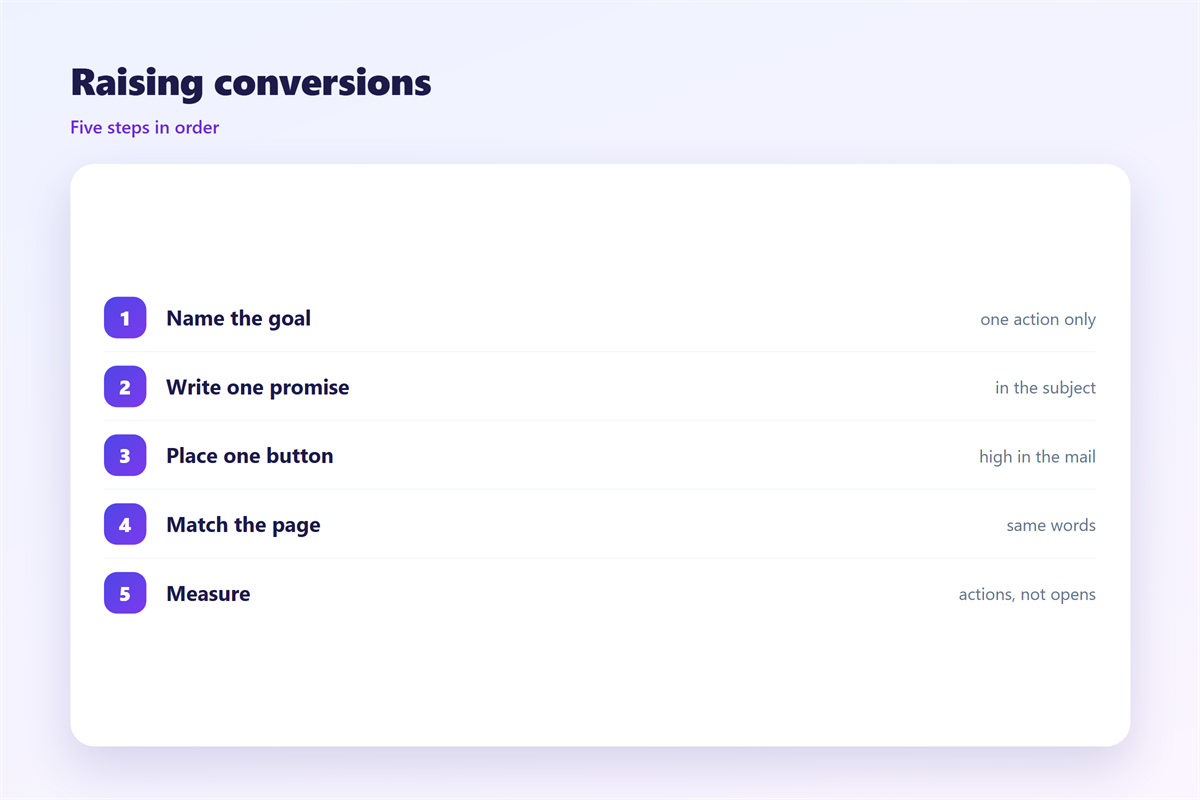
Start with the offer. A message can only sell something people want.
Write one promise in the subject. Keep it true and let the body keep the promise.
Then make the ask obvious. A single button in one colour is enough.
Put the button high in the message. Many readers never scroll to the bottom.
Trim the extra links. Every other link is a way for the reader to leave.
Match the 邮件转化率 goal to the reader’s mood. A calm reader rarely buys in a hurry.
Send at the hour your readers act. For work mail, that is usually mid morning.
Test one change at a time. Otherwise you never learn what helped.
Keep the reader’s next step small. A big ask raises fear, and fear lowers 邮件转化率.
The landing page half
Half the work happens after the click. A slow page loses the reader you just won.
Keep the page and the email saying the same thing. A mismatch feels like a bait and switch.
Repeat the promise at the top of the page. The reader should recognise where they landed.
Remove the menu and the sidebars. A landing page with one exit converts better.
Make the form short. Every extra field costs you a few readers.
The wording of the button matters too. “Get started” often beats “Submit” by a wide margin.
Check the page on a phone. Most mail is opened there first.
A fast page with a small form is the cheapest way to lift 邮件转化率.
Measuring 邮件转化率
Pick a window and keep it. Thirty days is common for most offers.
Count the action, not the click. The gap tells you how honest your links are.
Split the number by segment. New readers and old readers rarely behave alike.
Watch the trend, not one send. A single bad week is noise.
Keep a note of what you changed. Memory is a poor record of last month.
Log the send date beside the number. A 邮件转化率 without a date is hard to compare later.
Compare only like with like. A holiday send will always look different.
A simple sheet beats a fancy dashboard you never open.
Common mistakes
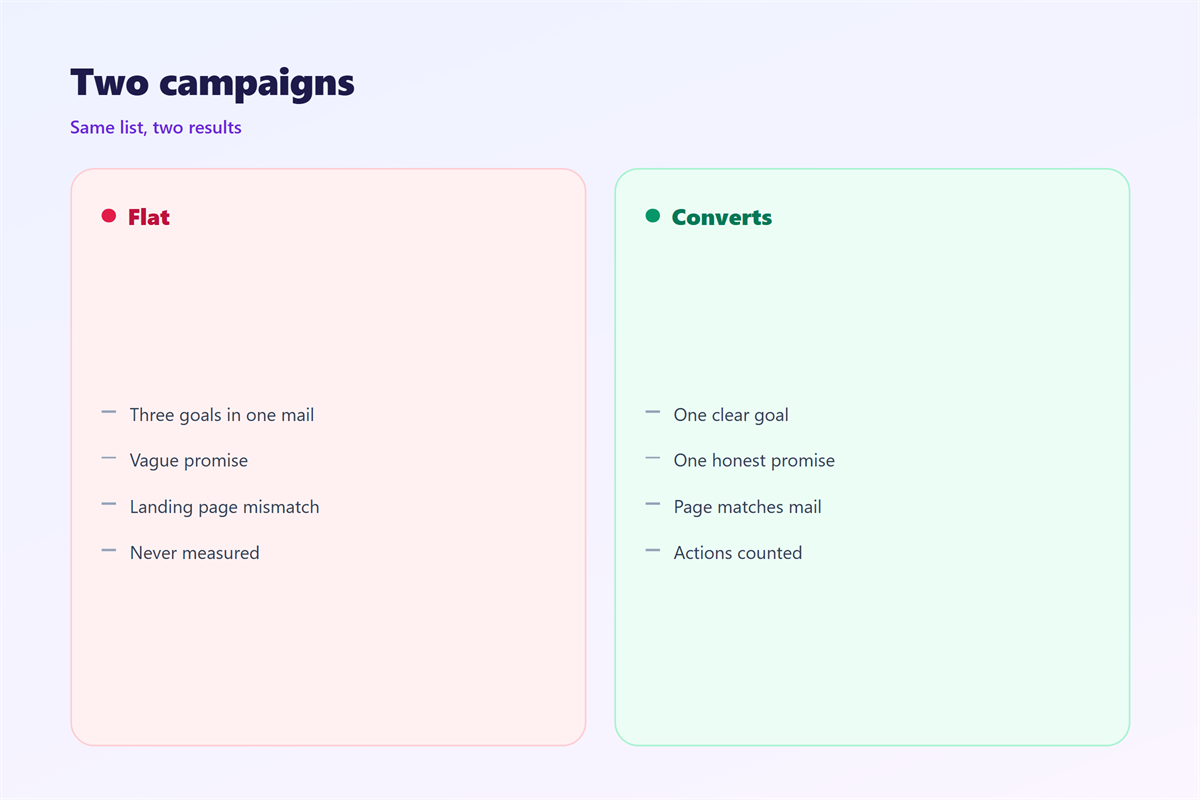
The first mistake is too many goals. One email cannot do five jobs well.
The second is a vague promise. Clever wording hides a weak offer for only a moment.
The third is ignoring the landing page. The best email cannot save a broken page.
Another mistake is judging too early. Some readers act days after the send.
Do not change ten things at once. You will never know which one worked.
Avoid copying a tactic from another list. Audience and offer change everything.
Finally, do not chase the highest number. A small, honest 邮件转化率 beats a fake spike.
Sending and improving
Send on a schedule people can learn. Predictable mail feels calmer to read.
Ask for one action in the subject line. See 邮件打开率 for how the first line earns the click.
Measure the click, then the action. The difference is described under 邮件点击率.
Build a page that matches the promise. The rules are set out in 邮件落地页.
Earn the right to send at all. Permission comes before volume, as explained in 邮件营销.
Then repeat what worked. A steady habit beats a clever one off campaign.
Give each campaign a short name. Months later that name is the only memory you have.
FAQ
Is 邮件转化率 the same as open rate?
No. The open rate counts readers who looked. The conversion counts readers who acted.
What is a good conversion rate?
It depends on the offer. Compare against your own past sends, not a number from a blog.
Should I add more buttons?
Rarely. One clear button usually beats three competing ones.
How often should I measure it?
Once a week is enough for most lists. Daily numbers are mostly noise.
References
- Litmus: Email marketing metrics and benchmarks
- Mailchimp: Email marketing benchmarks
- IETF RFC 5322: Internet Message Format
延伸阅读
- 《邮件优惠券怎么发?Coupons People Redeem》
- 《邮件裂变怎么做?A Referral Loop That Grows》
- 《邮件线索怎么跟进?Warming Up a Lead》
- 《邮件促销怎么写?Promotions People Open》
- 《邮件报表怎么看?Numbers That Explain》
- 《邮件折扣怎么写?A Saving That Reads》
- 《邮件预售怎么写?Selling Before Launch》
- 《邮件返现怎么讲?Money Back After》
- 《邮件试用怎么发?A Trial That Converts》
- 《邮件行动号召怎么写?The One Button That Asks》
- 《邮件热图怎么看?Where Clicks Really Land》
评论
还没有评论,来说两句吧。
评论功能已关闭。