 小影邮箱
邮件收件人怎么填?Who Gets the Message First
Key Takeaways
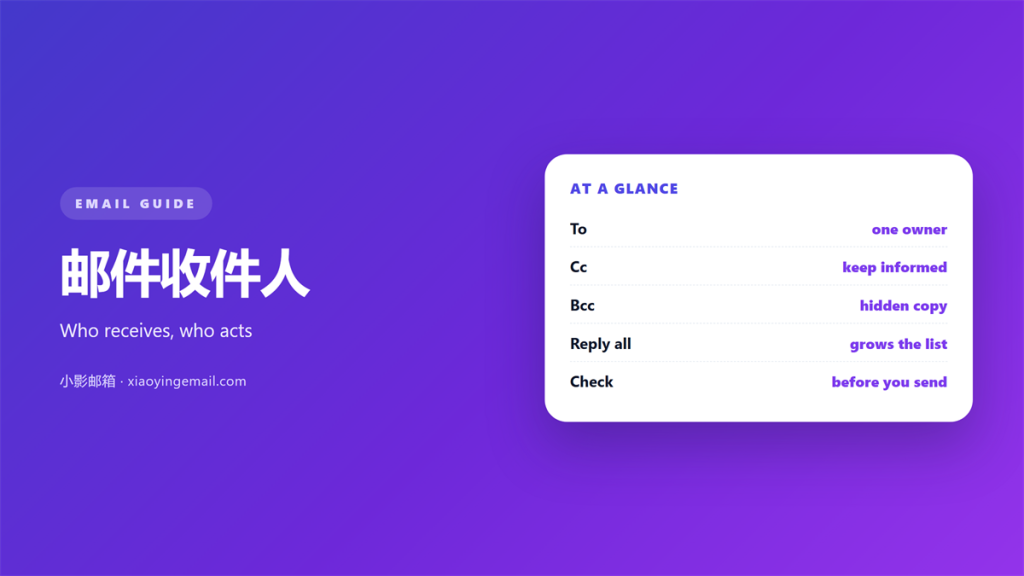
- The 邮件收件人 line decides who must act.
- To is for action and Cc is for awareness.
- Bcc hides a copy and removes it from replies.
- One misplaced name can leak a whole thread.
- Check the field list once before you send.
What 邮件收件人 actually decides
邮件收件人 is the field most people fill last and think about least.
It sets the tone of the whole message. The same words mean “please do this” or “please note this”, depending on who is named.
A wrong name sends work to the wrong desk. It can also expose a private note to a stranger.
So the field is not paperwork. It is part of the message itself.
Careful 邮件收件人 work takes ten seconds. It saves a correction that takes an hour.
The habit is simple. Decide who acts, who watches, and who should not see the thread at all.
Those three answers map onto three fields. To, Cc and Bcc.
Most confusion comes from mixing them up. People use To for awareness and Cc for action, then wonder why nobody replies.
Keep the mapping fixed and the message becomes easier to write. You already know who owes you an answer.
This is why the field is worth a second look. It carries intent, not just delivery.
A message with the right words and the wrong names fails in silence. The reader who should have acted never sees it.
The three fields on every 邮件收件人 line
To names the people who must act. Keep this list short.
Every name in To is a person who owes you a reply. Five names usually means nobody replies.
Cc names the people who should know. They are not asked to act.
Cc is a record, not a request. A reader on Cc can ignore the message and that is correct.
Treating Cc as a task list is the fastest way to annoy a busy team.
Bcc hides a copy from everyone else. Use it for records, not for quiet politics.
A hidden 邮件收件人 is still a recipient. They read the message and they keep it.
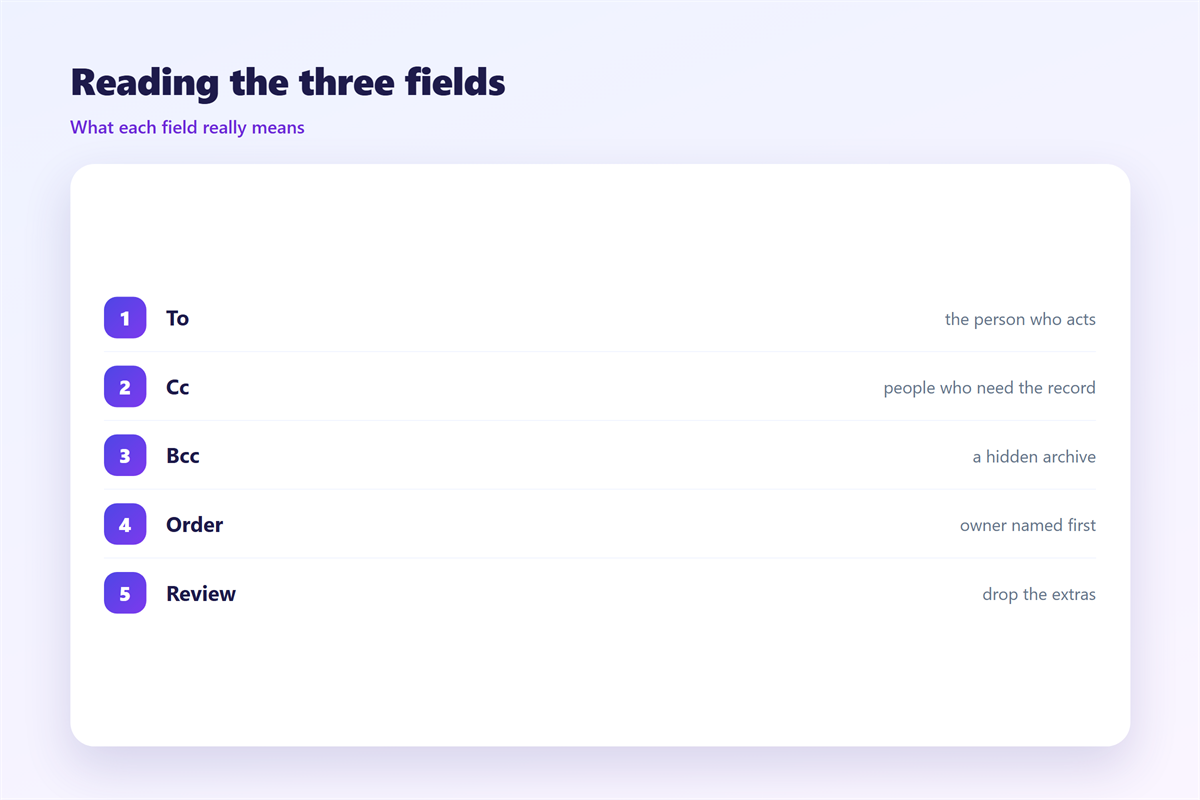
- To: one owner, and at most a few.
- Cc: stakeholders who need the record.
- Bcc: the archive, or a protected address.
A common mistake is putting a manager in To just to be safe. That manager now owns the reply.
Good 邮件收件人 practice keeps To small and Cc honest.
Where 邮件收件人 goes wrong
Four errors cause most of the trouble.
The first is reply all. It grows the 邮件收件人 list with every round.
Each reply adds one more 邮件收件人, and the thread slowly becomes public.
The second is a stale group. A list that was once right quietly becomes wrong.
The third is blind Bcc. The hidden copy stays hidden until someone replies to all.
The fourth is auto complete. A half typed name matches the wrong contact in seconds.
None of these are rare. Each one has a cheap fix.
Review the To line before sending. Remove anyone who does not need to act.
A calm check beats a hurried apology. Thirty seconds of reading saves a week of quiet damage.
A tidy field list also signals care. Readers notice when they were added on purpose.
Testing your 邮件收件人
Send a test before a message that matters.
Address it to yourself first. Check how the fields look in the received copy.
Then ask one question. If this reached the wrong person, what would they learn?
If the answer worries you, move that name to Bcc or remove it.
For a shared mailbox, agree on a rule. To is for owners and Cc is for the team.
Write the rule down. A rule that lives in one person’s head disappears when they leave.
Check the 邮件收件人 fields as the last step before sending.
Keep a short checklist beside you for the first week. Habits fade once the pressure returns.
Do this for one week and the check becomes automatic.
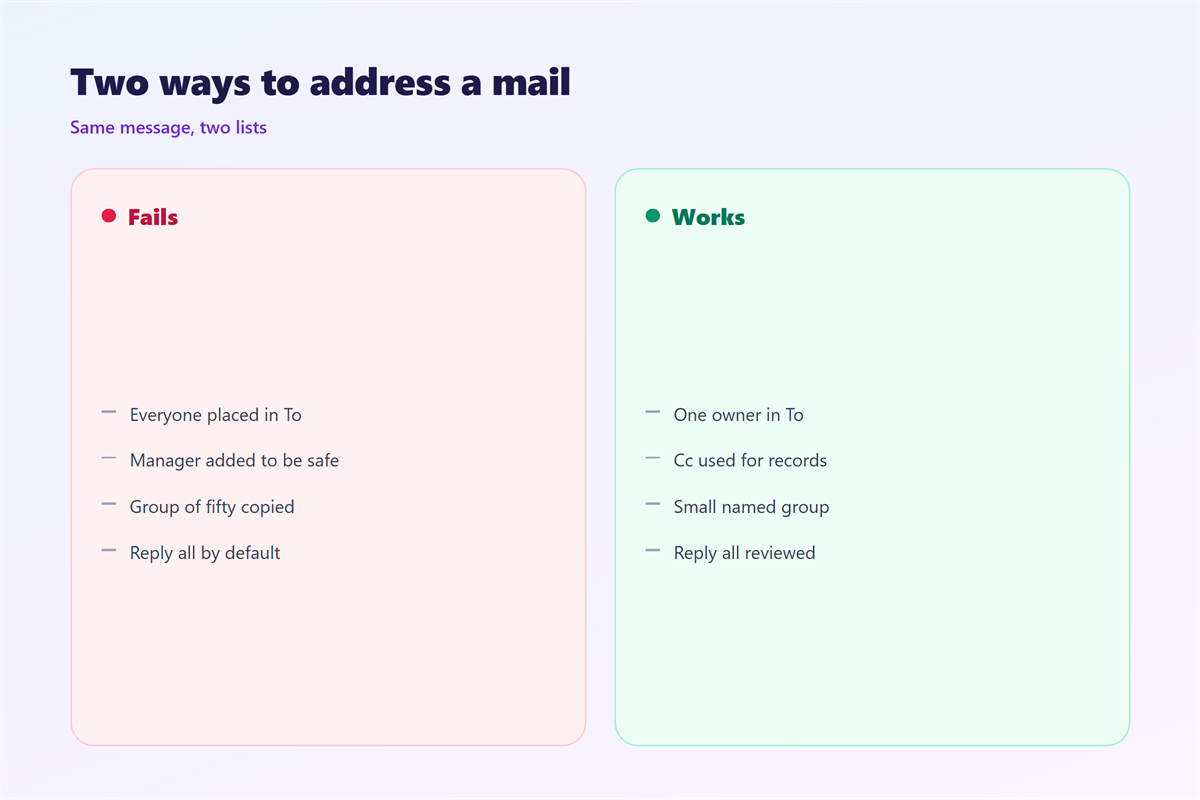
A short 邮件收件人 check prevents most leaks and most ignored requests.
Working with groups and aliases
Groups make 邮件收件人 easy and dangerous.
A group hides its members. You cannot see who will read the message.
A group can add fifty 邮件收件人 in one keystroke, and you cannot tell who they are.
Before using a large group, open it once. Check that it still holds the right people.
Prefer a named owner over a group when you need a reply. Groups rarely answer.
When in doubt, send to fewer people. You can always forward the reply, but you cannot unread a message.
Our notes on 邮件抄送 cover visibility in detail. The quieter option is explained under 邮件密送. The message itself is treated in 邮件正文, and saved addresses sit under 邮箱联系人.
FAQ
Who should be in To?
The person who must act. Add others only if they truly share the work. A long To list spreads the task until it belongs to no one.
Is Cc rude?
No, when it is used to inform. It becomes rude when it is used to expose or to pressure. Ask what the reader needs to do with the message.
When should I use Bcc?
For records and for protected addresses. Avoid it to hide a copy from a colleague on the same thread. That usually surfaces and damages trust.
Does 邮件收件人 order matter?
Slightly. The first name reads as the owner. Put the person who acts first and keep the rest in a stable order.
References
- IETF RFC 5322: Internet Message Format
- Microsoft: Add or remove recipients in a message
- Google: Add or remove recipients in Gmail
评论
还没有评论,来说两句吧。
评论功能已关闭。