 小影邮箱
邮件活跃度怎么看?Measuring Real Engagement
Key Takeaways
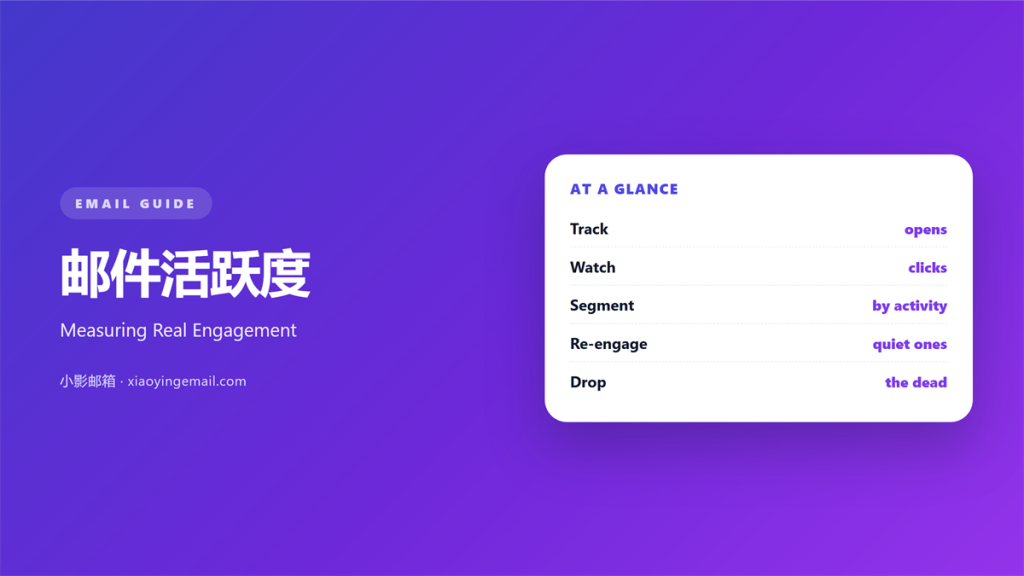
- 邮件活跃度 shows who still reads your mail.
- Opens and clicks are the first signals.
- A quiet reader is not always gone.
- Group people by how recently they acted.
- Re-engage the quiet ones with one clear note.
- Watch the trend across months, not days.
What 邮件活跃度 means
邮件活跃度 is a measure of real reader interest.
It tracks who opens, clicks, and replies.
It also tracks who has quietly stopped.
The idea goes past a single open.
One open can be a fluke or an image load.
A click takes a little more effort.
A reply takes the most of all.
So the strongest signals sit deepest.
邮件活跃度 blends those signals into a picture.
That picture shows the health of the list.
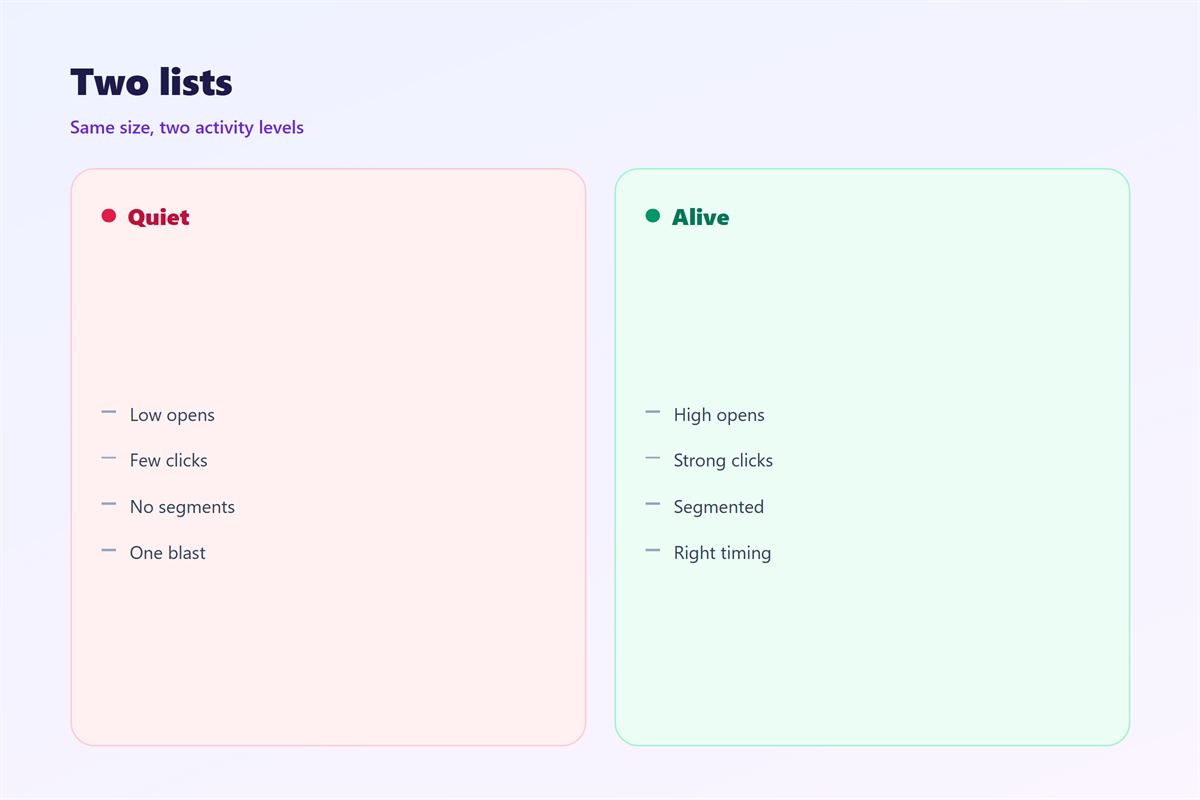
A healthy list reacts within a day.
A tired list stays silent for weeks.
So the metric separates the living from the lost.
It turns a flat file into a living map.
That map changes as readers come and go.
So review it often and expect movement.
A frozen list is usually a fading one.
Why 邮件活跃度 matters
Deliverability follows interest
Mail servers watch how readers behave.
A quiet list looks like spam to them.
邮件活跃度 predicts whether mail lands well.
A lively list keeps the sender trusted.
That trust decides the inbox or the junk folder.
So the metric protects every future send.
It also guides which names to keep.
A low score can warn you early.
So check it before a big campaign.
An early warning saves a whole send.
So treat the score as a daily health check.
A small fix early avoids a big repair later.
That habit keeps the list in good shape.
When 邮件活跃度 helps
Choosing who to mail
The number helps when you plan a send.
It shows which names are most likely to read.
邮件活跃度 also helps when you clean a list.
A low score marks a name for review.
It helps too when you design a series.
Active groups can take a longer path.
Quiet groups may need a shorter one.
And it helps when a launch matters.
Send to the lively group first.
Then learn before you widen the reach.
So the score turns a guess into a plan.
Then you can match the message to the group.
A tight match lifts the whole send.
When 邮件活跃度 hurts
A single 邮件活跃度 can mislead a team.
Some clients block the open pixel.
So a real reader can look quiet.
That gap can hide a loyal fan.
It can also hurt when the score is a target.
A forced goal invites tricks and clutter.
People then chase opens with bait subjects.
Those subjects can win a click and lose trust.
So read the score with care.
Use it to help, not to punish.
A kind reading keeps the team honest.
So pair the number with a real question.
Ask a few quiet readers what went wrong.
The answer often beats the data alone.
邮件活跃度 and the open rate
The open rate is one part of the picture.
邮件活跃度 takes a wider view.
It adds clicks, replies, and recency.
So the two numbers are not the same.
A high open rate can still hide silence.
A reader may open and never act.
The wider view weighs that action too.
So read both numbers together.
Then the list tells a fuller story.
A story beats a single figure every time.
So keep both in the same report.
One column for reach and one for action.
Then a glance shows the whole story.
How to use 邮件活跃度 well
Building a simple score
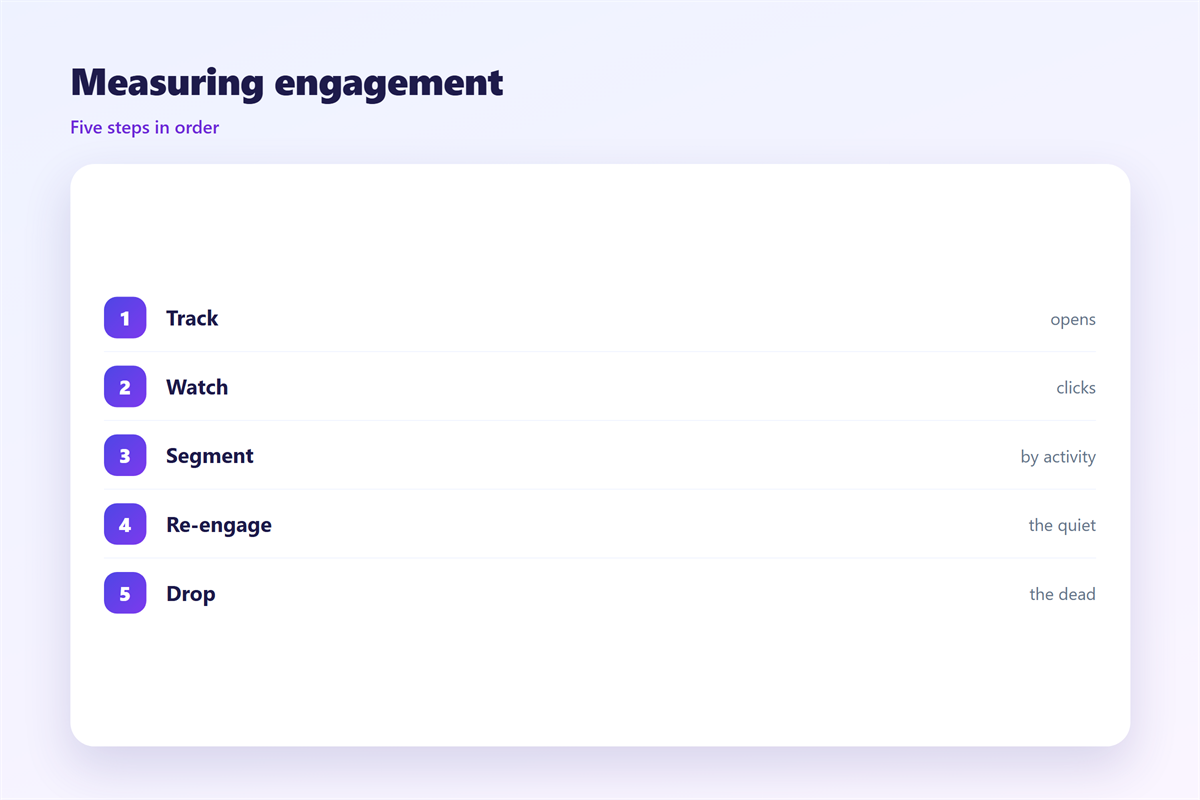
Start with three signals you can trust.
An open, a click, and a reply.
Give each one a simple weight.
Then set a window of ninety days.
A reader who acts inside it stays active.
The 邮件活跃度 score then updates itself.
Review the groups once a month.
Move names as their habits change.
Then act on the groups you find.
A clear score beats a vague feeling.
So keep the method simple and plain.
Then anyone on the team can run it.
A shared method keeps results fair.
邮件活跃度 on a small list
A small list can still show real patterns.
Even a few hundred names will split into groups.
It works at any list size.
With fewer names, read the trend longer.
One quiet week means little on a small list.
So stretch the window to a quarter.
Then the pattern becomes clear.
A small, active list can beat a big, tired one.
So grow slowly and keep the readers warm.
A warm reader stays warm for years.
So treat the quiet ones with patience.
A single good note can bring them back.
Keeping 邮件活跃度 consistent
A steady routine
Consistency keeps the score meaningful.
Pick your signals and keep them fixed.
The open figure sits in 邮件打开率. The keep-or-drop rule sits in 邮件留存. The warm-up path sits in 邮件培育. The comeback note sits in 邮件唤醒.
Then keep the same window every month.
A rule that changes gives numbers that lie.
So write the method down for the team.
Then review the method once a year.
A yearly check keeps it sharp and useful.
So the score stays a help, not a habit.
FAQ
Is 邮件活跃度 the same as the open rate?
No. It adds clicks, replies, and recency to the picture.
How do I fix a low score?
Send to your best readers first. Then re-engage the quiet ones.
Should I delete inactive names?
Not at once. Try one comeback note before you decide.
How often should I check the score?
Once a month is enough for most lists.
References
- W3C WAI: Content structure and emphasis
- Litmus: Email rendering guides
- Nielsen Norman Group: Typography and readability
评论
还没有评论,来说两句吧。
评论功能已关闭。