 小影邮箱
邮件离职怎么写?Leaving Well by Mail
Key Takeaways
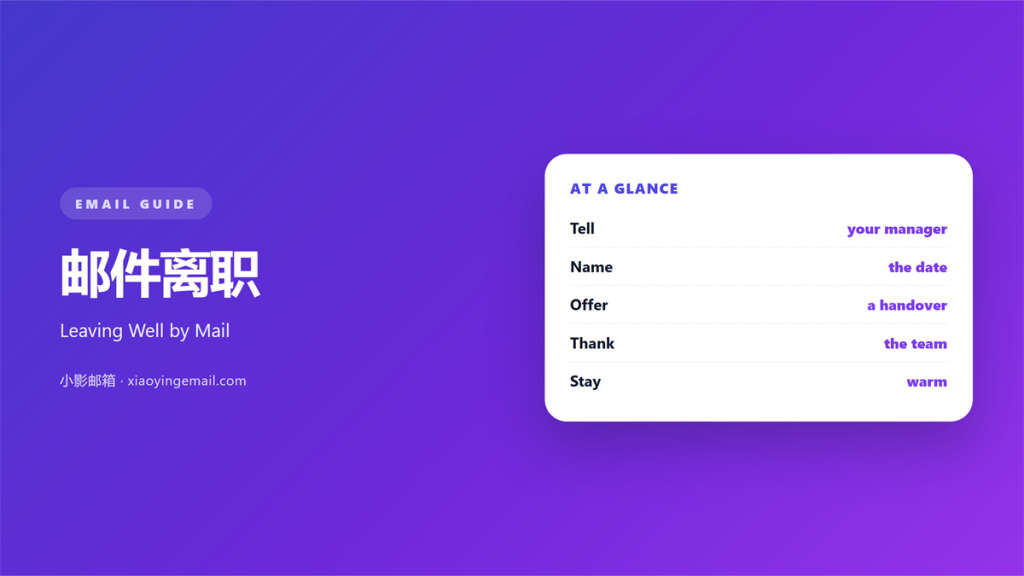
- 邮件离职 is a farewell that keeps doors open.
- State your last day in the first line.
- Hand over your work in writing.
- Keep the tone warm and brief.
- Say goodbye to people, not just the job.
What 邮件离职 means
邮件离职 is the mail you send when you leave.
It covers resigning, handover, and a warm goodbye.
One note does not replace an exit interview.
But it often becomes the record people keep.
So it should be clear, calm, and complete.
A good note names the last working day.
It thanks the team in a single line.
It points to who will take over the work.
It stays short. No one reads a long farewell.
Some people send one note to the manager first.
Then they send a shorter one to the wider team.
The order matters. Your manager should hear first.
So plan the two messages together.
A rushed 邮件离职 can undo years of goodwill.
A careful one can open a door later.
Why 邮件离职 matters
People remember how you left, not how you stayed.
A calm note protects your reputation.
It also keeps your references strong.
The tone you choose outlives the job.
A bitter line can follow you for years.
A warm one travels just as far.
A clear 邮件离职 also protects the team.
Everyone learns the timing and the plan.
Then no one is left guessing about the handover.
It also fixes the date in writing.
A written date avoids a later dispute.
Timing and tone
Send the note after you tell your manager.
Never let the team hear it from a rumour.
Keep the tone plain and kind.
Avoid blame, sarcasm, and long complaints.
When 邮件离职 helps
邮件离职 helps in a few clear moments.
Use it when you resign or retire.
Use it when you move to another team.
Use it when a contract simply ends.
Each case needs the same three facts.
The date, the handover, and the thanks.
It also helps when you lead a team.
Your note sets the tone for everyone else.
A calm leaving note stops a worried silence.
It helps when the project is mid-flight.
Then a short plan keeps the work steady.
One clear message
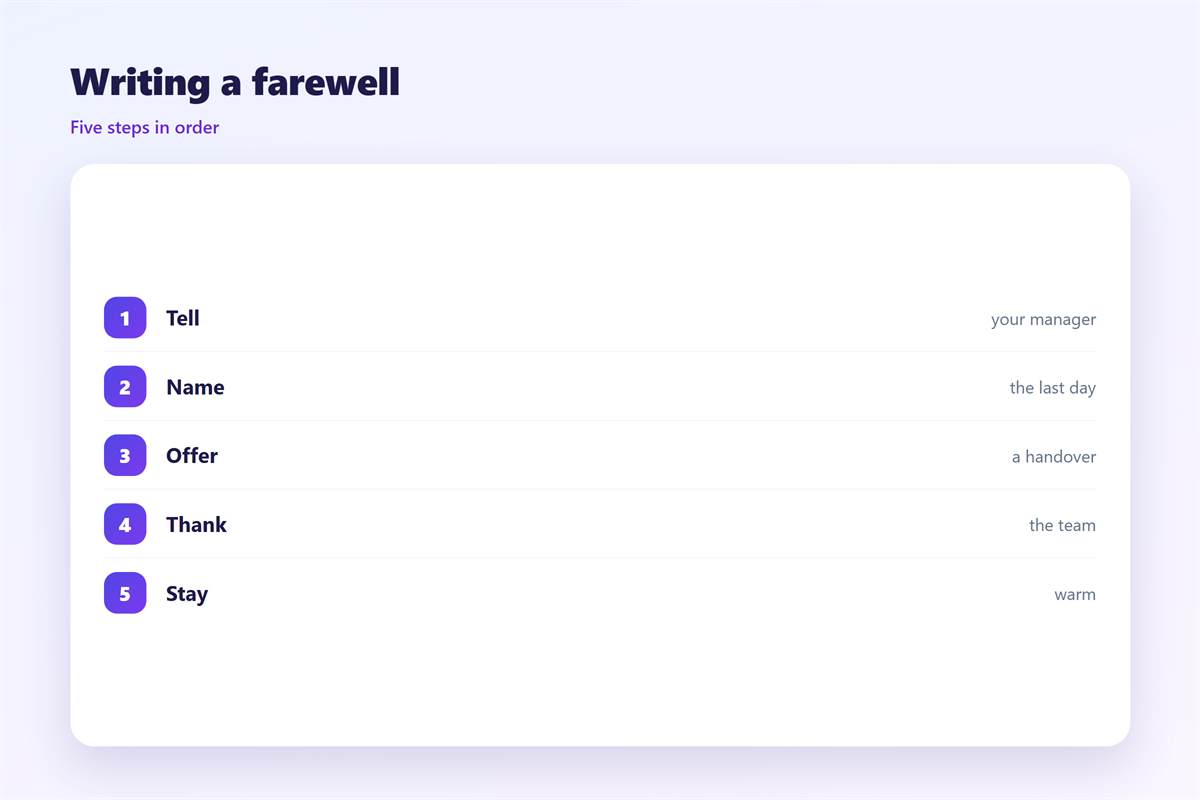
Put the last day in the first line.
Then list who takes each task.
Then thank the people by name.
Keep the whole note under six lines.
When 邮件离职 hurts
A rushed 邮件离职 can burn a bridge fast.
Anger in print is hard to take back.
A joke can read as a snub in writing.
So read the draft twice before you send.
Vague wording also causes harm.
If the last day is unclear, payroll may slip.
A missing handover leaves your team stuck.
Then they blame you for the gap.
Another risk is a very long farewell.
It reads as a speech, not a note.
People skim it and miss the key facts.
So keep the details near the top.
Then let the thanks take one short line.
邮件离职 and handover
The handover is the most useful part.
List every task that will pass to someone else.
Add the file path and the key contact.
A short list beats a long paragraph.
Name one owner for each task.
If a task has no owner, flag it early.
A good 邮件离职 makes the transfer easy.
So the team feels no drop in service.
It also helps to note the open risks.
A deadline or a pending approval matters most.
Then share the same list in the handover meeting.
One source of truth stops the confusion.
How to write 邮件离职 well
Start with a plain subject line.
Name the role and the leaving date.
Then open with the news in one sentence.
Follow with the last working day.
Then give the handover in a short list.
Then thank the team in one warm line.
Then offer a personal email for later.
Keep the whole note easy to scan.
Read it as if you were the manager.
Cut any line that could sound like a complaint.
Check the names and the dates twice.
Then send it to your manager first.
Wait for a reply before the wider message.
Good 邮件离职 feels simple and honest.
A short checklist
Last day, handover, thanks, and contact.
If all four appear, the note is ready.
邮件离职 on the last day
The last day brings a second, softer note.
This one goes to the wider team.
Keep it shorter than the first message.
Thank people for the work you shared.
Wish them well in a single line.
Do not repeat the whole handover again.
A link to the plan is enough.
Then set an auto-reply on your mailbox.
Give the new contact and the leaving date.
Check that the forward works before you go.
Then leave the inbox tidy and empty.
Keeping 邮件离职 civil
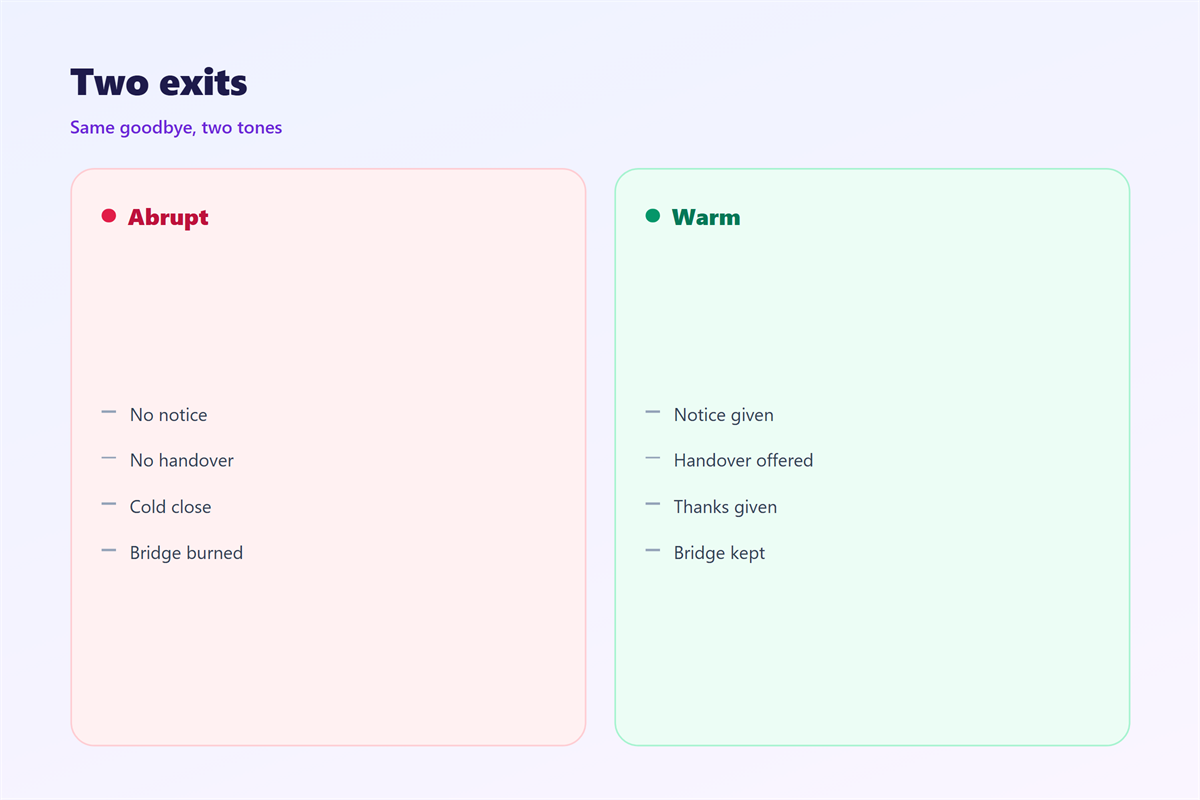
A civil tone costs nothing and earns respect.
Write for the reader, not for yourself.
The resignation note itself is covered in 邮件辞职.
The full transfer of work appears in 邮件交接.
The move to a new seat sits in 邮件调岗.
The talk about results appears in 邮件绩效.
Agree on one tone across your team.
Then a leaving note never turns personal.
A person who leaves well is welcome back.
FAQ
When should I send the leaving note?
Right after you tell your manager face to face.
How long should the note be?
Four to six lines is enough for most roles.
Should I list all my tasks?
No. List the live ones with a clear owner.
Can I keep in touch after I leave?
Yes. Give one personal address and stay warm.
评论
还没有评论,来说两句吧。
评论功能已关闭。