 小影邮箱
邮件签收怎么设?Proof of Receipt
Key Takeaways
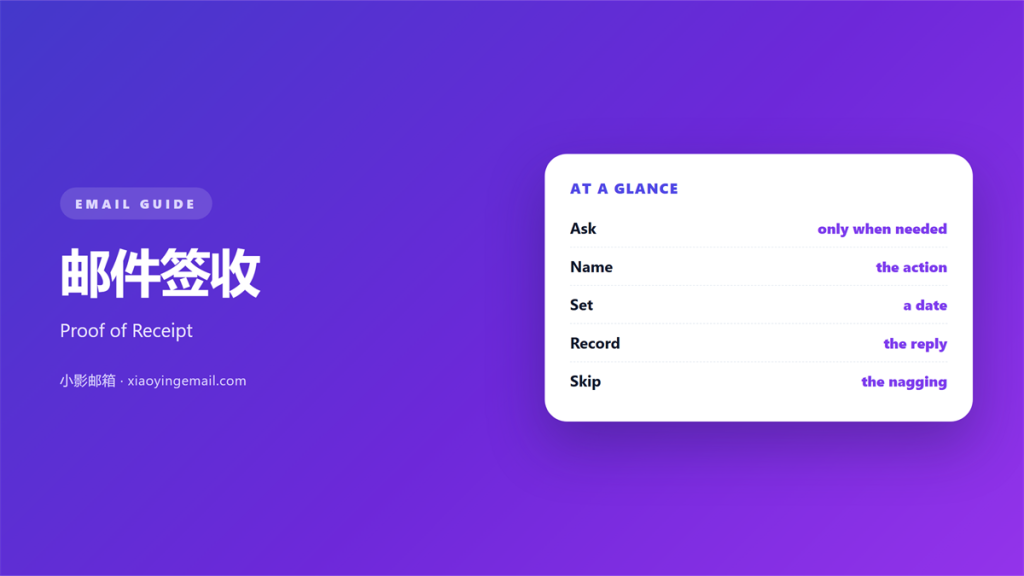
- 邮件签收 records that a message arrived and was seen.
- A receipt request should always carry a reason.
- Ask for a reply when the content carries a decision.
- Automatic flags are hints, not solid proof.
- Store the confirmation next to the message itself.
What 邮件签收 means
邮件签收 is the record that a message reached a reader.
It can be a system notice or a written reply.
The two are not equal in weight.
A system notice says the server accepted the mail.
A written reply says a person read it.
Only the second one proves attention.
Many teams use the word for both.
That loose habit causes arguments later.
Be exact about which proof you need.
For a contract, ask for a named reply.
For a routine note, a delivery notice is enough.
The choice depends on what the message decides.
Decide before you send, not after.
Why 邮件签收 matters
A receipt closes a small loop.
The sender stops wondering. The reader knows the task is counted.
That loop matters most when money or law is involved.
An invoice needs a date of receipt.
A legal notice needs proof that it arrived.
邮件签收 also protects the reader.
A recorded request is easier to answer in order.
It gives both sides the same timeline.
When a dispute starts, that timeline is checked first.
Proof and memory
Memory fades after a week.
A stored receipt does not.
It answers who, when, and on which address.
That record costs almost nothing to keep.
It saves hours when a question appears months later.
When 邮件签收 helps
邮件签收 helps when a message carries a deadline.
A filing date, a payment date, or a start date all qualify.
It helps when several people must act on one note.
The reply shows who has started.
It also fits any message that replaces a signature.
A signed scan by mail is common now.
Ask for a short confirmation in the same thread.
Use it when a client claims the mail never arrived.
A delivery log settles that claim fast.
These cases share one feature.
The cost of a missed message is high.
Only then is a receipt worth the friction.
Receipts in customer service
Support teams use 邮件签收 for promises.
The agent states what will happen and when.
The customer replies with one word.
That word becomes the record of the promise.
It prevents a second complaint about the same gap.
When 邮件签收 hurts
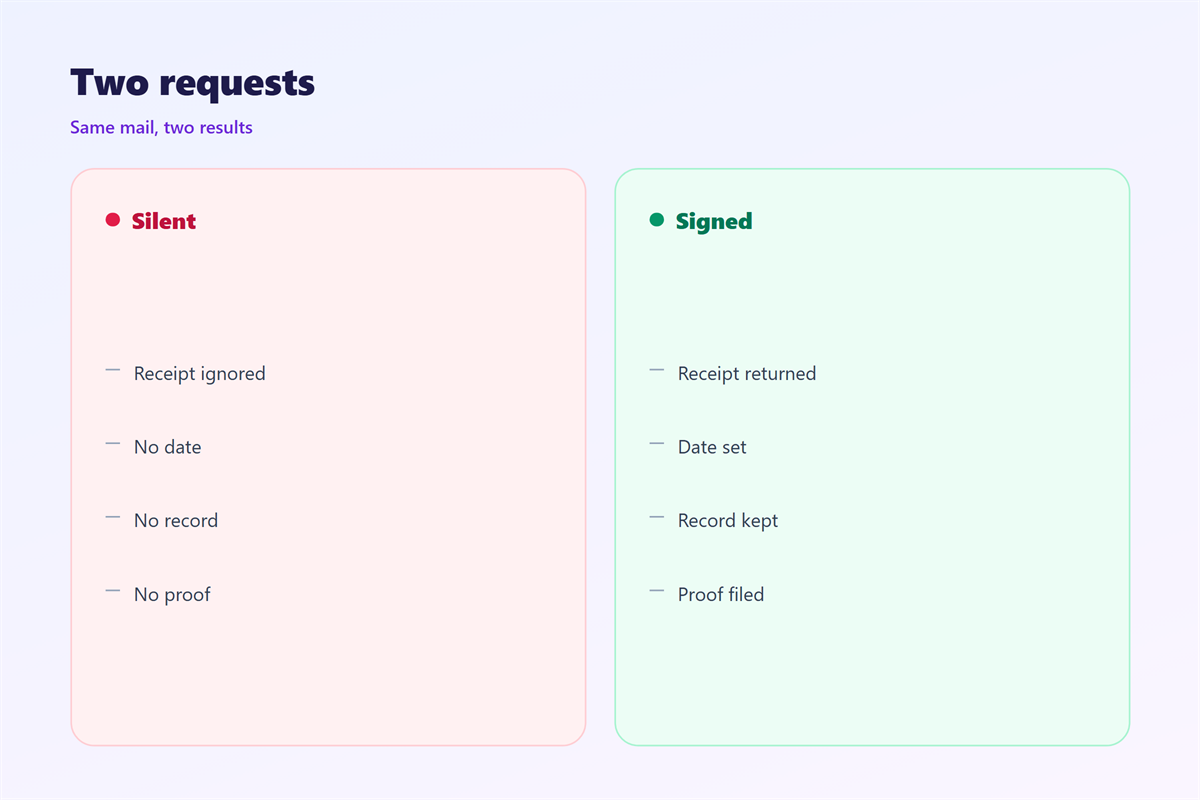
A receipt request adds work for the reader.
Some systems ask a question before the mail opens.
That box can feel like a demand.
邮件签收 hurts when it appears on every message.
Readers learn to click yes without reading.
The record then proves nothing.
It also hurts when the request hides in small text.
People resent a trap more than a request.
Say plainly that you need a reply.
And say why in the same line.
A receipt on a marketing mail is usually pointless.
Nobody owes you attention for an advert.
A request with no reason looks like tracking.
邮件签收 and trust
Trust decides whether a receipt means anything.
A reader who trusts the sender replies honestly.
A reader who does not will click the fastest button.
So build the habit before you need the proof.
邮件签收 works best inside a calm relationship.
Then a request reads as care, not control.
Keep the ask small and specific.
One line is enough for most cases.
What a read receipt cannot tell you
It cannot tell you that the text was understood.
It cannot tell you that the reader agrees.
Some clients block the request by default.
Others report a preview pane as a full read.
Treat the signal as a hint.
Ask a direct question when you need a real answer.
How to use 邮件签收 well
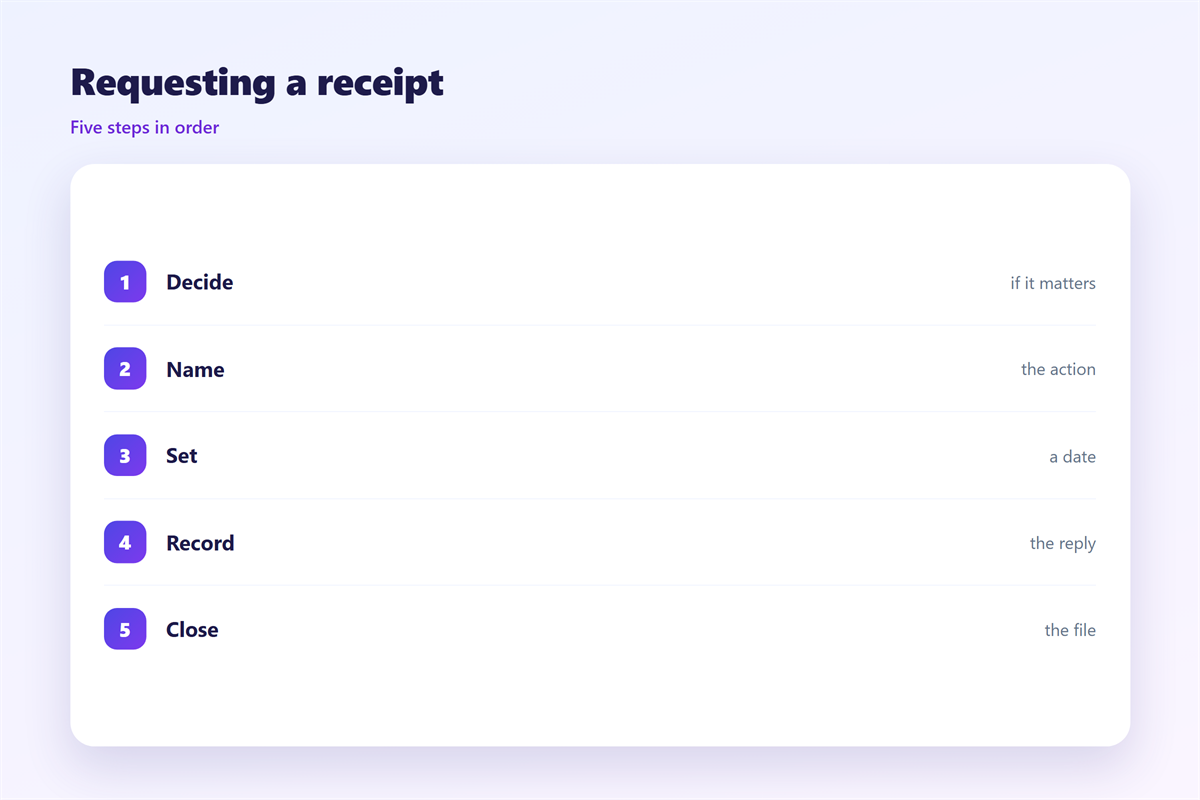
Start by naming the proof you need.
Then choose the smallest tool that gives it.
A reply is stronger than a system flag.
Write the ask in the first two lines.
Say what to reply, not just that a reply is wanted.
Add the date and the reference number.
Keep the request polite and short.
Then stop asking twice in the same week.
If a reply does not come, send one reminder.
Move to a phone call after that.
Finally, file the answer next to the original.
A tidy file turns a receipt into evidence.
Name the file with the date and the sender.
邮件签收 across systems
Every mail system handles receipts in its own way.
Some send a notice when the mail lands.
Some send one when the reader opens it.
Others send nothing at all.
A strict company server may strip the request.
So never promise a receipt you cannot see.
Test the path once with a colleague.
Then write down what the system really reports.
邮件签收 across systems is a matter of testing.
One test beats ten assumptions.
Repeat the test after any server change.
Keeping 邮件签收 consistent
Consistency turns a receipt into a habit.
Use the same wording in every request.
A standard reply format lives in 邮件回执. The reader’s side of the habit sits in 阅读回执. The decision record itself is covered in 邮件确认. The wider flow appears in 邮件收发.
Then teach the format to new staff.
A shared habit removes most arguments.
Review it once a year and keep it short.
FAQ
Is a 邮件签收 legally binding?
Rarely on its own. It supports a record but does not replace a contract.
Should I request a receipt on every mail?
No. Save it for messages with a date or a cost.
Why did my read receipt never arrive?
The reader may have declined it, or the client blocked it.
What is the best proof of delivery?
A short reply from the reader. It names a person and a time.
评论
还没有评论,来说两句吧。
评论功能已关闭。