 小影邮箱
邮件回执怎么用?A Receipt That Confirms

Key Takeaways
- 邮件回执 tells you a message arrived and was opened.
- Ask for one only when the answer truly matters.
- Say why you need it before you click send.
- Some readers treat a request as suspicion.
- A quiet note works better than a firm demand.
What 邮件回执 means
邮件回执 is a signal that a message was opened.
The term covers two different tools. One is a formal read receipt.
The other is a tracking pixel hidden inside the message.
A read receipt asks the reader to confirm. A pixel reports on its own.
Both answer the same small question. Did the mail arrive and get seen?
Neither one tells you whether the reader understood a word.
So a 邮件回执 is a narrow tool. Use it for the narrow question it answers.
The word itself is simple. People still confuse it with proof.
Keep the two ideas apart and you will use it well.
Why 邮件回执 matters
Silence is the hardest thing to read in a working inbox.
You send a note and then you wait. Nothing comes back.
A 邮件回执 removes that doubt for a moment.
It tells you the message reached a real person.
That single fact can settle a plan or start a chase.
Without it, you guess. Guessing wastes a day.
What a receipt can prove
A receipt proves delivery at best. It never proves agreement.
The reader may open the note and close it again.
So treat the signal with care. Do not overread it.
A calm reader wants facts, not assumptions.
A receipt is a snapshot, not a promise.
Treat it as one clue among many.
When to ask for 邮件回执
Some messages deserve a receipt. Most do not.
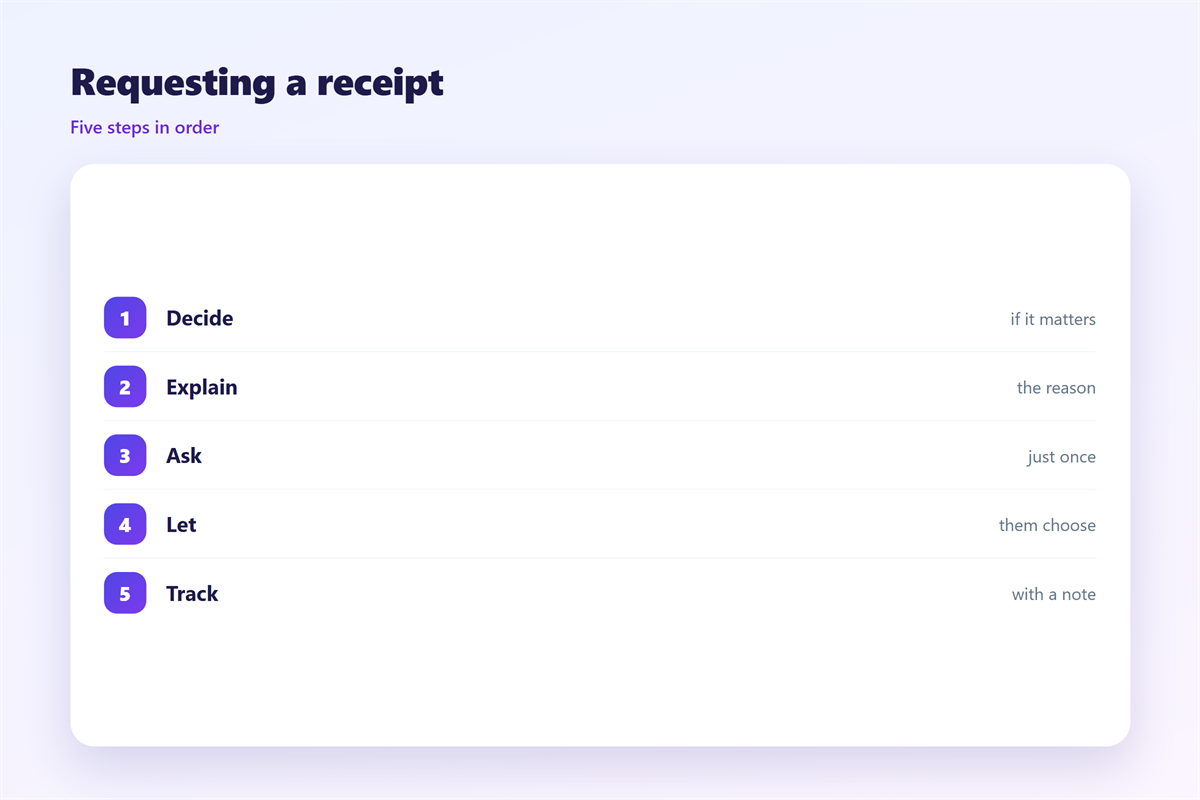
Ask when a deadline is tight and the stakes are real.
Ask when you must prove that a notice was sent.
Legal and finance teams often need that record.
Ask a new contact when the channel is still unproven.
Messages that rarely need one
Routine updates do not need a receipt.
Friendly notes do not need one either.
A quick question needs an answer, not a receipt.
Save the request for the messages that carry weight.
Think about the reader before you decide.
A busy manager may ignore the prompt anyway.
How to request 邮件回执 politely
The way you ask decides how the request lands.
Explain the reason in one plain line.
Say what the receipt helps you do.
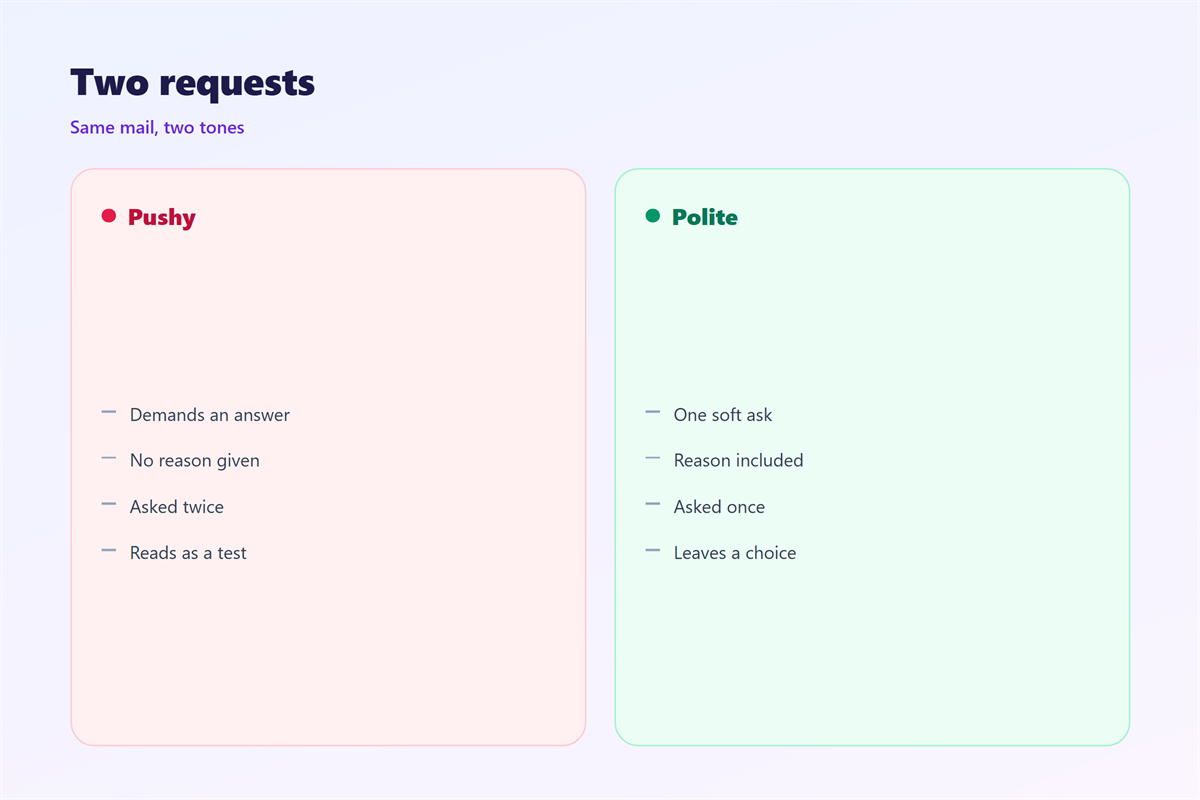
Ask for it once, and never twice.
Then let the reader choose. A 邮件回执 is always optional.
Words that work
Try a simple line near the end of the message.
“Please confirm receipt if you can.” That is enough.
It asks for a tap and gives an easy way out.
Do not write “I need to know you read this.”
That sounds like a test, and readers dislike tests.
Then a 邮件回执 feels like a favour, not a trap.
When to skip 邮件回执
Some readers react badly to any request for proof.
They see a receipt as a sign of mistrust.
In a close team, that cost is usually too high.
Skip the request and follow up in words instead.
A short reply of your own often works faster.
It also keeps the relationship warm.
A kind note beats a silent tracker every time.
邮件回执 and privacy
A tracking pixel reports without asking first.
That quiet signal raises real privacy questions.
Some clients block pixels by default.
Others strip images before the reader opens the note.
So a missing 邮件回执 may mean nothing at all.
When you track, say so in the message.
Honesty costs one line and keeps trust intact.
A short note about tracking clears the air.
Readers forgive a clear policy. They resent a hidden one.
Choosing a 邮件回执 tool
Most mail clients hide the setting in a menu.
You can turn a receipt on for one message or for all.
A single-message rule is the safer choice.
It keeps the request rare and deliberate.
For bulk mail, the pixel is the common option.
It reports opens without asking the reader.
Yet it can report a false open in a preview pane.
So read the number with a little caution.
Handling a 邮件回执 request
You will also sit on the other side of the request.
Someone will ask you to confirm that you read their note.
You can accept, decline, or simply reply with words.
A short answer is often the kindest option.
It gives the sender the fact they wanted.
It also ends the thread in one move.
Choose the spoken reply when the news is sensitive.
Keep the same habit across every message you send.
Keeping 邮件回执 habits consistent
Consistency turns a small habit into a reliable one.
Pick a rule for your team and hold it.
The weight of a formal notice is covered in 阅读回执.
The data behind opens and clicks is explained in 邮件追踪.
How many people open a note is measured by 邮件打开率.
The choice between a single reply and a group one appears in 邮件回复.
Then keep the same rule across every message.
A team that agrees on 邮件回执 spends less time chasing silence.
FAQ
Is 邮件回执 the same as a read receipt?
Mostly. The term covers read receipts and tracking pixels.
Should I always ask for one?
No. Ask only when the answer really matters.
Can a receipt show that someone agreed?
No. It shows the message was opened, and nothing more.
Do tracking pixels always work?
No. Many clients block them, so a blank result proves little.
References
- IETF RFC 8098: Message Disposition Notification
- Grammarly: Email etiquette and privacy
- FTC: Protecting consumer privacy
评论
还没有评论,来说两句吧。
评论功能已关闭。