 小影邮箱
邮件考勤怎么做?Attendance Mail Without Friction
Key Takeaways
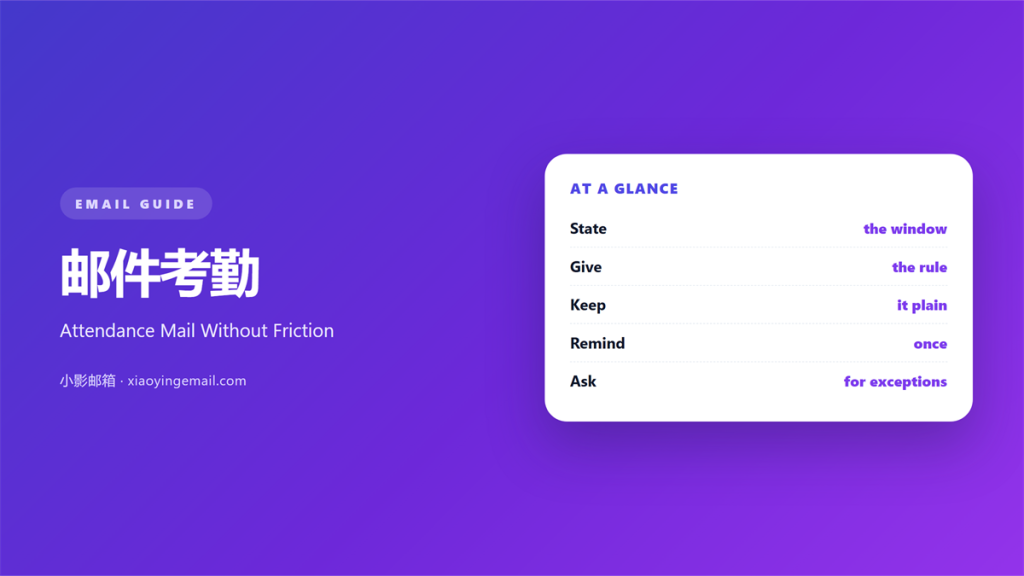
- 邮件考勤 is the record of who worked, and when.
- Attendance mail works best when the rule is simple.
- State the window first, then the deadline.
- Remind once, and then stop.
- A fair rule gets far fewer complaints.
What 邮件考勤 means
邮件考勤 is the record of who worked, and when.
Teams keep it so they can pay people fairly.
Most of that record arrives by email now.
A manager sends a short note each day.
Staff reply with their hours.
The replies are logged in one place.
That log becomes the official record.
The record then settles pay and leave.
So accuracy matters more than speed.
A wrong entry costs trust.
A missing entry costs time to fix.
Both are easy to avoid with one clear rule.
The rule should fit the shift, not the tool.
Keep the wording plain and short.
Why 邮件考勤 matters
People care about being counted.
A fair count keeps morale steady.
An unfair one spreads quiet resentment.
Attendance also feeds the payroll.
A late record delays a paycheck.
That is why the timing matters.
邮件考勤 also protects the manager.
A written trail answers later questions.
It shows who was on shift.
It shows when the shift ended.
That trail is worth keeping for a year.
It also settles a later question about pay.
A clear note ends most of those debates.
So treat each reply as evidence, not chatter.
Daily, weekly or monthly
Daily suits hourly teams.
Weekly suits salaried staff.
Monthly suits a small office.
Pick one and keep it steady.
When 邮件考勤 helps
A clear system helps in three ways.
It saves the manager time.
It saves the staff from arguments.
It saves payroll from guesswork.
The note is short and the rule is plain.
Everyone knows what to send.
Everyone knows when to send it.
So the round takes minutes, not hours.
The record is also easy to audit.
A single page shows the whole month.
That page settles most disputes.
So the daily effort stays small.
The same note works for every shift.
A short log is easy to scan.
The once-a-day habit
Send the request at the same hour.
People reply when they expect it.
A fixed hour removes daily nagging.
That habit is the whole trick.
When 邮件考勤 hurts
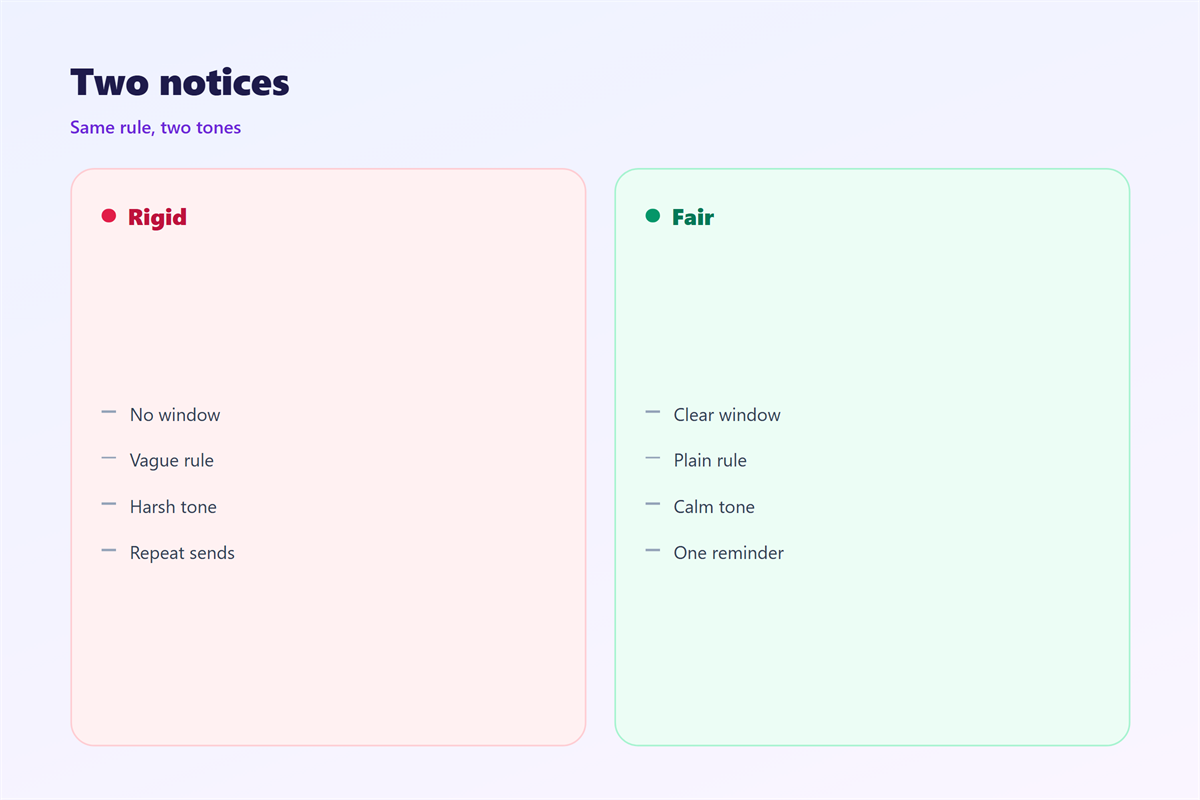
A vague rule hurts everyone.
Nobody knows what counts as late.
So people guess, and the guesses differ.
Too many notes also hurt.
Three reminders a day feels like pressure.
Staff stop reading the subject line.
Then real requests get missed.
Silence hurts just as much.
A manager who never chases gets no record.
Then payday becomes an argument.
So balance firm rules with calm wording.
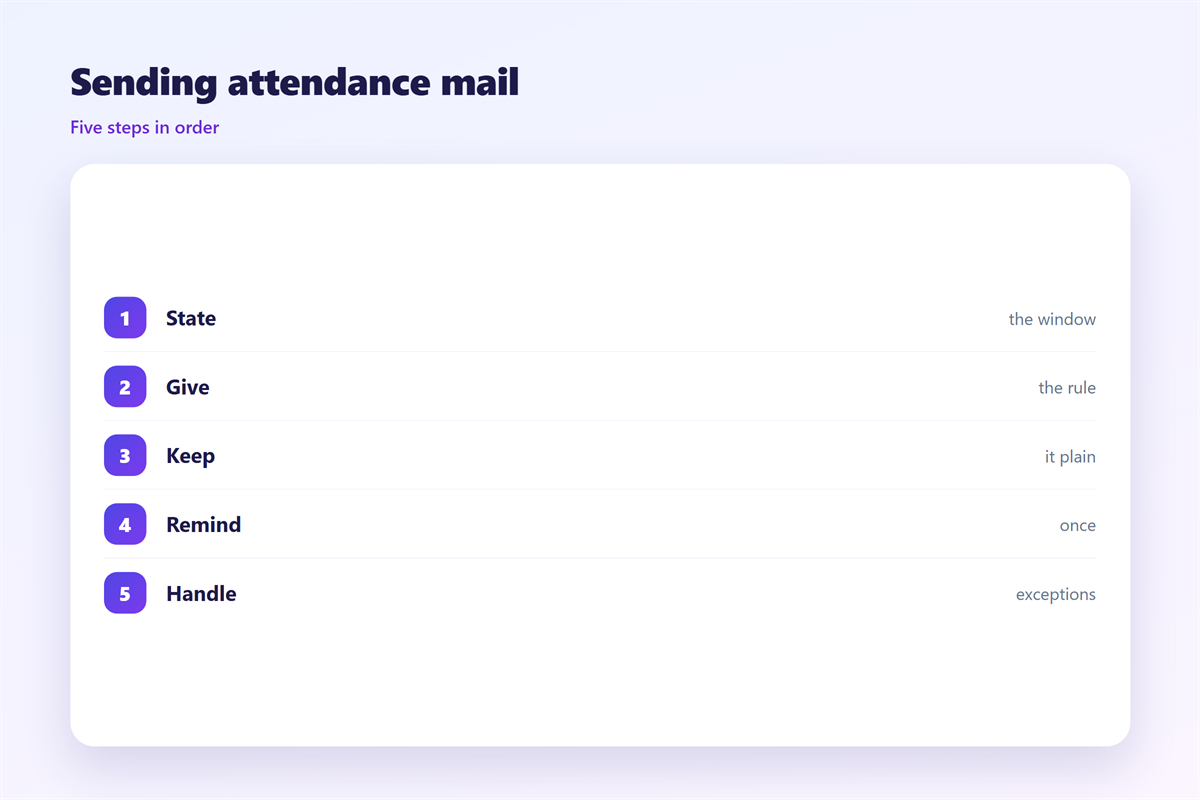
One note, one deadline, one reminder.
A rule that nobody reads is no rule at all.
So explain the reason once, clearly.
The late-reply problem
A late reply is not a crime.
Ask for a reason once.
Then mark the entry and move on.
邮件考勤 in practice
Start with the rule on paper.
Say what counts as a full day.
Say what counts as a half day.
Say how leave is recorded.
Then pick the sending hour.
Write the note in plain words.
Keep it under one screen.
Ask for one reply per person.
Use a single thread, not many.
Then check the log each evening.
Mark the missing replies in red.
Send one gentle reminder the next day.
Keep the tone friendly, not official.
A warm line gets a faster reply.
How to set 邮件考勤
Build a small template first.
Add the date and the deadline.
Add a line for the hours worked.
Add a line for any leave.
Then save it as a draft.
Reuse it every single day.
Change only the date.
That keeps the wording stable.
Next, agree the rule with the team.
Let them raise questions once.
Then lock the rule for a quarter.
Post it where everyone can see it.
邮件考勤 improves with small tweaks.
Do not change the rule mid-month.
A steady rule is easier to follow.
Then test the note for a week.
Fix any line that confuses people.
After that, leave it alone.
邮件考勤 and the team
Staff work in different places.
Some are on site and some are remote.
The rule must cover both.
Remote staff can log hours from home.
On-site staff can confirm at the desk.
The email looks the same to both.
That keeps the record consistent.
Time zones matter for remote teams.
Set the deadline in one shared zone.
Say the zone in the note itself.
Then no one guesses wrong.
A clear zone removes half the questions.
Part-time staff need the same clarity.
A simple question removes their doubt.
So write one line for them too.
Keeping 邮件考勤 steady
A steady routine turns into a habit.
Keep the same subject line each day.
The shift rota that feeds it is covered in 邮件排班.
Extra hours are explained in 邮件加班.
Time off is handled in 邮件请假.
The alerts that remind the team sit in 邮件通知.
Review the rule once a quarter.
Then keep the same wording for every team.
Then read one week of logs.
Look for gaps and repeats.
A shared habit makes 邮件考勤 painless.
FAQ
How often should a manager send 邮件考勤 requests?
Once a day is enough for most teams.
Does the same rule suit every team?
No. Hourly and salaried teams need different windows.
Can staff send their hours late?
Yes, but set one reason and one deadline.
What should 邮件考勤 include?
The date, the hours, and any leave taken.
评论
还没有评论,来说两句吧。
评论功能已关闭。