 小影邮箱
邮件脚注怎么写?Notes at the Foot
Key Takeaways
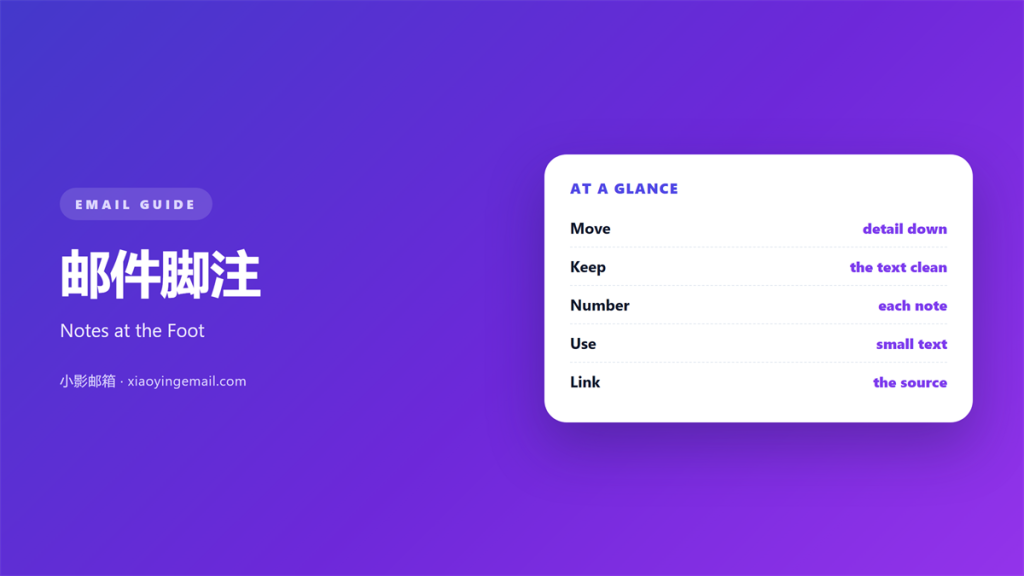
- 邮件脚注 is a short note at the foot of a message.
- It holds detail that would slow the main text.
- Keep it short and clearly separated.
- Use it for sources, rules or small print.
- Never hide an important ask down there.
What 邮件脚注 means
邮件脚注 is a small note placed at the foot of a message.
It sits after the main body and before the sign off.
It usually explains a source, a rule or a small detail.
It is not the same as the signature block at the end.
The note supports the main text without crowding it.
A good 邮件脚注 answers a question the reader may have.
It keeps the same tone as the rest of the message.
So it should read like a helpful line, not a legal wall.
Readers often skim the body and stop at the foot.
So the note should reward a quick glance.
It should never hide a key fact from the main text.
Why a 邮件脚注 helps
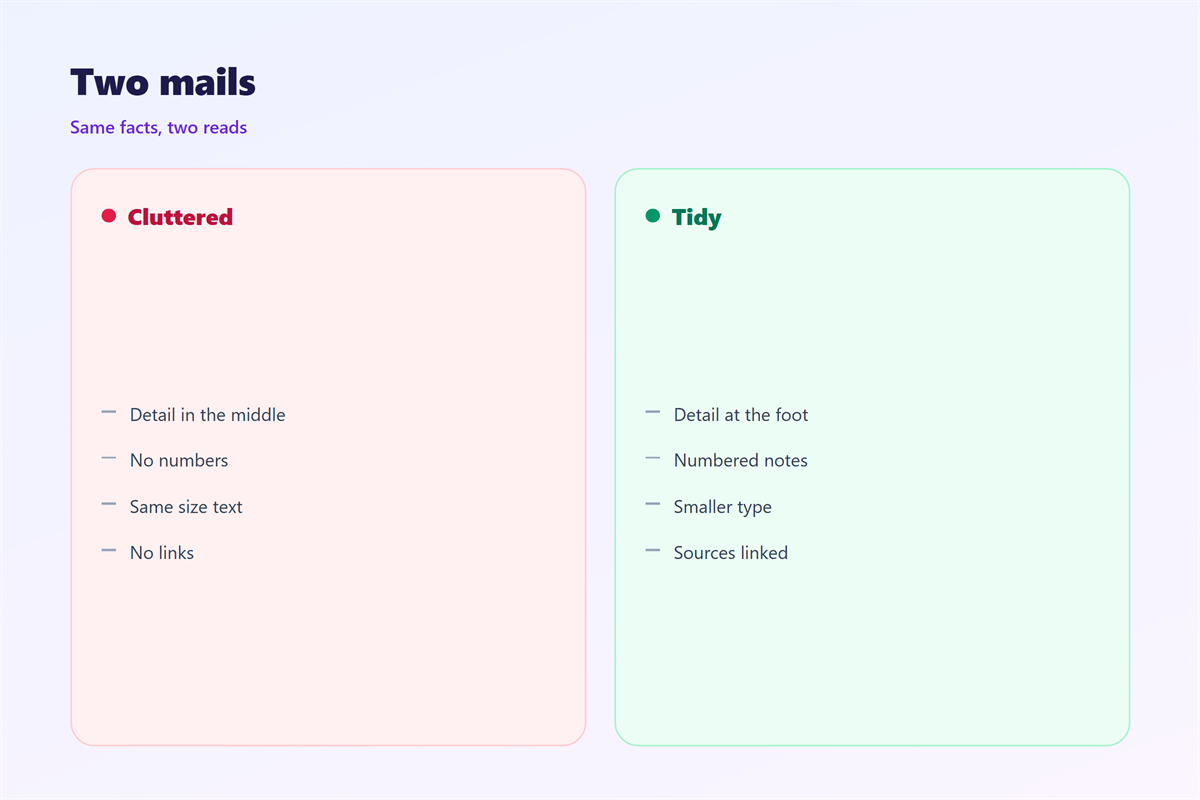
Long main text is hard to scan when it carries every fact.
Moving side detail to the foot keeps the top clean.
A short 邮件脚注 also gives the message a tidy finish.
It shows the reader that you thought about the small points.
That care builds trust without adding many words.
Keeping the main text lean
Every clause you push down frees the body to breathe.
The reader then sees the ask without extra noise.
A cleaner body is read faster and answered sooner.
A tidy foot also makes the message look finished.
Careless notes at the bottom make the whole mail feel rushed.
Consistency here tells the reader you are organised.
Where to place a 邮件脚注
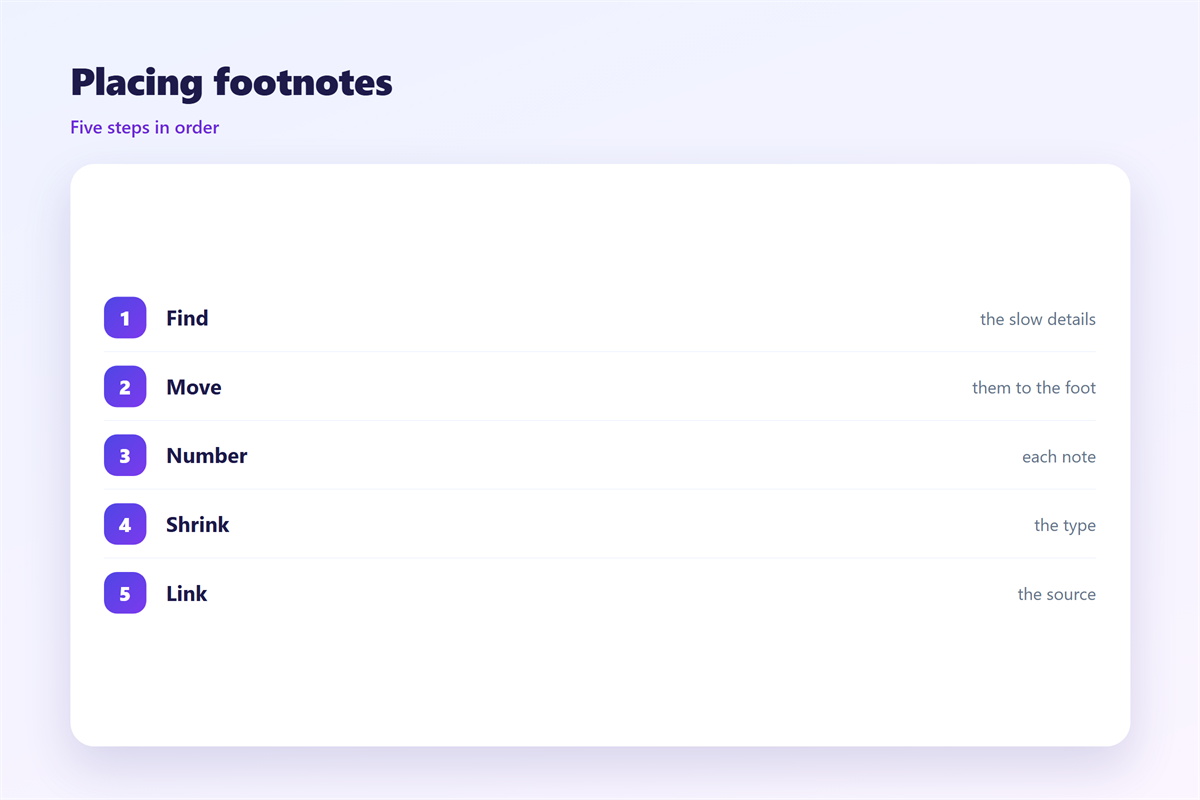
Put the note below the last line of the body.
Separate it with a blank line or a thin rule.
Keep it above the signature so it stays part of the message.
A 邮件脚注 should never interrupt a sentence mid way.
Use the same spot every time so readers learn the pattern.
That habit makes even dense notes quick to scan.
Avoid stacking three notes in a row.
If you need more than one, group them as a short list.
Keep the same spacing above and below for balance.
What belongs in a 邮件脚注
Keep the content narrow and clearly useful.
Put only things that would interrupt the main flow.
Sources and credit
Link the report or the file you are quoting.
Name the person who gave you the figure.
A short credit protects you and helps the reader check.
Rules and small print
Add a deadline rule or a policy line if it matters.
Keep legal wording as light as the law allows.
If it grows beyond three lines, move it to a link.
Ask yourself if the reader truly needs this line.
If not, drop it rather than pad the bottom.
Every note should carry its own small reason to exist.
Writing a 邮件脚注 clearly
Use plain words and short sentences.
One idea per line is easiest to read.
A 邮件脚注 should not need a second reading.
Keep it short
Two or three lines often cover it.
If it runs longer, question what can be cut.
Use plain words
Avoid heavy legal phrases when a simple word works.
Write the note the way you would say it aloud.
Read the note aloud to hear awkward phrasing.
If it trips your tongue, it will trip the reader too.
Then trim until it flows in one breath.
Common mistakes with a 邮件脚注
The first mistake is hiding the main ask down there.
The second is writing a huge block of small print.
The third is a note that repeats the body word for word.
A fourth is a footnote with no clear link to the text.
Each one weakens an otherwise tidy message.
A fifth mistake is a note that arrives only sometimes.
Readers learn to trust a pattern, not a surprise.
Keep the foot note as steady as the greeting.
Testing a 邮件脚注
Read the message from top to bottom as a stranger would.
Check that the note still makes sense on its own.
Look at it on a phone where lines are short.
A 邮件脚注 can wrap badly on a narrow screen.
Fix the length before you send the message out.
Check both the plain text and the rich text version.
A line that looks fine in one can break in the other.
Send a test before any message that matters.
Reusing a 邮件脚注
Save each 邮件脚注 you write often.
A fixed closing line saves time on routine mail.
Swap the details for each new reader.
Keep one plain version for serious messages.
Keep notes grouped by the kind of message they suit.
A short label makes the right one easy to find.
Keeping the pieces nearby
The note sits near the lower block described in 邮件页脚.
Its place inside the message follows 邮件正文.
Whether to use plain or rich text is covered in 邮件格式.
Spacing around the note follows 邮件排版.
Then the foot of the message looks as calm as the top.
With a steady foot, the reader never loses their place.
FAQ
What is a 邮件脚注 for?
It holds small detail that would slow the main text.
How long should it be?
Two or three lines. Move longer detail to a link.
Is it the same as a signature?
No. A signature names you. A footnote adds detail.
Should it ever carry the ask?
No. Keep the ask in the body where it is seen.
References
- IETF RFC 5322: Internet Message Format
- Twilio SendGrid: Email best practices
- Harvard Business Review: Writing email with precision
评论
还没有评论,来说两句吧。
评论功能已关闭。