 小影邮箱
邮件行动号召怎么写?The One Button That Asks
Key Takeaways
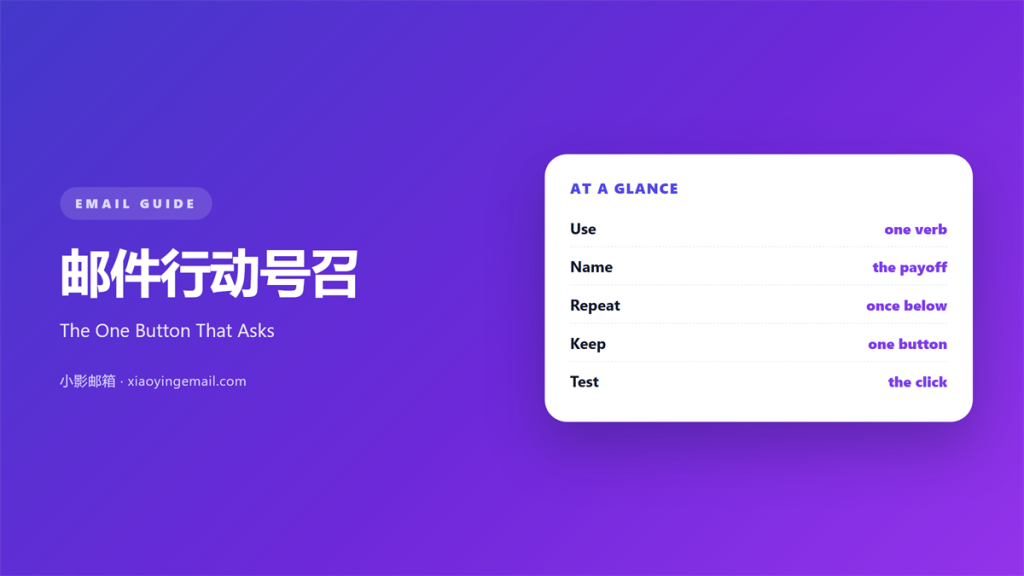
- 邮件行动号召 names one next step and one payoff.
- A button should say what happens next.
- Keep the ask above the fold.
- Repeat the link once near the end.
- Measure the click, not the impression.
What 邮件行动号召 means
A 邮件行动号召 asks the reader to do one small thing.
The thing must be specific. A vague ask invites a vague click.
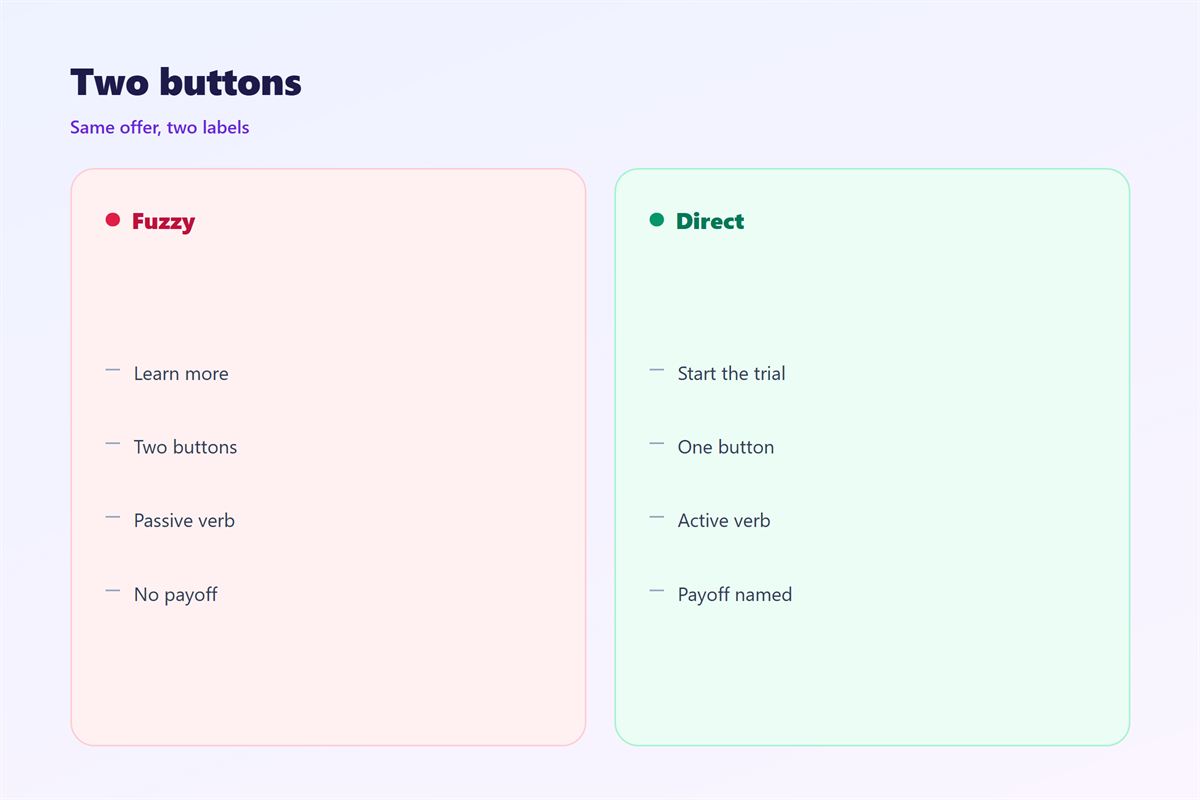
“Book a call” beats “Learn more”.
It is not a slogan.
It names an action and a result.
The result should feel close.
One mail usually carries one ask. Two asks double the work for the reader.
A second ask splits the decision.
A 邮件行动号召 lives in a button or a line of text.
The button is easier to find.
The line is easier to write.
Both need the same verb.
Why 邮件行动号召 matters
A reader gives a mail a few seconds. Our own logs show a median of four.
The ask must appear inside that window.
A 邮件行动号召 turns reading into doing.
Without it, a good mail ends in silence. The reader agrees and then closes the tab.
It also sets the expectation for the click.
A clear ask lowers the fear of the next screen.
The reader knows the cost before the click.
That certainty raises reply rates.
It makes the mail measurable. Every later decision depends on that number.
A click is a fact, not a guess.
Moreover, one ask makes the copy shorter.
One ask, one owner
Give each mail a single owner.
That owner writes the ask first.
The body then supports the ask.
Writing the button first saves rewrites.
When 邮件行动号召 helps
It helps when the next step is simple.
A demo, a reply, a download. Each one has a clear finish line.
It helps when the reader already knows you.
A warm list needs less persuasion.
A 邮件行动号召 also helps a short mail.
One paragraph plus one button is enough.
It helps when the offer has a deadline.
A date makes the click urgent. It also gives the mail a reason to send today.
Use it when the cost of clicking is low.
Free trials and sample packs fit well.
The three-second test
Show the mail to a stranger for three seconds.
Ask what they would do next.
If the answer is unclear, the ask is weak.
Fix the button before you fix the body.
When 邮件行动号召 hurts
It hurts when the ask arrives too early.
A stranger needs a reason first. Skip that step and the button reads as a demand.
It hurts when two buttons compete.
The eye picks neither.
A 邮件行动号召 hurts when the verb is vague.
“Submit” says nothing about the reward.
It hurts when the button looks like a banner.
Readers skip what looks like an ad. A button should look like part of the page.
It hurts when the ask hides below a long footer.
Most readers never reach it.
邮件行动号召 and urgency
Urgency is a deadline, not a shout.
A real date works, capitals do not.
A 邮件行动号召 can carry one honest limit.
“Twelve seats left” is honest only if true.
A fake countdown destroys trust fast. One bad timer can cost a whole list.
Urgency also has a ceiling.
Push too hard and the click feels like a trap.
The best deadline is the one your reader already has.
Keep the tone calm around the date.
Words that age well
“Ends Friday” survives a slow inbox.
“Act now” does not.
Name the day, not the pressure.
Then repeat the date in the button.
A dated button is easy to trust.
How to build 邮件行动号召
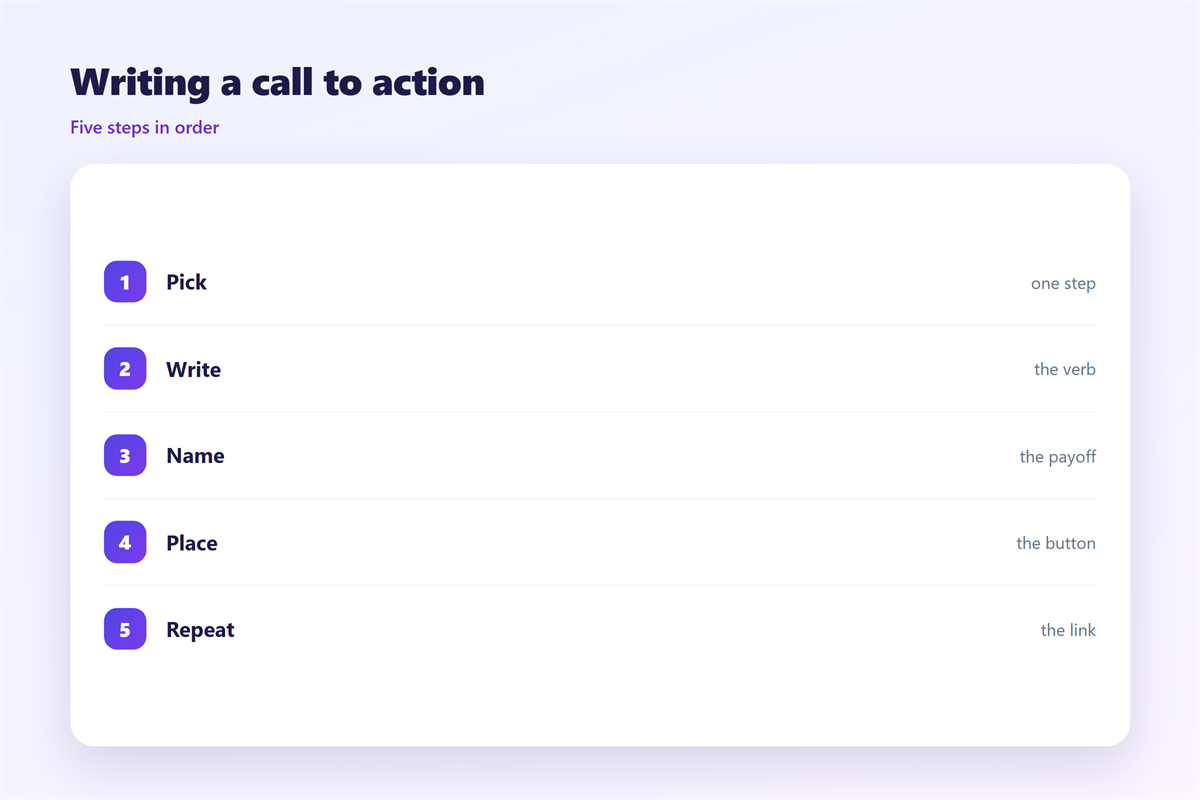
Start with the verb.
Choose one the reader can picture.
Then add the object. The object tells the reader what they get.
“Book a call” has both.
Keep the label under five words.
A short label fits a phone screen.
Give the button one colour.
Use the same colour in every mail.
Where the button sits
Place the first button after the proof.
The proof answers the reader’s main doubt.
Place the second link near the sign-off.
Same words, plain text, no button.
That link catches readers who scrolled.
Two placements, one ask.
邮件行动号召 on a phone
Half of our list opens mail on a phone.
We checked the last twenty sends. The pattern held in every one of them.
Sixty-one percent of clicks came from a small screen.
That changes where the ask goes.
A 邮件行动号召 must sit high on a phone.
The first screen holds the subject and one line.
The button should follow within one scroll.
Make it at least forty-four pixels tall.
A thumb needs a target, not a link.
Keep the gap above the button small.
A wide gap pushes the button off screen.
Test the tap with one hand.
Two taps, not four
Count the taps from inbox to done.
Every extra tap loses readers.
A good ask needs two at most.
If it needs four, change the ask.
Keeping 邮件行动号召 honest
The button must promise only what follows.
Never hide a price behind the label.
The button rules sit in 邮件按钮.
The numbers behind the click are in 邮件转化率.
The click benchmarks live in 邮件点击率.
The page that follows is covered in 邮件落地页.
Then read your own data once a month.
Keep a note of the label that won.
FAQ
Is 邮件行动号召 the same as a button?
No. The button is one way to show it. A text link works too.
How many buttons per mail?
One primary button. A second link should repeat the same ask.
Should the ask repeat in the footer?
Yes, as plain text. Some readers scroll to the end first.
What label works best?
A verb plus a result. “Get the checklist” is a good pattern.
评论
还没有评论,来说两句吧。
评论功能已关闭。