 小影邮箱
邮件谈判怎么写?Negotiating by Mail
Key Takeaways
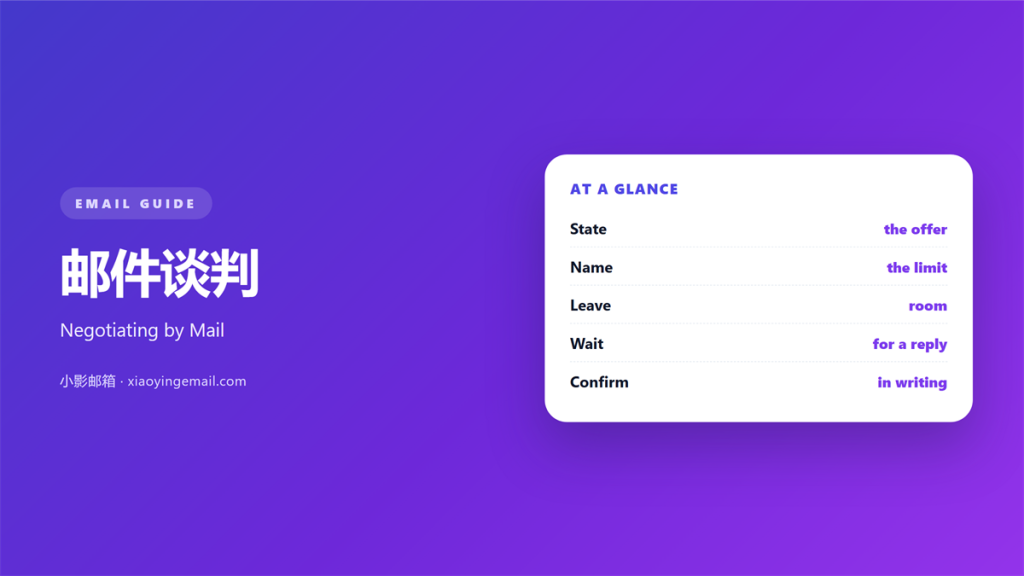
- 邮件谈判 is the work of reaching terms in writing.
- State the offer and the limit in plain words.
- Give the other side time to reply.
- Keep one issue per round.
- Put every agreement in the thread.
What 邮件谈判 means
邮件谈判 is the work of reaching terms in writing.
It moves in rounds, not in one message.
Each round answers the last and adds one point.
The pace is slower than a call.
That slowness can help both sides think.
It also leaves a record of every offer.
Good 邮件谈判 uses that record well.
It quotes the last number before it moves.
It names the next step at the end of each note.
And it never hides a term in a long paragraph.
That habit keeps the thread easy to audit.
It also keeps both sides honest about dates.
Why 邮件谈判 matters
A written deal is easier to trust.
Both sides can check what was agreed.
A calm note also protects the relationship.
A calm note can say no without damage.
A rushed call can say too much.
Writing gives you time to choose your words.
That time is worth more than speed.
Deals often fail on small misunderstandings.
A clear thread removes most of them.
A clear record also helps a later review.
That habit also makes a new offer easier.
A written record also outlasts a change of staff.
Name your limit
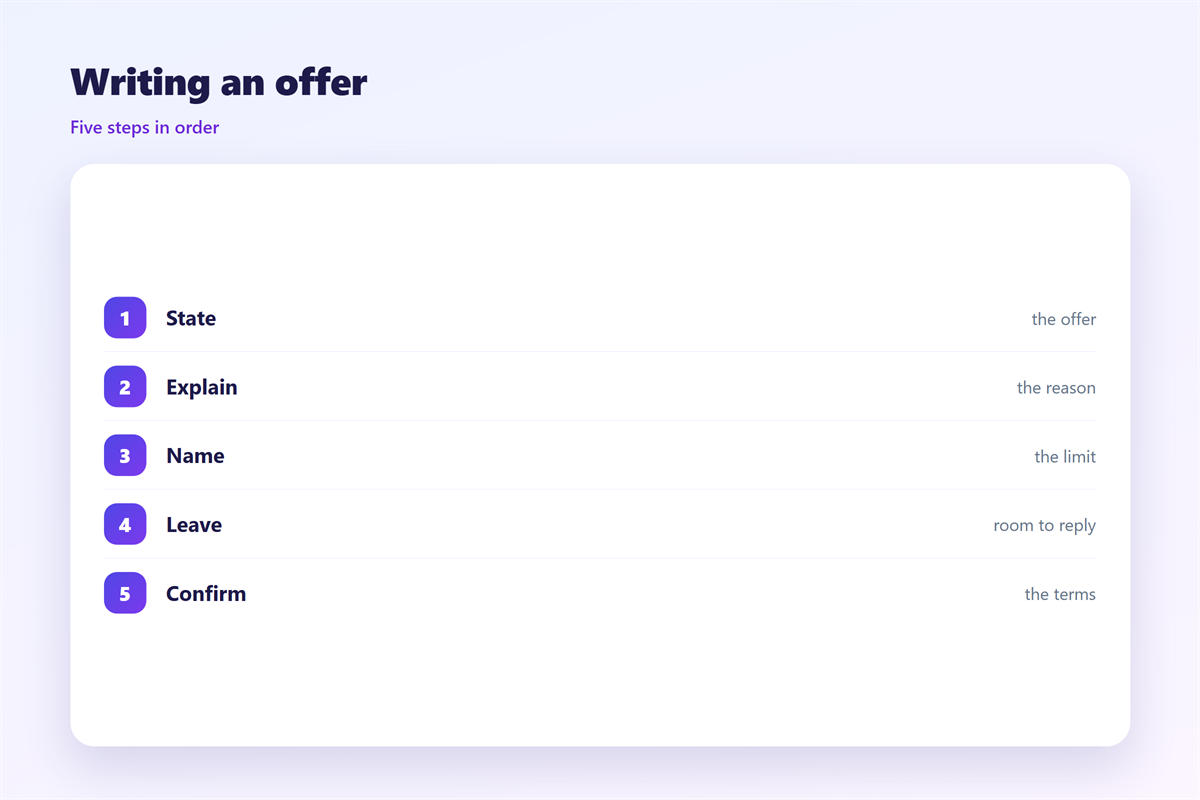
Decide your limit before you write.
Write it down for yourself.
Then keep every offer inside that line.
A limit you invent mid-thread is not a limit.
When 邮件谈判 helps
The process helps when the terms are simple.
Price, date, and scope fit in a short note.
It helps when the other side is far away.
Time zones make calls hard to plan.
It also helps when you need a record.
A written offer can be approved later.
That record speeds up the internal sign-off.
A written answer can wait for their morning.
A short note can cross the world overnight.
The other side can answer when ready.
Leave room to reply
End each note with a real question.
Give the other side a few days.
Do not set a false deadline.
Pressure closes a deal and opens a grudge.
When 邮件谈判 hurts
邮件谈判 hurts when the topic is tense.
Misreading is easy without a voice.
It hurts when a round hides two issues.
The other side answers one and ignores the other.
It also hurts when replies come too fast.
A quick answer often skips the detail.
And it hurts when nobody restates the deal.
Then both sides remember different numbers.
Write the summary before you celebrate.
A quick word on the phone can fix more.
A calm voice can clear a misunderstanding fast.
邮件谈判 and the first offer
The first offer sets the range.
Make it clear and easy to answer.
Name the price, the scope, and the date.
Then explain what the price includes.
Do not add hidden terms later.
A fair first offer invites a fair reply.
A clear first offer also saves a round.
A clear number is easier to compare.
Here the craft of 邮件谈判 meets simple honesty.
One issue per round
Pick the issue that blocks the deal.
Settle it before you move on.
Then confirm it in one line.
Small steps keep the thread readable.
They also keep the agreement stable.
Then the next round starts from a known point.
How to write 邮件谈判 well
Open with the point you want to settle.
Quote the last agreed term.
Then state your new position.
Add one reason, not five.
Keep the note under twelve lines.
End with a question and a date.
Read it once as the other side.
A calm line is easier to accept.
A short note is easier to answer.
Good 邮件谈判 sounds calm and firm.
Put it in writing
After each call, send a short note.
List what changed and what stayed.
Ask the other side to confirm.
That habit prevents most disputes.
A written summary also protects the quiet side.
邮件谈判 over several rounds
Long threads drift toward confusion.
Keep one thread per deal.
Put the current terms at the top.
Then answer only the open point.
Do not reopen settled terms.
If the other side does, quote the agreement.
Stay polite and repeat the fact.
A clear 邮件谈判 can close in three rounds.
Most deals need no more than that.
A single thread is easier to audit.
A short list of terms keeps everyone aligned.
Keeping 邮件谈判 fair
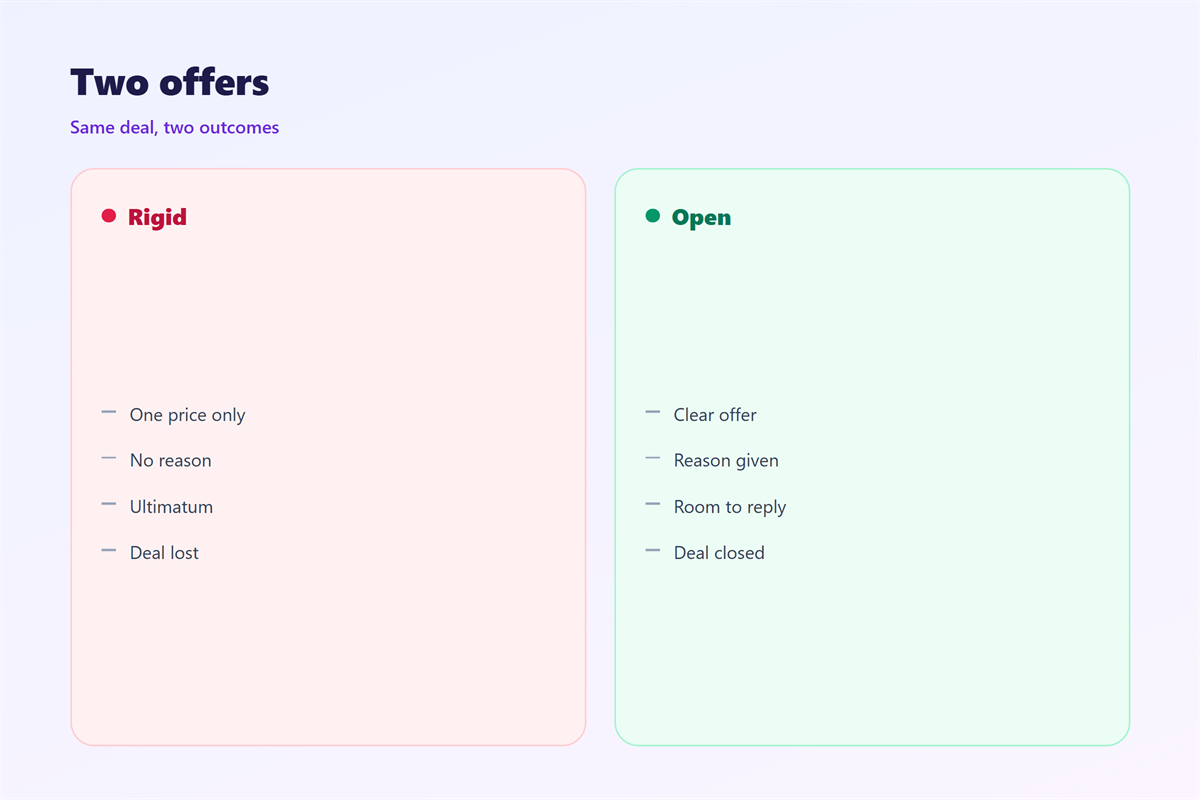
A deal should work for both sides.
Name what you need and what you can trade.
Do not use silence as a weapon.
A short follow-up is fairer than a cold wait.
Quotes are covered in 邮件报价.
Price requests sit in 邮件询价.
The timing of a reminder appears in 邮件跟进.
The final step is explained in 邮件成交.
Then confirm the deal in one clean note.
A fair deal is easier to repeat.
A clear reason makes a hard number easier to hear.
That habit also makes the next deal smoother.
Fair 邮件谈判 earns more than one deal.
FAQ
What is 邮件谈判?
It is the process of reaching terms by email. Each note moves one issue closer to agreement.
How do I start a negotiation by email?
State the offer, the scope, and the date. Add one reason. Then ask a simple question.
Does 邮件谈判 take longer than a call?
Yes, usually. The extra time gives both sides room to think. It also leaves a clear record.
How do I end a negotiation politely?
Thank the other side and restate the terms. Confirm the next step. Then send the summary to everyone.
评论
还没有评论,来说两句吧。
评论功能已关闭。