 小影邮箱
邮件报价怎么写?Quotes Clients Understand
Key Takeaways
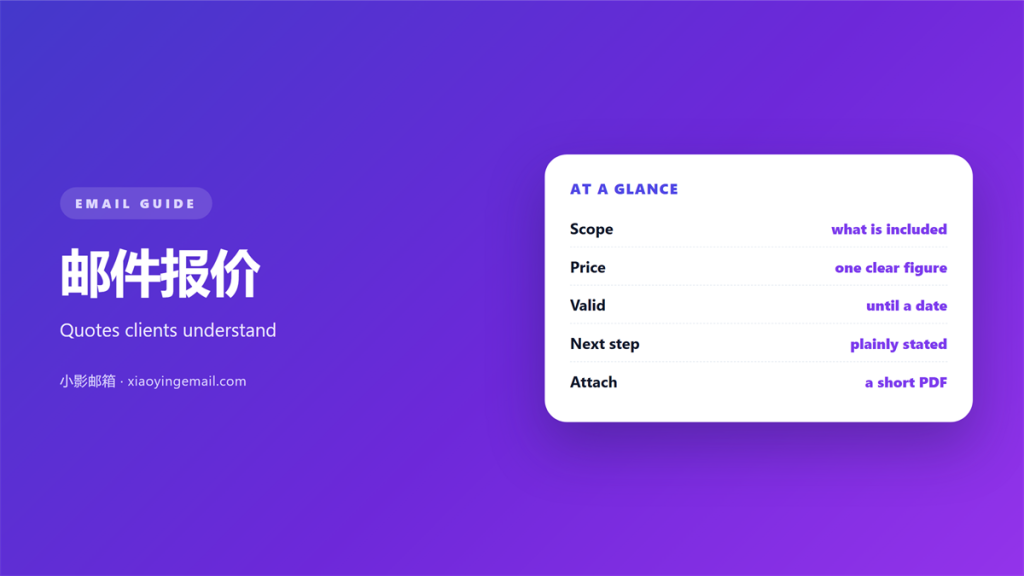
- 邮件报价 should state one clear total.
- List what is included and what is not.
- Give the price a validity date.
- Keep the scope short and readable.
- Ask for a simple yes or no next step.
What a 邮件报价 must include
邮件报价 turns a conversation into a priced offer.
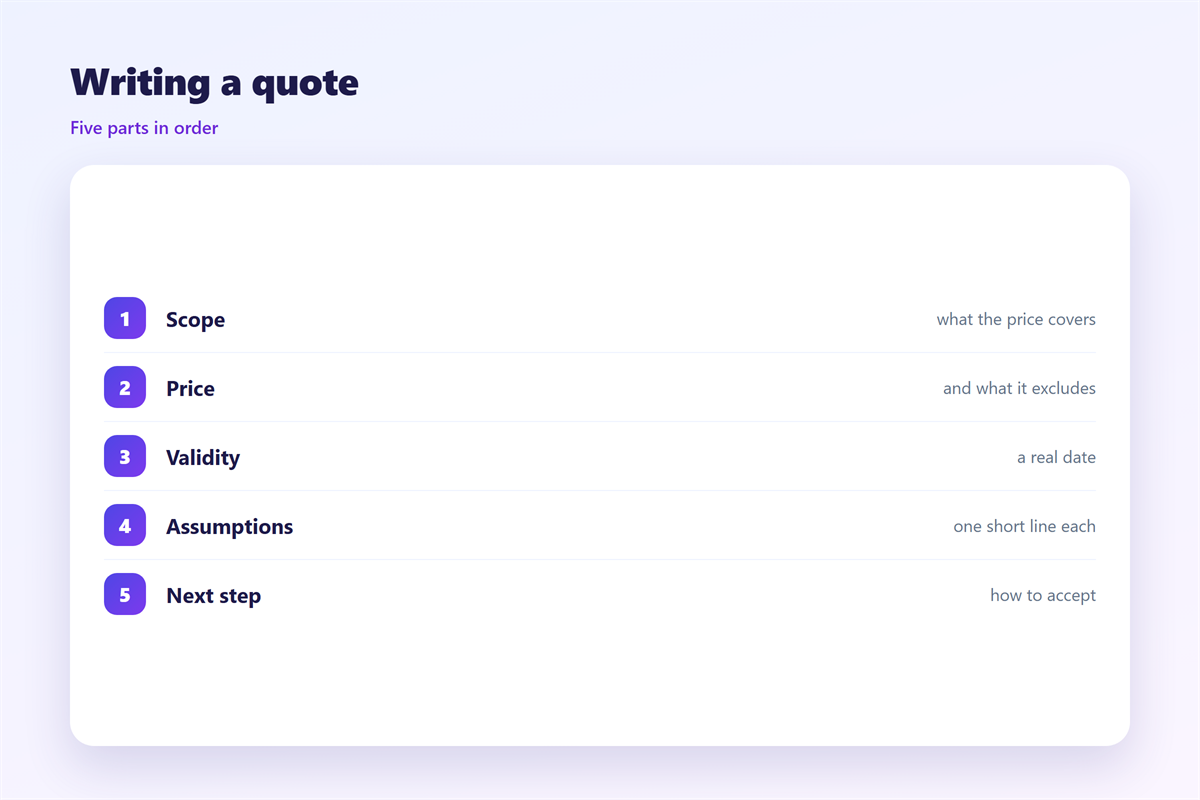
It needs a scope, a total and a time frame.
The scope says what work the price covers.
The total states the number without hiding fees.
The time frame sets how long the offer stands.
邮件报价 is also a promise. Name the terms plainly.
A clear quote saves three follow up messages later.
It should also name the currency and the tax.
A missing currency invites a costly guess.
Spell out recurring fees so nothing hides.
Add a short description of the work itself.
That context helps a busy reader decide.
Keep it to one or two plain sentences.
Long background belongs in the earlier talks.
Structuring a clear 邮件报价
Open with one sentence of context.
Then put the total on its own short line.
List the included items as a small set of bullets.
Add a line for anything excluded from the price.
邮件报价 readers scan first and read second.
So keep the numbers easy to find.
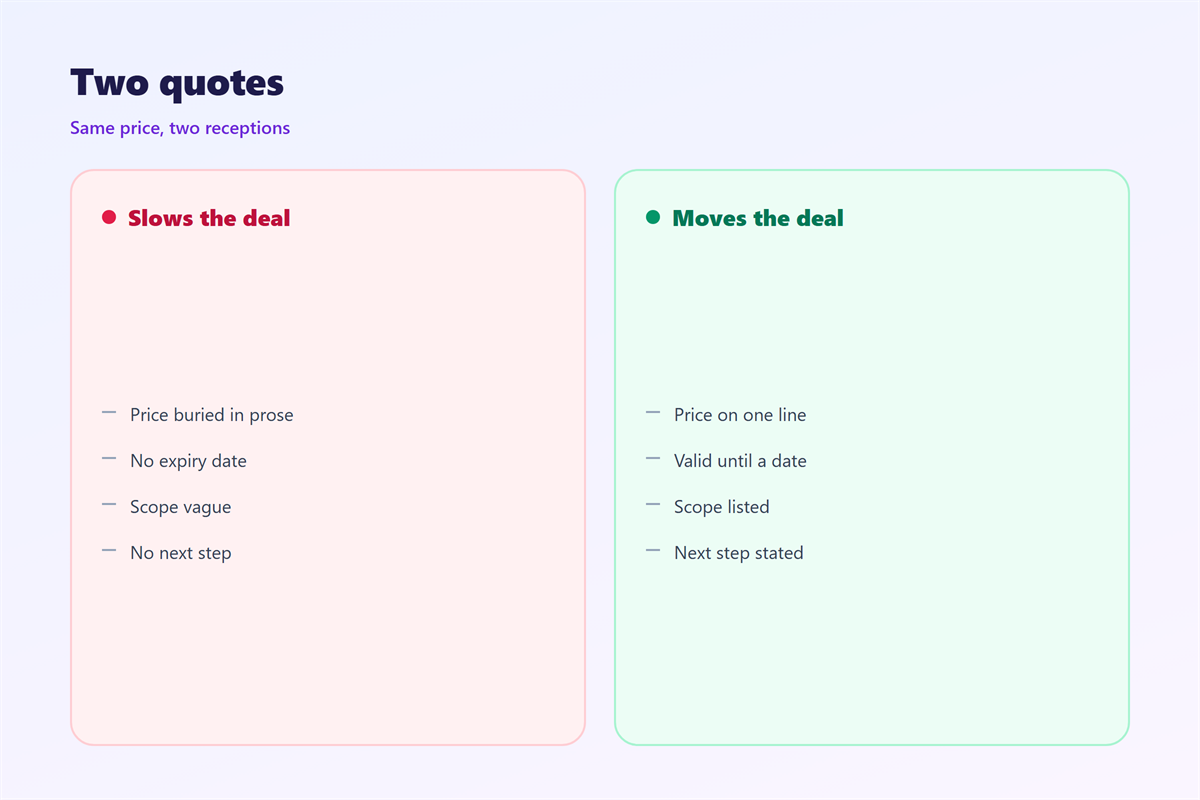
A quote buried in prose slows every decision.
Bold the total so the eye lands there.
Number the bullets so a client can reply by number.
A numbered list makes a yes easy to give.
Put the price before the long explanation.
Readers who see the number early read on.
Readers who must hunt for it often stop.
Where 邮件报价 go wrong
The first fault is a hidden fee. Trust drops at once.
The second is a vague scope. Both sides imagine different work.
The third is no validity date. The price lingers for months.
The fourth is a wall of text. The reader gives up.
Each fault has a simple cure. Review the quote before sending.
邮件报价 works best when both sides read the same thing.
Clarity protects the buyer and the seller alike.
A quote without a breakdown can still be fair.
A quote with hidden extras is never fair.
Small print belongs in the body, not a footnote.
If a term matters, state it plainly.
A price without units confuses the scope.
Say whether the total is per day or per project.
Mixed units cause most billing disputes.
Sending a 邮件报价 well
Send the quote from a signed, stable address.
Name the client and the project in the subject line.
Attach a file only if the price needs detail.
Keep the 邮件报价 readable in the body as well.
Set a reply window and offer one clear next step.
Ask a single question. Would you like to proceed?
That question is easy to answer and easy to ignore.
A simple ask raises the reply rate.
Send the quote while the need is fresh.
A delayed quote loses to a faster rival.
Offer a start date to make the offer concrete.
Keep the subject short and searchable.
Use the client name and the project name.
Following up on a 邮件报价
Give the client a few quiet days first.
Then send one short, friendly reminder.
Reply in the same thread and repeat the total.
Mention the 邮件报价 validity date once more.
If the price is the problem, offer two clear options.
A smaller scope at a lower price often moves the deal.
Keep every version until the decision is made.
Note the reason when a client declines.
That note shapes the next quote you write.
Ask one calm question about the budget if allowed.
The answer often reveals the real obstacle.
Wait a week, then send a single nudge.
A second nudge a week later is still polite.
After that, let the client come back.
Working with related messages
A quote rarely travels alone. It joins a longer conversation.
Our notes on 邮件开发信 open the first contact. The timing of a nudge is set out under 邮件跟进. Reusable wording sits under 邮件模板, and a polite close is covered in 邮件致谢.
A good 邮件报价 fits into that flow without friction.
Each small message builds the trust the price needs.
Keep the same tone across the whole exchange.
A sudden shift in style can look careless.
Save the final quote beside the signed offer.
The pair answers most later questions quickly.
A tidy record also speeds the next deal.
A written quote removes memory from the deal.
Both sides can point to the same page.
A clear quote also protects your own time.
Fewer questions mean fewer long replies.
A firm boundary on scope keeps the work sane.
State what a change order would cost.
Then new requests become a simple choice.
A client who understands the terms stays longer.
Trust, clear terms and a fair price win the deal.
FAQ
How detailed should a 邮件报价 be?
Detailed enough to prevent surprise, short enough to read. One page usually does the job. Put extra terms in an attached file.
Should I show a breakdown?
Show a breakdown when the client asks for one. Otherwise keep the headline total clear. Too many lines can invite haggling over each item.
How long is a quote valid?
Two to four weeks is a common window. State the date in plain words. Refresh the 邮件报价 when the window closes.
Can I follow up more than once?
Yes, but keep it short and spaced. Two gentle reminders are usually enough. Stop when the client clearly declines.
References
- U.S. SBA: Price your product or service
- Microsoft: Create a quote
- Google: Send attachments with your Gmail message
评论
还没有评论,来说两句吧。
评论功能已关闭。