 小影邮箱
邮件询价怎么写?Ask for a Price Clearly
Key Takeaways
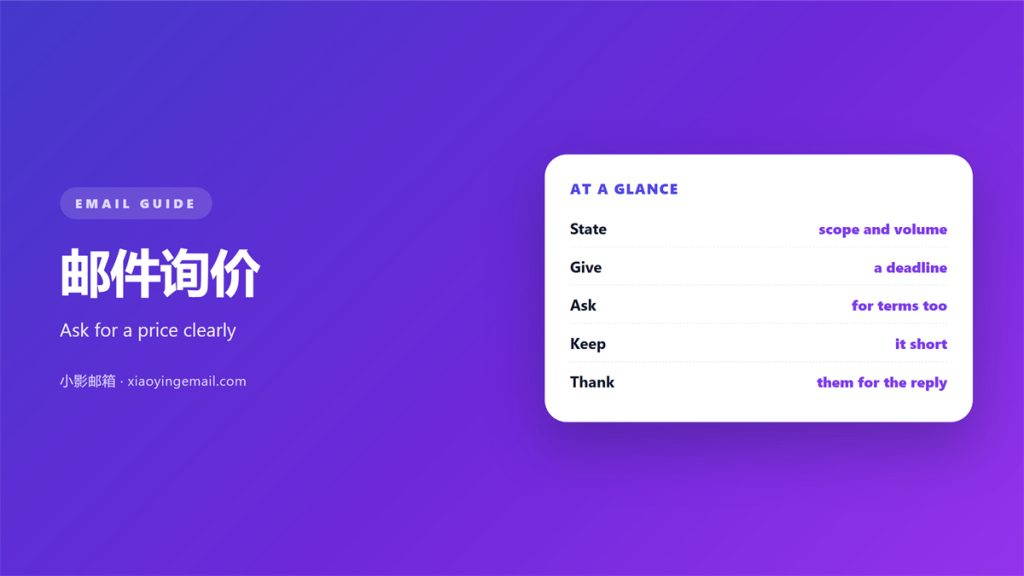
- 邮件询价 works best when scope and volume are clear.
- One message should carry a single clear request.
- Give the supplier a deadline you can keep.
- Ask for a written quote, not a verbal guess.
- A polite follow up protects your timeline.
What 邮件询价 really means
邮件询价 is a written request for price and terms.
It is not a chat and not a wish list.
The buyer states what they need and how many.
The supplier answers with a number and a date.
Both sides then keep the same record.
That record matters when the order is finally placed.
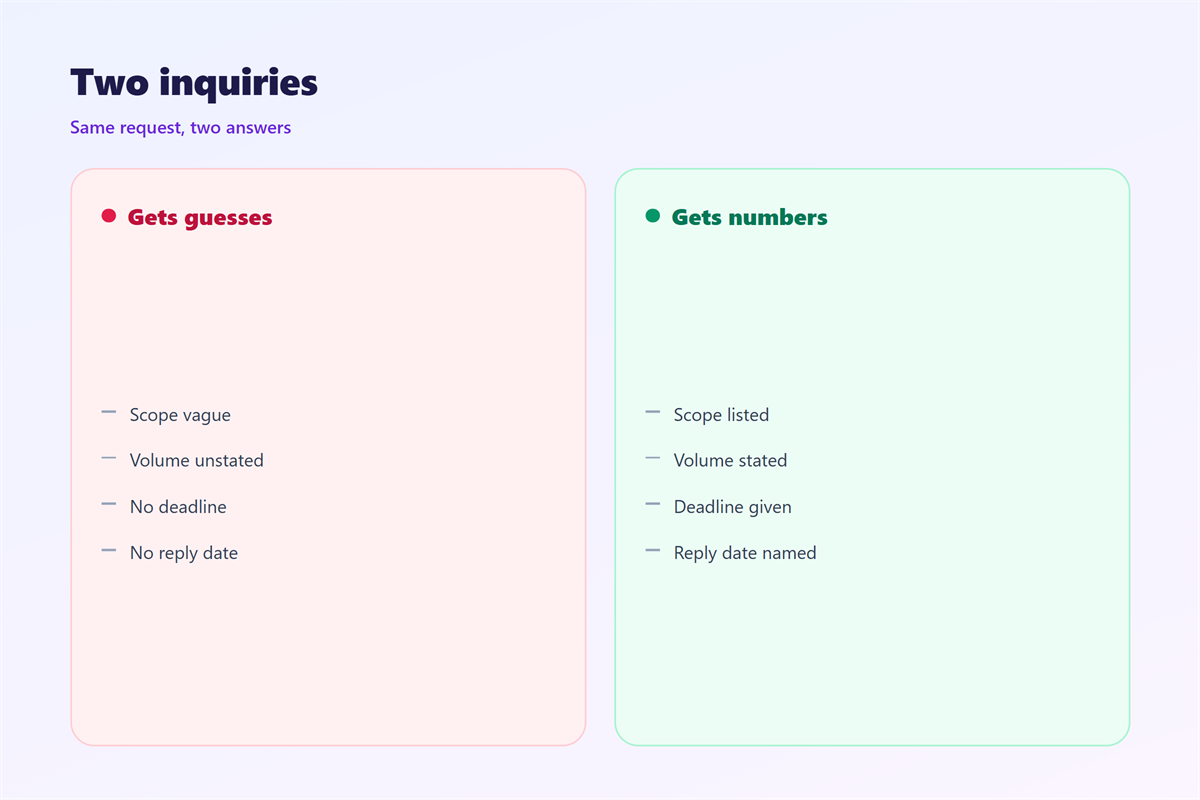
A vague request invites a vague answer.
Then nobody can compare two quotes fairly.
Think of it as a short form written in plain words.
The clearer the form, the easier the reply.
Good 邮件询价 removes that guesswork entirely.
It names the item, the volume and the date.
Everything else is detail that can follow later.
It should never read like a demand.
A friendly tone costs nothing and helps a lot.
A rushed 邮件询价 wastes everyone’s afternoon.
Two minutes of planning prevent that waste.
The goal is a clear answer, not a perfect one.
So keep the first message narrow and clean.
Where 邮件询价 often fails
Most requests fail for the same few reasons.
The buyer hides the volume to keep some leverage.
The supplier then pads the price as insurance.
Or the deadline is left out entirely.
A late answer then delays the whole project.
No one is at fault, yet everyone loses time.
Silence is another common failure.
A sent message is not the same as a read one.
So confirm that your request arrived.
A one-line note is enough for that.
邮件询价 also fails when it copies too many people.
A crowded thread slows down every reply.
Keep the recipient list short and known.
Send it to one named person if you can.
That person owns the answer from start to finish.
A clear owner removes most of the confusion.
A good 邮件询价 also states what is flexible.
That helps the supplier offer a cheaper option.
What a good 邮件询价 contains
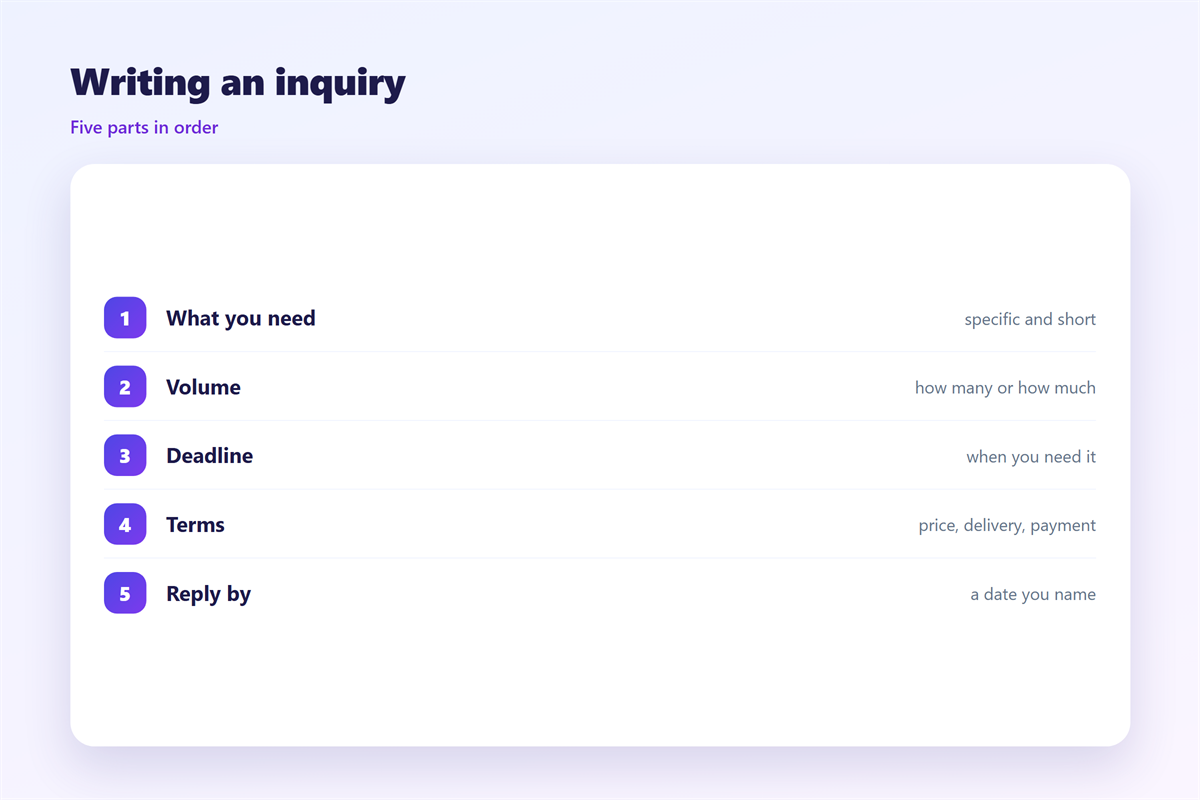
A strong request has five plain parts.
Each part answers one question the supplier will ask.
The list below covers them in order.
- Item: name the product or service exactly.
- Volume: state how many units you need.
- Timeline: give the date you need delivery.
- Terms: mention payment and shipping needs.
- Contact: say who can answer questions.
Reading a 邮件询价 against that list takes a minute.
It is the fastest way to spot a missing detail.
Fix the gaps before you send, not after.
Numbers beat adjectives every time.
Around a hundred units tells the supplier very little.
Write one hundred units and the answer improves.
A complete request earns a faster reply.
It also shows that you value the supplier’s time.
Keep the 邮件询价 free of internal jargon.
The supplier may work in another industry.
Timing your 邮件询价
Send the request early in the working week.
Monday and Tuesday tend to get the quickest answers.
Avoid the last hour of a Friday.
A message sent late may sit until Monday.
Give the supplier at least three working days.
A rush request without warning rarely succeeds.
If the deadline is tight, say so at the top.
Honesty about timing builds trust.
Then follow up once, politely and on time.
A second nudge too soon reads as pressure.
Waiting a full week before the second try is wise.
Time zones matter when the supplier sits abroad.
Check the clock before you expect a reply.
A message sent at midnight may wait for hours.
A patient 邮件询价 gets a more careful price.
A short hold can save a rushed decision.
So send it when their morning begins.
Checking a 邮件询价 reply
When the answer arrives, read it twice.
Compare the price to the scope you sent.
Check that the volume matches your request.
A missing line often hides a hidden cost.
Ask about anything the reply leaves unclear.
Do that before you accept the number.
Prices can change once the volume changes.
Ask how long the quote stays valid.
A quote with no expiry date is a trap.
Confirm the currency and the tax line too.
Our notes on 邮件报价 explain how a quote should read. The first approach is covered in 邮件开发信. A gentle nudge is described under 邮件跟进, and reusable wording sits in 邮件模板.
Keep the reply in a folder you can find.
Then save the whole 邮件询价 thread in one place.
A written agreement at this stage saves trouble.
Store the final quote with the order later.
Future orders become easier when you keep this history.
FAQ
What should a first 邮件询价 include?
Name the item, the volume and the deadline. Add your payment and shipping needs. Keep the message to one screen so it is easy to answer.
How long should I wait for a reply?
Three working days is a fair window. If nothing arrives, send one short reminder. A second reminder can wait another week.
Can I ask several suppliers at once?
Yes, and it usually helps. Send each one the same clean request. Then you can compare their answers on equal terms.
Is email the right channel for this?
For most standard goods it works well. Email leaves a clear record of price and terms. Move to a call only when the details get complex.
References
- IETF RFC 5322: Internet Message Format
- Google: Send or unsend Gmail messages
- FTC: CAN-SPAM Act compliance guide
评论
还没有评论,来说两句吧。
评论功能已关闭。