 小影邮箱
邮件内推怎么写?A Referral in Writing
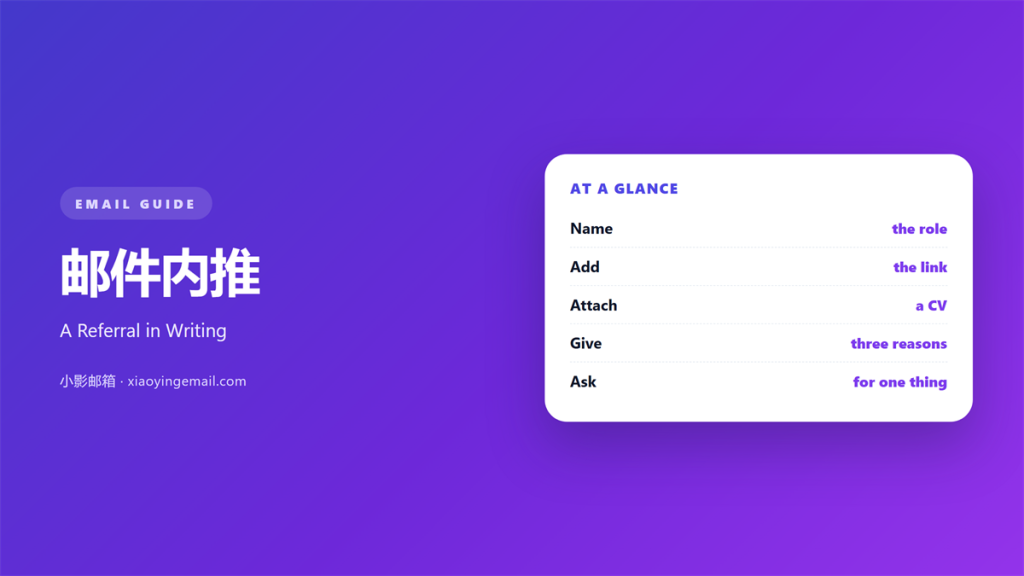
Key Takeaways
- 邮件内推 asks one person to name another for a role.
- Name the exact role and paste the job link.
- Attach the resume as a single PDF file.
- Give three lines on why the fit is real.
- Do not ask the referrer to write your whole story.
What 邮件内推 means
邮件内推 is a short mail that connects a person to a job.
It can come from an employee or from the candidate.
The employee version goes to the hiring team.
The candidate version goes to a former colleague.
Both versions do the same work.
They move a name from the pile to a desk.
A 邮件内推 is not a recommendation letter.
It is shorter and more factual.
The role, the link, the file, the reason.
Four things, in that order.
Both versions need the same four facts.
Anything else slows the reader down.
The whole mail should fit on one screen.
Why 邮件内推 matters
A referral arrives with trust attached.
The reader already knows the sender.
That trust shortens the first screening step.
A 邮件内推 also protects the referrer’s name.
A vague referral spends that trust for nothing.
Referrals also reach roles before they are posted.
Teams often ask staff first, then open a listing.
A good mail can land in that early window.
Referrals also help the candidate stand out.
A named sender beats an anonymous application.
The referrer is not your writer
Ask for a name, not for an essay.
Offer three facts they can reuse.
Keep the ask to one small action.
Then send everything they need in one file.
When 邮件内推 helps
It helps when the role is open and specific.
A 邮件内推 works best with a job link.
It helps when you have worked with the sender.
A shared project gives you a real reason.
It also helps when the team is growing fast.
Then the referral list moves faster than the job board.
It helps most when you ask one person only.
A single clear ask gets a faster reply.
The ask is small and the answer is quick.
The three-line reason
Say what you did in the same field.
Say which part of the role you have done before.
Say what you would need to learn.
Three lines are enough for a first read.
When 邮件内推 hurts
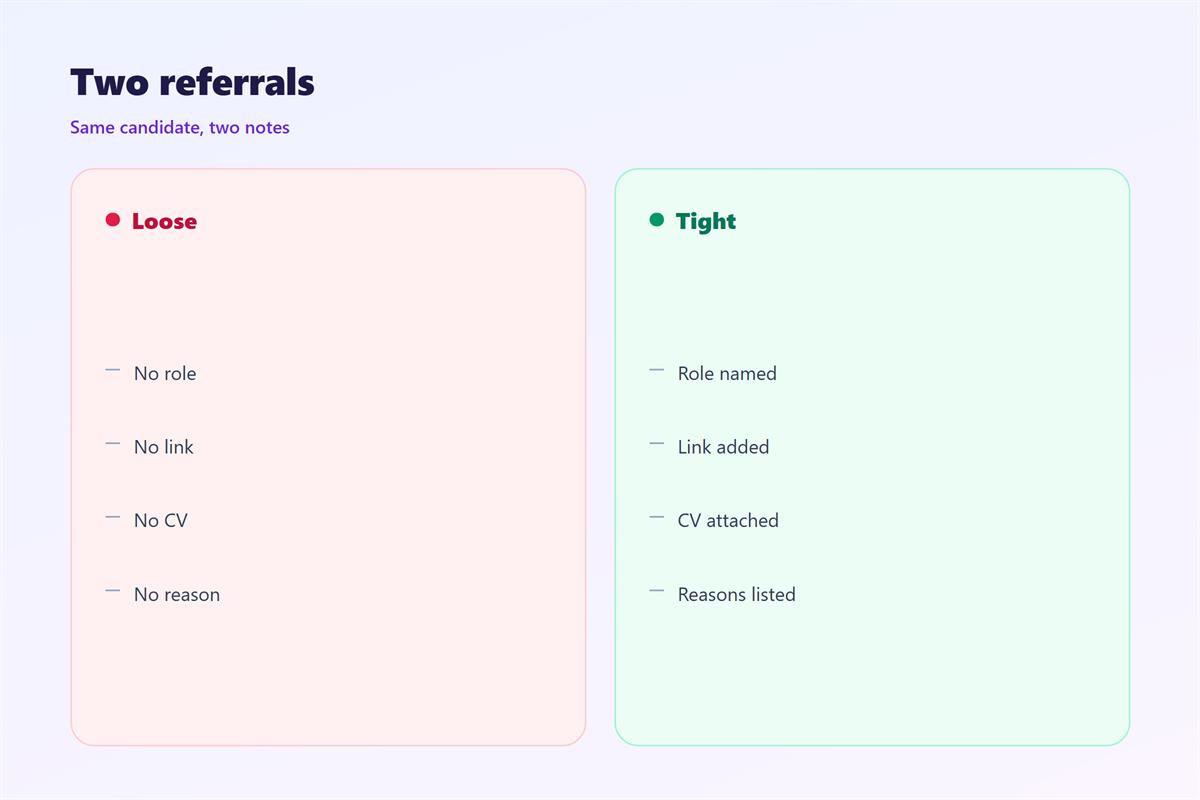
A 邮件内推 hurts when it asks for too much.
Nobody wants to write a paragraph on your behalf.
It hurts when the role is not named.
One vague sentence gives the reader nothing to do.
It hurts when the resume is missing or huge.
A twenty-megabyte file will not be forwarded.
It hurts when the mail flatters the reader for a page.
Praise without facts reads as a request, not a fit.
It hurts when you ask five people at once.
Word travels, and the fifth reader hears about the first.
邮件内推 and the attached resume
A 邮件内推 usually carries one file.
That file is the resume, and it does most of the work.
Name the file with your full name and the role.
A clear file name survives three forwards.
Keep it to one page for early-career roles.
Two pages are fine for senior positions.
Use PDF so the layout holds on any machine.
Then mention the file once in the mail body.
Do not attach five documents and a portfolio link.
What the file must show
List the last two roles and the dates.
Add one line of results with numbers.
Include a link that works without a login.
Put contact details on the first page.
Then stop adding. A short file gets read.
How to use 邮件内推
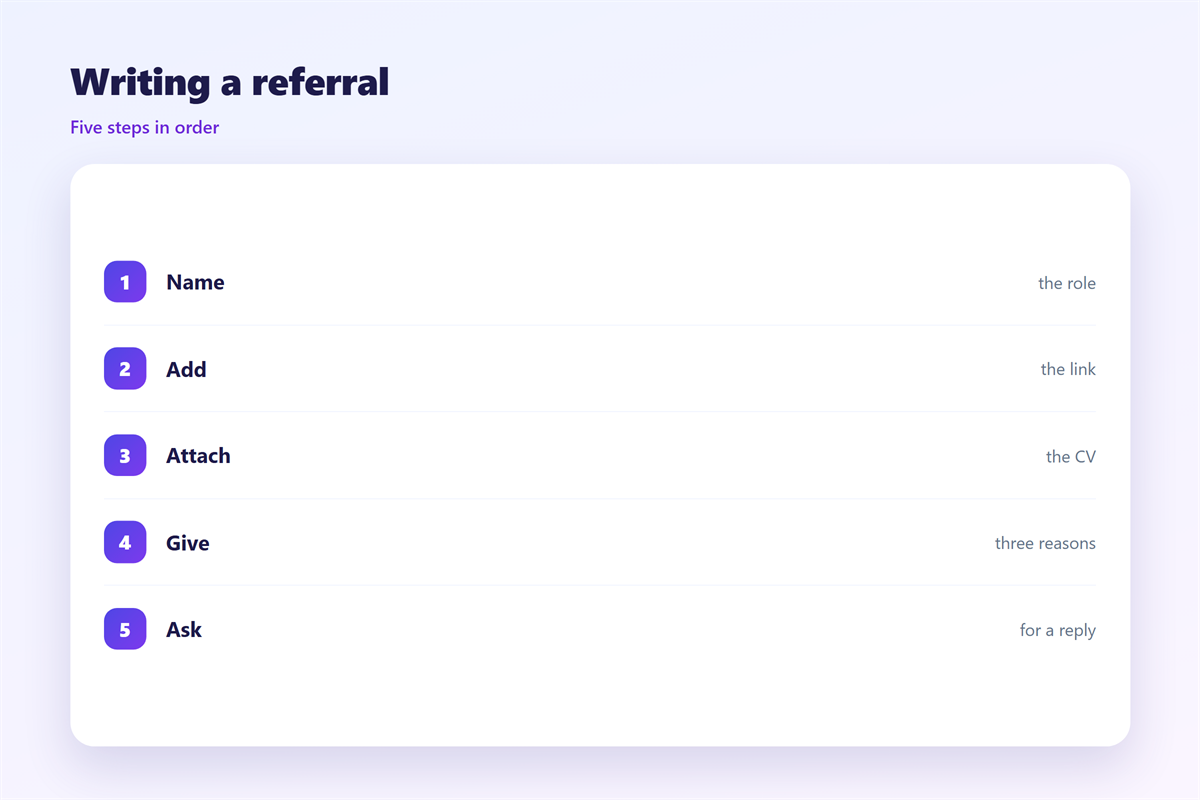
Write 邮件内推 after you find the exact posting.
Copy the job title as it appears on the page.
Paste the link in the second line.
Add one sentence about your connection.
Then give the three-line reason.
Attach the resume and name it clearly.
Close with one small question.
Keep the whole mail under a hundred words.
Subject line and one ask
Put the role and your name in the subject.
A short line with both is enough.
Ask for one action: forward or introduce.
Do not ask for a call, a review, and advice.
Then wait a week before a single follow-up.
One reminder is polite, and three is pressure.
邮件内推 on a phone
Many referrals are read on a phone between meetings.
The first two lines decide whether the rest is read.
Put the role and the link at the top.
A long greeting pushes the link off the screen.
Attach the file before you add the text.
Then check that the attachment icon appears.
Test the job link on a phone as well.
Some career pages break at a narrow width.
Keep the reason to three short lines.
Then read the whole mail aloud once.
Keeping 邮件内推 honest
Never claim a role is open when it is closed.
Ask before you use someone’s name.
The first conversation after a referral is often an 邮件面试.
A good word can lead to an 邮件录用 later.
The formal version of support is an 邮件推荐信.
Employers check claims, and 邮件背调 explains how.
Then keep the referrer informed at each step.
A short update protects their reputation too.
A referral that ends well earns the next one.
That is the whole point of asking.
FAQ
Who should I ask for a referral?
Someone who has seen your work in the last two years.
Should I attach the resume in the first mail?
Yes. It saves a round trip and shows you are ready.
How long should the mail be?
Under a hundred words, with the link near the top.
What if nobody answers?
Send one reminder after a week, then let it go.
评论
还没有评论,来说两句吧。
评论功能已关闭。