 小影邮箱
邮件加薪怎么写?Making the Case
Key Takeaways
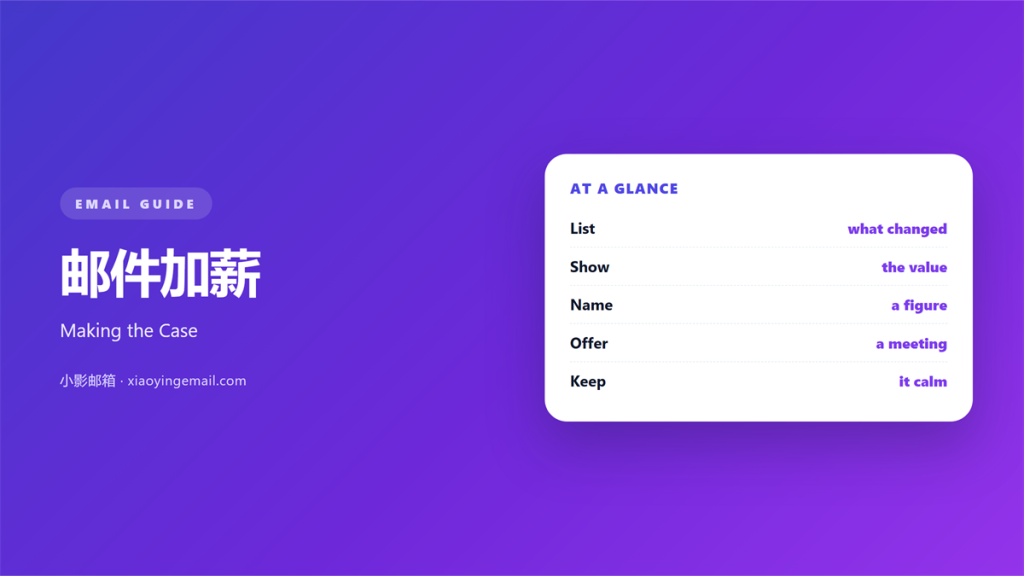
- 邮件加薪 is a written case for better pay.
- Lead with results, not with need.
- Name one clear figure and one date.
- Keep the whole note under one page.
- Send it after a win, not after a bad week.
What 邮件加薪 means
邮件加薪 is a short written case for better pay.
It is not a complaint and not a threat.
It is a record of what you delivered.
Most people treat it as a favour request.
That framing weakens the whole message.
A raise is a business decision.
Your note should read like a business case.
Show the work, the result, and the change you want.
Then leave the decision with your manager.
One page is enough for almost every case.
A clear 邮件加薪 respects the reader’s time.
It also gives the answer a shape.
Why 邮件加薪 matters
Pay rarely rises on its own.
Managers handle many requests and few budgets.
A clear note puts your case on record.
It also gives your manager something to forward.
That matters in firms with several approval steps.
Silence is the usual result of a vague ask.
People who never ask rarely get a review.
The note itself is not the reward.
It is the tool that starts a fair conversation.
Timing beats volume
One careful note beats five reminders.
Send it when results are fresh and budgets are open.
A raise request is a signal, not a demand.
It also protects the relationship.
A good 邮件加薪 leaves room for a fair answer.
That answer may come in two steps.
Ask which step comes first, then plan around it.
When 邮件加薪 helps
邮件加薪 helps when your role has grown.
New duties, new markets, or new reports all count.
It helps when the market rate has moved.
It also helps after a strong quarter.
Those moments give your manager a reason to act.
Each one needs evidence, not adjectives.
Three good moments to write
First, after a project ships and the numbers hold.
Second, when a job description no longer fits your work.
Third, when a review cycle opens and you know the date.
Write before the decision, not after it.
When 邮件加薪 hurts
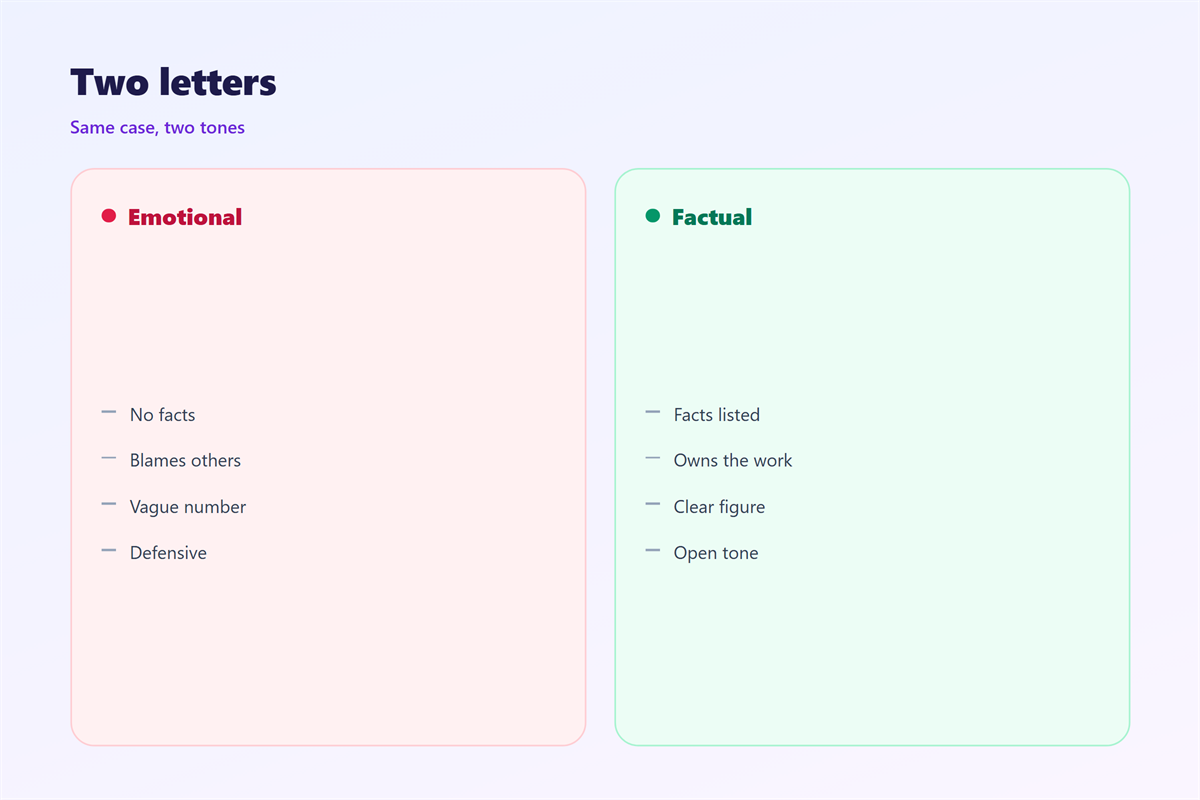
邮件加薪 hurts when it arrives with no evidence.
Feelings are real, but they do not set budgets.
It hurts when the figure is a range.
A range invites the lowest number.
It also hurts when you compare yourself to a colleague.
That turns a business case into a personal complaint.
Never send it in the middle of a team crisis.
Wait for a calm week and a clear head.
A rushed note is hard to withdraw later.
It can also damage a good working relationship.
Keep the case about the work, never about a person.
邮件加薪 and evidence
Evidence is the spine of the request.
Pick three results you can measure.
Use numbers your manager already trusts.
Revenue, time saved, and retention all work.
Then link each result to the work you did.
Keep the list short and specific.
Write results, not duties
A duty describes the job you were given.
A result describes what changed because of you.
Replace “responsible for support” with a real number.
Then place the strongest result first.
A weak 邮件加薪 lists tasks and hopes for the best.
A strong one shows what the tasks produced.
Keep a copy of the numbers you cite.
How to use 邮件加薪 well
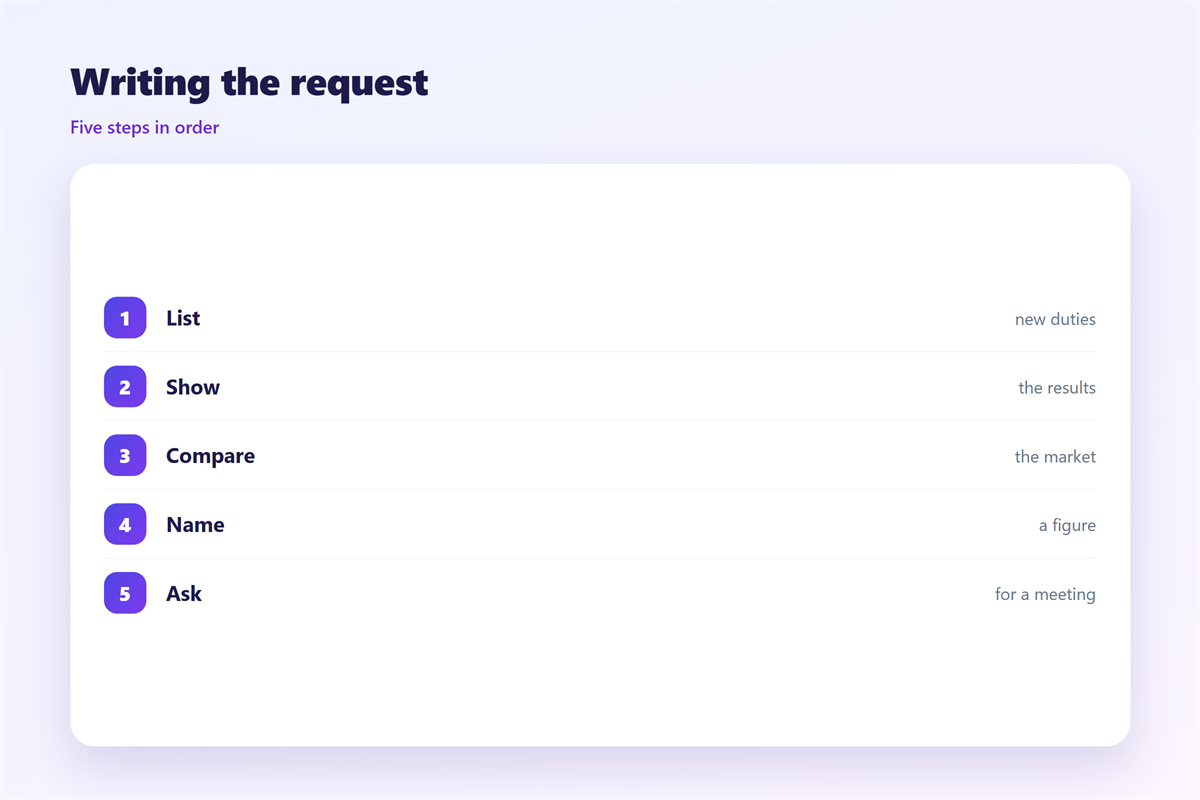
Start with a plain subject line.
Name the topic and the date you want to talk.
Open with one sentence that states the request.
Then give the three results in order.
Name the figure you have in mind.
Explain the basis for that figure in one line.
Close with a clear next step and a date.
Keep the tone calm and direct.
Name one figure
A single number is easier to answer.
Give the percentage or the salary, not both.
Support it with market data or a wider role.
Then stop writing. A longer note looks unsure.
邮件加薪 across the year
A raise request is not a single event.
Keep a running note of wins as they happen.
Save the numbers while they are fresh.
Then the case takes an hour, not a weekend.
Review your salary once a year at least.
If the answer is no, ask what would change it.
Write that answer down and check it next quarter.
A clear no with reasons is still useful.
It turns a closed door into a plan.
Then revisit the case when the reasons change.
Do not resend the same note every month.
Keeping 邮件加薪 honest
Honesty keeps the request credible.
Only claim work you actually did.
The results you report belong in 邮件绩效.
The written record sits in 邮件述职.
The offer side of the table appears in 邮件录用.
A move to a new seat is covered in 邮件调岗.
Then keep the same facts in every conversation.
If your manager checks, the story should not change.
A calm, accurate note ages well.
It also makes the next request easier.
Trust is the real asset here.
Keep the note private and the tone professional.
FAQ
How long should 邮件加薪 be?
One page is enough. Three results and one figure fill it well.
Should I give a salary range?
No. A range invites the lowest number. Name one figure and explain it.
What if the answer is no?
Ask what would change the decision. Write the answer down and review it later.
Can I send it before a review?
Yes. Send it two or three weeks early. That gives your manager time to prepare.
评论
还没有评论,来说两句吧。
评论功能已关闭。