 小影邮箱
邮件工单怎么用?Turning Mail Into a Queue
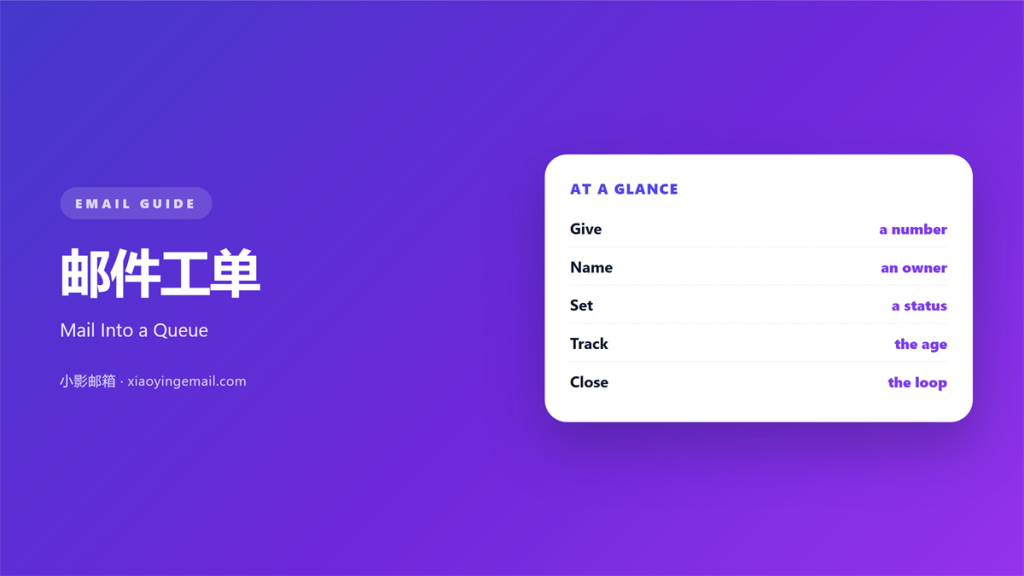
Key Takeaways
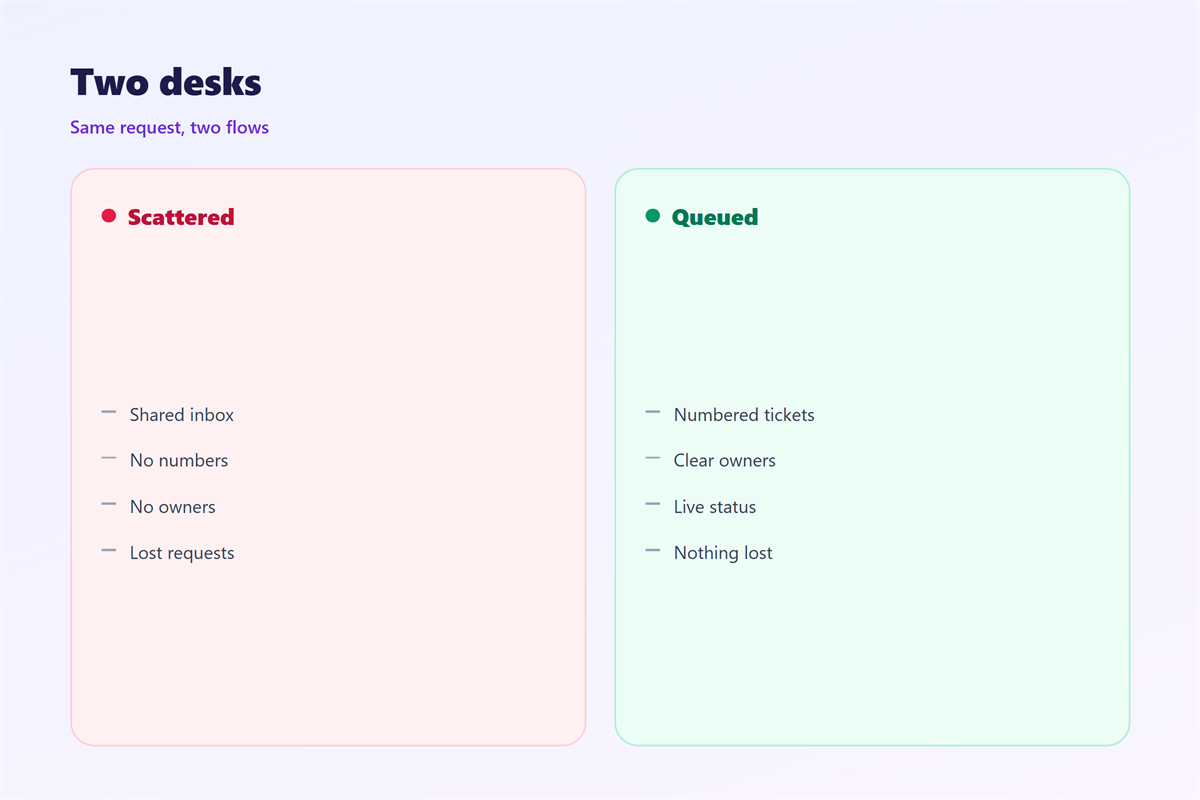
- 邮件工单 turns a scattered inbox into a queue.
- Give every request a number and an owner.
- Set a status so everyone sees the stage.
- Track each ticket until it is closed.
- A clear queue keeps no request lost.
What 邮件工单 means
邮件工单 is a tracked request built from an email.
The message becomes one item in a list.
Each item gets a number and an owner.
It also gets a status and a due date.
The list replaces a crowded inbox.
Nothing sits unseen at the bottom.
The team can see what is open.
The team can see what is done.
A ticket is simply a promise you track.
It turns a message into a small job.
The whole point is to forget nothing.
邮件工单 is a habit more than a tool.
Start with a plain list if you have no system.
Why 邮件工单 matters
Mail arrives in a random order.
A queue puts it in a clear order.
The reader knows who owns each request.
The writer knows when to expect a reply.
Good 邮件工单 removes the guesswork.
It also stops two people from answering once.
One owner means one clear answer.
The queue also shows the busy spots.
A long line means you need more help.
So the queue is a planning tool too.
It turns noise into a simple picture.
Number and owner
Give each ticket a short number.
Then assign one clear owner.
The number helps you talk about it.
The owner helps you track it.
When 邮件工单 helps
A queue helps in almost every shared inbox.
Use it for a support desk.
Use it for a sales team.
Use it when many people share one address.
Use it when requests often get lost.
Each case rewards a simple tracked list.
The team then answers in a steady order.
Customers feel the difference fast.
A queue also helps when someone is away.
The list shows the work still waiting.
邮件工单 on a phone
A phone is fine for a quick status check.
Open the list and scan the open items.
Add a short note and move on.
Keep the heavy work on a larger screen.
When 邮件工单 hurts
A queue can hurt when it is too heavy.
Ten fields for a tiny request slows the team.
A strict stage for a one-line task wastes time.
A ticket with no owner starts to float.
A ticket with no date drifts for weeks.
So keep the list light and clear.
Add a field only when it earns a place.
Every ticket needs an owner and a date.
Then the queue stays honest and quick.
The light-ticket rule
Use few fields for a small request.
Use more fields for a large one.
A ticket should never cost more than the task.
Keep it light and the team will use it.
邮件工单 in plain text
Plain text keeps a ticket simple.
The subject line carries the number.
The body states the request in one line.
No fancy format is needed here.
A plain list in a shared mailbox can work.
A short subject makes it easy to find.
Use the same words every time.
Then anyone can sort and search it.
A plain subject can hold the number and the topic.
Then the search box finds it in a second.
The plain version is a safe first step.
Many teams start there before any tool.
The habit matters more than the software.
How to run 邮件工单 well
Start with one shared address.
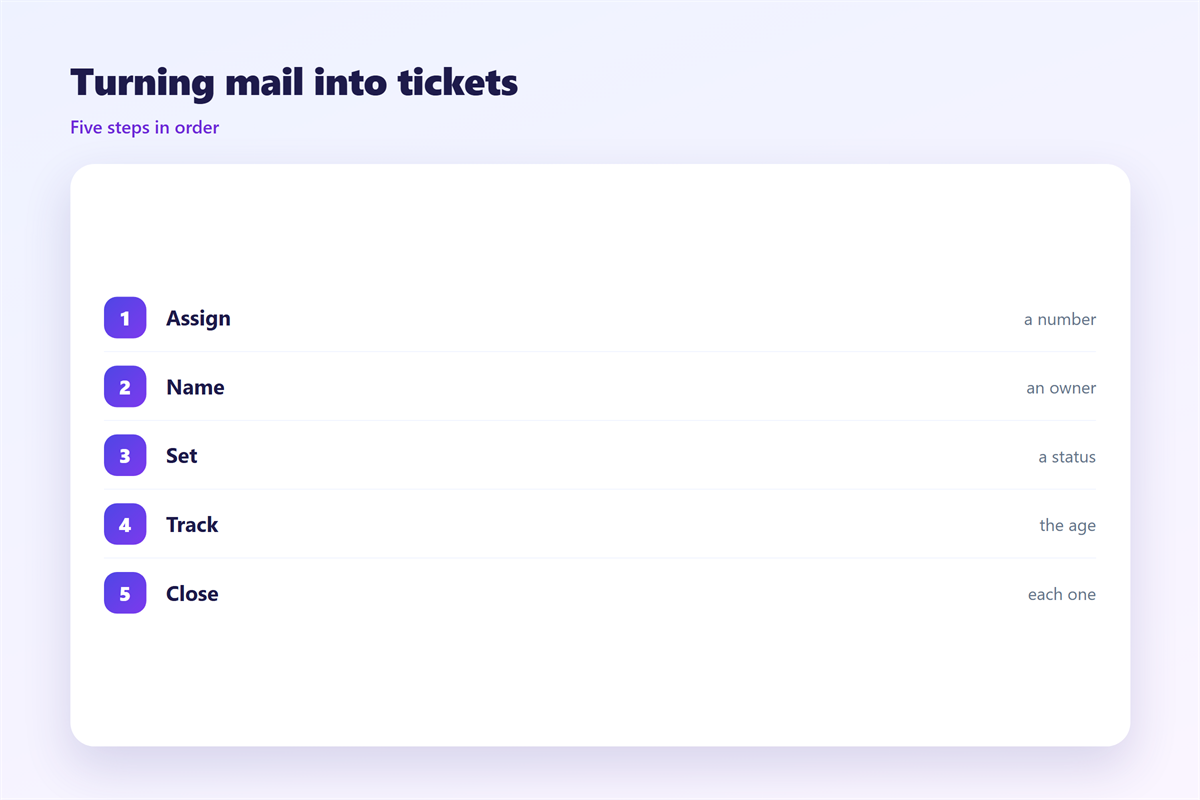
Turn each message into a tracked item.
Give it a number and an owner.
Add a status and a due date.
Keep the first stage short and clear.
Reply to the writer with the number.
Then work the oldest open item first.
Move the status as the work moves.
Close the ticket with a plain note.
A good 邮件工单 keeps no request lost.
The team then trusts the queue.
Read the open list each morning.
Clear the oldest items first.
If the list grows, add a second owner.
Aim for a queue that stays short and calm.
邮件工单 and trust
A steady queue builds real trust.
A customer sees a number and a reply.
That small signal says the request was heard.
A quick close also builds goodwill.
So keep each promise you make.
A quiet queue also lowers the daily stress.
The team stops wondering what was missed.
If a date slips, say so early.
A calm update beats a silent delay.
The queue should never hide a problem.
Let it show the truth in plain words.
That honesty keeps customers close.
Keeping 邮件工单 consistent
Consistency turns a queue into a habit.
Pick one workflow and hold it across the team.
Keeping customers warm is covered in 邮件客户关怀.
A set of ready answers lives in 邮件快捷回复.
A reusable reply structure sits in 邮件模板.
Handing a ticket to a person appears in 邮件分配.
Agree on the fields every ticket must have.
Then keep the same steps for every request.
A team that agrees on 邮件工单 answers faster.
FAQ
What is a 邮件工单?
It is a tracked request built from an email, with a number and an owner.
Does a small team need a paid tool?
No. A shared mailbox, a simple list, and a clear rule can work.
How many fields should a 邮件工单 have?
As few as possible. Add a field only when it earns its place.
When should a ticket be closed?
Close it when the request is met and the writer has an answer.
评论
还没有评论,来说两句吧。
评论功能已关闭。