 小影邮箱
邮件故事怎么讲?Stories That Stick
Key Takeaways
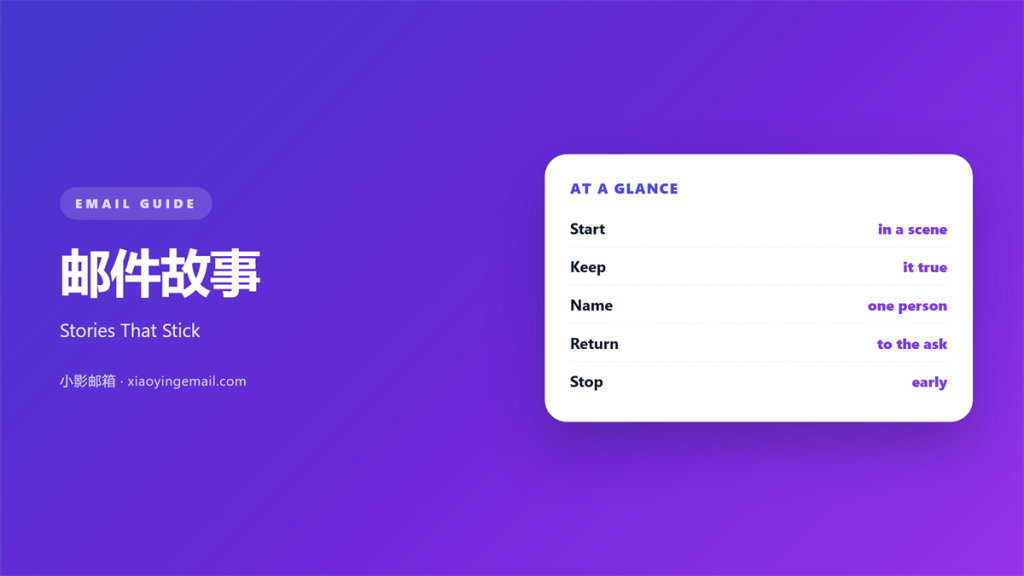
- 邮件故事 is a short scene with a person, a problem, and a change.
- Three sentences can already be a story.
- Start inside the moment, not with a summary.
- Keep every detail true or cut it.
- Link the story back to the one action you want.
What 邮件故事 means
邮件故事 is a small true scene that carries one point.
It has a person, a moment, and a change.
The person does not need to be famous.
The moment does not need to be dramatic.
A support queue on a Monday morning is enough.
The change is what makes it a story.
Something was one way, and then it was another.
Without that turn, you have a description, not a story.
Keep the scene small enough to hold in one screen.
The reader should see a person, not a brand.
Why 邮件故事 matters
A fact is easy to read and easy to forget.
A scene gives the fact a place to live.
Readers remember the room, the person, and the words.
Then the fact comes back with them.
That is why a short story beats a long list.
Good 邮件故事 also lowers the guard.
A reader who is following a person stops scanning for a pitch.
By the time the ask arrives, the reader is already involved.
The ask feels like the next step, not an interruption.
Facts fade, scenes stay
A number in a table is forgotten by Friday.
The same number inside a scene tends to stay.
The reader remembers who was affected and why.
That memory is what makes the mail useful later.
When 邮件故事 helps
邮件故事 helps when a change is hard to explain.
A process, a fix, or a new habit all need a picture.
It helps when the mail asks for trust.
A reader who sees the work is more willing to reply.
It helps again in a welcome mail.
The first story tells the reader what this list is about.
And it helps when an apology is needed.
A short account of what went wrong sounds honest.
It also helps when the mail is a reminder.
One story per mail
Two stories split the attention in half.
Pick the one that points most directly at the ask.
Then let the rest of the mail explain it.
A single story with one lesson is enough.
Save the other story for the next send.
When 邮件故事 hurts
邮件故事 hurts when the story is invented.
Readers can smell a made up customer in one line.
It hurts when the story is longer than the offer.
A four paragraph tale pushes the button out of view.
It hurts again when the reader is the villain.
A story about lazy customers never lands well.
And it hurts when the lesson is spelled out twice.
Show the change, then stop explaining it.
One sentence of meaning is plenty.
邮件故事 and brand voice
The stories you choose define how the brand sounds.
Quiet, specific stories read as careful.
Loud stories with big claims read as advertising.
So pick details that match the voice you want.
A small detail, like a wait time, does a lot of work.
Keep the details true
Change the name, keep the facts.
Never invent a quote to make a scene work.
If a fact is missing, write around it.
Ask the person for one line of permission.
A true story can be told many times without damage.
How to use 邮件故事 well
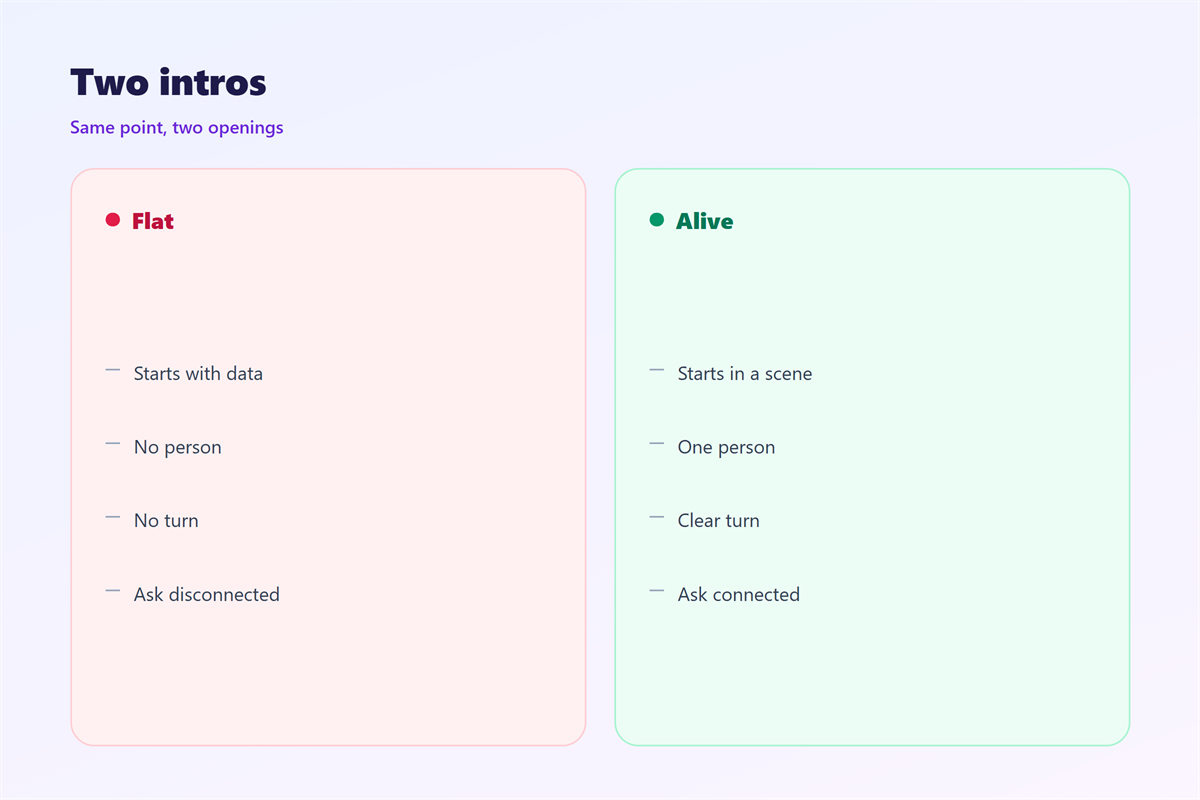
Start with the moment of change, not the background.
Give the reader one detail that sets the scene.
Name the problem in the person’s own words.
Then show the single action that shifted things.
Keep the timeline tight and the cast small.
One person and one action is enough.
Cut every sentence that does not move the scene.
End on the result, not on a slogan.
Then connect the result to the reader’s own week.
Test the story aloud
Read the story to a colleague in one breath.
If they ask a question, the scene has a gap.
If they lose interest, the opening is too slow.
If they retell it correctly, the story works.
Then cut ten percent more and send it.
邮件故事 in a short mail
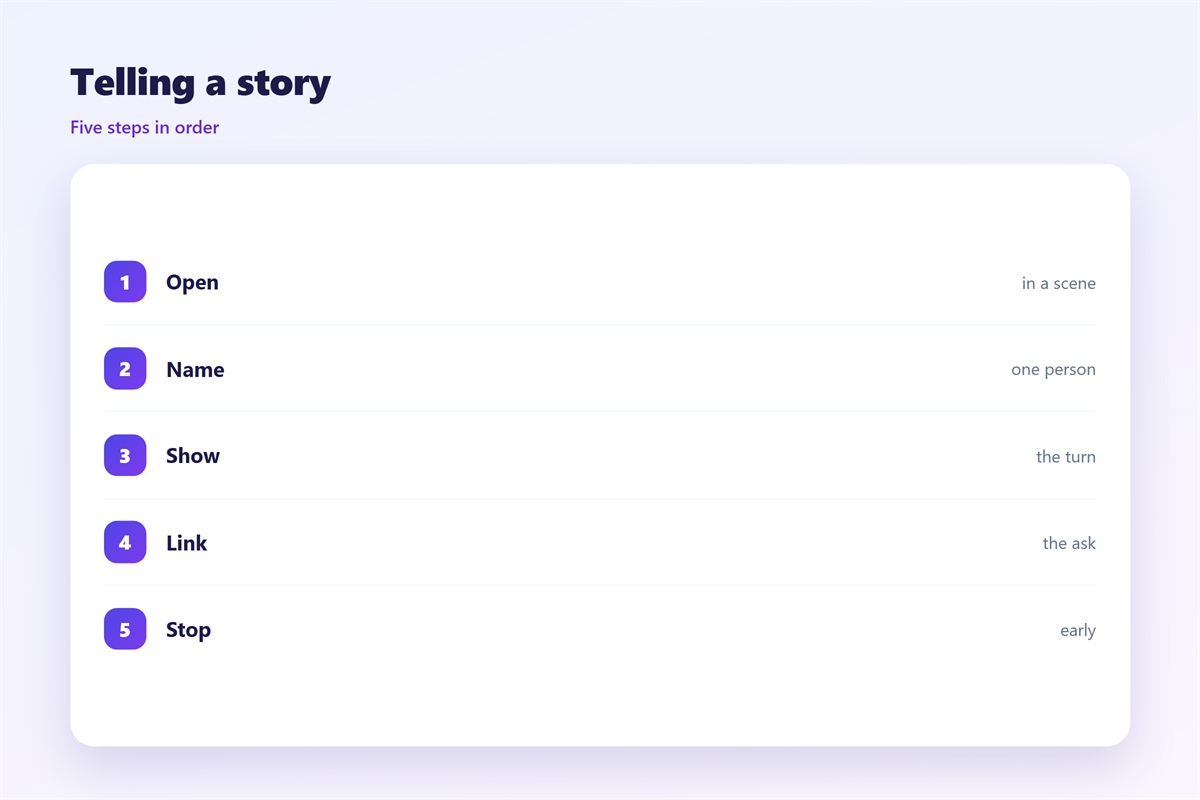
A short mail can still hold a story.
Give it three sentences and no more.
Sentence one sets the scene with a time and a person.
Sentence two names the problem and the action.
Sentence three gives the result.
Then move straight to the ask.
Do not explain the moral twice.
A good 邮件故事 trusts the reader to finish the thought.
That trust is part of the tone.
It also keeps the mail short enough to finish.
Short and specific beats long and clever.
Keeping 邮件故事 honest
Honesty is the only thing that makes a story reusable.
Keep a small file of true scenes and their dates.
The opening lines are covered in 邮件开场白.
The structure around the story sits in 邮件正文.
Permission and consent belong to 邮件营销.
The voice you build over time is the 邮件品牌.
Then date every scene you keep.
Retire the ones that no longer match the product.
Then the next story starts from a real place.
邮件故事 stays useful only while it stays true.
FAQ
How long should a 邮件故事 be?
Under one hundred words. Three sentences is often enough.
Can I reuse a story?
Yes, if the facts still hold. Change the framing, keep the details.
Do I need a happy ending?
No. A partial result is fine. Honesty matters more than a win.
What if the reader does not know me?
Say who is telling the story in the first line. Then begin.
评论
还没有评论,来说两句吧。
评论功能已关闭。