 小影邮箱
邮件月报怎么写?A Monthly Mail That Gets Read
Key Takeaways
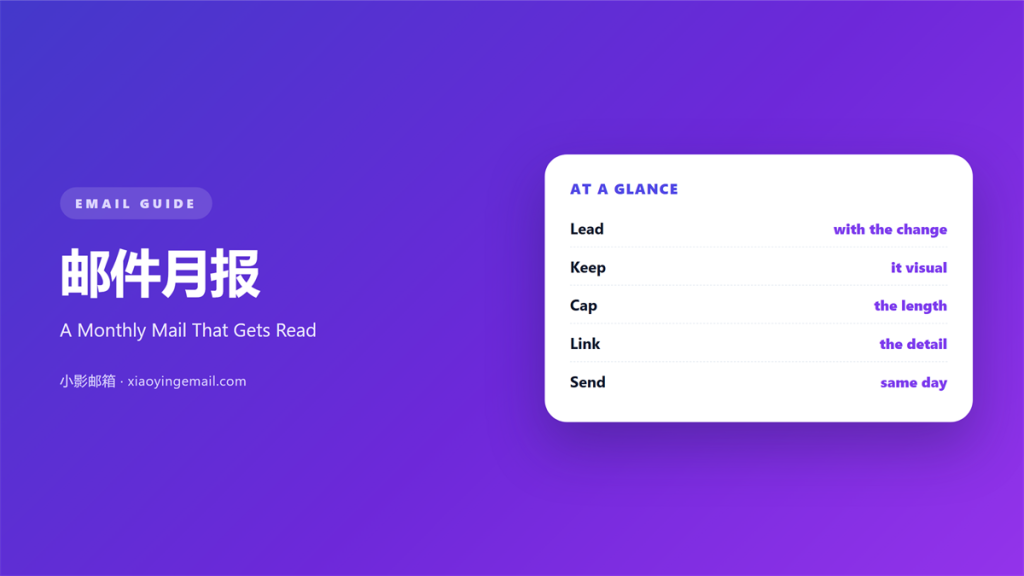
- 邮件月报 is a monthly note that sums up what changed.
- Keep it short, visual and easy to scan.
- Lead with the headline, not the process.
- Link to the detail for the few who want more.
- A fixed send date trains readers to expect it.
What 邮件月报 means
邮件月报 is a summary you send once a month.
It gathers the changes that matter most.
It is not a full record of every task.
Think of it as a headline page, not a filing cabinet.
The reader should grasp the month in one minute.
So cut anything that does not change a decision.
A monthly note has a natural rhythm.
Each issue looks like the last one.
That sameness is a feature, not a flaw.
Readers learn where to look for each item.
They scan the top, then stop.
It compresses a month into a few lines.
Each line answers a simple question.
What changed, and does it matter?
The answer should fit one breath.
Why 邮件月报 matters
A monthly note builds a shared picture.
It saves a dozen tiny status questions.
People stop asking what changed this month.
The answer is already in their inbox.
It also protects the record.
Six months from now, you can look back.
The old issues show how the work moved.
That timeline is hard to rebuild later.
A good 邮件月报 also builds trust.
It shows what slipped, not just what shipped.
Honesty about delays keeps readers calm.
Readers also value the plain language.
Short notes respect a busy schedule.
A clear summary saves them a meeting.
That saving is felt every month.
Monthly, not weekly
A month is long enough for real change.
It is short enough to stay fresh.
Weekly notes often repeat themselves.
When 邮件月报 helps
A monthly note helps in several cases.
It suits reports, roadmaps and slow projects.
It suits teams that span many time zones.
Each reader can catch up on their own hour.
It also helps when a meeting is cancelled.
The note replaces the standing update.
A steady 邮件月报 keeps everyone aligned.
And it helps the writer, too.
You collect the month in one sitting.
The rest of the month stays quiet.
That calm is worth protecting.
Where it fits
Use it for progress, not for alerts.
Urgent news needs its own short note.
Leave the month for the slower picture.
When 邮件月报 hurts
A weak 邮件月报 wastes a whole month.
It arrives too late to change anything.
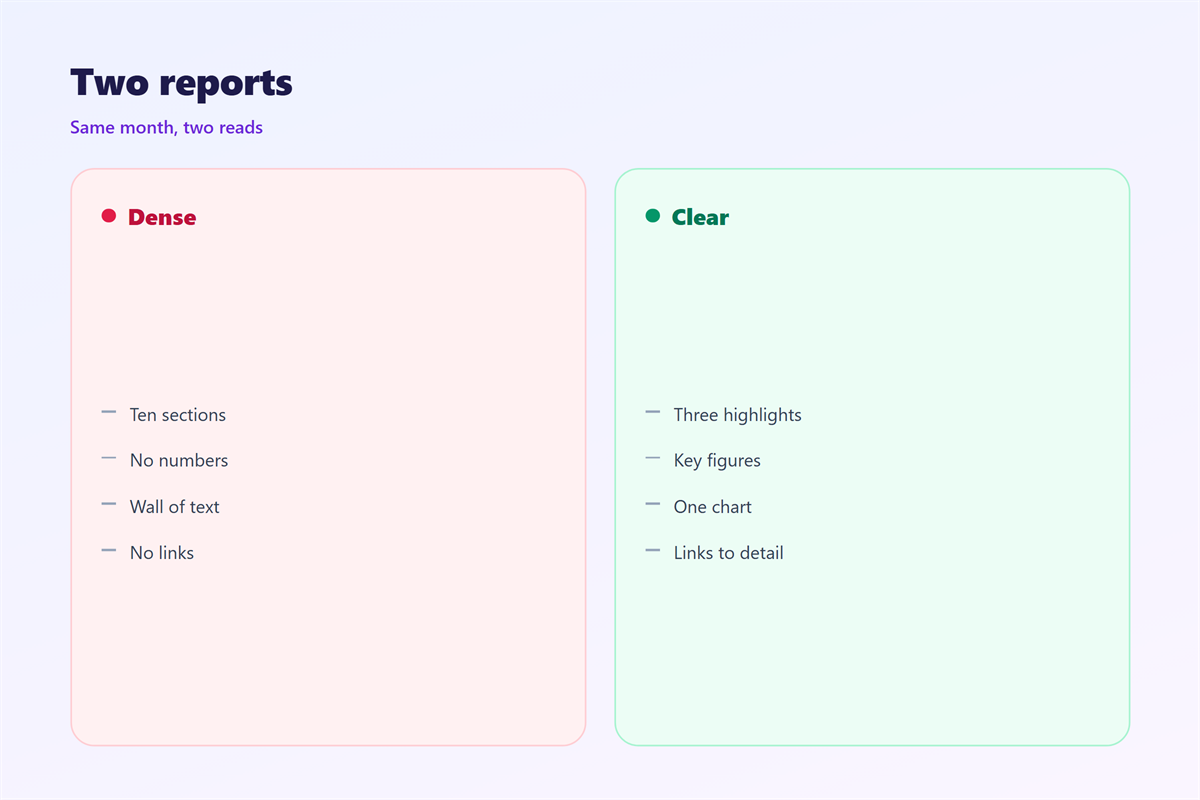
It buries the point under long lists.
Readers skim, find nothing, and close it.
Length is the usual culprit.
Ten pages of detail is not a summary.
Repetition is the second culprit.
If nothing changed, say so in one line.
Do not pad the note to fill space.
A short honest issue beats a long vague one.
A good 邮件月报 earns its minute.
The skipped month
Some months have little to report.
Send one short line anyway.
A missing issue looks like neglect.
Keep the tone neutral and calm.
Blame rarely helps a summary.
State the fact and move forward.
邮件月报 in practice
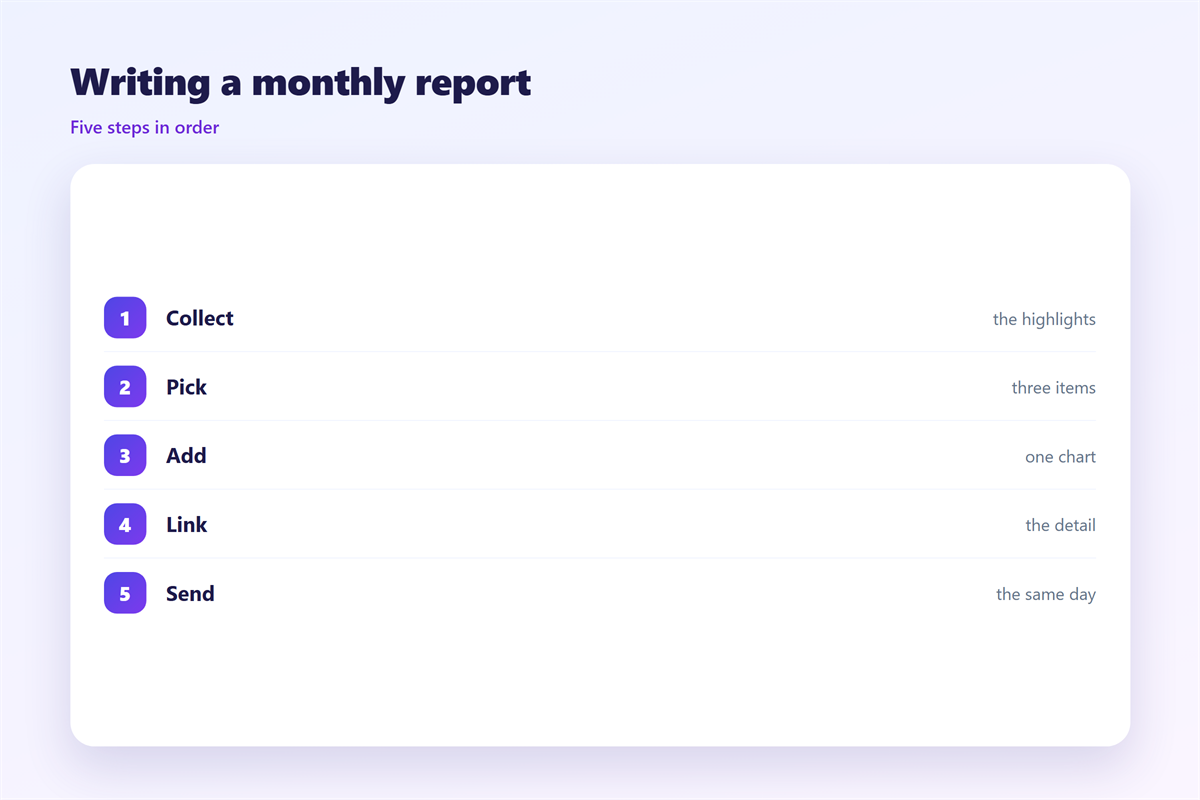
Start by picking a fixed send date.
The first working day is a safe choice.
Then keep the same date every month.
Collect items as they happen, not at the end.
Keep a running draft in one place.
That draft is the whole 邮件月报.
On the day, sort the items by importance.
Keep the top three. Cut the rest.
Write one line per item.
Add a number when a number helps.
Then read it aloud once.
If a line drags, cut it.
Keep a note of what you cut.
Some cut items return next month.
A simple list helps you find them.
Then restore them in the right issue.
How to write a 邮件月报
Open with the single biggest change.
Then add two or three supporting points.
Keep each point to a short line.
Use a plain subject that names the month.
Skip the greeting when the list is internal.
Use a small heading for each block.
Bold the numbers that matter.
Close with one clear next step.
Then send it before noon.
Morning sends get read the same day.
Save the exact wording once it works.
Reuse the frame every month.
Test the subject line once with two versions.
Ask which one they noticed first.
邮件月报 and the reader
Readers judge the note in seconds.
So the first line must carry the news.
Put the rest lower down.
Use white space to separate blocks.
A dense block of text gets skipped.
Keep sentences short and flat.
State the fact, then move on.
Avoid jargon that only insiders know.
Say “we shipped the login fix”, not “the ticket closed”.
Plain words travel further than acronyms.
Readers also like a consistent shape.
Same order, same labels, every month.
A clean 邮件月报 respects that habit.
Group related items under one label.
That keeps the scan quick.
A reader should never hunt for the point.
Keeping 邮件月报 useful
A fixed frame makes each issue faster to write.
The weekly version of the same habit is covered in 邮件周报.
The shorter internal update appears in 邮件简报.
The daily round-up sits in 邮件摘要.
The one-off status note is explained in 邮件汇报.
Review the frame once a quarter.
Drop the blocks nobody reads.
Keep the ones that earn a reply.
Then hold the same date for a full year.
FAQ
How long should a 邮件月报 be?
One screen is plenty for most teams.
Should every project get a section?
No. Only the ones with real change.
Can I change the 邮件月报 date?
Yes, but keep the new date steady.
What if nothing changed this month?
Send one honest line and stop there.
评论
还没有评论,来说两句吧。
评论功能已关闭。