 小影邮箱
邮件欢迎信怎么写?The First Hello
Key Takeaways
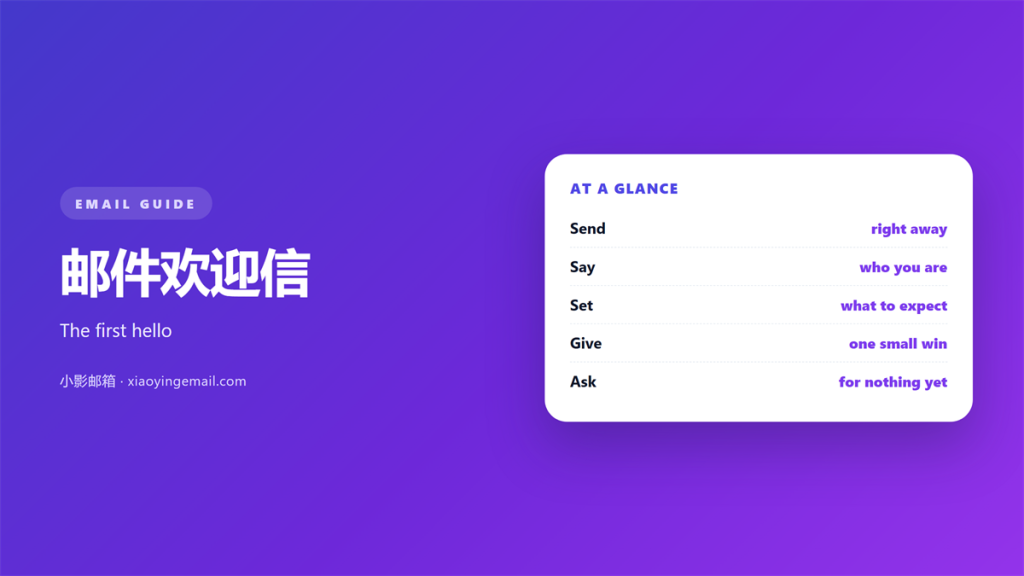
- The 邮件欢迎信 sets the tone for everything after.
- Send it within minutes, not days.
- Deliver what you promised at sign up.
- Help first and sell later.
- One clear next step is enough.
What 邮件欢迎信 means
邮件欢迎信 is the first message a new reader gets after signing up.
It arrives once. It is not part of a campaign or a sale.
Its job is simple. It says hello and keeps the promise you made.
A weak 邮件欢迎信 wastes a rare moment. The reader is still paying attention.
They just chose you over many others. That interest is easy to lose.
One welcome often sets a whole relationship. Get it right and trust grows.
It also sets the rules. Readers learn what to expect and when.
A clear promise makes leaving easy. That honest tone earns long term trust.
Why the 邮件欢迎信 sets the tone
First messages carry more weight. Readers decide fast if they trust you.
A calm 邮件欢迎信 lowers the worry of a new inbox.
It tells the reader what to expect. That reduces surprise and complaints.
It also sets your sending rhythm. A clear promise makes leaving easy.
A good 邮件欢迎信 answers one worry fast.
A first 邮件欢迎信 should feel calm and warm.
What to put in a 邮件欢迎信
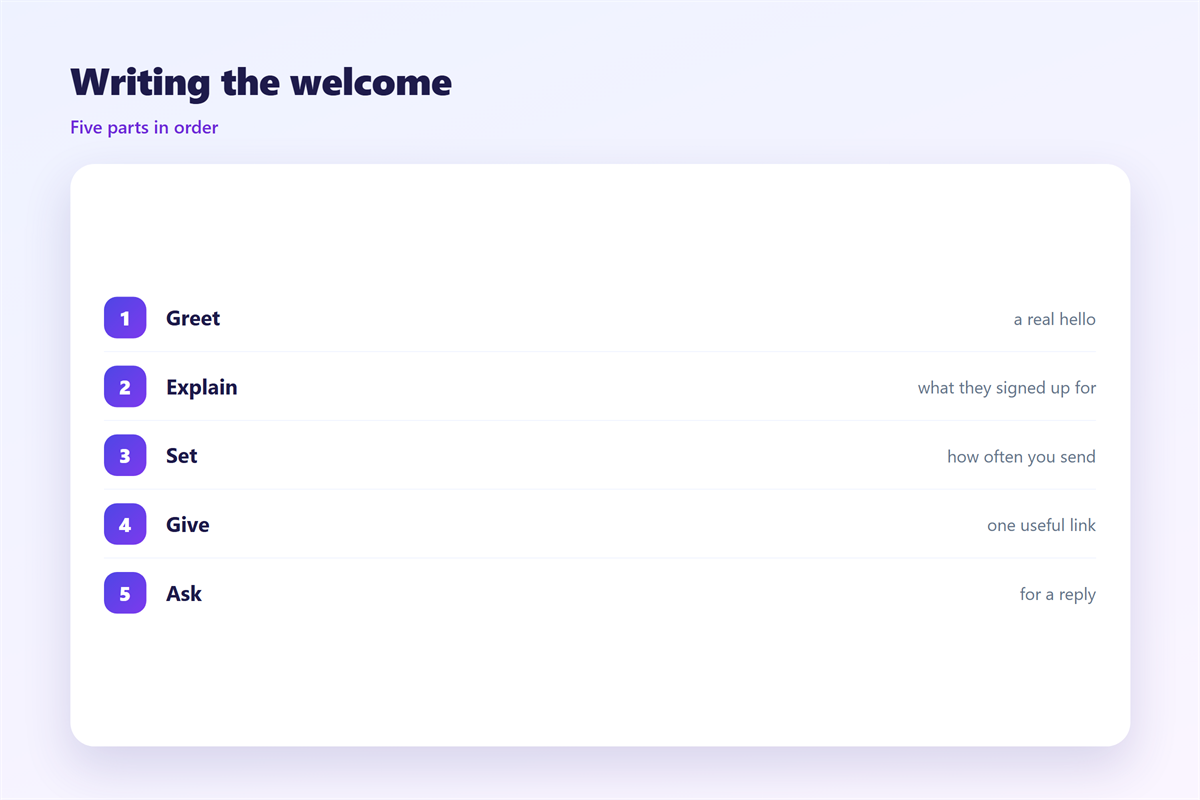
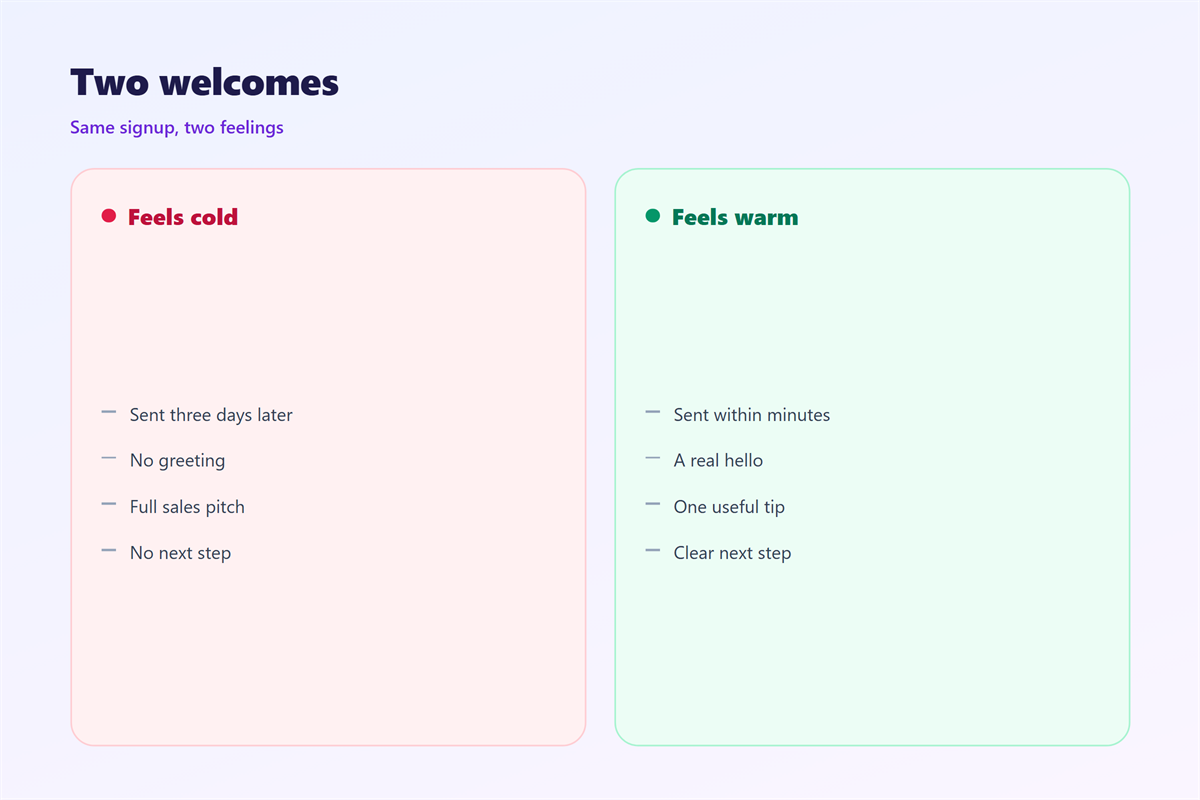
Start with a warm thanks. Keep the first line human and short.
Remind them why they signed up. That single line builds trust.
Deliver the thing you offered. A guide, a code or a simple tip.
Add one clear next step. A single link is enough.
What to leave out
Leave out the hard sell. A new reader is not ready for a big ask.
Skip the long story. Nobody reads five paragraphs on day one.
Avoid five links. Each extra link is a way to leave.
Skip the jargon. Plain words reach more readers.
Do not overload the first screen. One clear line is enough.
How to write a 邮件欢迎信
Write it like a short letter. Talk to one person, not a crowd.
Use a first name in the greeting. A name makes the reader feel seen.
Keep every paragraph to two lines. Short blocks read faster on a phone.
Repeat the promise from the sign up form. The reader should recognise it.
Give a 邮件欢迎信 a plain subject line. A simple hello beats a trick.
Read the note out loud. If it sounds stiff, soften the words.
Keep the greeting simple. “Hi Sam” beats “Dear valued customer”.
Write one clear promise. A single line should say what comes next.
Make the layout easy to skim. Short lines beat dense paragraphs.
Test the look on a phone before you send.
A short 邮件欢迎信 example
Thanks for joining, Sam. You will get one short note each week.
Here is the guide you asked for. It is linked just below this line.
When you are ready, reply and share your biggest question.
That is it for today. Talk soon, and welcome aboard.
That example is only four lines. It still does the whole job.
A short note does not need to be long.
It needs to feel real and keep its word.
Write yours in your own voice. A borrowed voice never sounds honest.
The first week after
The welcome is only the start. The next few days matter just as much.
Send one more helpful note within a week. Then settle into a steady rhythm.
Do not vanish after the hello. Silence makes readers forget why they joined.
A simple plan beats a burst of energy. Two short notes a month are plenty.
When to send the 邮件欢迎信
Send it within minutes. The sign up is still fresh in their mind.
A slow 邮件欢迎信 feels like a cold reply.
Set the timing once in your tool. Let it run on its own.
Check the reader’s time zone. A quick send can still land at midnight.
Test one change at a time. Otherwise you never learn what helped.
Set a reminder to check the series each month.
Broken links creep in over time. Fix them before a new reader finds them.
Tone and voice
Write like you talk to a friend. Warm and plain works best here.
Keep sentences short. Long lines lose a reader on a small screen.
Avoid hype words. Calm claims feel more honest than loud ones.
Use one idea in each sentence. Clear beats clever every time.
Common mistakes
The first mistake is selling too soon. Trust needs a little space first.
The second is a wall of text. A long first email gets skimmed or closed.
The third is a broken promise. If you offered a guide, send the guide.
Another mistake is too many links. One action beats four choices.
Do not copy a welcome from another list. Audience and offer change everything.
Another mistake is a broken link. A dead link kills the first impression.
A cold tone is also common. Warmth costs nothing and gains a lot.
Measuring the 邮件欢迎信
Watch the open first. A low open means the subject needs work.
Then watch the click. That shows if the next step was clear.
Log the send time beside the number. A 邮件欢迎信 result without a date is hard to read.
Compare new sign ups over weeks. A single day is only noise.
Keep one simple sheet. It beats a dashboard you never open.
Watch replies too. A reply is the strongest sign of trust.
Track how many readers finish the guide you sent.
Where to go next
Make leaving simple in 邮件订阅. Reuse a good layout from 邮件模板. Set a calm reply in 自动回复. Add a name with 邮件个性化.
Then repeat what worked. A steady habit beats a clever one off push.
FAQ
Should the 邮件欢迎信 sell?
Rarely. A soft mention is fine. Save the real offer for a later message.
How long should it be?
Short. Three or four short paragraphs are plenty for a first hello.
Can I use a template?
Yes, but edit the words. A raw template sounds like everyone else.
What if nobody opens it?
Test a plainer subject line. Ask for one small action, nothing more.
评论
还没有评论,来说两句吧。
评论功能已关闭。