 小影邮箱
邮件跟进话术怎么用?Nudge, Never Nag
Key Takeaways
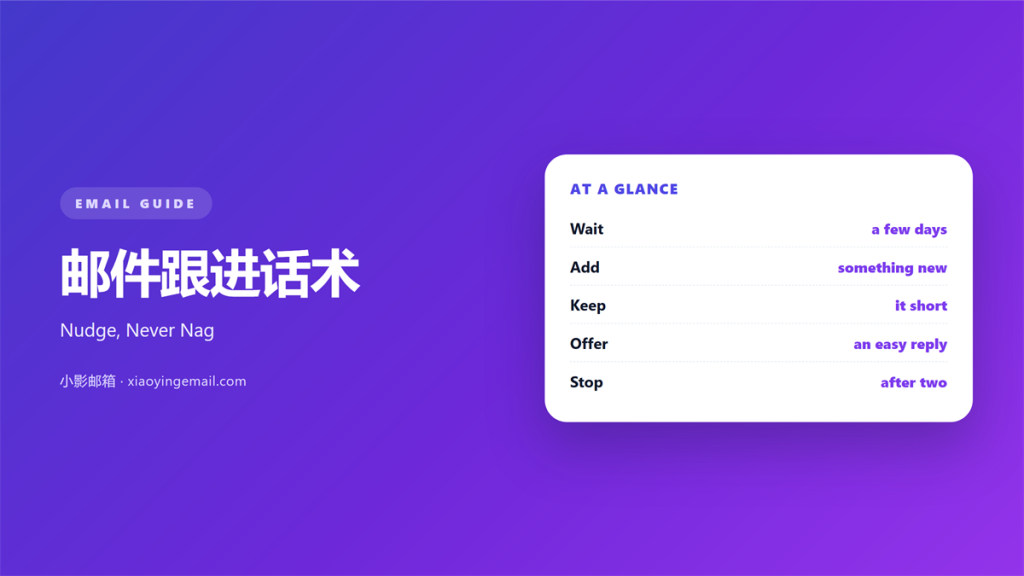
- 邮件跟进话术 gives a nudge that still feels welcome.
- Keep each follow-up short and useful.
- Add something new so the nudge earns its place.
- Give the reader an easy way to reply.
- Stop after one or two gentle tries.
What 邮件跟进话术 means
邮件跟进话术 is the set of words used to follow up politely.
It covers the reminder, the nudge, and the last check.
The phrase means ready-made wording for a second try.
People often confuse it with pressure or nagging.
The two are not the same at all.
A good follow-up offers help, not blame.
It treats the reader as busy, not careless.
So 邮件跟进话术 is a kind of quiet persistence.
Learned well, 邮件跟进话术 keeps a project moving.
It never begs and it never scolds.
A script gives you a calm starting point.
You can still change it for each reader.
It turns an awkward chore into a simple one.
Good wording keeps the relationship intact.
Why 邮件跟进话术 matters
Most replies never arrive on the first try.
A busy reader forgets a note within a day.
One gentle nudge often brings it back.
Good 邮件跟进话术 makes that nudge easy.
Poor wording turns the same nudge into a demand.
So the words you choose decide the outcome.
A friendly line keeps the door open.
A sharp one closes it for good.
A short nudge keeps a project on track.
It also saves a slow second request later.
Silence is common and rarely personal.
Readers appreciate a patient and clear reminder.
A kind nudge also protects your reputation.
Nudge, never nag
A nudge reminds. A nag complains.
The nudge assumes good faith and offers a way forward.
The nag implies the reader failed you.
Choose the nudge every single time.
The best nudge feels like a small favour.
It never questions the reader’s effort.
When to use 邮件跟进话术
Use it after a fair and reasonable wait.
Wait two or three working days for a small ask.
Wait a week for a larger request.
Do not follow up within the same hour.
Patience shows respect for the reader’s load.
Follow up when the work truly depends on it.
A rough guide beats no rule at all.
One well-timed note often ends the wait.
Give the reader a clear deadline too.
Signals that a nudge is fair
The topic still matters to the work.
Enough time has passed since the first note.
You have one small item to add.
Any of these means a short follow-up is fair.
Your own deadline is another fair signal.
A teammate waiting on the same answer counts too.
How to write 邮件跟进话术
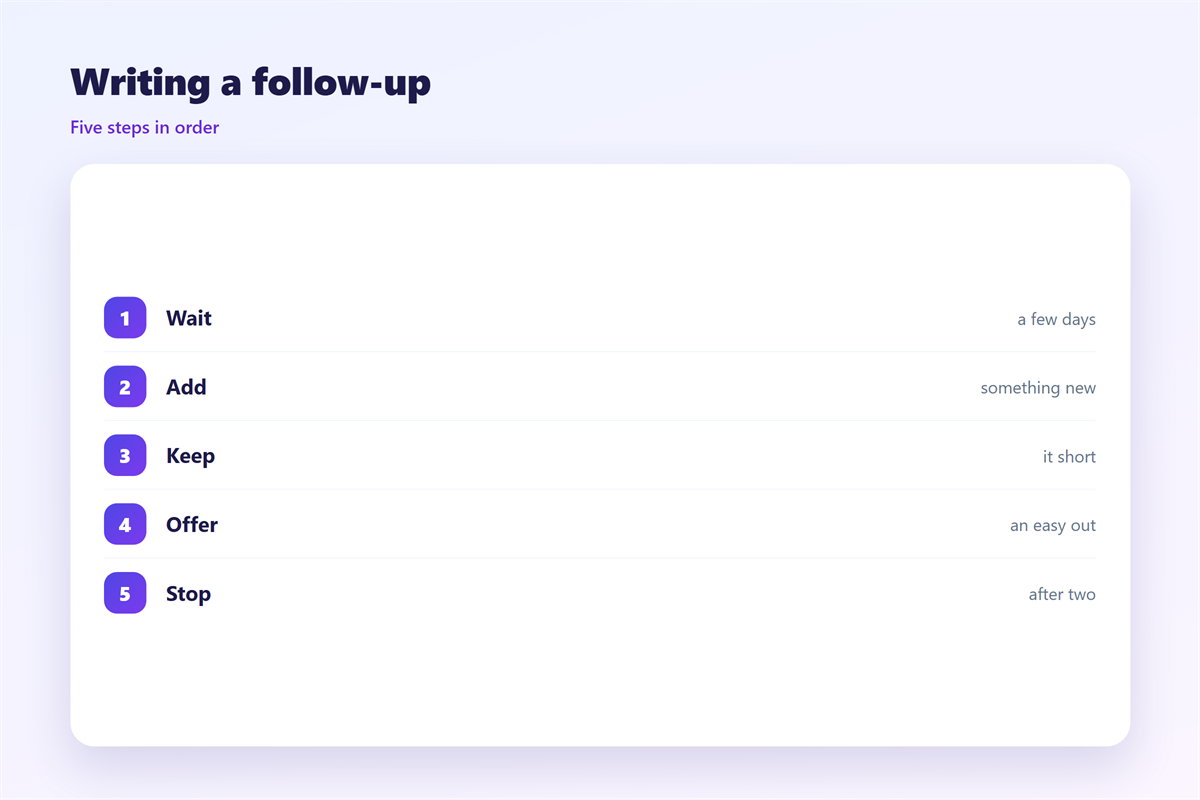
Start with a warm and brief line.
Remind the reader of the first message.
Add one new fact or a new offer.
Ask for one clear and small action.
Make replying the easy path.
Keep the first line friendly and short.
Then state the ask in plain words.
Keep the tone light and the ask small.
A single question is easier to answer.
A three-line template
Line one: a friendly hello and a kind opener.
Line two: the ask, restated in plain words.
Line three: a simple question that invites a yes.
Keep the whole note under a hundred words.
Read it aloud once before you send.
If it sounds heavy, make it lighter.
邮件跟进话术 and timing
Timing decides how a nudge feels.
Monday morning feels pushy after a Friday send.
Tuesday or Wednesday often lands better.
Match the hour to the reader’s working day.
Early in their morning is usually safe.
A note that lands at the right hour gets a reply.
Avoid the very end of a work day.
Late Friday notes often wait until Monday.
Time zones matter when the reader is abroad.
Mistakes that weaken 邮件跟进话术
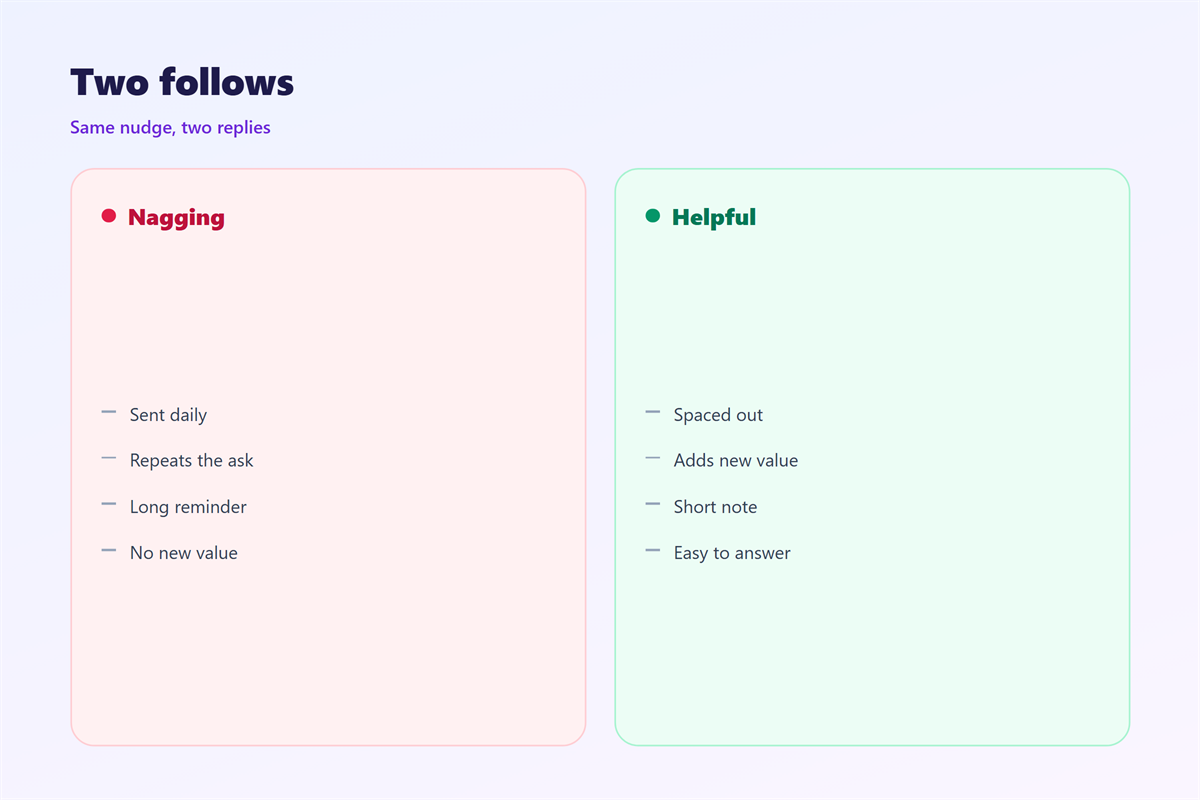
Some follow-ups only repeat the first message.
Others add guilt with phrases like still waiting.
A third kind fires off three notes in a day.
All of them annoy the reader.
Add value or wait a little longer.
One calm reminder beats ten urgent ones.
Never copy the whole first message again.
That just wastes the reader’s time.
Repeating yourself adds nothing new.
Pressure rarely speeds a real answer.
Keep every follow-up focused on one thing.
Signs you are nagging
If you check the thread every hour, slow down.
If your tone turns sharp, rewrite it.
If you need a fourth try, stop and call instead.
Count your tries before you write again.
Three is usually the honest limit.
Building a 邮件跟进话术 habit
Save two or three lines you trust.
Reread each follow-up before you send it.
Cut any word that adds pressure.
Track your own reply rates over time.
Then your 邮件跟进话术 stays polite and effective.
Practice the wording until it sounds like you.
Keep your templates in one simple place.
Update them as your tone grows.
Notice which lines actually get replies.
Short notes are easy to reuse.
Reward yourself for patience, not speed.
Keeping 邮件跟进话术 consistent and linked
Consistency keeps a follow-up friendly and calm.
The best moments to send one appear in 邮件跟进.
A wider set of reusable lines sits in 邮件话术.
A softer way to press appears in 邮件催促.
Ready-made answers are shared in 邮件回复模板.
Match the same gentle style across every nudge.
Readers trust 邮件跟进话术 that always stays calm.
Agree on one approach with your whole team.
A shared habit removes doubt and delay.
Keep the same gentle style every time.
A shared approach earns calm replies.
Keep the reader first in every note.
FAQ
Is 邮件跟进话术 the same as chasing?
No. A chase repeats a demand, while a nudge offers help.
How many follow-ups are too many?
More than two without a reply usually is.
Can 邮件跟进话术 sound pushy?
Yes, if you add guilt or repeat yourself.
What if the reader never replies?
Send one last note, then try another channel.
评论
还没有评论,来说两句吧。
评论功能已关闭。