 小影邮箱
邮件返现怎么讲?Money Back After
Key Takeaways
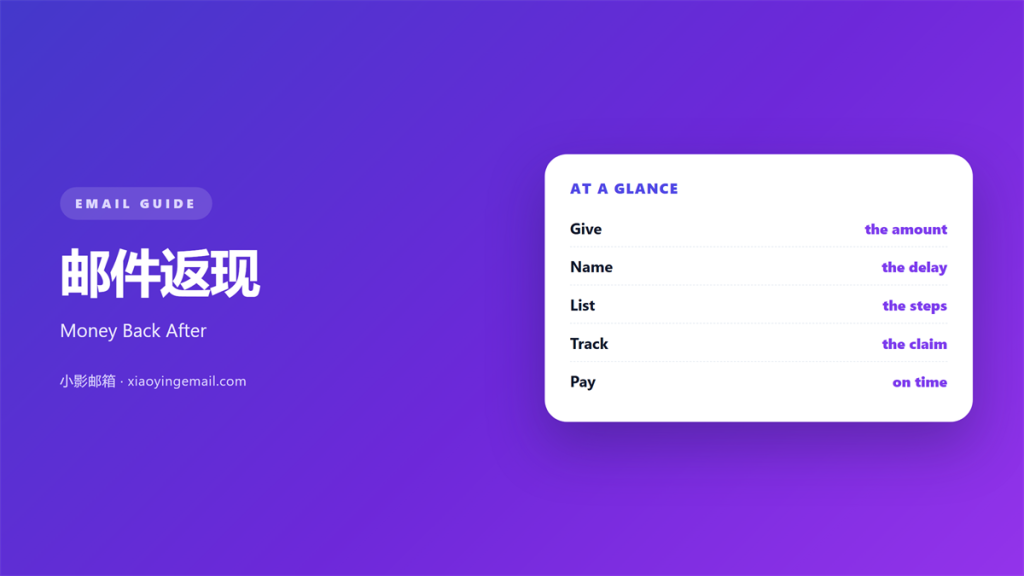
- 邮件返现 returns part of the price after the order.
- State the amount in currency, not percent.
- Give the arrival window in days.
- List the claim steps in order.
- Never use cashback to hide a high price.
What 邮件返现 means
邮件返现 is money returned after a purchase.
The buyer pays the full price first.
Part of that money comes back later.
The return usually lands in a wallet or an account.
It can also arrive as credit on the next order.
That makes cashback different from a discount.
A discount lowers the price at the checkout.
Cashback lowers the cost after the checkout.
The difference matters when the buyer compares prices.
A 邮件返现 must say which form the money takes.
It must also say when the money arrives.
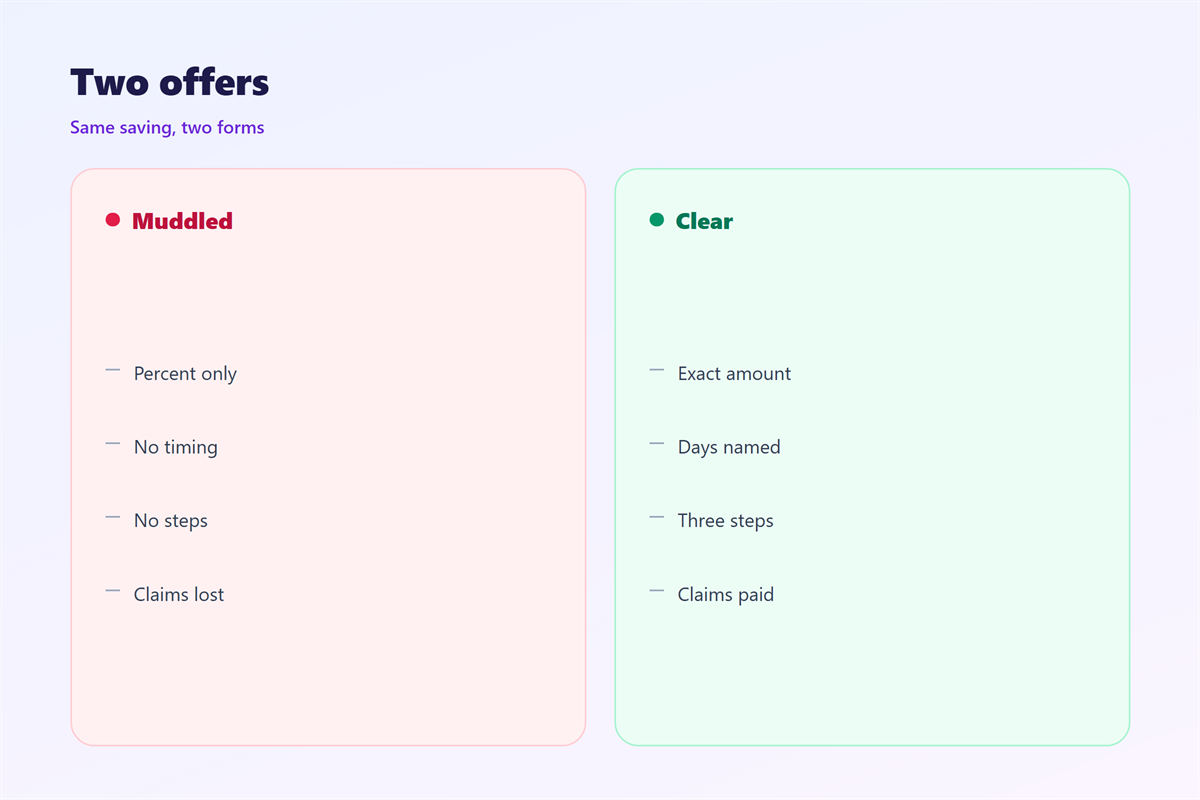
A percent sign alone is not a cashback promise.
The amount should be a number the buyer can repeat.
Without those two facts the offer is a riddle.
Why 邮件返现 matters
Cashback gives a reason to buy from you.
It also gives a reason to come back.
The money sits in your shop until the next order, which keeps the buyer close.
A 邮件返现 can lift the second purchase.
The second purchase is often the profitable one.
Cashback also feels like a reward, not a cut.
A discount lowers the value of the product, while a return keeps the listed price intact.
A return that arrives late is a loan, not a gift.
The buyer sees the return as a small win.
That helps when the brand sells on price stability.
The delay is the cost
Money that arrives later is worth less.
Say the delay in days, not in soon.
Three days feels fair and seven feels slow.
Put the number in the first screen.
When 邮件返现 helps
It helps when the product is bought often, and coffee, paper, and food qualify.
It helps when the order value is steady.
A fixed amount is easy to budget.
It also helps after a first purchase.
The return gives the buyer a reason to return.
It helps when you want the price to stay listed.
A second order arrives sooner when the balance is visible.
A stable price protects the brand.
One amount, one product
Keep one cashback amount per product.
Two amounts confuse the comparison.
Raise the amount only with a reason.
Write that reason in the mail.
When 邮件返现 hurts
It hurts when the price is raised to fund it.
A high price with cashback is still a high price.
It hurts when the arrival date is vague, because buyers remember money that never came.
It hurts when the claim needs five steps, since every extra step loses claims.
It hurts when the terms exclude the common case.
A selected-items-only rule reads as a trap.
It hurts when the amount changes after the checkout.
A claim page that times out loses the buyer.
Cashback also hurts when the amount is tiny.
One dollar back does not change a decision.
邮件返现 and the next order
The second order is where cashback earns its keep.
Time the reminder to the day the money lands.
That mail has a reason to exist.
It carries a balance, not a slogan.
A 邮件返现 reminder should show the exact amount.
Then show one product the money can buy.
One product keeps the decision simple.
Keep the path to the cart short.
If the money expires, say the date.
An expiry without a warning is a complaint.
Show the balance
Put the balance in the header of the mail.
A number in the header gets read.
Then repeat it next to the button.
One balance, one button, one product.
How to run 邮件返现
Run 邮件返现 as a promise with a date.
Decide the amount before you write the mail.
Decide the form, whether wallet, card, or credit, and the arrival window in days.
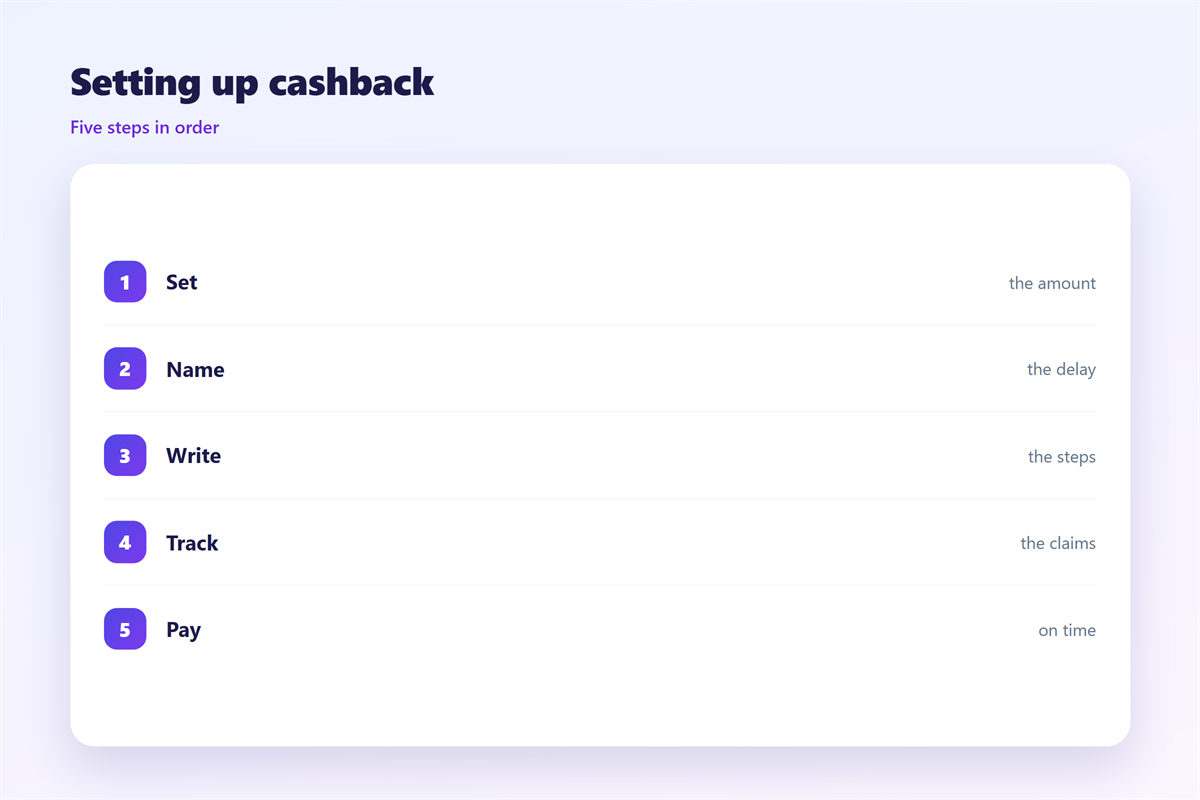
Then write the claim steps as a short list.
Put the list in the mail, not behind a link.
Add the support address for missed claims.
Test one claim yourself before the send.
Then write the same steps in the confirmation mail.
Write the steps as a list
Step one: buy the product.
Step two: keep the order number.
Step three: open the claim page.
Step four: enter the number and the date.
Step five: wait for the confirmation.
Five steps is the practical maximum.
邮件返现 on a phone
The amount must be readable without a tap.
Put the number in the first two lines.
Then the arrival window under it.
Keep the claim button above the fold.
A 邮件返现 on a phone should take two taps, one to open and one to confirm.
Do not ask for a screenshot on mobile.
The camera roll is a maze on a phone.
Use the order number instead.
A wide table of terms will not fit.
Test the claim page on a small screen.
Keeping 邮件返现 honest
Cashback should not replace a fair price.
If the price is high, lower it first.
A small return cannot fix a bad deal.
The coupon version sits in 邮件优惠券.
The return visit sits in 邮件复购.
The click path sits in 邮件转化率.
The offer framing sits in 邮件促销.
Then publish the claim rate once a quarter, and put the terms on one page in plain words.
A rate you would not show is a rate to fix.
FAQ
How long can 邮件返现 take?
Seven to fourteen days is common and fair.
Is cashback the same as a refund?
No. A refund returns the whole price when goods come back.
Can the money expire?
Yes, but warn the buyer twice before it does.
Should I pay cashback instantly?
Only if your system can do it without errors.
评论
还没有评论,来说两句吧。
评论功能已关闭。