 小影邮箱
邮件预检怎么做?Check Before You Send
Key Takeaways
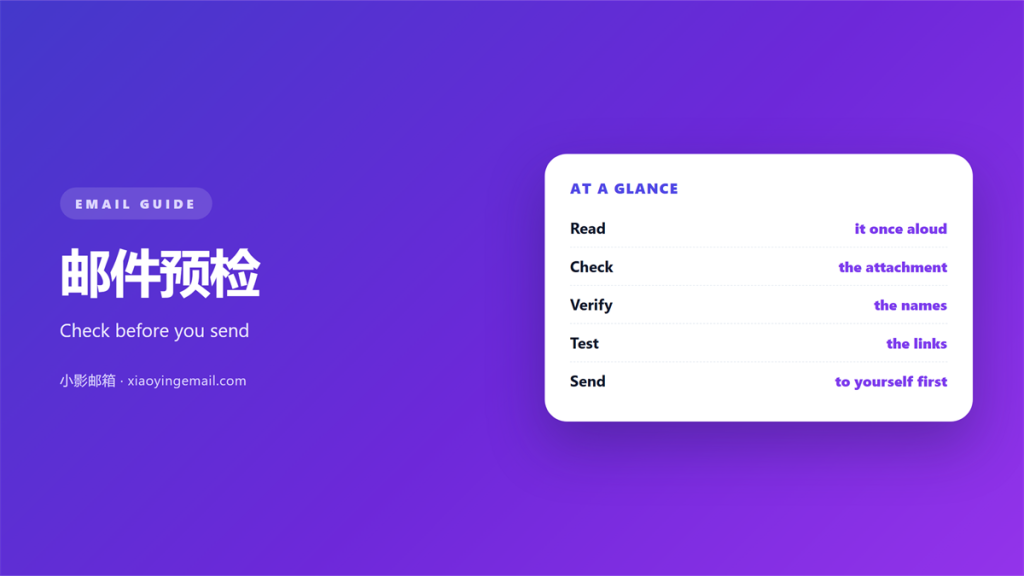
- 邮件预检 is the quick check you run before you send.
- It catches the faults that are cheap to fix early.
- Check the file, the link, the list and the look.
- A fixed order is faster than a random scan.
- The best check takes less than a minute.
What 邮件预检 really checks
邮件预检 is the quick check you run before you press send.
It catches the small mistakes that ruin a good message.
A missing file or a broken link can undo an hour of work.
The sender often cannot see these faults alone. A short pause and a second look help.
邮件预检 is not a spell check alone. It covers the file, the link, the list and the look.
It also weighs how the mail will land. Tone travels with the words you choose.
Filters judge a message before a person ever opens it. A clean check keeps that score healthy.
So the goal is simple and calm. Catch the fault while it is still cheap to fix.
Do it in the same order every time. A fixed routine is faster than a random scan.
The best check takes under a minute. Long checks tend to get skipped.
It sits between writing and sending, not after both.
Treat it as part of the job, not an interruption.
A calm sender makes fewer errors. Rush is the real enemy here.
Steps in a quick 邮件预检
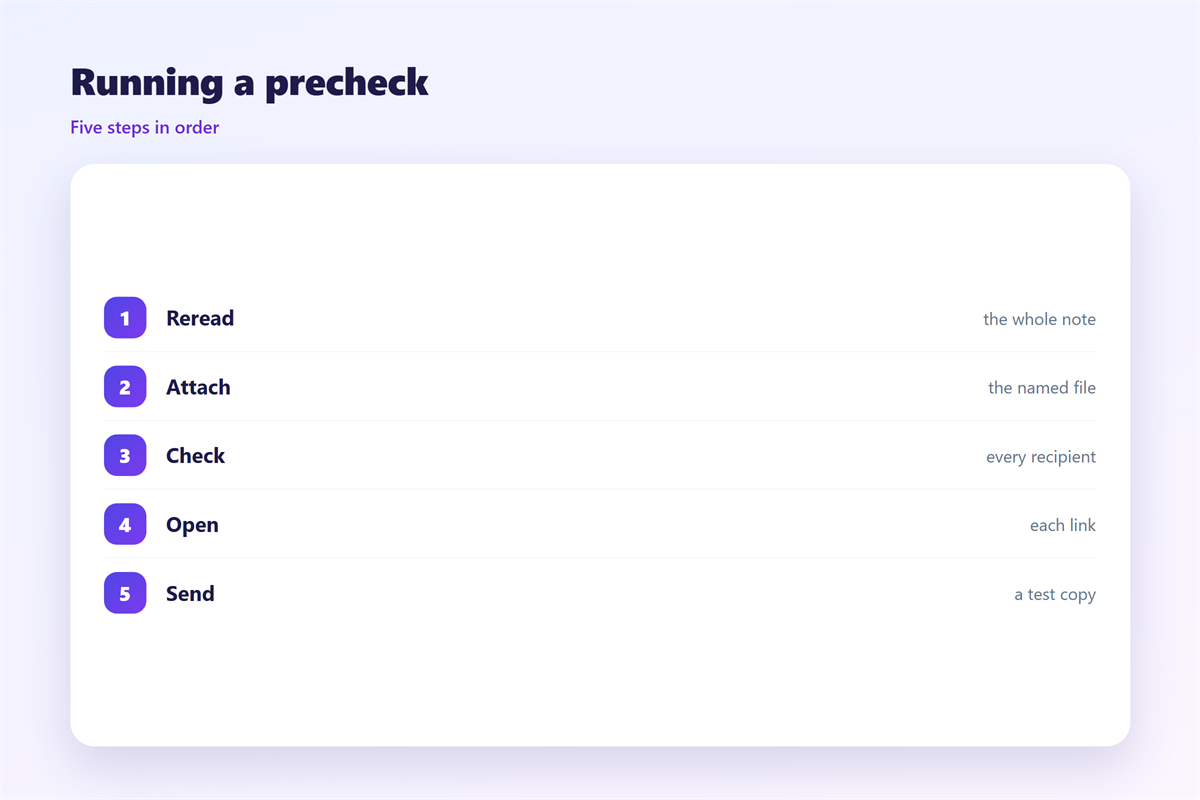
Run the check in one steady pass.
Start with the line a reader sees first.
The subject line
Read it as a stranger would. Does it still make sense on its own?
A vague subject hides the point and invites the spam folder.
Keep it short and specific. Mention the action if there is one.
The body
Skim for the one thing you want the reader to do.
Check every link by clicking it once. A broken link is worse than no link.
Confirm the file is attached. This is the oldest mistake in the book.
Read the first and last lines aloud. Most tone problems hide there.
Then confirm the right people are on the list.
That single pass is the heart of 邮件预检.
Scan the greeting for the right name. A wrong name starts the mail badly.
Count the questions you ask. One clear ask beats three vague ones.
Common mistakes that 邮件预检 stops
Most send errors fall into a few familiar shapes.
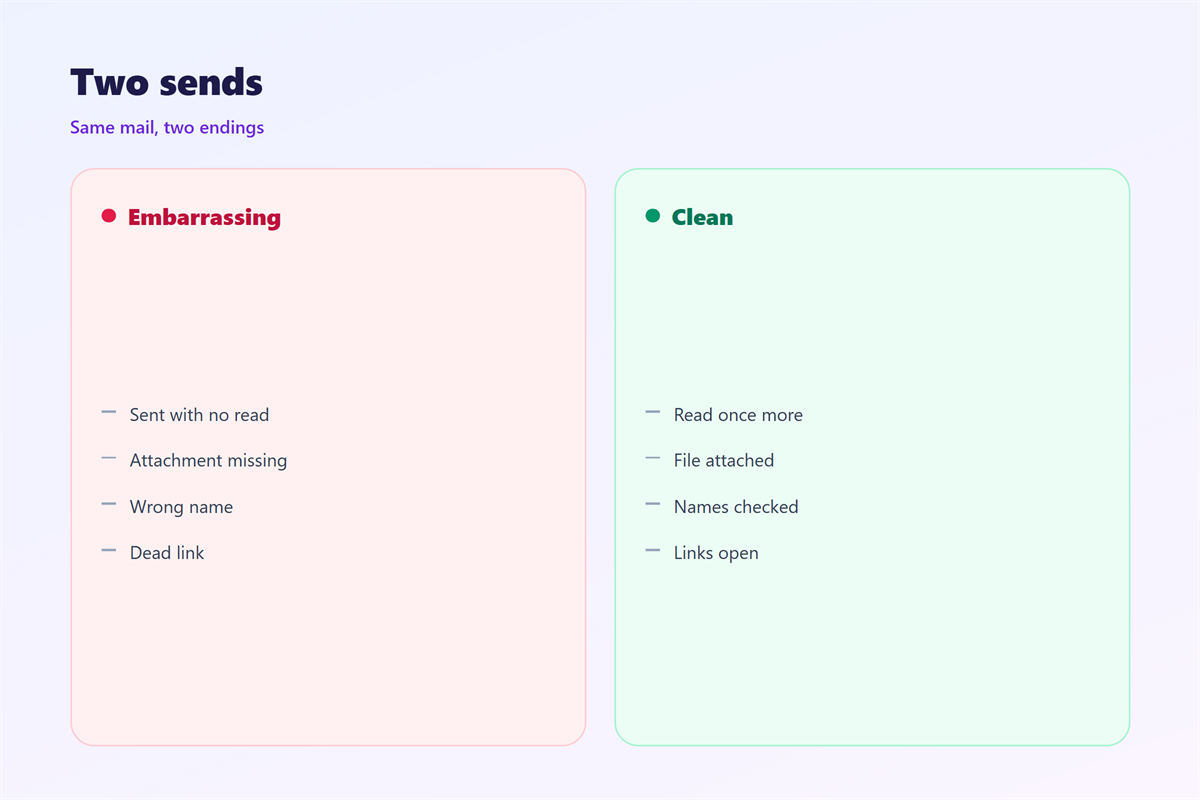
A missing attachment
You promise a file in the text but forget to attach it.
The reader is left guessing and annoyed.
Check the paperclip before you write the closing line.
The wrong recipient
One wrong address can leak a private note.
Use blind copy when the list is long. It keeps each address private.
Slow down when auto complete fills a name for you.
The wrong person reads everything you meant for someone else.
That damage is hard to undo once the mail is gone.
邮件预检 catches these faults in a few seconds.
Reply all is a quiet trap. It sends a private thought to a whole crowd.
An empty subject looks like spam. Give every message a short, real title.
Check the reply to address, not just the sender line.
Building a 邮件预检 habit
A habit beats a heroic effort every time.
Make the check a fixed step, not an optional extra.
Put a short pause between writing and sending.
A minute away from the draft sharpens your eye.
Use a tiny checklist on a sticky note. The eye finds what the mind expects.
Send a copy to yourself for important mail. Then read it as the reader will.
Ask a colleague to look at the risky files. A second pair of eyes is cheap.
A good 邮件预检 is quick and almost boring.
Track what you keep missing. Then add that item to the list.
Reward yourself for slowing down. The habit grows when it feels easy.
Read the draft later, not right away.
Fresh eyes catch what tired eyes miss.
Keeping 邮件预检 sharp over time
A check written once can go stale.
Review the list each season. New tools bring new ways to slip.
Confirm the mail actually reaches the inbox. The steps are covered in 邮件收发测试.
See where your messages really land. The records are explained in 邮件投递率.
Match the file to the tool that opens it. The safe options are listed in 邮件附件格式.
Watch how the mail looks on a small screen. The rules are set out in 邮件排版.
Then keep the routine short and real. A fresh 邮件预检 is worth more than a dusty one.
Note what changed and why. A short log keeps the list honest.
邮件预检 for a whole team
A shared routine helps everyone send better mail.
Write the steps down where the team can see them.
Agree on one file type and one naming rule.
New people then learn the habit from day one.
Review a few sent messages together each month.
Talk about the faults, not the person.
A calm review keeps the habit alive. Blame just teaches people to hide mistakes.
That shared 邮件预检 protects the whole inbox.
Keep the list short enough to use. A long list gets ignored by everyone.
FAQ
How long should a 邮件预检 take?
Under a minute for most mail. A risky message deserves a longer, slower look.
Does a check stop every mistake?
No. But it removes the common faults that cause the most damage.
Should I check on a phone or a computer?
Check where you write. Then glance once on a phone for the layout.
Can a 邮件预检 help deliverability?
Yes. Clean links and a clear subject help filters trust your mail.
评论
还没有评论,来说两句吧。
评论功能已关闭。