 小影邮箱
邮件质量分怎么看?What Filters Score
Key Takeaways
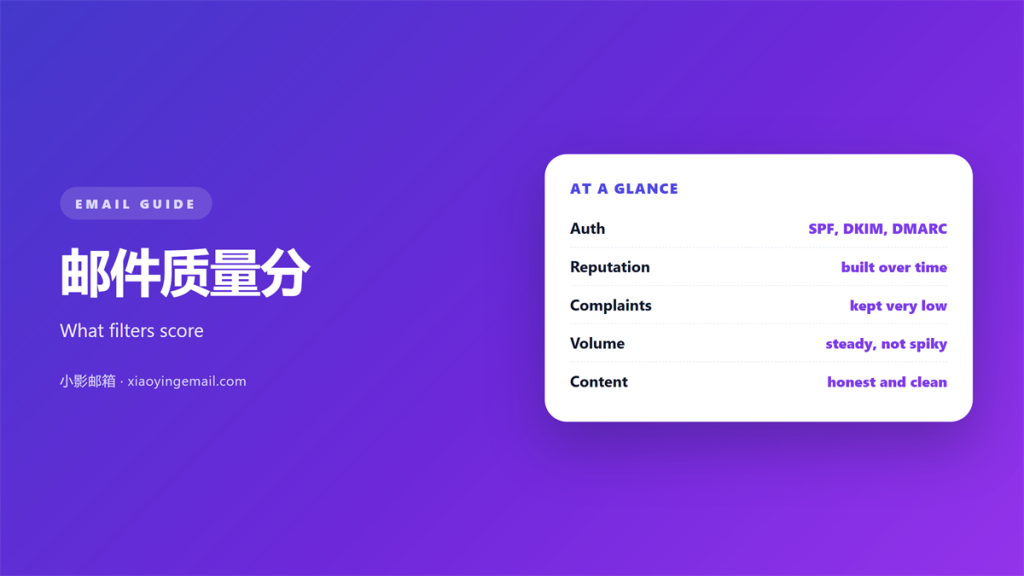
- 邮件质量分 is the grade a filter gives your mail.
- It blends sender history with the content of this message.
- Good list habits lift the score over time.
- Bounces and complaints pull it down fast.
- Watch the trend, not a single day.
What 邮件质量分 measures
邮件质量分 is the grade a filter gives your mail before anyone reads it.
It is not one number that you can look up somewhere.
Each provider scores a message on its own terms.
The score blends sender history with the content of this mail.
A strong record helps even a plain message get through.
A weak record drags down an otherwise perfect note.
So the grade follows the sender as much as the message.
Filters care about what readers do with your mail. Opens, replies and moves all count.
A message people delete unread looks like a problem.
邮件质量分 is really a guess about your future behaviour.
A good score is earned slowly and lost quickly. One bad send can undo many careful weeks.
The provider never tells you the exact number. You learn the score from its effects instead.
Open rates and bounce rates both feed the guess. So does the simple act of a reply.
What raises a 邮件质量分
A few steady habits lift the grade over time.
Good list habits
Send only to people who asked for your mail.
Let people leave easily, and honour every request at once.
Prune addresses that never open anything. An idle list slowly turns cold.
Clean content
Write one clear reason for the mail.
Keep the layout plain and the links honest.
Avoid shouting in all caps or heavy red text.
Test that every link points where it says.
Ask readers to reply, not just to click.
Replies are one of the strongest signals you can send.
That is how a 邮件质量分 quietly climbs.
A welcome message sets the tone for everything later. Send it right after the sign up.
Let a reader choose how often you write. Fewer, better mails beat a daily flood.
Keep the same voice in every message. A steady tone is easier to trust.
What lowers a 邮件质量分
The same list can fall apart in quiet ways.
Hard bounces
A hard bounce means the address will never work.
Send to it again and again and you look careless.
Remove bad addresses the moment you learn of them.
Spam traps
A trap is an address that no real person owns.
Old lists collect these traps without anyone noticing.
Hit one and your whole record takes a hit.
Complaints hurt even more than a bounce.
A reader who marks you as spam has stopped trusting you.
So a falling 邮件质量分 is often a list problem first.
A sudden jump in complaints is a clear alarm. Look at the last message you sent.
Purchased lists almost always fail this test. They carry traps and strangers from the start.
So build the list one willing reader at a time. That slow path protects the score.
Reading your 邮件质量分
Watch the trends rather than a single day.
A slow slide is easier to fix than a sudden drop.
Track delivery, opens and complaints side by side.
One number alone can mislead you badly.
Compare segments of the list, not just the whole.
A fresh group may behave very differently.
Look for the change you made before the dip.
Most drops trace back to one recent decision.
Write down what you changed and when.
That log turns guesswork into a clear cause.
A calm reading of 邮件质量分 beats a panicked reaction.
Watch the score after each big campaign. The change often shows up within a day.
Keep a simple chart of the main signals. A picture of the trend beats a folder of numbers.
Share the findings with the whole team. Everyone then learns from the same mistake.
Protecting 邮件质量分 over time
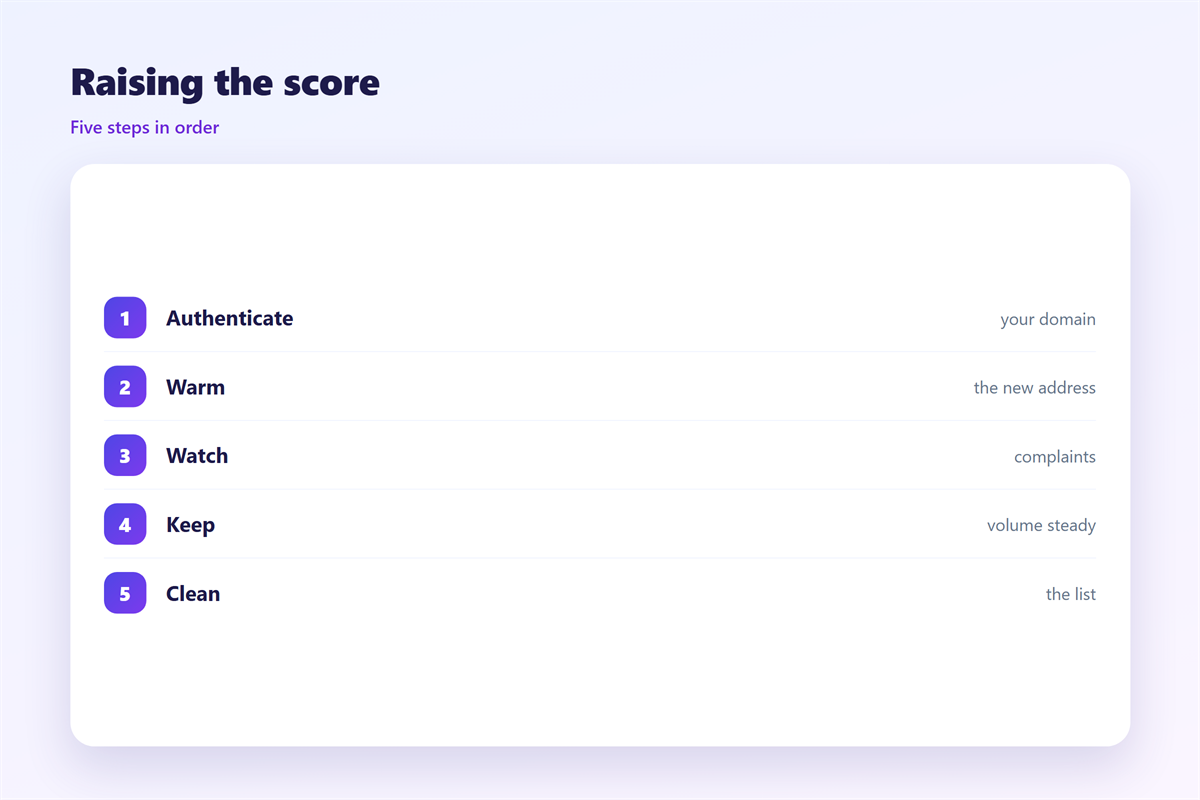
Long term care matters more than any quick fix.
Watch how your record is seen by others. The signals are explained in 邮件信誉.
Confirm that mail lands where it should. The records are covered in 邮件投递率.
Learn what it means to be blocked. The warning signs are described in 邮件黑名单.
Warm a new address before you send in bulk. The plan is set out in 邮件预热.
Keep the pace steady and the list clean.
Answer complaints quickly and politely.
A quick reply can turn a lost reader around.
A stable 邮件质量分 rewards patience, not tricks.
Cut the list when it stops working for you. A smaller living list beats a large dead one.
Tell readers what to expect when they join. Surprises feel like spam very quickly.
邮件质量分 and your sending plan
Your sending habits shape the grade as much as your words.
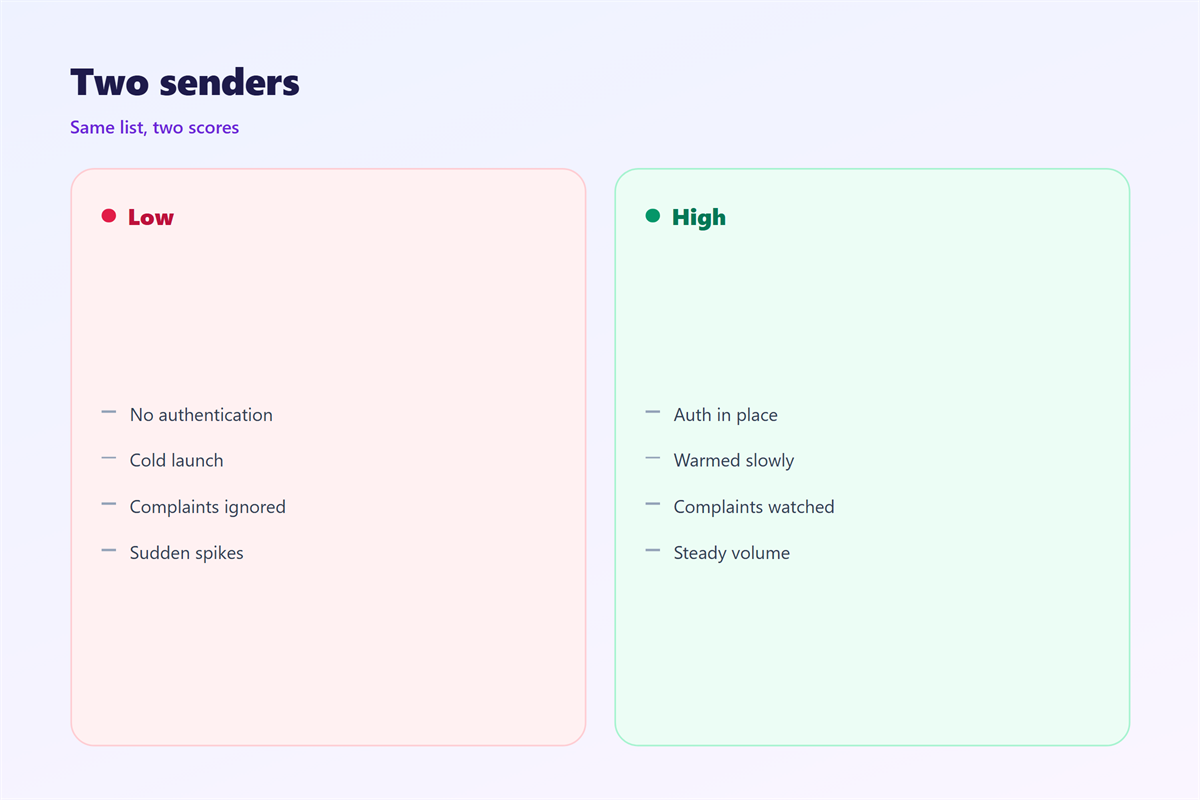
Sudden volume spikes look like an attack.
Ramp up slowly when you grow the list.
Send at a steady rhythm people can expect.
A predictable sender is easier to trust.
Keep the same name and address over time.
Frequent changes make you look like a stranger.
Plan the week before you press send.
Treat 邮件质量分 as a long relationship, not a test.
Send a test to yourself before the real one. Then you see what the reader sees.
Keep one clear voice across every campaign. Constant change erodes hard won trust.
FAQ
Can I see my 邮件质量分 directly?
Rarely. Most providers keep the score private and show only its effects.
Does a good score last forever?
No. It fades if your habits slip, even after a strong year.
What is the fastest way to raise it?
Clean the list and send only to active, willing readers.
Do images affect my 邮件质量分?
Only slightly. Heavy images can slow a message and hint at bulk mail.
评论
还没有评论,来说两句吧。
评论功能已关闭。